148,000 Michiganders May Qualify to Have Student Loans Forgiven

148,000 Michiganders May Qualify to Have Student Loans Forgiven
Governor Whitmer Header

FOR IMMEDIATE RELEASE

August 11, 2022

Contact: press@michigan.gov


Gov. Whitmer Announces an Estimated 148,000 Michiganders May Qualify to Have Student Loans Forgiven Under Federal Program

Over 6,000 Michiganders have saved $358 million through the Public Service Loan Forgiveness program


LANSING, Mich. — Governor Gretchen Whitmer is encouraging Michiganders working in public service to review the Public Service Loan Forgiveness (PSLF) program to see if they qualify for federal student loan relief no later than October 31, 2022. Thousands have already utilized the program to pay off their debt, and over 148,000 more Michiganders may be eligible due to the recent PSLF waiver.


“I’m grateful to the countless, dedicated public servants across Michigan that spend their days making our state a better place to live. Whether you are a service member, firefighter, health professional, teacher, social worker, librarian–-the list goes on—thank you for your service,” said Governor Gretchen Whitmer. “Tens of thousands of Michiganders may qualify for this loan forgiveness program, which will help ease the burden of student debt and put money back in people’s pockets. I encourage Michiganders to review the Public Service Loan Forgiveness program and see if they are eligible to have their remaining student loan debt forgiven.”


“The State of Michigan employs nearly 50,000 people across the state. We’re working hand-in-hand with employees to help them take full advantage of the Public Service Loan Forgiveness program,” said Liza Estlund Olson, director of the Office of the State Employer. “By highlighting recent changes to this federal program, we urge borrowers to take a second look to see if they qualify for student loan relief and encourage more Michiganders to join the public sector workforce.”


“As a son of teenagers just trying to get by, we didn’t have much. My single mother did everything she could, but other than a small Pell Grant, I had no help to afford college. Loans were the only way to get the education that no one in my family had. I’ve devoted my career to the service of others both in the non-profit and public sector, and I was excited when I first learned about the expanded Public Service Loan Forgiveness Program,” said Bryan Van Dorn, a state employee from East Lansing. “When I tried to apply for Public Service Loan Forgiveness back in 2010, the program wasn’t the right fit for my situation. So we just kept making loan payments. Chipping away at interest. Hardly making a dent. Last fall the rules changed and each of the payments I had made for the proceeding 10 plus years that were previously ineligible were deemed eligible. So I applied again under this temporary relief. Some paperwork, processing time, and anxious anticipation later, the remaining balance is now zero. Having these loans forgiven all but guarantees that my daughter won’t have to shoulder the same burden.”


“After working as an educator for over 20 years, doing what I absolutely love, I was blessed to have my student loans forgiven years sooner than expected. I am so thankful that I applied for the PSLF program years earlier and followed through each year with the recertification process,” said Erika Carpenter an educator of 23 years in Southfield. “This has helped open additional opportunities for me and I would encourage all educators to take the time to apply. Teachers should not have student loans, especially when we do not get the income we deserve. We teach the world!”


“As educators, we pursue a bachelor’s and master’s degree, masters plus thirty, student teaching without pay and years of continuing education every five years for recertification – all of which has been an investment in my career and the students I enjoy teaching,” said Nikoji Smith, an educator of twenty plus years in Southfield. “I applied for the Public Service Loan Forgiveness Program and was grateful that something actually existed for educators. We are the most underpaid but yet we build the foundation for the doctors, lawyers and judges. I made my monthly payments and figured this would be forgiven by the time I retire. Imagine my surprise when I saw ‘paid in full’. I would encourage all educators to apply for the PSLF. I’ve had many conversations with my colleagues on the ease of the application and yearly recertification process. It feels good knowing that more of my colleagues’ loans are being forgiven as well. For educators, it feels like winning the lottery. This has truly been a blessing!”


Public Service Loan Forgiveness Background

Until October 31, 2022, the U.S. Department of Education is offering public servants working in government and eligible non-profits a second chance to qualify for student loan forgiveness. An estimated 154,000 public service workers in Michigan could be eligible for student loan debt relief under the PSLF waiver. According to the Office of Federal Student Aid’s June report, over 6,000 Michiganders have taken advantage of the PSLF waiver and have had $358 million in loans forgiven.


The recent changes to the federal Public Service Loan Forgiveness program allow previously ineligible borrowers – those with a non-Direct loan, who are not enrolled in an income driven repayment plan, who have missed a repayment, or made a partial repayment in the past – to receive credit toward loan forgiveness for the years they worked in government or a qualifying non-profit.


To apply for the PSLF waiver, borrowers should:


If borrowers have questions regarding their individual situation, they can visit studentaid.gov/pslf/ or call FedLoan Servicing at 1-855-265-4038.


Congress created Public Service Loan Forgiveness (PSLF) to recruit and retain top talent in the public sector workforce. If an individual works for federal, state, local, or tribal government or a qualifying non-profit for 10 years, makes 120 full, on-time loan payments, and submits all required paperwork, the federal government forgives all of their remaining student loan debt.


Though PSLF was established in 2007, it has faced implementation challenges. Prior to the PSLF Waiver, only 2.1% of eligible borrowers had been approved for loan forgiveness. The recent PSLF program overhaul is the U.S. Department of Education’s attempt to deliver on the program’s promise and thank the public service workforce for their dedication and support.


The Public Service Loan Forgiveness: Champions Toolkit is available for employers and professional associations to help them amplify the PSLF waiver opportunity and connect borrowers to resources. The toolkit includes sample email correspondence and social media posts. It is available for download here.
Free COVID-19 tests available for all households

Free COVID-19 tests available for all households

MDHHS banner with logo no names

Press Release


FOR IMMEDIATE RELEASE: August 10, 2022

CONTACT: Chelsea Wuth, 517-241-2112, WuthC@michigan.gov

MDHHS announces free COVID-19 tests available for all households through Rockefeller Foundation partnership

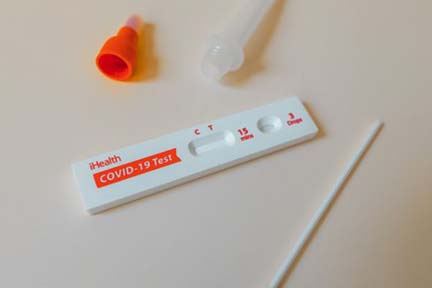
LANSING, Mich. – The Michigan Department of Health and Human Services (MDHHS) is announcing its expanded partnership with the Rockefeller Foundation through Project Act to provide 180,000 COVID-19 tests to 36,000 households located anywhere in the state free of charge. Previously, tests were only available in select ZIP codes.

Residents can request the tests through the end of August. Households will receive one kit containing five tests.

“Testing remains both a critical and helpful tool in managing the spread of COVID-19, and reduces the risk of getting infected for our loved ones and neighbors,” said Dr. Natasha Bagdasarian, MDHHS chief medical executive. “We encourage residents to take advantage of these free tests as many families get ready to head back to school. We are grateful for our partnership with the Rockefeller Foundation to ensure equitable access to tools that prevent COVID-19.”

All households in the state of Michigan can order their free COVID-19 tests through AccessCovidTests.org. Each household will receive one kit with five tests, typically within a week of ordering. Individuals without internet access can contact 211 for assistance ordering tests.

This program is in addition to free at-home tests available through the federal government partnership with the United States Postal Service. 

MDHHS continues to partner with libraries across the state to provide free at-home COVID-19 tests to Michiganders. Click here for a list of participating libraries.

Private health insurers are required to cover up to eight at-home COVID-19 tests per month for each person covered by a health plan.

For more information about testing, visit Michigan.gov/Coronavirus.

Third Round of Child Care Grants to Expand Options

Third Round of Child Care Grants to Expand Options

Governor Whitmer Header

FOR IMMEDIATE RELEASE

August 10, 2022

Contact: press@michigan.gov


Gov. Whitmer Announces Third Round of Child Care Grants to Expand Options and Lower Costs for Working Families 

Licensed child care programs are eligible for Child Care Stabilization Grants to fund quality, affordable care, lower costs, and help parents get back to work


LANSING, Mich. — Today, Governor Gretchen Whitmer announced the launch of the third round of the Child Care Stabilization Grant program, which will award nearly $200 million to licensed child care providers to strengthen their programs and help lower costs for working families.


“High-quality, affordable child care is foundational to our economy. Parents rely on child care so they can go to work knowing that their kids are safe,” said Governor Whitmer. “As a working mom, I know firsthand the importance of having a top-notch early educators to take care of your children when they’re young. That’s why I’m continuing to fight to support child care professionals and the child care industry. I was proud to work across the aisle to make game-changing investments in our childcare providers and professionals in the bipartisan budget I signed just a few weeks ago. Thanks to our bipartisan efforts, we have expanded low- or no-cost child care to 150,000 more kids and are helping new providers open across Michigan. I urge providers to take apply for the grant so they can continue serving their communities and helping young Michiganders thrive.”


“Early childhood is my passion and I have always believed and understood the importance of the early childhood profession.  I want to say thank you to the State of Michigan, Governor Gretchen Whitmer, Great Start to Quality, Michigan Department of Education, and all the politicians who decided to agree to get things done for all the early childhood educators, children, and families in Michigan,” said Cassandra Rice, owner and operator of Our Kidz World Learning Center in Detroit. “The decisions that were made as a collective group, relating to the funding of grant funds helped to keep my childcare center open as well as others.  The funding help to provide the continuance of a high quality, safe, and healthy environment for children, families, and employees.”


“I am a new child care provider and the idea of caring for and developing children has been a dream of mine for years.  I wanted to be able to spend more time with my family, I had a great high paying job, but decided to pursue opening my daycare business,” said Nicole Florez, a home-based child care provider in Muskegon County. “This grant allowed me to purchase needed items for everyday use as well as a few mortgage payments as I started this new endeavor. I started this business hoping to impact children’s lives for the better and help parents. I am so grateful for this and future grants so I can continue to learn and play and develop and do such an important rewarding career.”


Child Care Stabilization Grants

The Child Care Stabilization Grant is a non-competitive grant available to approximately 8,000 licensed centers, group homes, family homes, and tribal childcare providers to be used to support operational expenses. All eligible applicants will receive funding. Applications open today and are available through September 9th. Providers can learn more and apply at Michigan.gov.childcare.


In the first two rounds of the Child Care Stabilization Grants, nearly 6,000 child care providers received funding and 38,000 childcare professionals received bonuses.

  • 5,890 providers received funding
  • Average awards:
  • Center: $108,685
  • Group home: $20,454
  • Family home: $10,763
  •  5,544 providers received funding
  • Average awards:
  • Center: $120,697
  • Group home: $21,777
  • Family home: $11,394


Child Care Stabilization Grants have been awarded to child care businesses in all 83 counties with a total investment to date of $730 million.


Lowering Costs for Families

These grants are part of a $1.4 billion investment to expand access to quality, affordable childcare and get Michigan families back to work. Child care is often the largest expense in a family’s budget and 40% of Michigan families with kids under age 12 are now eligible for free or low-cost child care. To qualify, families must:

  • Have a child under age 13
  • Need childcare because they’re working or going to school
  • Have a qualifying income.  Your monthly income must be less than $36,620 for a family of 2, $46,060 for a family of 3, or $55,500 for a family of 4.


Visit Michigan.gov/childcare for a complete list of reasons families may qualify for low or no cost childcare and qualifying income levels for larger families. Families can apply for childcare support by visiting MiBridges.Michigan.gov.


Increasing Access to Care

While these grants help keep existing child care providers open, the state is also working to recruit new child care entrepreneurs. In May 2022, Governor Whitmer launched Caring for Mi Future—a $100 million strategy to open 1,000 new child care programs by the end of 2024. In collaboration with the Michigan Departments of Education and Licensing and Regulatory Affairs, the state has brought on three partners to expand access to quality care statewide.

  • Early Childhood Investment Corporation to assist regions in responding to local child care needs, home-based business owners in strengthening their operations, and partners in creating and expanding child care apprenticeships.
  • First Children’s Finance to assist rural communities in responding to local child are needs and entrepreneurs as they create a business plan.
  • IFF to assist entrepreneurs with identifying and renovating facilities.


Additional grants and technical assistance will be available to entrepreneurs this fall.

How automated speed enforcement could save road worker lives

How automated speed enforcement could save road worker lives

How automated speed enforcement could save road worker lives

On this week’s edition of the Talking Michigan Transportation podcast, conversations with two people working on initiatives to protect those who build our state’s roads and bridges.

Listen now: https://www.buzzsprout.com/1374205/11108912-how-automated-speed-enforcement-could-save-road-worker-lives


TMT Player Episode 114

Michigan House Bill 5750 would allow the Michigan Department of Transportation (MDOT) and Michigan State Police (MSP) to set up automated speed enforcement systems in segments of state roads where work is being performed.

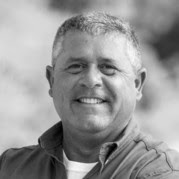
John Osika

First, John Osika, a veteran of Operating Engineers 324, representing heavy equipment operators, talks about the need for this legislation and other measures to protect workers. He recently penned an op-ed for Bridge Magazine laying out the reasons he and his colleagues support HB 5750.

He also discusses close calls he observed first-hand while working on projects.

The bill earmarks civil fine revenue from violations of section 627c first to MDOT, by implication for the cost of installing and using automated speed enforcement systems. The bill directs MDOT to deposit civil fine revenue from violations of section 627c in excess of the costs of installing and using automated speed enforcement systems into the Work Zone Safety Fund, established in the bill as a restricted fund for the purpose of improving work zone safety.

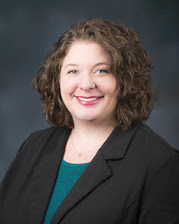
Lindsey Renner

Later, Lindsey Renner, MDOT construction operations engineer who is transitioning from her role as work zone manager, talks about the potential benefits of automated speed enforcement. These benefits have been measured in other states, including Maryland where a 2016 report documented a 10 percent reduction in speeds in Montgomery County.

The House Fiscal Agency analysis says the bill would limit use of automated speed enforcement system to streets and highways under MDOT jurisdiction (state trunkline highways) and only in work zones when workers are present. The bill would have no impact on local road agencies.


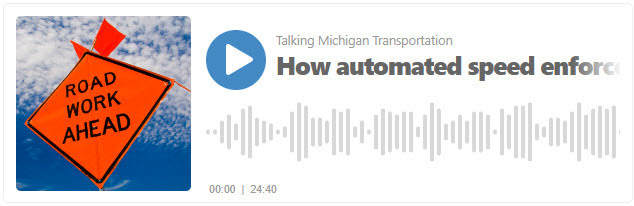
Podcast photo: Road work ahead sign.
First portrait: John Osika, training director of Michigan-based Operating Engineers 324.
Second portrait: MDOT construction operations engineer.

Listen now at https://www.buzzsprout.com/1374205.

Stay connected by subscribing to Talking Michigan Transportation e-mail updates.

Time to check trees for Asian longhorned beetle

Time to check trees for Asian longhorned beetle

 
Aug. 9, 2022
Contact: Rob Miller (MDARD), 517-614-0454 or Joanne Foreman (DNR), 517-284-5814

Heads up! It’s time to check trees for invasive Asian longhorned beetle

August is a great time to enjoy the outdoors, and it’s also the best time to spot the invasive Asian longhorned beetle as adults emerge from trees. That’s why the U.S. Department of Agriculture is declaring August as “Tree Check Month.” Checking trees for the beetle and the damage it causes is one way you can protect trees and help the USDA’s efforts to eliminate this beetle from the United States.

Adult Asian longhorned beetles on a branchThe Michigan departments of Agriculture and Rural Development; Environment, Great Lakes, and Energy; and Natural Resources are joining the USDA in asking people to take just 10 minutes this month to check trees around homes for the beetle or any signs of damage.
The Asian longhorned beetle, or ALB for short, is a non-native wood-boring beetle considered invasive in North America because it attacks 12 types of hardwood trees, including maples, elms, horse chestnuts, birches and willows. Here, there are no predators or diseases to keep ALB populations in check. In its larval stage, the insect feeds inside tree trunks and branches during the colder months. The beetle creates tunnels as it feeds, and then it chews its way out as an adult in the warmer months.

Infested trees do not recover and eventually die. They also can become safety hazards since branches can drop and trees can fall, especially during storms.

You can help

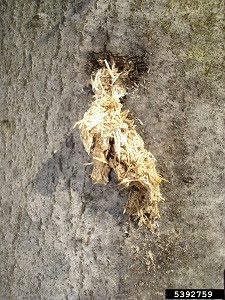
Asian longhorned beetle frass, resembling wood shavings, coming out of an exit hole in a tree trunk.Although this invasive beetle has not yet been discovered in Michigan, it is crucial we keep an eye out for it. Discovering early signs of infestation can prevent widespread damage to the state’s forest resources, urban landscapes and maple syrup production.
“We’re asking for the public’s help to find Asian longhorned beetle and any tree damage it causes, because the sooner we know where the insect is, the sooner we can stop its spread,” said Josie Ryan, the USDA Animal and Plant Health Inspection Service’s national operations manager for the ALB Eradication Program. “Five of the 15 known infestation sites in the U.S. were detected and reported by alert residents, including the most recent discovery in Hollywood, South Carolina. This shows how critical public participation can be.”

The USDA recently reported the infestations at 10 of those locations have been eradicated.

Look for signs

Whenever you are outdoors, take time to look at the trees around you for signs of the Asian longhorned beetle, including:

  • Round exit holes – about the diameter of a pencil – found in tree trunks and branches.
  • Shallow oval or round scars in the bark, where the adult beetle chewed an egg site.
  • Material that looks like wood shavings lying on the ground around the tree or in the branches.
  • Dead branches or limbs falling from an otherwise healthy-looking tree.

Look for the beetle

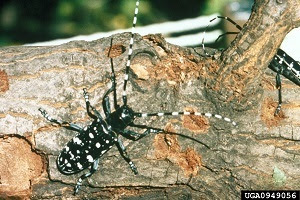
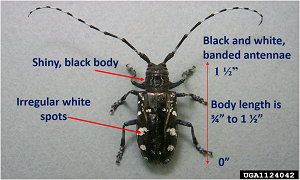
Asian longhorned beetle with descriptive notes.Adult Asian longhorned beetles are distinctively large, ranging from 3/4 to 1 1/2 inches in length, not including their long antennae. The beetles are shiny black, with random white blotches or spots, and their antennae have alternating black and white segments. They have six legs that can be black or partly blue, with blue coloration sometimes extending to their feet.


Be aware of look-alikes

Several beetles and bugs native to Michigan often are mistaken for the Asian longhorned beetle, but there are differences to be aware of:

  • The white-spotted pine sawyer has a distinctive white spot below the base of its head – between its wings – and is brownish in color.
  • The cottonwood borer is about the same size as the Asian longhorned beetle and is also black and white, but it has a pattern of single, broad black stripes down each wing, and its antennae are all dark.
  • The northeastern pine sawyer reaches up to 2 inches in length, has very long antennae and is gray in color.
  • The eastern eyed click beetle has distinctive eye circles on the back of its head. It rolls over when threatened, then clicks and makes a flipping movement to get back on its feet.

Anyone observing an Asian longhorned beetle, or a tree appearing damaged by it, is asked to report it. If possible, capture the beetle in a jar, take photos, record the location and report it as soon as possible at AsianLonghornedBeetle.com or contact MDARD at 800-292-3939 or MDA-info@Michigan.gov.

More information can be found at Michigan.gov/ALB.


Michigan’s Invasive Species Program is cooperatively implemented by the Department of Environment, Great Lakes, and Energy, the Department of Natural Resources, and the Department of Agriculture and Rural Development.


/Note to editors: The accompanying photos are available for download. Caption information follows.

Adults: Adult Asian longhorned beetles emerge from within trees in late summer to mate. Females chew small depressions in tree trunks or branches, such as those seen here, to deposit eggs. Photo courtesy of Kenneth R. Law, USDA APHIS PPQ, Bugwood.org.

Frass: Material resembling wood shavings at the base of a tree or tree branches is a sign of Asian longhorned beetle infestation. Photo courtesy of Kenneth R. Law, USDA APHIS PPQ, Bugwood.org.

Identification: The Asian longhorned beetle is a large, shiny black beetle with irregular white spots and black and white banded antennae. Photo courtesy of USDA APHIS PPQ.

WSPS: The white-spotted pine sawyer is native to Michigan and often mistaken for the Asian longhorned beetle. Look for a white spot between the upper wings to identify this pine sawyer. Photo courtesy of William M. Ciesla, Forest Health Management International, Bugwood.org.

Cottonwood: The cottonwood borer’s antennae are all black. Photo courtesy of Gerald J. Lenhard, Louisana State University, Bugwood.org.

NEPS: The northeastern pine sawyer is a large beetle reaching 2 inches in length. Its body is primarily gray with white and black spots. Photo courtesy of Jim Brighton.

Eyed beetle: The eastern eyed click beetle is distinguished by large circles on the back of its head. Photo courtesy of iNaturalist./