DRN News Digest – Week of Aug. 8, 2022

DRN News Digest – Week of Aug. 8, 2022

DNR banner

News Digest – Week of Aug. 8, 2022

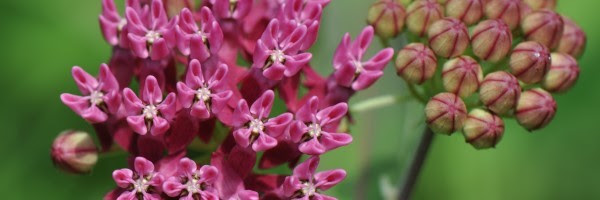
A close-up of purple milkweed.

Make pollinators and monarchs a priority by planting milkweed and other native flowers.

Here are just a few of this week’s stories from the Michigan Department of Natural Resources:

See other news releases, Showcasing the DNR stories, photos and other resources at Michigan.gov/DNRPressRoom.

PHOTO FOLDER: Larger, higher-res versions of the images used below, and others, are available in this folder.


Photo ambassador snapshot: Lovely light at Lake Hudson

A place lake reflects beautiful, gold and orange whispy clouds at sunset. Want to see more pictures like this, taken by Michigan state parks photo ambassador Carolly Maiyo at Lake Hudson Recreation Area in Lenawee County? Visit Instagram.com/MiStateParks to explore photos and learn more about the photo ambassadors! For more on the photo ambassador program, contact Stephanie Yancer at 989-274-6182.


Don’t miss Free ORV Weekend Aug. 20-21

Three ORVs travel down a dirt path in a sparse forest.Taking place twice a year, Free ORV Weekend is a great time to see, experience and test out Michigan’s off-road vehicle trails.

The final Free ORV Weekend of the year takes place Saturday, Aug. 20, and Sunday, Aug. 21. On these two days, Michigan residents and visitors can legally ride Michigan’s 4,000 miles of designated routes and trails, and the state’s six scramble areas, without purchasing an ORV license or trail permit. All other ORV rules and laws still apply.

“Our hope is that after experiencing a weekend of off-road fun, riders will consider purchasing an ORV license or trail permit for the remainder of the season,” said Jessica Holley-Roehrs, statewide motorized trails program analyst with the DNR Parks and Recreation Division. “We always like to say that it’s the perfect time to introduce – or reintroduce – friends and family to the fun and beauty of a ride.”

The DNR directly reinvests ORV trail permit and license dollars back into the ORV trails system. The funds help pay for trail brushing, signage, maintenance, bridge and culvert construction, maintenance of trailhead amenities and other expenditures.

A Recreation Passport still is required where applicable, such as at trailheads and scramble areas. Typically, there’s an entrance fee at the Holly Oaks ORV Park (although no Recreation Passport requirement), but the fee is waived for this special weekend.

Visit Michigan.gov/ORVInfo for the latest ORV trail, safety and closure information.

Questions? Contact Jessica Holley-Roehrs at 517-331-3790.


Natural Resources Commission to meet Thursday in Detroit

small group of dark brown turkeys walks away from the camera, trotting off into a green field amid a few tall treesThe next meeting of the Michigan Natural Resources Commission leads off with a Wildlife Committee agenda that includes an overview of turkey hunting regulations and a presentation about the antler point restrictions and chronic wasting disease study.

The meeting also will include DNR Law Enforcement Division lifesaving awards, the 2021 Hunter Instructor of the Year Award, an update on the DNR licensing mobile app, upcoming fisheries orders, a legislative update and several land transactions.

It will start at 9 a.m. Thursday, Aug. 11, in the Riverview Loft of the DNR Outdoor Adventure Center, 1801 Atwater St., in downtown Detroit. See the draft meeting agenda at Michigan.gov/NRC.

Before the meeting, the public also is invited to “Coffee with the Commissioners” from 8 to 9 a.m. in the OAC Forest Room.

For more information or to request time to speak at the meeting, contact Victoria Lischalk at 517-599-1067 or NRC@Michigan.gov.


Forestry’s favorite bear turns 78 this week

A costumed Smokey Bear impersonator leans forward while talking to smiling, young girls and boys near a fenceWinnie the Pooh, Yogi, Baloo and the Berenstain family are among the most popular bears in books or on TV. But in the natural resources world, the crown goes to none other than Smokey Bear.
On his birthday, Aug. 9, the wildfire prevention icon is celebrating 78 years of protecting forests.

Our furry friend’s message, “Only you can prevent wildfires,” still rings true today; nine out of 10 wildfires are caused by humans.

“In 2021, escaped yard waste burns and campfires were the most common causes of wildfire in Michigan,” said DNR fire prevention specialist Paul Rogers.

DNR firefighters have responded to 172 fires burning 3,248 acres so far during this year’s fire season.

Do you know how to safely build a fire and fully put it out? Make Smokey proud by committing these safety tips to memory:

  • Always have a water source nearby.
  • Never leave a fire unattended, even for a minute.
  • Keep a metal shovel and bucket nearby.
  • Put out fires completely with water.
  • Don’t burn on windy days or during dry weather.

Find fun, Smokey-themed activities on his website SmokeyBear.com, or download the “Flat Smokey” coloring page inspired by Dale Hubert’s Flat Stanley Project.

Learn more about wildfire prevention at Michigan.gov/PreventWildfires.


Make a pollinator-friendly space and help monarchs

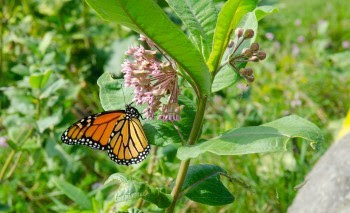
A monarch butterfly sits on a flowering milkweed.Eastern monarch butterflies are one of the most well-known butterflies in North America. These gorgeous orange, black and white butterflies are a staple of Michigan summers, and they need our help.

The eastern monarch butterfly population has been declining over the last 20 years, primarily due to habitat loss in its summer range – including Michigan – and Mexico, where these beauties spend the winter.

Due to the declining population, monarch butterflies are listed as a candidate species under the federal Endangered Species Act, and their population status is under review annually. Learn more at FWS.gov/SaveTheMonarch.

You can help monarchs as you work in your backyard, garden or community garden this year by following these tips to make these spaces beneficial for pollinators. You can even help create and maintain a certified monarch waystation.

Monarchs rely on habitat with milkweed plants. Milkweeds are the only species of plant on which monarchs lay their eggs, are the only plants that monarch caterpillars eat, and provide nectar-producing flowers as food for adult butterflies.

“The monarch and other pollinators need both early- and late-blooming plants as well as plants that flower mid-summer, a diverse mix which can be found in grasslands, agricultural fields and urban backyard habitats,” said Mike Parker, conservation partners program specialist with the DNR. “These habitats can also support milkweeds, which are essential for the monarch’s reproductive cycle.”

If you spot monarchs or their caterpillars this summer, be sure to report sightings to help inform conservation decisions here in Michigan! You can report monarch sightings and track their journey at Journey North.

Find out more about ways you can help monarchs by visiting Michigan.gov/Monarchs or contacting the DNR Wildlife Division at 517-284-9453.


THINGS TO DO

Michigan has thousands of miles of water trails to choose from for your next paddling adventure. Whether you’re kayaking, canoeing or paddle boarding, find the right trail for your trip.

BUY & APPLY

Looking to sharpen your skills or learn some new ones? Check out upcoming classes from the DNR’s Outdoor Skills Academy. Learn to identify wild mushrooms, garden for pollinators, start a trap line and more.

GET INVOLVED

No matter where you are in Michigan, there are plenty of opportunities to get involved and give back to the natural resources you love. Check the DNR volunteer calendar for events near you.

We recently launched a new website, and we’d love to hear what you think via this brief survey. Thanks for helping us improve our site for all users!

New tool available to track harmful algal bloom

New tool available to track harmful algal bloom

MDHHS banner with logo no names

Press Release


FOR IMMEDIATE RELEASE: Aug. 8, 2022

MDHHS CONTACT: Chelsea Wuth, 517-241-2112, WuthC@michigan.gov
MDARD CONTACT: Chelsea Lewis-Parisio, 517-331-1151, LewisC31@michigan.gov
EGLE CONTACT: Jeff Johnston, 517-231-9304, JohnstonJ14@michigan.gov  

New tool available to track harmful algal bloom reports

LANSING, Mich. – The Michigan Department of Health and Human Services (MDHHS), Department of Environment, Great Lakes, and Energy (EGLE) and the Michigan Department of Agriculture and Rural Development (MDARD) are reminding Michiganders to be aware of the potential for harmful algal blooms (HABs) in bodies of water. To help the public know where HABs have been reported, a new Michigan Harmful Algal Bloom Reports map is now available online at Michigan.gov/HABsMap.

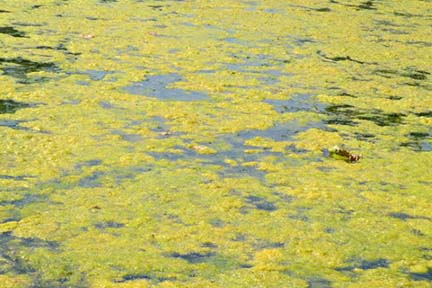
HABs form due to a rapid growth of cyanobacteria, also called blue-green algae, which are naturally found in lakes, rivers and ponds. Toxins found in cyanobacteria (cyanotoxins) that can be found in blooms can be harmful to people and animals.

“The new Michigan Harmful Algal Bloom Reports map is an exciting tool to increase awareness of HABs and to help prevent related illness,” said Dr. Natasha Bagdasarian, MDHHS chief medical executive. “If you may have had contact with or swallowed water with a HAB and feel sick, call your doctor or Poison Control at 800-222-1222. If symptoms are severe, get emergency medical attention as soon as possible.”

To provide more information on HABs statewide, MDHHS and EGLE developed the Michigan Harmful Algal Bloom Reports map. The map, which will be updated weekly from June to November, shows bloom reports that have been verified by EGLE and the results of any cyanotoxin tests.

Not all HABs in Michigan are reported to EGLE and some may not be included on the map. HABs can move around, disappear and reappear – meaning that HABs may be present in waterbodies, but not present on the map. Before going in any water, MDHHS recommends that you always look for and keep away from visible HABs or scums and that people and pets stay out of water in affected areas.

The occurrence of cyanobacteria and their toxins typically takes place in the summer and fall and has been confirmed in lakes across Michigan in previous years. In 2021, 79 harmful algal blooms in 43 counties were reported to EGLE.

HABs look like water that has algal scums or mats, which looks like spilled paint or pea soup or has colored streaks on the surface. Visit the HAB Picture Guide for examples of HABs, as well as other algae and plants mistaken for HABs. HABs usually occur from May through October, with most occurring in August and September. HABs can last for days or weeks and change in size, location and toxicity.

Breathing in or swallowing water with HAB toxins may cause illness, such as runny eyes or nose, asthma-like symptoms, difficulty breathing, vomiting, diarrhea, weakness, numbness, headaches or dizziness. Skin contact may cause rashes, blisters or hives.

What should people do if they think they have found a HAB?

If people think they have found a HAB or have any suspicion of a HAB:

  • Do not let people, pets or livestock in the water or near the shore in affected areas.
  • Always rinse off people and pets after contact with any lake water.
  • If there is a posted HAB advisory or closing, follow its instructions.
  • You can still use unaffected areas of a lake unless a bloom covers most of the lake.
  • Report suspected HABs to EGLE by e-mailing AlgaeBloom@Michigan.gov with pictures of the suspected HAB. Reports can also be received via phone at 800-662-9278.

HABs and animal health

Animals, especially dogs, can become ill or die after contact with HABs. Signs of illness can include vomiting, diarrhea, staggering and seizures. To prevent illness in dogs, keep them out of areas with scums or discolored water, rinse them off after contact with any lake water and bring clean, fresh water for them to drink. If a pet or livestock animal become sick after contact with a suspected HAB, call a veterinarian right away.

Animal illness due to HABs is reportable to MDARD. To report cases, submit a Reportable Disease Form (found at Michigan.gov/dvmresources under ‘Reportable Diseases’) or call 800-292-3939.

How to help prevent HABs

To reduce and prevent HABs, Michiganders should learn about pollution from excess nutrients, such as nitrogen and phosphorus. Excess nutrients may come from fertilizers, detergents, sewers and failed septic systems.

To decrease nutrients going into water:

  • Use phosphate-free detergents.
  • Dispose of pet waste properly.
  • Apply fertilizer only when necessary, at the recommended amount. A buffer should be left when applying fertilizer near a lake or stream.
  • Promote the use of natural shoreline, including growing native vegetation along the water’s edge.
  • Join with a local organization or residents to develop or update a watershed management plan, which identifies pollutants causing water quality problems, sources of those pollutants and recommendations to reduce pollutant inputs.

Contacts for HAB questions

  • The new Michigan Harmful Algal Bloom Reports map can be found at Michigan.gov/HABsMap.
  • Visit Michigan.gov/HABs for more information on HABs.
  • For more information on HABs and your health, call MDHHS at 800-648-6942.
  • For more information on HABs and pets or livestock, call MDARD at 800-292-3939.
  • For more information on HABs and the environment, call EGLE at 800-662-9278.
Final Application Deadline for Michigan Parents’ Council

Final Application Deadline for Michigan Parents’ Council

Governor Whitmer Header

FOR IMMEDIATE RELEASE

August 8, 2022

Contact: press@michigan.gov


Gov. Whitmer Highlights Final Application Deadline for Michigan Parents’ Council

The Michigan Parents’ Council will center parent perspective in the policymaking process and formalize how parent recommendations are included in education policy decisions


LANSING, Mich. – Today, Governor Gretchen Whitmer reminded Michigan parents and family members to submit applications to join the new Michigan Parents’ Council by 5PM on Monday, August 8. The governor established the Michigan Parents’ Council to center the parent perspective ahead of the 2022-2023 school year. Joining the council offers parents and family members a space to make their voices heard on state-level education issues in Michigan, including next year’s budget.


“Parents are their children’s first and most important teachers, and their perspective is critical to ensure that the 2022-2023 school year is successful,” said Governor Whitmer. “As a mom, I was proud to establish the Michigan Parents’ Council last month. Parents will be a key ally as we help our kids keep learning in-person, tackle unfinished learning, and get back on track to pursue their potential. I look forward to working closely with the Michigan Parents’ Council and I encourage everyone who is invested in our children’s success to apply before Monday’s deadline.”


Please consider applying by 5PM on August 8 if you are:

  • A parent or family member with children in early childhood learning programs, elementary, middle, and/or high school
  • A parent or family member with students who have an Individualized Education Plan or Individualized Service Plan, who speak English as a second language, or who are in foster or kinship care.


Michigan parents and family members interested in appointment can apply at www.michigan.gov/Whitmer/Appointments. Click “Apply Now” and select “Michigan Parents’ Council” when prompted in the application. Applications are due by 5PM on Monday, August 8.


Michigan Parents’ Council


Structure

Seven parents or family members appointed by the governor will lead the council and convene regional roundtables with families across Michigan to bring in as many voices as possible. Appointees must have children enrolled in PreK-12 and represent diverse student experiences, including special education, English as second language students, and students in foster or kinship care. The council will also include the governor’s K-12 policy advisor and a designated representative of the Superintendent of Public Instruction from the Michigan Department of Education.


Responsibilities

The council will convene roundtables of parents and family members across Michigan to strengthen partnerships between parents and schools. They will share input from the roundtables directly with the governor’s team and state superintendent. The council will submit a report to the governor highlighting major themes from the roundtables and summarizing proposals for inclusion in the governor’s budget recommendation by December 9, 2022.


The executive order establishing the Michigan Parents’ Council can be viewed by clicking here.


FY 2023 Education Budget Investments

Governor Whitmer’s recently signed bipartisan education budget is focused on six key sections: students, mental health, learning supports, student safety, school infrastructure, and teacher recruitment.


1) Students

For our students, the highest state per-pupil funding in Michigan history—$9,150 for every kid, in every public school district. Additional support for the nearly 200,000 special education students and 710,000 at-risk students in Michigan. Expanding funding for career and technical education programs by 27%.


2) Mental Health

Dedicated mental health dollars for every student in every school. Increasing funding for teen centers, district mental health grants, and TRAILS, which offers training to school mental health professionals so they can better serve students with evidence-based services.


3) Teacher Recruitment

Funding MI Future Educator Fellowships, which pay up to $10,000 in tuition for 2,500 future Michigan educators a year, $9,600 stipends a semester for student teachers, and Grow-Your-Own programs that help districts put support staff on no-cost paths to become educators.


4) School Infrastructure

$250 million for school construction and renovations, helping them build or refurbish classrooms, labs, and libraries.


5) Learning Supports

An expansion of before and after-school programs to keep kids engaged. The budget offers every kid in Michigan tutoring to help catch up and get on track for long-term success, and resources for districts to develop learning pods for academically at-risk and economically disadvantaged students.


6) Student Safety

Dedicated school safety dollars for every student in every school. Funds to hire more on-campus school resources officers, create an intervention system for at-risk students that brings together law enforcement, schools, and mental health professionals, and establish a school safety commission.


Governor Whitmer’s Education Investments

For four years in a row, Governor Whitmer has worked across the aisle to make the largest education investments in Michigan history—without raising taxes. Since taking office, the governor has tripled the number of literacy coaches and last year, closed the funding gap between schools, boosted state per-student investment to an all-time high, and helped districts hire thousands of teachers on-campus mental health professionals.


The Whitmer-Gilchrist Administration’s education accomplishments can be found here.


Whitmer Makes Appointments to the Bench

Whitmer Makes Appointments to the Bench

Governor Whitmer Header

FOR IMMEDIATE RELEASE

August 4, 2022

Contact: press@michigan.gov


Governor Whitmer Makes Appointments to the Bench


LANSING, Mich. — Today, Governor Gretchen Whitmer announced the appointments of Amy C. Clapp to the 49th Circuit Court of Mecosta and Osceola Counties and Amanda L. Eicher to the 1st District Court of Monroe County.


“I am proud to appoint Amy and Amanda, two skilled legal professionals with a range of experience, to the bench,” said Governor Whitmer. “They will both serve the people of Michigan honorably and uphold the law, ensuring that our families and communities are safe and justice is delivered.”


49th Circuit Court – Mecosta and Osceola Counties


Amy C. Clapp is the current prosecutor for Mecosta County. She was appointed to this position in 2021 after serving as the chief assistant prosecutor since 2015. Prior to her current role, Clapp was an attorney with Heidi L. Wolf, PC where she represented clients charged with criminal misdemeanors and felonies and in estate planning, divorce and child custody, and civil litigation. She has also served as assistant prosecutor for Allegan and Mecosta Counties and as an adjunct professor for Aquinas College where she taught Constitutional Law.


Clapp earned her Juris Doctor degree from Michigan State University Law School and Bachelor of Science degree from Aquinas College. She has served as a member of the Allegan County Coordinating Council on Domestic Violence, Allegan County Mental Health Treatment Court, Mecosta County Domestic Violence Task Force, and Mecosta County Multi-Disciplinary Team for Child Abuse and Neglect. Amy lives in Stanwood with her husband, Andrew.


“I am so grateful to Governor Whitmer for this appointment to the 49th Circuit Court,” said Clapp. “I have dedicated my career to public service, and I’m honored to have the opportunity to continue that service for the citizens of Mecosta and Osceola Counties. As Judge, I hope to increase accessibility and transparency of the court, promote civility and respect, and apply the law fairly and justly. I’m humbled by this opportunity and excited beyond measure.”


This appointment was made to fill a partial term, which will commence on August 22, 2022 and expire at twelve o’clock noon on January 1, 2025, following the retirement of Judge Scott Hill-Kennedy effective June 10, 2022. If Ms. Clapp wishes to seek a full six-year term, she would be required to run for reelection in November of 2024.


1st District Court – Monroe County


Amanda L. Eicher currently serves as the supervising attorney for Legal Services of South Central Michigan a division of the Michigan Advocacy Program (MAP). In her role, Eicher provides free civil legal advice and representation to low-income citizens and senior citizens of Monroe and Lenawee Counties. She has handled cases involving domestic violence, family law, personal protection orders, landlord tenant cases, probate issues, and expungements. Before joining the MAP, she was an attorney with Lambrix & Bartlett, PLLC and Leonard K. Kitchen & Associates. Eicher also served as a judicial clerk with the Monroe County Probate Court following her graduation from law school.


Eicher earned her Juris Doctor degree from Michigan State University College of Law and her Bachelor of Arts degree from Pennsylvania State University. Eicher is a member of the Lenawee County Domestic Violence Task Force, Lenawee County Anti-Human Trafficking Task Force, and Lenawee County Sexual Assault Task Force. Amanda is a long-time resident of Monroe County and lives in Milan with her family.


“I am humbled and honored by Governor Whitmer’s confidence in me,” said Eicher. “I have been fortunate to serve the people of Monroe County throughout my career and it will be a privilege to continue to do so in the capacity of district court judge. I look forward to this opportunity and will ensure that all parties are treated with dignity and respect.”


This appointment was made to fill a partial term, which will commence on September 6, 2022 and expire at twelve o’clock noon on January 1, 2025, following the appointment of Judge William Nichols to the 38th Circuit Court effective April 18, 2022. If Ms. Eicher wishes to seek a full six-year term, she would be required to run for reelection in November of 2024.


Judicial appointments are not subject to the advice and consent of the Senate.

$1.5 million awarded in grants to prevent child abuse

$1.5 million awarded in grants to prevent child abuse

MDHHS banner with logo no names

Press Release


FOR IMMEDIATE RELEASE: Aug. 4, 2022

CONTACT: Chelsea Wuth, 517-241-2112, WuthC@michigan.gov

Over $1.5 million awarded in grants to help prevent child abuse in Michigan

LANSING, Mich. – The Children Trust Michigan’s (CTM) Board of Directors has approved $1,516,148 for direct services innovation grants for five Michigan community-based organizations to support local child abuse prevention initiatives.

All grantees will be funded over a four‐year period. Winning grant proposals were selected through a competitive bid process from among the 11 proposals submitted.Children Trust Michigan

“We congratulate the five successful grantees that emerged from an extremely competitive process with many more excellent proposals than we were able to fund,” said Suzanne Greenberg, CTM executive director. “We will work closely with our
new grantees to build protective factors for children and families that will make safe, healthy and childhoods possible for Michigan’s children.”

The five organizations receiving funding are:

  1. Big Brothers Big Sisters of Washtenaw County – $320,000: Developmental Relationships Frameworks, Key Connected program to include family nights and parent advisors.
  2. Child and Family Charities – $316,148: The Nurturing Father’s program, including developing and sustaining a parent advisory board.
  3. Family Assistance for Renaissance Men – $320,000: 24/7 Dad program with a focus on workforce development and job skills mentoring.
  4. Motherly Intercession – $240,000: InsideOut Dad program
  5. Tuscola Intermediate School District – $320,000: Family Resource Center

The purpose of direct services grants is to fund community‐based child abuse prevention programs and services. The grants support families that experience challenges that could impact positive parenting and optimal child development. Strong emphasis is placed on assuring that funded initiatives are appropriately integrated into broader community plans for serving children and families.

With the newly funded initiatives combined with other multi‐year grant commitments and the statewide network of local councils, CTM distributed more than $2.6 million in 2022 in support of child abuse prevention programming across the 83 counties in Michigan. Visit Michigan.gov/ChildrenTrustMichigan for more information.