
Maintaining bridges in an era of climate volatility

Listen now: https://soundcloud.com/talkingmitransportation/maintaining-bridges-in-an-era-of-climate-volatility

On this week’s Talking Michigan Transportation podcast, a discussion about the long-term challenges for transportation infrastructure presented by a volatile climate.

First, Hugh McDiarmid Jr., director of communications at the Michigan Department of Environment, Great Lakes and Energy, joins to talk about the High Water Action Team convened earlier this year by Gov. Gretchen Whitmer.

TMT - Maintaining bridges in an era of climate volatility

Wednesday, Gov. Whitmer signed Executive Order 2020-182 and Executive Directive 2020-10 to create the MI Healthy Climate Plan. The governor’s comprehensive plan will protect Michiganders’ public health and the environment and help develop new clean energy jobs by putting Michigan on a path toward becoming fully carbon-neutral by 2050.

“The science is clear, and message urgent: the earth’s climate is now changing faster than at any point in the history of modern civilization, and human activities are largely responsible for this change,” says the executive directive.

McDiarmid explains that Michigan’s water levels are at their highest in more than two decades, causing millions of dollars in damage to private property and public infrastructure, like roads and bridges.

Traffic has been disrupted across the state as flooding and high water flowed over roads and bridges. The problem is particularly acute on the Lake Michigan shore, where roads have been under water in Benton Harbor, Montague, Whitehall, Pentwater, and Elberta in Benzie County. Inland areas have also suffered damage as well as roads near Lake Huron.

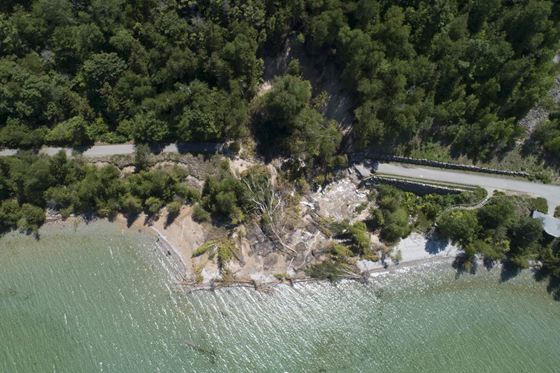
Erosion severely damaged the popular Little Traverse Wheelway between Charlevoix and Petoskey and a study indicated restoration could cost millions.

Little Traverse Wheelway between Charlevoix and Petoskey

Erosion on Little Traverse Wheelway between Charlevoix and Petoskey.

Matt Chynoweth, MDOT’s chief bridge engineer and director of the department’s Bureau of Bridges and Structures, joins the podcast to talk about the perils high water presents for bridge supports, and MDOT’s intensive inspection procedures.

Scour

Chynoweth explains that the issue is not so much the annual precipitation totals but more about the increased frequency of extreme events. Given the median age of bridges in the state, he details how MDOT inspectors monitor bridges and structures around the state during these more frequent and higher intensity flooding events.

He also explains the concept of bridge scour and why the sustained high water is of particular concern.

NotMISpecies: New webinar series

NotMISpecies: New webinar series

 
EGLE Main GovD banner
FOR IMMEDIATE RELEASE
Sept. 23, 2020
Contact: Joanne Foreman, 517-284-5814

Editor’s note: This news release was issued earlier by the Department of Natural Resources.

NotMISpecies: New webinar series explores Michigan’s efforts to prevent and respond
to invasive species

Many invasive species are already in Michigan, causing harm to the state’s waters, woods and open spaces – and others could be on the way. What is being done to respond to these threats?

NotMISpecies logoNotMISpecies, a new, monthly webinar series from Michigan’s Invasive Species Program, will take an in-depth look at efforts across the state to prevent the introduction and spread of invasive plants, insects, animals and diseases.

Michigan’s Invasive Species Program, a collaborative effort of the departments of Natural Resources; Environment, Great Lakes, and Energy; and Agriculture and Rural Development, coordinates and supports invasive species initiatives across the state and provides support through the Michigan Invasive Species Grant Program.

CarpThose concerned about the impacts of invasive species or interested in the techniques used to prevent, detect and control them are encouraged to take advantage of this free webinar series. Topics include species-specific actions such as those underway to control red swamp crayfish; innovations in research and technology, like those being used to respond to grass carp in Lake Erie; and programs designed to help communities prevent and manage harmful invasive species.

“We’re excited to be able to showcase the work that’s happening behind the scenes, including the collaboration and resource sharing between agencies, researchers, businesses and local communities,” said Joanne Foreman, DNR invasive species communications coordinator. “There are no simple, ready-made solutions for keeping invasive species out of the state or eliminating those that are here, but Michigan remains at the forefront of many national and bi-national efforts to find sound solutions.”

CrayfishEach hour-long webinar will introduce audiences to the people on the front lines of invasive species prevention and response. They will share what they are learning about how species behave outside their native environments and how this knowledge helps to prevent or control infestations. A question and answer period will follow each presentation.

The series kicks off at 9 a.m. Thursday, Oct. 22 with a look at how science and technology are fueling a multi-jurisdictional response to grass carp in Lake Erie.

“Delicious but Dangerous,” at 9 a.m. Nov. 17, examines the hazards caused by thousands of burrowing invasive red swamp crayfish and how this species’ habits complicate removal efforts.

The series takes a break for the holidays and returns Jan. 22, 2021, with “Hemlock Rescue,” a look at the labor-intensive effort to inventory and treat eastern hemlock trees infested with hemlock woolly adelgid. Topics for future sessions will be added throughout the year.

Each webinar will be presented live, with recordings available for viewing approximately one week after the live event. For more information on each NotMISpecies webinar, including registration links, visit Michigan.gov/EGLEEvents.

Michigan’s Invasive Species Program is cooperatively implemented by the Department of Environment, Great Lakes, and Energy, the Department of Natural Resources, and the Department of Agriculture and Rural Development.


/Note to editors: Accompanying photos are available below for download. Caption information follows.

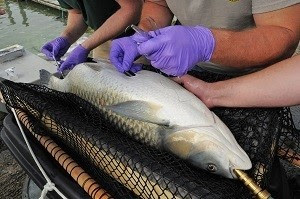
Insertion: An acoustic transmitter is inserted into the stomach cavity of a grass carp and blood is drawn to determining the carp’s reproductive status.

Tree injection: A certified pesticide applicator prepares to inject an infested hemlock tree with pesticide.

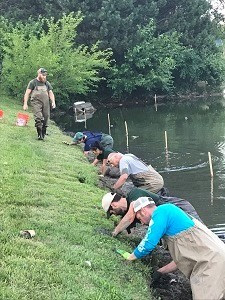
Crayfish: A team from DNR, EGLE and Michigan State University looks for red swamp crayfish in burrows./

I-75 lane shift requires northbound single-lane closures

MDOT E-mail

MDOT on facebook MDOT on Twitter MDOT on YouTube Mi Drive - Know before you go. MDOT on Instagram Sign up for E-mails form MDOT
 

FOR IMMEDIATE RELEASE                                       THURSDAY, SEPTEMBER 24, 2020


CONTACT: Rob Morosi, MDOT Office of Communications, MorosiR@Michigan.gov


I-75 lane shift requires northbound single-lane

closures in Oakland County


Fast facts:

– Progress continues on segment 2 of the I-75 modernization project in Oakland County.          

– Beginning at 9 a.m. Friday, Sept. 25, one lane of northbound I-75 will be closed during non-peak travel times to allow crews to remove temporary barriers.

– By early October, northbound I-75 traffic will be using the left and center lanes from 13 Mile Road to Coolidge Highway.


September 24, 2020 — Contract crews building segment 2 of the I-75 modernization project in Oakland County will be removing temporary barrier wall on the northbound side of the freeway. This work will result in a moving lane closure, leaving one lane open in sections from 13 Mile Road to Coolidge Highway beginning at 9 a.m. and ending by 3 p.m. weekdays, and 7 a.m. – 7 p.m. Saturdays and Sundays. By early October, it is expected that two lanes of northbound I-75 will be open via the left and center lanes throughout the limits of segment 2.


The first moving lane closure will begin at 9 a.m. on Friday, Sept. 25, to allow crews to safely replace the temporary concrete barrier with barrels that will remain in place this fall during work to open all lanes and ramps. Access to northbound I-75 entrance and exit ramps will be maintained once the lanes are shifted.


Both directions of I-75 will have two lanes open between 8 Mile and Adams roads until late November.                               

Follow I-75 modernization progress on the web at www.Modernize75.com, or follow on Facebook at www.facebook.com/Modernize75 or on Twitter at www.twitter.com/Modernize75.


Coulter: Balanced Three-Year Budget

Coulter: Balanced Three-Year Budget

Coulter: Balanced Three-Year Budget “Invests In Key Priorities”

Pontiac, Michigan – The Oakland County Board of Commissioners approved County Executive David Coulter’s recommended balanced budget for fiscal years 2021-2023 this evening in a bipartisan vote. The county executive released the following statement:

“I am pleased with the bipartisan vote on our balanced, three-year budget. This budget is fiscally responsible, invests in key priorities, and preserves the county’s fund balance,” Coulter said. “The county is aggressively using federal CARES Act funding to manage the pandemic and recover our economy. It must be our top priority to protect the health and economic well-being of our residents and businesses. I am disappointed with those Republicans who have abandoned the Oakland County tradition of governing cooperatively through the budget.”

The county executive’s recommended budget reflects his commitment to strengthening fiscal discipline practices, maintaining a balanced budget, and priority areas that require investment and leadership by the county. County administration and the board of commissioners also worked together to ensure that the COVID-19 pandemic would have a minimal impact on the fiscal health of the county so it not only can provide an effective response to the pandemic but also continue to provide county residents and businesses with quality services. Coulter’s priorities include expanding and protecting health care with the Oakland Health 360 initiative; increasing workforce opportunities and implementing Oakland80; creating a new economic development strategic plan; protecting water and environment; embracing diversity, equity and inclusion; and establishing a public safety fund.

The general fund/general purpose budget is balanced at $457,447,452 for fiscal 2021, $469,264,431 for fiscal 2022; and $473,064,659 for fiscal 2023. The total budget for all fund amounts is $908,837,356 for fiscal 2021, $916,254,528 for fiscal 2022, and $922,115,865 for fiscal 2023. For more information about the budget, go to OakGov.com/fiscal.

Whitmer: 2021 budget focused on education and healthy families 

Whitmer: 2021 budget focused on education and healthy families 

Governor Gretchen Whitmer Banner - headshot with bridge graphic


FOR IMMEDIATE RELEASE

September 23, 2020

Contact:

Tiffany Brown, Press@michigan.gov

Kurt Weiss, 517-243-3139, Weissk1@michigan.gov


Gov. Gretchen Whitmer: 2021 budget remains focused on education and healthy families

Governor set to sign budget in coming days


LANSING, Mich. — Gov. Gretchen Whitmer will soon sign her second budget into law amidst a global pandemic that created one of the most challenging and unique budget cycles in Michigan history. It’s a budget that will deliver on many of her signature priorities, including the Michigan Reconnect program for a tuition-free pathway for adults, funding for the Healthy Moms, Healthy Babies program to ensure women have the care they need for a healthy pregnancy, and expanding access to childcare for families.


“When we started the budget process in early February, nobody had an idea of how challenging the coming months would be, no knowledge of the devasting impacts that COVID-19 would have, including the impact to our state budget,” said Gov. Whitmer. “But Michigan is strong, and by working collaboratively with our partners in the Legislature we now have a budget I will soon be signing, a budget that funds shared priorities that will move Michigan forward.”


The budget will protect schools, colleges, universities, and local governments from any state funding reductions below their original 2020 funding levels. The budget will also include new education investments focused on providing students, teachers, and adults across Michigan with needed resources, including:

  • $161 million in flexible per pupil spending to help districts address the increased costs of educating students in the midst of a pandemic.
  • $30 million for the Michigan Reconnect program to provide a tuition-free pathway for adults looking to upskill and earn a postsecondary certificate or associate degree. Implementing Reconnect will help close the skills gap and move the state closer to reaching 60% postsecondary educational attainment by 2030.
  • $5.6 million for mental health counselors to assist children in schools across Michigan with mental health needs.
  • $5 million in incentives to attract and retain first-year teachers in districts across Michigan.
  • An increase of $3 million to continue to fund literacy coaches and expand resources to improve training for other educators in best practices of literacy learning.
  • $2 million in additional supports to assist vulnerable students who are learning remotely, including special education students, students who are chronically absent, and children in need of childcare while their parents are working.
  • $2 million for Detroit Public TV to foster early childhood initiatives to enhance learning and early education.
  • Implementation of previously announced teacher hazard payments of up to $500 per teacher, along with the addition of payments of up to $250 for school support staff.
  • $1 million for school meal debt forgiveness.


“This has been a budget cycle unlike any other, but in the end we have been able to work collaboratively and put together a budget that reflects many of the Governor’s key priorities and values,” said State Budget Director Chris Kolb. “I am pleased that we will soon have a budget in place for the new fiscal year which begins October 1, but I still have concerns about projected revenues loses for Fiscal Year 2022 and we still need Congress to provide states with new federal funding.”


When it comes to budget priorities for the health of families across Michigan, the budget will include:

  • $12.6 million for the Healthy Moms, Healthy Babies program to ensure women are given the care they need to have a healthy pregnancy and to expand support for interventions that are proven to improve outcomes.
  • $26 million to expand access to childcare for families by increasing the income limit from 130% to 150% of the federal poverty level, expanding childcare services to nearly 6,000 children.
  • $135 million to extend the $2.00/hour wage increase for direct care workers assisting the elderly and other vulnerable individuals during this especially difficult time.
  • $20 million in additional support for nursing homes for COVID-19-related cost increases.
  • $20 million to support the state’s psychiatric hospitals so that Michiganders in need of mental health services have improved access and care.
  • $2 million for the Lead Poisoning Prevention Fund to protect Michigan families from lead in their homes.
  • $10 million to implement policies to keep more children with families rather than entering congregate care.
  • $2.5 million to provide first responders with the mental health services they need, including treatment for post-traumatic stress disorder.


“The coronavirus pandemic has exacerbated the challenges and disparities that have prevented far too many Michiganders from realizing their fullest potential,” said Lt. Governor Gilchrist. “The budget that we’ve put forth is an opportunity to take a proactive, deliberate approach toward investing in the health, education, and economic well-being of those who need it the most. This budget sets a foundation to make expand access to opportunity for all of the people who call this state home.”


The 2021 budget will include critical funding for programs within the Department of Labor and Economic Development and the Michigan Economic Development Corporation, including $100 million for business attraction efforts.  A total of $28.7 million will be provided for the Going Pro program to support job training grants to businesses to support training for current and new employees in high-demand, skilled trades industries. In addition, new funding of $3 million is provided for a statewide pre-apprenticeship program with the goal of developing qualified candidates for building trades apprenticeships in the construction industry. Funding for the popular Pure Michigan campaign will be set at $15 million.


The budget will also provide funding for critical initiatives directed at the environment, including $5 million that will draw down significantly more in federal funding for the Conservation Reserve Enhancement Program to reduce runoff of contaminants into Lake Erie and other watersheds. The budget will also add $1 million to Michigan Saves to help Michigan families make energy efficiency improvements to their homes.


A total of $4.2 million will be provided to begin implementing the pre-trial incarceration task force recommendation for crisis intervention and de-escalation training through the Michigan Coalition on Law Enforcement Standards, helping ensure law enforcement officers have the training and education they need to intervene successfully. The budget will include $7 million to increase the number of troopers within the Michigan State Police.


The budget will also include $14.3 million in broadband funding to help expand Internet access across the state which is more important than ever to Michiganders relying on telework, telehealth, and virtual learning.

Governor Proclaims This Week as Small Business Week

Governor Proclaims This Week as Small Business Week

Governor Gretchen Whitmer Banner - headshot with bridge graphic

FOR IMMEDIATE RELEASE 

September 22, 2020

Contact: Press@michigan.gov


Governor Whitmer Proclaims This Week as Small Business Week in Michigan 

The governor calls on the president and Mitch McConnell to pass a COVID-19 recovery package to help Michigan’s small business


LANSING, Mich. — Today, Governor Whitmer proclaimed September 20 – September 26, 2020 as Michigan Small Business Week to recognize the thousands of small business across the state that keep Michigan’s economy strong and our communities united.


“The COVID-19 pandemic has hurt small business owners everywhere who have spent their lives building their businesses. While we have been able to secure small business loans for people across Michigan, there is still more work to do to ensure they have the support they need to get through this pandemic. We need the president and Mitch McConnell to work across the aisle on a bipartisan recovery package that includes support for families and small business owners,” said Governor Whitmer. “When our local businesses thrive so do our communities, families, schools, and economy. I hope this week will serve as a reminder of the positive impact small businesses have on our state. I encourage us all to do our part by shopping local now and throughout the year.


In Michigan, small businesses comprise over 98% of Michigan businesses and employ half of Michigan workers. Additionally, for every $100 spent at a local business, roughly $68 stays in the local economy, allowing both business and job growth.


Throughout the COVID-19 pandemic, Governor Whitmer and the Michigan Economic Development Corporation (MEDC) have worked together to leverage federal  CARES Act funding to provide economic support to entrepreneurs, workers and communities in all 83 counties through the Michigan Small Business Restart Grant program ($100 million) and Michigan Agricultural Safety Grant program ($15 million). As part of the Michigan Small Business Restart Grant we have ensured that at least 30% of these funds will support women-, minority- or veteran-owned businesses around the state


“By collaborating with local partners and our partner agencies across state government, we have been able to deliver vital financial resources to small businesses across Michigan to create a path for economic recovery here in our state,” said Mark A. Burton, CEO of the MEDC. “We will continue to work closely with our small business community to ensure they have the opportunity to not only survive, but thrive, in Michigan long term.”


Since March, MEDC launched 19 COVID-19 response programs, that are anticipated to support more than 10,000 businesses throughout the state by the end of the year, while retaining 21,000 jobs. Additionally, 42% of support has gone to businesses in historically disadvantaged communities. Learn more at michiganbusiness.org/covid19response.