nohaz, Saturday, July 23, 2022

nohaz, Saturday, July 23, 2022

NoHaz Collection EventDon't Trash Your Hazardous Waste Bring it to a NoHaz Collection Event Near You.

Register Today for the
Next Collection Event

Saturday, July 23, 2022  |  8:00 a.m. to 2:00 p.m.

Kensington Church  |  4640 S, Lapeer Road, Orion Township
Register Today at: NoHaz.EventBrite.com


Poster Contest Third Place Winner

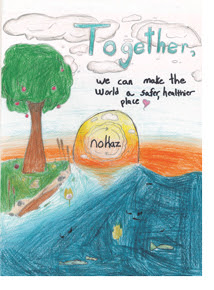
Together, we can make the world a safer, healthier place. That’s the message of Layla Hall, a fourth grader at Harvey Swanson Elementary School and third place winner of the 2022 NoHaz Poster Contest.  Layla uses her creativity to remind us how we can help protect our world by properly disposing of household hazardous waste (HHW). Do your part to make our planet a safer place for future generations by bringing your HHW to a NoHaz Collection Event near you.


To help accelerate the drop-off process:

  • Pre-register and pay applicable fees at NoHaz.com (registration opens about three weeks prior to each collection event)
  • Bring household hazardous waste (HHW) only; no business, institution or contractor waste
  • Separate HHW in your vehicle into three types:
    1. Paint   2. Electronics   3. All other HHW*
  • Clearly separate HHW from other items in your vehicle
  • Bring acceptable HHW** only; liquids must be in leakproof five-gallon containers or smaller
  • Present your driver’s license or other proof of residency and your registration ticket (either printed or digitally)
  • Remain in your vehicle
  • Masks are encouraged when interacting with volunteers

*Chemicals, motor oil, fertilizers, batteries, syringes, etc.
**For a more comprehensive list of acceptable materials, as well as member communities and applicable fees, visit: NoHaz.com

Thank you for caring about the environment.
We appreciate your participation!


Questions? Contact wrmd@oakgov.com


This email was sent to ilocke@orionontv.org using GovDelivery Communications Cloud on behalf of: Oakland County, Michigan · 1200 North Telegraph Road · Pontiac, MI 48341 · 1-888-350-0900 · Unsubscribe GovDelivery logo
MI Environment features upcoming Great Lakes beach walks

MI Environment features upcoming Great Lakes beach walks

EGLE Main GovD banner


MI Environment features upcoming Great Lakes beach walks

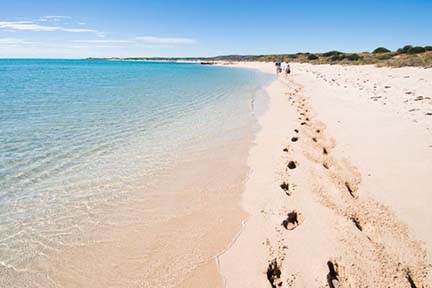
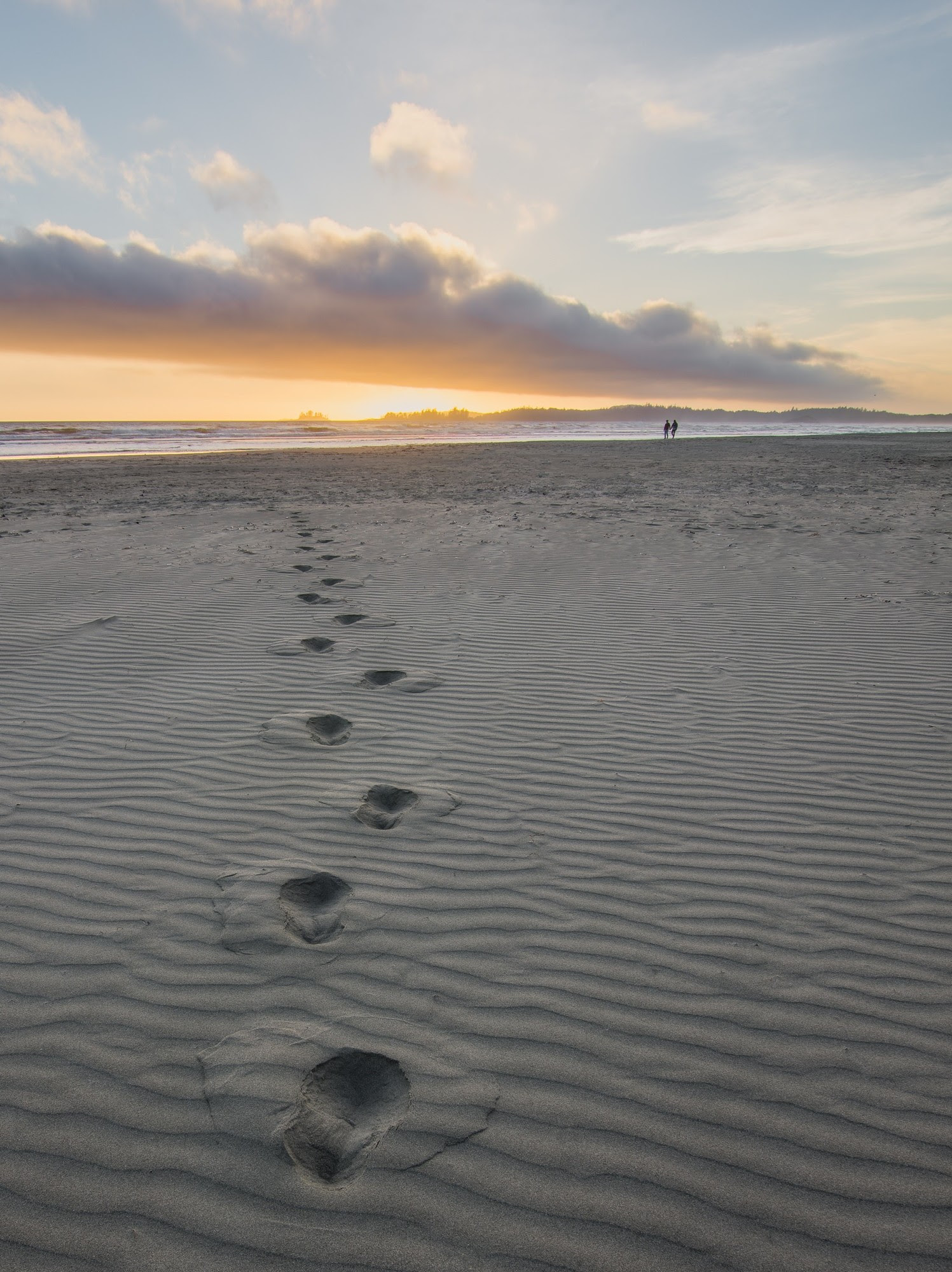
Journalists: We thought you might be interested in today’s MI Environment story that highlights Footprints in the sand with people in the distance walking along the shoreline.the eight upcoming Great Lakes beach walks in Michigan, hosted by the Michigan Department of Environment, Great Lakes, and Energy and the U.S. Army Corps of Engineers. 

The program’s goal is to increase coastal communities’ resilience — the ability to understand and use available resources to respond to, withstand, and recover from adverse situations.

The walks also will provide an opportunity to learn about the Michigan Coastal Management Program’s Pathway to Resilience and information on grant funding.

EGLE partners with Army Corps of Engineers for educational beach walks

Do you subscribe to MI Environment? Subscribe here to receive regular updates when new articles are posted and follow us on Twitter, LinkedIn, and Facebook.

MDARD: prevent spread of invasive pests

MDARD: prevent spread of invasive pests

bob new header
Release Date: June 6, 2022
Program contact: Robin Rosenbaum, 517-490-1301
Media contact: Jennifer Holton, 517-284-5724

MDARD asks public to help prevent spread of invasive pests, protect plant health during national gardening week

LANSING – Summer weather has finally made its appearance, and many Michiganders are stocking up on new plants for their garden or landscape. With people headed to their local greenhouse or nursery, the Michigan Department of Agriculture and Rural Development (MDARD) is asking the public to help be on the lookout for invasive plants, pests, and diseases.

When selecting plants and flowers, homeowners and gardeners should keep in mind the impact those plants may have on other plants cultivated around their landscape or garden.  Invasive, non-native plants have few or no natural predators in their non-native environments and can quickly spread—disrupting ecosystems by pushing out native species and reducing biological diversity.

Invasive plants are not the only problem. Many plants and flowers, including those native to Michigan, can be hosts to invasive plant pests and diseases. These invasives can hitch a ride on plants and be transported to homeowners’ yards and then quickly spread to the surrounding area. Warmer weather can magnify their impact, increasing the level of plant pest infestations and disease infections, allowing pests to produce more generations each year, and extending the suitable habitat for plant pests.

“People can unintentionally move pests around the state,” said Robin Rosenbaum, Plant Health Section Manager of MDARD’s Pesticide and Plant Pest Management Division. “Many of the pests we are most concerned about can hide in or on untreated firewood, soil, seeds, and plants. Some pests such as spotted lanternfly can lay eggs on conveyances in an infested region and then be transported into Michigan.”

To help combat the spread of invasives pests and diseases, MDARD has implemented several plant pest quarantines. These legal documents issued by the department limit the movement of specific plant material within, into or out of the state of Michigan. The United States Department of Agriculture and other state’s quarantines help combat the movement of invasives such as spongy moth (formerly known as gypsy moth), Asian longhorned beetle and others. MDARD’s plant heath inspectors work throughout the summer months inspecting plant material and ensuring compliance with state and federal quarantines.

“Quarantines are a useful tool to control the spread of invasives, but we need help from the public to stop the spread of pests we’re most concerned about,” added Rosenbaum.

Michiganders interested in buying plant material online should also be aware that many websites and social media groups lack adequate information about state and federal quarantines and concerns about pest movement.is. Buying locally from an MDARD-licensed nursery is a great way to minimize risk as these firms are inspected annually and are aware of Michigan-specific laws, regulations, and pests.

Here are some simple steps you should take to help limit the spread of invasive species:

  • Visit the Michigan Invasive Species website to learn how to spot invasive pests posing a threat to plants and agriculture in your area.
  • Don’t move untreated firewood. Buy certified, heat-treated firewood or buy wood where you burn it and burn it all before you go home to avoid unintentionally spreading species that hide inside untreated firewood.
  • When returning from international travel, declare food, plants and other agricultural items to U.S. Customs and Border Protection to ensure these items are pest-free.
  • Make sure seeds and plants you buy online are not invasive to your region.
  • Report signs of invasive plant pests and diseases to MDARD through the Michigan Invasive Species website or at 800-292-3939.

For additional information about MDARD’s Pesticide and Plant Pest Management Division, visit www.michigan.gov/mdard/plant-pest.

Great Lakes and Fresh Water Week, June 4-12

Great Lakes and Fresh Water Week, June 4-12

EGLE Main GovD banner
FOR IMMEDIATE RELEASE
June 2, 2022
Jeff Johnston, public information officer, JohnstonJ14@Michigan.gov, 517-231-9304

Great Lakes and Fresh Water Week, June 4-12, celebrates Michigan’s ‘water champions’

Commemorations include water use webinar, grant announcements, free fishing weekend

The Great Lakes and Michigan’s abundant freshwater resources have tremendous value to Michiganders. Coming up June 4-12, the annual celebration of Great Lakes and Fresh Water Week focuses on becoming “water champions” – inspiring people to champion the health of this vital ecosystem and to enjoy, appreciate, and safeguard it for current and future generations.

Michigan is home to more than 3,200 miles of coastline along four Great Lakes, 11,000 inland lakes and ponds, 36,000 miles of rivers and streams, and enough groundwater to fill Lake Michigan over again. More than 30 million people in the U.S. and Canada rely on the Great Lakes for their drinking water.

“Michiganders share a special bond as stewards of the world’s largest freshwater system,” said Gov. Gretchen Whitmer, who dedicated the week in a proclamation. “Great Lakes and Fresh Water Week reminds us that this irreplaceable resource powers our lives, our livelihoods, and the ecosystems around us. Being a Michigan water champion means understanding our responsibility to work together to find solutions and overcome challenges such as aging infrastructure, invasive species, extreme weather, and climate change.”

This year’s Great Lakes and Fresh Water Week follows the April 21 release of the MI Healthy Climate Plan, a broad vision for Michigan’s prosperous clean energy future and economywide carbon neutrality by 2050. Gov. Whitmer commissioned the plan, which calls for protecting state land and water.

More recently, Michigan’s Department of Environment, Great Lakes, and Energy (EGLE) hosted a virtual Great Lakes Water Infrastructure Conference, May 10-11, focused on solutions to challenges faced by the Great Lakes region. Recorded sessions from the conference are available on the website.

These latest actions harken back to the MI Clean Water Plan released in 2020 and providing $500 million in funding to help local municipalities upgrade drinking water and wastewater infrastructure.

“By building a shared understanding of how water conservation, water infrastructure, energy, and climate are connected, we can strengthen our collective efforts and protect the health and sustainability of our water resources,” said EGLE Director Liesl Clark. “We want future generations to enjoy the same experiences we do in the Great Lakes State: swimming, boating, fishing, sightseeing, and more.”

EGLE and its Office of the Great Lakes (OGL) partner with the Michigan Department of Natural Resources (DNR), the Southeast Michigan Council of Governments (SEMCOG), and the MiSTEM Network at the Michigan Department of Labor and Economic Opportunity (LEO) to sponsor Great Lakes and Fresh Water Week.

“The celebration of Fresh Water Week takes on even more meaning this year, as we mark the 75th anniversary of the Michigan State Waterways Commission and all of the work done to make the state’s Great Lakes, rivers, and inland lakes more accessible for better boating adventures,” said DNR Director Dan Eichinger. “Michigan’s freshwater resources, in large part, define what it means to live in this state, and the DNR remains committed to protecting and managing these resources that provide the backdrop for amazing recreation experiences you won’t find anywhere else.”

SEMCOG Executive Director Amy O’Leary agreed.

“Southeast Michigan’s Great Lakes shoreline and our inland lakes and streams are among our most prized regional assets,” O’Leary said. “The health and sustainability of our waters are supported by an army of water champions, including our state and federal partners, the Great Lakes Water Authority, local governments, educators, gardeners, anglers, paddlers, nature lovers, nonprofit partners such as watershed organizations, and so many more. If you want to learn more about how to be a water champion in your Southeast Michigan community, visit miOneWater.org.”

There are many ways to participate in Great Lakes and Fresh Water Week:

  • Visit EGLE on Facebook for news and info from the department. A video June 6 by EGLE Director Liesl Clark will highlight Michigan water champions and the opportunity to share how you and those you know live out water champion principles.
  • Virtually attend a webinar titled “Water: We are the Champions,” part of SEMCOG’s One Water webinar series, at 1 p.m. Monday, June 6. Presenters from SEMCOG, EGLE, and the Great Lakes Water Authority will discuss what it means to be a water champion. Register on SEMCOG’s website or watch the presentation live on SEMCOG’s Facebook page.
  • Virtually attend an EGLE webinar titled “How Michigan’s Water Use Program Preserves and Manages our Water Resources” at 1 p.m. Tuesday, June 7, to learn why Michigan has water use regulations, how they work, and what they mean for the state’s residents, industries, and future generations. Register on EGLE’s website.
  • Tease your brain with daily Great Lakes trivia, posted to the DNR’s Mi Nature Facebook page and at EGLE’s Twitter feed June 6-10.
  • Fish for free June 11-12. On these two days, the DNR will waive the need for a fishing license, as well as off-road vehicle license, trail permit, and the Recreation Passport requirement for admission to state parks and boating access sites.
  • Settle in at the beach with a great summer read like the 2021 State of the Great Lakes report.
  • Enjoy the outdoors safely and sustainably by following tips for responsible recreation in and around Michigan waterways.
  • Teachers, explore the From Students to Stewards toolkit for place-based educational resources that will instill a desire to learn about water resources and protect our lakes and streams.
  • Public officials, study up on issues around drinking water infrastructure investments and resources available to your communities. Check the Michigan Municipal League Foundation’s MI Water Navigator website as a guide to navigating infrastructure funding opportunities.
  • Watch the Department of Labor and Economic Opportunity’s (LEO) MiSTEM Network website June 8 for the announcement of grant recipients from a combined $200,000 allocated by LEO and EGLE in February. The grants, a continuation of the 2020 From Students to Stewards Initiative and 2021 MiSTEM Transformative Playbook grants, will boost freshwater literacy programs and access to real-world STEM experiences for Michigan K-12 students.   

More details about the week are available on the OGL’s Stewarding the Great Lakes webpage, including links to local events, videos, educational resources on topics such as invasive species identification and proper disposal of old medications, and information on how to volunteer with the Michigan Clean Water Corps.

EGLE awards 23 grants to conduct stream cleanups

EGLE awards 23 grants to conduct stream cleanups

 
EGLE Main GovD banner
FOR IMMEDIATE RELEASE
May 17, 2022
Jeff Johnston, Public Information Officer, JohnstonJ14@Michigan.gov, 517-231-9304 Tamara Lipsey, Aquatic Biologist, LipseyT@Michigan.gov, 517-342-4372

EGLE awards 23 grants to conduct stream cleanups and monitoring

The Michigan Department of Environment, Great Lakes, and Energy (EGLE) today announced $108,228 in grants to 23 local governments and nonprofit organizations for stream cleanup and monitoring through the Michigan Clean Water Corps (MiCorps) Program. These annual grants help foster local stewardship and a sense of community while providing valuable data used to protect Michigan’s waters.

The MiCorps Volunteer Stream Cleanup Program provides grants to local governments to clean and improve Michigan waterways. Local governments often partner with nonprofits or other volunteer organizations for the cleanups, which include removal of trash and other manmade debris from streams and stream banks.

The cleanup grant program began in 1998 and is funded by fees from the sale of Michigan’s specialty water quality protection license plates that are available from the Secretary of State’s Office.

The local governments selected to receive cleanup funding in 2022 are:

  • City of Ann Arbor, $4,210.
  • City of Battle Creek, $3,839.
  • Benzie County Conservation District, $750.
  • Berrien County Conservation District, $2,051.
  • City of Dexter, $979.
  • Grand Traverse County Conservation District, $2,550.
  • Muskegon Conservation District, $2,888.
  • Newaygo County Conservation District, $5,000.

The MiCorps Volunteer Stream Monitoring Program provides grants to enable local governments and nonprofit organizations to conduct volunteer-based water quality and stream habitat monitoring through benthic macroinvertebrate surveys and habitat assessments. Three types of monitoring grants are available: startup grants get organizations started with learning and planning, implementation grants fund the first two years of official monitoring, and maintenance grants help organizations that are already monitoring replace equipment and continue their program.

The organizations selected to receive funding in 2022 are:

Startup Grants

  • Antrim County Conservation District, $5,000.
  • Gogebic County Conservation District, $4,261.
  • Hillsdale County Conservation District, $4,703.

Implementation Grants

  • Lower Grand River Organization of Watersheds, $18,530.
  • Olivet College, $16,391.
  • West Michigan Environmental Action Council, $20,000.

Maintenance Grants

  • Alger County Conservation District, $1,958.
  • Clinton River Watershed Council, $2,000.
  • Friends of the Rouge, $2,000.
  • Grass River Natural Area, Inc., $1,127.
  • Kalamazoo Nature Center, $1,991.
  • Manistee County Conservation District, $2,000.
  • The Watershed Center Grand Traverse Bay, $2,000.
  • Tip of the Mitt Watershed Council, $2,000.
  • Yellow Dog Watershed Preserve, $2,000.

MiCorps is a network of volunteer water quality monitoring programs established by EGLE in 2004 to engage the public in collecting water quality data for use in water resources management and protection programs. MiCorps is administered for EGLE by Michigan State University Extension, in partnership with the Michigan Lakes and Streams Association and Huron River Watershed Council.

Questions about the grant award process should be directed to Dr. Paul Steen, Huron River Watershed Council, at 734-519-0449 or PSteen@HRWC.org; or Tamara Lipsey, Lake Michigan Unit, Surface Water Assessment Section, Water Resources Division, EGLE, at LipseyT@Michigan.gov or 517-342-4372.

###


EGLE COVID-19 RESPONSE: For details on EGLE’s work during the pandemic, visit this webpage. Follow state guidelines at Michigan.gov/Coronavirus.

EGLE application deadlines for electronics recycling grants

EGLE application deadlines for electronics recycling grants

 
EGLE Main GovD banner
FOR IMMEDIATE RELEASE
May 10, 2022
Steven Noble, Electronics Recycling Specialist, Nobles4@michigan.gov 517-449-6153
EGLE Media Office, EGLE-Assist@Michigan.gov, 517-284-9278

EGLE announces funding and application deadlines for electronics recycling grants

The Michigan Department of Environment, Great Lakes, and Energy (EGLE) announces $250,000 in available funding for Rural Electronics Grants. The deadline for grant applications is July 2, 2022.

This grant opportunity will support increased access to proper electronics recycling in the rural areas of the state. Grants can be used to support improvements to current collection facilities; support electronics recycling events leading up to the establishment of new permanent collection locations; support the collection, handling and proper recycling of consumer electronics; provide education to residents on the proper collection, handling and recycling of household batteries; and upgrade operations to provide increased efficiency at registered electronics recyclers.

The funding is made available through the Renew Michigan Fund. Eligible entities include cities, villages, townships, charter townships, counties, tribal governments, conservation districts, municipal solid waste or resource recovery authorities, non-profit organizations, health departments, colleges or universities, and regional planning agencies. For-profit Michigan-based registered electronics recyclers are eligible for operational improvement funds.

The maximum request amount per collection location and collection event grants is $20,000 per location. Other grants are available at lesser amounts. Applicants are encouraged to discuss their proposal with the Electronics Program staff in EGLE’s Materials Management Division prior to submittal. Funds are available on a first-come first-served basis.

To view the Request for Proposal and for more information about the EGLE recycling grants program, go to Michigan.gov/MIRecycles. Click on the Grants tab and scroll down to the electronics section.

Stay up to date on other EGLE news at Michigan.gov/MIEnvironment.

###


EGLE COVID-19 RESPONSE: For details on EGLE’s work during the pandemic, visit this webpage. Follow state guidelines at Michigan.gov/Coronavirus.