This winter, make your home a healthy nest

This winter, make your home a healthy nest

EGLE Main GovD banner
FOR IMMEDIATE RELEASE
Jan. 5, 2023
Jill A. Greenberg, EGLE public information officer, GreenbergJ@Michigan.gov, 517-897-4965
Lynn Sutfin, MDHHS spokesperson, SutfinL1@michigan.gov, 517-241-2112
Leslie E. Smith, III, Indoor Radon Specialist, Radon@Michigan.gov, 800-723-6642

Governor Gretchen Whitmer declares January Radon Action Month

This winter, make your home a healthy nest

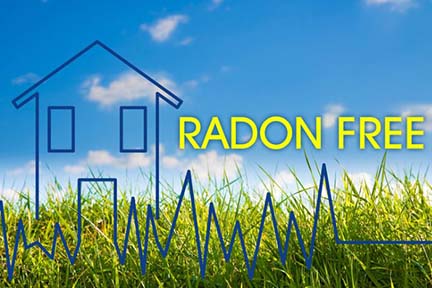
Governor Gretchen Whitmer has declared January 2023 as Radon Action Month in Michigan, and she encourages all Michigan residents to learn more about this environmental hazard and test their homes during the heating season.

You cannot see, smell, or taste radon, and there are no short-term side effects that could cause alarm or warn of its presence. However, long-term exposure to radon increases the risk of developing lung cancer, which accounts for more deaths in both men and women than any other form of cancer in the United States, according to the Michigan Department of Environment, Great Lakes, and Energy (EGLE), which aims to increase awareness of health risks associated with elevated indoor radon levels, promote home testing, and encourage citizens to take action to reduce exposure once elevated radon levels are found.

Behind smoking, radon is the second leading cause of lung cancer and is considered a leading environmental cause of cancer deaths in the United States.

The U.S. Environmental Protection Agency (USEPA) estimates that radon is responsible for about 20,000 lung cancer deaths in the United States each year. The risk of lung cancer from radon exposure is higher for people who smoke than for people who do not smoke.  However, the USEPA estimates that more than 10% of radon-related cancer deaths occur among people who have never smoked cigarettes.

According to the Michigan Department of Health and Human Services (MDHHS), lung cancer is the leading cause of cancer deaths in Michigan. Male residents and Native American residents have the highest rates of lung cancer in the state. Reducing exposure to cigarette smoke and radon is proven to reduce the risk for lung cancer.

Radon testing has increased in importance as many Michiganders work from home. Testing is easy, inexpensive, and the only way to determine if a radon problem exists. Residents are encouraged to test for radon every two to five years. If a radon mitigation system was previously installed in the home, residents are encouraged to test every two years to make sure radon levels remain in the acceptable range.

One in every four Michigan homes is expected to have radon levels exceeding the federal action level of 4.0 picocuries per liter. Elevated radon levels have been found in all 83 Michigan counties. Radon poses a serious threat to our community’s health, but high radon concentrations are also easily fixed.

For more information about radon testing and other information including resources for homeowners, builders, real estate agents, teachers, and health care providers, go to Michigan.gov/Radon or call EGLE’s Indoor Radon hotline at 800-723-6642 (800-RADONGAS). For more information on lung cancer prevention strategies, please visit Michigan.gov/Cancer.

To stay up to date on other EGLE news, follow us at Michigan.gov/MIEnvironment.

Funding to redevelop contaminated sites in metro Detroit

Funding to redevelop contaminated sites in metro Detroit

EGLE Main GovD banner
FOR IMMEDIATE RELEASE
Jan. 4, 2023
Jill A. Greenberg, EGLE spokesperson, GreenbergJ@Michigan.gov, 517-897-4965
EGLE Media Office, EGLE-assist@Michigan.gov, 517-284-9278

$2.9 million in EGLE brownfield funding to help redevelop contaminated sites in metro Detroit

The Michigan Department of Environment, Great Lakes, and Energy (EGLE) has awarded $2.2 million in brownfield grants and loans and approved $730,000 in brownfield tax increment financing for redevelopment of three contaminated properties in metro Detroit. Overall, in 2022 EGLE provided $20.7 million in brownfield funding to 67 projects statewide.

Plans for the projects include preservation of two historic buildings and the addition of new commercial establishments at the former Eloise Psychiatric Hospital in Westland; a new multi-tenant affordable housing apartment complex in Ferndale; and a redevelopment that will house commercial, office and residential space in Northville.

More than half of EGLE’s budget each year flows into Michigan communities through grants, loans and other spending that supports local projects, protects public health and the environment, ultimately creating economic growth and jobs for Michigan workers. Redevelopment of brownfields – vacant or abandoned properties with known or suspected contamination – increases property values both on the revitalized site and on other nearby properties.

EGLE’s Remediation and Redevelopment Division provides financial and technical assistance including grants, loans, tax increment financing and free site assessments to facilitate the redevelopment of brownfield properties.

Former Eloise Psychiatric Hospital in Westland

The city of Westland was awarded a $695,000 EGLE brownfield grant to address existing contamination at the former Eloise Psychiatric Hospital and ensure the site’s safe reuse. Of this funding, $225,000 comes from the 2023 brownfield grant budget. Westland has partnered with 30712 Michigan Avenue LLC to redevelop the hospital as part of a multi-phase project.

The completed project will include removal of several blighted structures, preservation of two historic structures and the addition of new commercial establishments, including a haunted attraction, hotel and restaurant/bar.

“We are very grateful to EGLE, the city of Westland and the State of Michigan for this grant. It will assist us in the redevelopment of this challenging project.” John G. Hambrick, managing member of 30712 Michigan Avenue LLC.

Petroleum-related compounds in soil and groundwater, likely attributable to former leaking underground storage tanks has complicated the redevelopment to date. The EGLE grant will help mitigate potential risks related to the observed contamination by facilitating the excavation, transport and disposal of contaminated soil. The soil removal will serve to prevent subsurface contamination from impacting the site’s historic structures.

The $4 million redevelopment project is expected to create 50-100 full-time jobs, 75-100 seasonal jobs and a $2.5 million increase in the property’s taxable value.

(EGLE site contact: Abbie Hanson, Brownfield Coordinator, HansonA2@Michigan.gov, 906-202-1285)

LGBTQ+ elder housing development in Ferndale

Full Circle Communities will demolish existing vacant structures and construct The Shephard House, a new four-story multi-tenant, affordable housing apartment complex. This project is made possible in part through a $700,000 brownfield grant EGLE awarded to the city of Ferndale to address existing environmental concerns.

The project strives to create an affirmative and inclusive environment for Lesbian, Gay, Bisexual, Transgender, Queer or Questioning (LGBTQ+) elders that would allow adults to age in place within Ferndale.

The development will contain 53 residential apartments (mostly one bedroom and several two bedroom), with a barrier-free design, energy efficient appliances, a community room, and pocket park on East 9 Mile Road in Ferndale, Michigan. The project is expected to be completed in the spring of 2024.

Ferndale will use the grant to remove contaminated soil to alleviate environmental risks attributed to past uses of the property. Soil and groundwater were believed to be contaminated with volatiles and metals as a result of the historic uses of the property including auto repair, machine sales and metal fabrication.

The building is anticipated to be National Green Building Standard (NGBS) certified.

The city is providing tax incentives in the form of payment in lieu of taxes to the developer to incentivize the redevelopment, which provides the project an estimated $3.5 million in savings over 40 years and the Ferndale Housing Commission has committed to provide eight Section 8 project-based vouchers for the project.

(EGLE site contact: Michelle Bakun, Brownfield Coordinator, BakunM@Michigan.gov, 586-233-3408)

456 Cady Street in Northville

The development team at 456 Cady LLC will build a new mixed-use residential and commercial development on a former industrial property at the eastern gateway to the city of Northville.  This work is made possible through an $800,000 brownfield redevelopment grant presented by EGLE to the city of Northville to assist with addressing onsite environmental contamination.

The redevelopment will include demolishing existing structures and building a new three-story structure that will house commercial, office and residential apartment spaces. The 456 Cady Street development includes an investment of $25 million and is estimated to create 30 new full-time jobs upon completion of the development.

Northville will use the EGLE grant to address the site’s environmental contamination, including excavation and disposal of impacted soils onsite, and installation of barrier systems to prevent exposure to any residual contamination.

In addition to the grant, EGLE has also approved just over $730,000 in brownfield tax increment financing for environmental costs not covered under the grant According to the assessment data collected by the developer and their consultants, soil and groundwater were likely contaminated by the sites historic industrial operations which included a foundry, machine shops and a mill pond associated with an adjacent industrial site. Impacted fill soils were also found throughout the property.

(EGLE site contact: Holden Branch, EGLE Brownfield Coordinator, BranchH1@Michigan.gov, 517-331-0993)

Funding to redevelop contaminated sites in metro Detroit

$1.73 million in EGLE brownfield funding

 
EGLE Main GovD banner
FOR IMMEDIATE RELEASE
Nov. 7, 2022
Jill A. Greenberg, EGLE spokesperson, GreenbergJ@Michigan.gov, 517-897-4965
EGLE Media Office, EGLE-assist@Michigan.gov, 517-284-9278

$1.73 million in EGLE brownfield funding to help redevelop contaminated sites in West Michigan

The Michigan Department of Environment, Great Lakes, and Energy (EGLE) has awarded $1.73 million in brownfield grants for redevelopment of contaminated properties in West Michigan. Overall, in 2022 EGLE will provide $20.7 million in brownfield funding to 67 projects statewide.

The plans include a multi-phased mixed-use development within the Boston Square Neighborhood of Grand Rapids, commercial condominiums in Grand Haven and a residential development in Grand Rapids.

More than half of EGLE’s budget each year flows into Michigan communities through grants, loans and other spending that supports local projects, protects public health and the environment, ultimately creating economic growth and jobs for Michigan workers. When brownfields – vacant or abandoned properties with known or suspected contamination – are redeveloped, property values increase both on the revitalized site awards and on other nearby properties.

EGLE’s Remediation and Redevelopment Division provides financial and technical assistance including grants, loans, tax increment financing and free site assessments to facilitate the redevelopment of brownfield properties.

Boston Square Neighborhood in Grand Rapids

The city of Grand Rapids Brownfield Redevelopment Authority plans to use a $1 million EGLE brownfield grant to address environmental contamination in the Boston Square Neighborhood in Grand Rapids, and make way for a multi-phase, mixed-use development that was collaboratively designed with neighbors. The community-focused development will begin with the construction of two mixed-use buildings, which will contain 102 mixed-income residential apartments and 16,000-square-feet of commercial space for local entrepreneurs. Future phases of the development are anticipated to include additional mixed-income residential apartments and townhomes, commercial spaces for local entrepreneurs, a community hub with early learning, an amphitheater, and a public park.

“The City of Grand Rapids Brownfield Redevelopment Authority is grateful to receive this grant from EGLE for the Boston Square Together project,” said Jonathan Klooster, executive director of the city of Grand Rapids Brownfield Redevelopment Authority. “EGLE has come alongside our existing community partnership with Boston Square Neighborhood Association, Oakdale Neighbors and Amplify GR and this award puts us one step closer to kicking off a significant part of the overall project.”

The contamination on the site is believed to be a remnant of historical property uses, which included gasoline service stations, various auto service, repair and sales operations, and numerous other commercial and light manufacturing operations. Contamination also resulted from both the placement of urban fill on the property and the former presence of railroad spurs.

The EGLE grant will pay for demolition, environmental investigation, disposal of contaminated soil, and installation of barriers and  ventilation systems beneath the future buildings to prevent potential exposure to residual contamination.

“Through our partnership with EGLE and the city of Grand Rapids, the Boston Square Together project can ensure the landscape is clean and healthy for current and future generations of neighbors,” shared Jon Ippel, executive director at Amplify GR. “We are appreciative of the collaboration that affirms neighbors’ desires to one day achieve environmental justice.”

The city of Grand Rapids has also approved several other brownfield incentives to help pay for other environmental costs, and site and public improvements. Once complete, the project is expected to create at least 24 part-time jobs and 24 full-time jobs, increase the City’s tax base, and revitalize over 10 acres of property in an area that has suffered decades of disinvestment.

(EGLE site contact: Andrea Ryswick, Brownfield Coordinator, RyswickA@Michigan.gov, 616-401-0827)

815 Verhoeks Street in Grand Haven

Three new, five-unit commercial condominiums will be constructed at 815 Verhoeks Street in Grand Haven after the site’s environmental contamination is addressed with assistance from a $300,000 EGLE brownfield grant. The redevelopment will encompass 16,000 square feet, providing space for local artisans, small incubator businesses and private storage.

The property historically operated as a gasoline filling station and bulk oil storage facility. The contamination at the property is the result of leaking fuel from storage tanks associated with a former site use.

EGLE awarded the Grand Haven Brownfield Redevelopment Authority (GHBRA) the grant to help facilitate the redevelopment and ensure the property is safe for reuse. The funding will be used for additional environmental investigation, disposal of contaminated soil, and installation of barriers and ventilation systems beneath the future buildings to prevent potential exposure to any residual contamination.

“For decades we have looked at a dilapidated building and have worried about groundwater contamination from this orphan site. Now we will see a redeveloped, prosperous property returning value to the community,” said Joy Gaasch, president of the GHBRA. “This would have been impossible without the support of the EGLE brownfield grant funding.”

Once complete, the project is expected to create five-to-seven full-time and 20 part-time jobs, increase the city’s tax base and encourage investment in the surrounding properties.

(EGLE site contact: Douglas Koop, Brownfield Coordinator,KoopD@Michigan.gov, 517-245-5054)

1603 Diamond Avenue NE in Grand Rapids

Metric Structures Inc. will construct a new multi-building residential development at 1603 Diamond Avenue NE and 1600 County Club Drive NE in Grand Rapids after environmental contamination is addressed through assistance from a $430,000 EGLE brownfield grant.

Historically, 1603 Diamond Avenue NE operated as a gas station, which resulted in soil and groundwater contamination.

In 2018, as part of a state-funded effort to remove the contaminated soil, approximately 2,655 tons of soil was removed. At that time, it was found that contamination likely extended beneath the onsite building, but it was unable to be removed without compromising the structure. New property ownership has resulted in a plan to revitalize the space into a vibrant new residential development. The development will require the demolition of the existing building, allowing for the removal of contaminated soils that were previously inaccessible.

EGLE awarded the grant to the city of Grand Rapids Economic Development Corporation to help facilitate the redevelopment and ensure the property is safe for reuse. The grant will be used for demolition of the building, environmental investigations, removal of contaminated soil, and installation of barriers and ventilation systems beneath the future buildings to prevent potential exposure to any residual contamination.

“The City of Grand Rapids Economic Development Corporation is grateful to EGLE for their investment in the cleanup efforts of this project,” said Jonathan Klooster, executive director for the city of Grand Rapids Economic Development Corporation. “Our partnership continues to make urban infill projects like this financially feasible and helps to incrementally increase housing supply in our community.”

Once complete, the $8 million project is expected to remove blight, create one new part-time job and increase the State Equalized Value of the property by approximately $5.8 million.

(EGLE site contact: Andrea Ryswick, Brownfield Coordinator, RyswickA@Michigan.gov, 616-401-0827)

EGLE celebrates 50 years of the Clean Water Act

EGLE celebrates 50 years of the Clean Water Act

EGLE Main GovD banner
FOR IMMEDIATE RELEASE
Sept. 30, 2022
Jeff Johnston, EGLE public information officer, JohnstonJ14@Michigan.gov, 517-231-9304

EGLE celebrates 50 years of the Clean Water Act

Webinar series marks a half century of landmark federal protection for waterways

CWA50-Logo-not-transparentThe federal Clean Water Act (CWA) took effect Oct. 18, 1972, regulating discharges of pollutants into U.S. waters and setting quality standards for surface waters. Now, 50 years later, Michigan is marking the anniversary of the landmark legislation with a three-week educational webinar series.

“This is a great time to reflect on a historic turning point for environmental protection,” said Liesl Clark, director of the Michigan Department of Environment, Great Lakes, and Energy (EGLE), the agency responsible for implementing  the CWA in Michigan.Clark said the Act has been especially impactful in Michigan, which sits in the center of the Great Lakes ecosystem containing one-fifth of the planet’s fresh surface water. “The resolve and foresight that produced the Clean Water Act also drives EGLE’s mission to protect Michigan’s environment and public health by managing our water and other natural resources.”

From 11 a.m.-noon Tuesday, Oct. 4, EGLE invites anyone with an interest in Michigan history and protecting the state’s water resources to virtually attend “50 Years of the Clean Water Act: An Overview of the Clean Water Act and its History and Significance in Michigan.” The program provides a historical perspective on the events that led to the Clean Water Act, an overview of important changes implemented, and what it all meant for Michigan. Online registration is open for the Oct. 4 webinar and the two others in the series:

About the Clean Water Act

The CWA is the primary federal statute regulating protection of the nation’s waters. It developed out of growing public concern in the 1960s and 1970s over substantial pollution entering the nation’s waterways. Over the past half century, it has transformed water quality in lakes, rivers, streams, and oceans across the United States.

The Act significantly amended a 1940s-era water pollution control law and established the basic framework for regulating the discharge of pollutants to lakes, rivers, streams, and wetlands; and for protecting water resources. Since the Act’s implementation and amendments over the years, Michigan and the U.S. have taken significant steps to meet its goals to restore and maintain the chemical, physical, and biological integrity of the nation’s waters.

Under the CWA, the U.S. Environmental Protection Agency (EPA) has implemented pollution control programs such as setting wastewater standards for industry and developed national water quality criteria recommendations for pollutants in surface waters. The CWA made it unlawful to discharge any pollutant from a point source into navigable waters without a permit.

In Michigan, water quality has significantly improved. The CWA requires the state to submit a biennial Integrated Report on the quality of its water resources to the EPA and U.S. Congress. The 2020 and 2022 reports are available online.

Learn more about the CWA and its use in protecting and restoring water resources nationwide in “50 Years of the Clean Water Act,” a multimedia presentation by the Association of Clean Water Administrators – an independent, nonpartisan, national organization of state, interstate, and territorial water program managers.

Keep up on EGLE events and activities surrounding the CWA’s 50th anniversary at michigan.gov/CWA50.

EGLE announces scrap tire cleanup grants

EGLE announces scrap tire cleanup grants

 
EGLE Main GovD banner
FOR IMMEDIATE RELEASE
Sept. 27, 2022
Jeff Johnston, EGLE public information officer, JohnstonJ14@michigan.gov, 517-231-9304
Kirsten Clemens, Scrap Tire Coordinator, EGLE-ScrapTire@Michigan.gov, 517-614-7431

EGLE announces scrap tire cleanup grants

Applications due by Oct. 28 to fund disposal or reuse

The Michigan Department of Environment, Great Lakes, and Energy (EGLE) is pleased to announce the availability of grants that support the cleanup and reuse of scrap tires in Michigan.

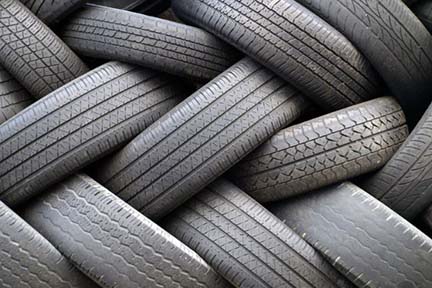
When scrap tires are dumped illegally in the environment, they become a fire hazard and a mosquito breeding ground. Through grants, scrap tires can be collected, processed, and used in paving products for roads, manufactured products, and energy production.

The Scrap Tire Cleanup Grant is available for property owners to clean up old or abandoned scrap tire piles. EGLE will give priority to collection sites where tires were accumulated prior to Jan. 1, 1991, as well as collection sites that pose an imminent threat to public health, safety, welfare, or the environment. Local units of government and nonprofit organizations are also eligible for funding for cleanup days and roadside cleanup grants.

Scrap Tire Market Development Grants are available to fund up to 50% of total eligible costs for projects that demonstrate new or increased uses of scrap tires in manufactured products or paving projects. EGLE will prioritize proposals based on the amount of scrap tire material being used in developing the project or product, demonstration of a new use of scrap tire material, and demonstration of a viable market for a proposed product.

To apply for a grant, visit the Scrap Tire website, and select the appropriate link under “Grant Information,” or contact EGLE at EGLE-ScrapTire@Michigan.gov.

EGLE will accept scrap tire grant applications with all supporting documentation received on or before 11:59 p.m. Eastern Daylight Time, Friday, Oct. 28, 2022.

Stay up to date on other EGLE news at Michigan.gov/MIEnvironment.

NoHaz Collection Event: There’s Still Time

NoHaz Collection Event: There’s Still Time

NoHaz Collection EventThere’s Still Time to Safely Dispose of Your Household Hazardous Waste
Register Today for the Last NoHaz Collection Event of 2022
Saturday, Sept 24, 2022 | 8:00 a.m. to 2:00 p.m.
Oakland County Service Center Campus | 1200 N. Telegraph Road, Pontiac
Follow signs once on campus

Register Today at: NoHaz.EventBrite.com

“I’ve attended a few NoHaz events for the past couple years, and I am always so impressed with how smoothly and efficiently the events run. It is so easy to participate and the volunteers/workers at the event are always incredibly nice and friendly. I really value and appreciate these events – thank you for hosting them!”

– NoHaz Collection Event Participant, Pontiac, April 2022

To help accelerate the drop-off process:
Pre-register and pay applicable fees at NoHaz.com (registration opens about three weeks prior to each collection event)
Bring household hazardous waste (HHW) only; no business, institution or contractor waste
Separate HHW in your vehicle into three types:
1. Paint 2. Electronics (unloaded last) 3. All other HHW*
Clearly separate HHW from other items in your vehicle
Bring acceptable HHW** only; liquids must be in leakproof five-gallon containers or smaller
Present your driver’s license or other proof of residency and your registration ticket (either printed or digitally)
Remain in your vehicle
Masks are encouraged when interacting with volunteers
*Chemicals, motor oil, fertilizers, batteries, syringes, etc.
**For a more comprehensive list of acceptable materials, as well as member communities and applicable fees, visit: NoHaz.com


Thank you for caring about the environment.
We appreciate your participation!

Questions? Contact wrmd@oakgov.com

NoHaz.com | Oakland County Economic Development | David CoulterAll ways, moving forward