Public Input for 2024 Development Fund Grant
|

|
 |
| For immediate release: May 13, 2024 Media contact: Jennifer Holton, 517-284-5724 Program contact: Andria McCubbin, 517-599-5748 MDARD Awards Nearly $55,000 in Grants for Horticulture Research in MichiganFunding invests in projects to support sustainable agriculture practices, support the growth of the state’s horticulture industry LANSING – Today, the Michigan Department of Agriculture (MDARD) announced the three recipients of the 2024 Horticulture Fund Grant designed to support Michigan’s approximately $1.4 billion nursery and ornamental horticulture industry. “These grants are another way MDARD is making investments in supporting sustainable agriculture, healthier communities, and cultivating resilience to our changing world,” said MDARD Director Dr. Tim Boring. “Research is a fundamental part to ensuring the long-term success of Michigan’s nursey and ornamental horticulture industry.” The department received seven proposals. Of those, MDARD awarded the three following projects, totaling a $54,953 investment:
Selected grant projects must fall under one of three categories:
The proposals were evaluated by the Horticulture Fund Advisory Committee through a competitive process. For additional information about MDARD’s Pesticide and Plant Pest Management Division, visit www.michigan.gov/mdard/plant- |
|
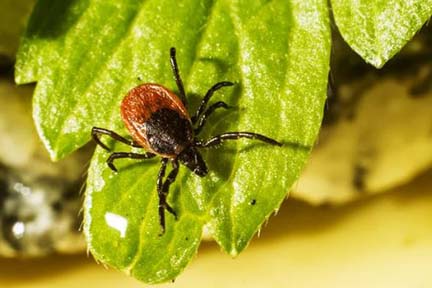
| For immediate release: May 6, 2024 Media contact: Jennifer Holton, 517-284-5724 Program contact: Emily Pochubay, 517-231-8723 MDARD offers guidance on creating tick-safe zones around the homeLANSING. – As warmer weather approaches, so does the increased risk of tick encounters, posing potential health threats to people and pets enjoying outdoor activities. That’s why the Michigan Department of Agriculture and Rural Development (MDARD) offers advice on how to create tick-safe zones around your home. There are over 20 known tick species in Michigan. Most often, they survive by feeding on wildlife. Several species of ticks are known to bite people and pets; and the insects may harbor dangerous bacteria, viruses, or parasites. Not all ticks carry diseases, but tick-related diseases (including Lyme disease) do occur in Michigan and can be serious or fatal if not properly diagnosed and treated. “Using insect repellents while outdoors and checking for ticks after being outdoors are common ways to prevent tick bites on people and pets, but other strategies can help reduce ticks around your homes without using pesticides,” said Steve Carlson, MDARD’s Pesticide and Plant Pest Management Division Director. “Integrated pest management, commonly referred to as IPM, uses multiple, systematic methods to minimize the impact of pests on people and property, while safeguarding the environment.” Here are some simple IPM techniques to help reduce tick populations around your home:
If you do choose to use pesticides, follow these safety tips:
If you are interested in hiring a pesticide applicator to manage pests for you, choose a firm licensed by MDARD. Licensed firms meet the necessary education and experience requirements and employ pesticide applicators who have passed MDARD’s proficiency examinations. Their training and experience will help prevent accidental pesticide misuse that could harm people, pets, livestock, and the environment. For additional information about ticks, including how to identify and remove a tick, visit the MDHHS website. Learn more about pesticide safety at Michigan.gov/MDARD. |

|
| For immediate release: April 18, 2024 Media contact: Chelsea Lewis-Parisio, 517-331-1151 Program contact: Ben Schram, 517-614-7362 MDARD’s Qualified Forest Program Helps Michiganders Save on Property Taxes & Protects Michigan’s Private ForestsApplications for the 2025 tax year are due by September 3, 2024 LANSING, Mich. – The Michigan Department of Agriculture and Rural Development’s (MDARD) Qualified Forest Program (QFP) announced today that applications to receive the tax exemption for the 2025 tax year are due by Tuesday, September 3, 2024. MDARD’s Qualified Forest Program is designed to encourage Michigan’s landowners to actively manage their privately-owned forests for commercial harvest, wildlife habitat enhancement, and improvement of other forest resources. The program provides two potential tax benefits for enrolled landowners in exchange for sustainably managing their forests. “Here in Michigan, we’re focused on protecting our natural resources for future generations. Michigan’s private forestlands are a critical part of those resources, which is why MDARD has the Qualified Forest Program, which encourages sustainable practices with landowners in Michigan,” said Director Tim Boring. “This program provides two possible tax benefits for landowners in exchange for implementing sustainable practices. Protecting our resources is good for businesses, and in Michigan, combating climate change is how we build a strong future for all.” “Michigan’s Qualified Forest Program ensures the viability of Michigan’s forest products industry and its good paying jobs now and into the future while also protecting drinking water, wildfire and sequestering carbon. It is a good deal for landowners and for Michigan,” said Senator Shink (D-Northfield Twp). The two possible benefits which helps save landowners on property taxes are:
Requirements to enroll in QFP include parcels of land that are 20 acres or larger, a forest management plan written by a qualified forester, and enrolled landowners must pay an annual fee; public access is not required. Buildings and structures are allowed but are not eligible for tax exemption. For parcels of land being enrolled that are less than 40 acres, no less than 80 percent must be stocked with productive forest. For parcels 40 acres or more, at least 50 percent must be stocked with productive forest. A productive forest is a forest capable of producing forest products at a rate of 20 cubic feet per acre per year. To apply, landowners are required to submit a QFP Application Form, a QFP Stand Summary and Harvest Schedule, a copy of the most recent deed and/or land contract, a copy of the tax bill(s), a $50 application fee, and a forest management plan. For more information and to get started with the Qualified Forest Program, visit our website or reach out to your local conservation district to connect with a qualified forester. |
|
| For immediate release: April 4, 2024 MI Tree Fruit Program contact: Nancy Nyquist, 517-679-4767 MDARD media contact: Jennifer Holton, 517-284-5724 Michigan Tree Fruit Growers Approve Continuation ReferendumLANSING – Michigan’s apple, cherry, peach, and plum producers have approved a referendum to continue the Michigan Tree Fruit Research and Development Program. Established in April 2014, Michigan Tree Fruit Research and Development Program was developed to improve the economic position and competitiveness of the Michigan tree fruit industry by supporting the fruit research stations, research and extension programs. The goal for this program is to keep Michigan’s tree fruit industry on the cutting edge of new technology as well as implementation of new research that keep Michigan’s farmers economically viable in the world market into the future. The program is a public body independent of the Michigan Department of Agriculture and Rural Development. It is comprised of nine tree fruit producers appointed by the Governor. MDARD Director Tim Boring and a person appointed by the Michigan State University Dean of the College of Agriculture and Natural Resources are non-voting ex-officio members. The program will continue for an additional five years, beginning April 1, 2024 and ending March 31, 2029. Michigan tree fruit may be assessed at a maximum rate of $2.50 per ton for cherries sold; 4 cents per CWT. for apples sold: $2.00 per ton for peaches sold; and $4.50 per ton for plums sold. A total of 152 valid ballots were cast in the referendum. 96 producers voted yes (63 percent) representing 294,814,092 pounds of apples, cherries, peaches, and plums (55 percent); and 56 producers voted no (37 percent) representing 239,799,386 pounds of apples, cherries, peaches, and plums (45 percent). For renewal of the program and its activities, more than 50 percent of the voting producers, representing more than 50 percent of the production of those voting, must have approved it. |

|
| For immediate release: March 28, 2024 Media contacts: Chelsea Lewis-Parisio, 517-331-1151 MDARD Encourages Owners to Help Keep Pets Safe this Spring Holiday SeasonFollowing a few easy tips can help ensure you have a healthy, happy celebration with your pets LANSING, MI—As Michiganders prepare to celebrate this spring holiday season, the Michigan Department of Agriculture and Rural Development (MDARD) is reminding owners of some of the best ways to keep their pets healthy and safe. “Spring holiday celebrations are filled with food, family, and loved ones—including our pets. It is important to consider their needs as we plan our festivities,” said State Veterinarian Dr. Nora Wineland, DVM, MS, DACVPM. “From keeping them away from eating chocolate and candy to ensuring they have a quiet space to destress, there are many actions we can take to make sure they have a safe holiday.” Keep pets safe this spring holiday season by following these six easy tips:
Unfortunately, pets cannot enjoy all of the same foods and treats we do. Foods not specifically formulated for pets should be avoided as they could cause pancreatitis—even when consumed in small amounts. Also, be sure to keep candy and other sweets containing chocolate, raisins, and/or xylitol (an artificial sweetener found in many candies and gum) away from pets as these ingredients can be hazardous.
Brightly colored plastic Easter grass or other basket fillers may make for a beautiful presentation, but it can also catch the eye of our pets. If consumed, the filler could cause intestinal blockages or other injuries. Be sure to remove filler from baskets completely or at least keep the baskets out of a pet’s reach, along with candles, lights, plastic eggs/toys, and some festive flowers/plants—especially Easter lilies as these are highly toxic to cats.
As a reminder, in Michigan, it is illegal to sell baby chicks, rabbits, ducklings, or other fowl or game that have been dyed or artificially colored (Public Act 163 of 1945). Violating this law is a misdemeanor, so keep animals their natural color.
With all the holiday activity, pets can easily sneak out and get lost. Make sure pets have identification tags and microchips updated with your current contact information to ensure they can be returned home.
Any holiday celebration can be loud and overly stimulating for pets. So, it is important to have a quiet space set aside for them to go if they are getting too stressed. Also, have the room stocked with their food, water, litter pan, etc. in case they want to maintain their distance for an extended period of time.
While it may be tempting to surprise someone with a real bunny, chick, or duckling this holiday, it is important to remember these animals are long-term pets, often requiring specialized care and feed. Many people feel unprepared to properly care for one of these animals and hand them over to local animal control or an animal shelter. Opt for gifting someone a stuffed or chocolate animal instead. These tips can help you and your pets have an egg-cellent and safe holiday. If there are ever any concerns about your pets’ health now or beyond the spring holiday season, please talk to your veterinarian. |