Protect Your Animals in an Emergency
|

|
 |
| For immediate release: August 29, 2024
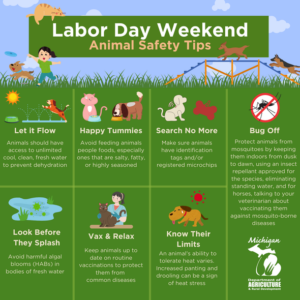
Media contact: Jennifer Holton, 517-284-5724 MDARD Encourages Owners to Help Keep Their Animals Safe this Labor Day HolidayKeep animals happy and healthy as they enjoy the last days of summer funLANSING, MI—As Michiganders prepare to celebrate the last days of summer, this Labor Day holiday, the Michigan Department of Agriculture and Rural Development (MDARD) would like to remind owners of some of the best ways to keep their animals healthy and safe. “When making any holiday plans, it is important not to overlook the needs of our animals,” said State Veterinarian Dr. Nora Wineland, DVM, MS, DACVPM. “From ensuring they are fully vaccinated to making sure they are cool and comfortable, there are many precautions owners can take to keep their animals safe this Labor Day.” Protect animals this holiday by following these seven easy tips:
Vaccinations are central to animals’ preventative care as the vaccines can protect them against common diseases, such as rabies and distemper. Contact your veterinarian to ensure your animals’ vaccinations are complete and/or to schedule an appointment.
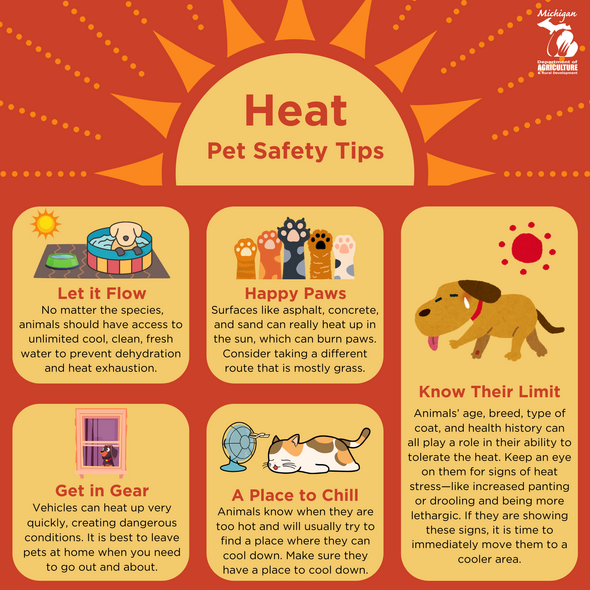
Just like people, animals can quickly get parched in hot temperatures. No matter the species, animals should have access to unlimited cool, clean, fresh water to prevent dehydration.
While it may be tempting to toss your animals a few crispy nuggets from the grill, they cannot enjoy all the same foods and treats as we do. Salty, fatty, and/or highly seasoned foods (like chips, nuts, and meat fat) can cause digestive upset. Also, chocolate, grapes/raisins, onions, and xylitol (an artificial sweetener found in many candies and gum) can be poisonous to animals; and bones can cause injury and illness as well.
An animal’s age, breed, type of coat, and health history can all play a role in their ability to tolerate the heat. Keep an eye on them for signs of heat stress—like increased panting or drooling and being more lethargic. If they are showing these signs, it is time to immediately move them to a cooler area. Also, consider talking to your veterinarian. They will have a greater knowledge of your animal(s) and be able to give more specific guidance on how to best handle them in hot weather.
HABs form due to a rapid growth of cyanobacteria, also called blue-green algae, which are naturally found in lakes, rivers, and ponds. To prevent illness in animals, keep them out of areas with scums or discolored water, rinse them off after contact with any lake water, and bring clean, fresh water for them to drink. If an animal becomes sick after contact with a suspected HAB, call your veterinarian right away. Also, animal illness due to HABs is reportable to MDARD. To report cases, submit a Reportable Disease Form or call 800-292-3939.
With all the summer fun and outdoor activities, it can be easy for animals to sneak away and become lost. Make sure they have identification tags and/or microchips that are up to date with your current contact information, ensuring a better chance they can be returned home.
Mosquitoes transmit a number of diseases that can make animals sick, such as West Nile virus and Eastern equine encephalitis. Both of these diseases were detected in horses from Michigan this year. As these viruses continue to circulate, it is important to protect animals from mosquitoes by keeping animals indoors from dusk to dawn, using insect repellants on animals approved for the species, eliminating standing water, and for horses, talking to your veterinarian about vaccinating them against these diseases. These tips can help keep your animals safe and healthy throughout the holiday. If there are any concerns about your animals’ health now or throughout the year, please talk to your veterinarian.
|
|
|
| Hi there,
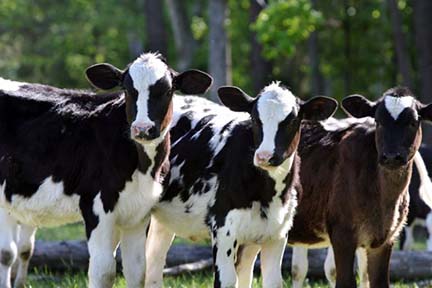
I want to talk to you about a new bipartisan bill I’ve introduced to address the ongoing outbreak of avian flu in dairy cattle, which includes detections here in Michigan. It’s called the Avian Influenza and Research and Response Act and it would ensure farmers are prepared and protected as we combat avian flu. I’ve heard directly from Michigan farmers on the forefront of this outbreak about how it has been disrupting their operations and threatening their livelihoods, and this legislation is drawn directly from those conversations. The Avian Influenza and Research and Response Act would:
Food security is national security, so it’s critical that we take action to protect dairy cattle, ensure the integrity of our milk supply, and support our farmers. As we continue to combat avian flu, I’ll be working closely with state, local, and federal officials to mitigate the effects of its spread. – Rep. Elissa Slotkin |
|
    |

|
| For immediate release: July 02, 2024 MDARD contact: Chelsea Lewis-Parisio, 517-331-1151 Fun in the Sun and Food Safety: Take Steps to Prevent a Food Disaster this Independence DayLansing, MI—With the 4th of July right around the corner, many Michiganders are preparing to celebrate with picnics and barbecues. However, improper handling of your food can spoil the fun for you and your loved ones. According to the Centers for Disease Control and Prevention (CDC), 1 in 6 Americans suffer from foodborne illnesses each year. The Michigan Department of Agriculture and Rural Development (MDARD) urges Michiganders to practice safe food handling while having fun in the sun during the holiday weekend and beyond. Following these simple tips will keep your outdoor eating fun and safe:
If you suspect you’ve eaten spoiled food or a contracted foodborne illness, please seek immediate medical attention and contact your local health department as soon as possible for assistance. Being able to enjoy your 4th of July starts with safe food practices. For more information about food safety, visit www.foodsafety.gov. |
|
|
| For immediate release: June 17, 2024 Media contacts: Jennifer Holton, 517-284-5724 or Chelsea Lewis-Parisio, 517-331-1151 MDARD Reminds Owners to Help Keep Their Animals Cool and Safe as Temperatures RiseFeeling hot? Chances are your animals are too LANSING, MI—As temperatures rise into the 90s in many parts of the state, the Michigan Department of Agriculture and Rural Development (MDARD) is reminding owners on some of the best ways to keep animals cool and safe. “When temperatures rise, keeping animals cool and hydrated is essential to their overall health,” said State Veterinarian Dr. Nora Wineland, DVM, MS, DACVPM. “While it is important to recognize the signs of heat stress in animals, it is even more critical to prevent this stress from occurring. Michiganders can follow six easy steps to help keep animals cool and safe.” Keep animals safe from the heat by following these tips:
Just like people, animals can quickly get parched in hot temperatures. No matter the species, animals should have access to unlimited cool, clean, fresh water to prevent dehydration. Also, if out in public, bring along some hydration options for your animal and avoid using shared/communal water bowls.
An animal’s age, breed, type of coat, and health history can all play a role in their ability to tolerate the heat. Keep an eye on them for signs of heat stress—like increased panting or drooling and being more lethargic. If they are showing these signs, it is time to immediately move them to a cooler area. Also, consider talking to your veterinarian. They will have a greater knowledge of your animal(s) and be able to give more specific guidance on how to best handle them in hot weather.
Surfaces like asphalt, concrete, and sand can really heat up in the sun, which can burn paws—or at least make a walk very uncomfortable. To test if a surface is too hot, touch it with the palm of your hand. If it is too hot for you, consider taking a different route that is mostly grass or waiting until the evening when everything has had a chance to cool.
HABs form due to a rapid growth of cyanobacteria, also called blue-green algae, which are naturally found in lakes, rivers, and ponds. To prevent illness in animals, keep them out of areas with scums or discolored water, rinse them off after contact with any lake water, and bring clean, fresh water for them to drink. If an animal becomes sick after contact with a suspected HAB, call your veterinarian right away. Also, animal illness due to HABs is reportable to MDARD. To report cases, submit a Reportable Disease Form or call 800-292-3939. In addition, to report any suspicious looking algae, please email algaebloom@michigan.gov.
Even when temperatures feel more moderate, vehicles can heat up very quickly, creating dangerous conditions for the animals left inside. Leaving windows cracked open and/or parking in the shade do little to improve the situation. In these conditions, it is best to leave pets at home when you need to go out and about.
Animals know when they are too hot and will usually try to find a place where they can cool down. Make sure they have access to shade, fans, misters, pools, cooling mats, and/or air-conditioned spaces to help them stay comfortable. Following these tips can help keep your animals cool and comfortable through any heat wave. If there are any concerns about your animals’ health either now or throughout the summer months, please talk to your veterinarian.
|