Connect Residents to Advance Careers through Education

Connect Residents to Advance Careers through Education

Career and Education Navigators to Connect Residents with Financial and Other Support to Advance Careers through Education or Training

  • Team will help adults attain post-secondary degree or certification and build the region’s talent pipeline.
  • Career and education navigators will be embedded in communities throughout Oakland County.
  • Partners include Oakland County Michigan Works!, Oakland Community College, Oakland University, Lawrence Technological University, Baker College, Oakland Literacy Council and others.

Pontiac, Michigan – Oakland County, in partnership with several regional educational institutions and community organizations, launched a new effort today to help Oakland County residents obtain a post-secondary degree or certification.

Career and education navigators will help individuals find paths to meaningful careers, get into and complete college or training programs, and reduce obstacles to education such as the cost of books, registration fees, and childcare options. To connect with a career and education navigator, call 1-888-559-4360 or click on www.oakgov.com/Oakland80.

“This program targets Oakland County adults to help them open the door to new or better career opportunities,” Oakland County Executive David Coulter said.  “We identified the resources needed to launch this program and hired people who are uniquely qualified to connect students with the help they need to launch a successful career.”

The career and education navigators are responsible for helping prospective students enter educational programs, including applying to post-secondary institutions, filing financial aid applications, accessing loan applications, transferring records, registering for classes, and helping tackle other barriers to success. Their work also includes intensive coaching and ongoing mentorship through graduation and beyond.

Career and Education Navigator Cal Talley said Oakland County residents who want to improve their career options, but may not be aware of the resources available, now have a partner in helping them achieve success.

“Oakland County’s career and education navigators are here to support you as you take the next steps in gaining your degree or credential,” he said. “From the application and enrollment process to student aid and support services like childcare, books, and transportation, our navigators will help you every step of the way in reaching your goals.”

The other career and education navigators and the communities in which they will be embedded are:

  • Team leader Tamara Myles
  • Jason Chapman in Troy
  • Rachel Dixon in Southfield
  • Carlton Elam in Waterford
  • Janice Fitzhugh based in Oak Park
  • Tonya Medlock in Pontiac
  • Paul Wierzbicki in Waterford

Talley is based in Novi. Navigator biographies accompany this press release in the press kit.

The career and education navigators will be located at the six Oakland County Michigan Works! Offices, Oakland Community College, Oakland University, the Oakland Literacy Council, and other partner sites around the county.

Oakland University President Ora Hirsch Pescovitz, M.D., whose campus will host a career and education navigator, said higher education translates into opportunity for individuals, their families, and communities.

“A college degree provides a person with more career options, upward mobility and significantly more earning potential,” Hirsch Pescovitz said.  “Higher education also has a direct and positive impact on the community, society, and economic development.  The data is unequivocal – there’s a direct correlation between education, quality of life and the health of our citizens and our economy.”

The Career and education navigators, funded by the American Rescue Plan Act, are aligned with Oakland80, Oakland County’s goal to achieve 80 percent of its residents obtaining a post-secondary degree or certification by 2030.

According to 2019 data from the Lumina Foundation, 59 percent of Oakland County’s 679,000 working adults already have an advanced degree.  This outpaces the state of Michigan, which has a rate of 49 percent.  The U.S. average of people with college degrees is 52 percent. Oakland County recognizes more needs to be done to improve the pipeline of skilled workers.  According to recent southeast Michigan labor market data from Emsi, there were 2,736 job postings in advanced manufacturing, 595 in construction, 2,622 in health care and 6,530 in information technology.

WD-O80NavigatorBiosSheet-v2.pdf

Support-Services-Flyer.pdf

Education Budget Making Highest State Per-Pupil Investment

Education Budget Making Highest State Per-Pupil Investment

Governor Whitmer Header

FOR IMMEDIATE RELEASE

July 14, 2022

Contact: Press@michigan.gov


Gov. Whitmer Signs Bipartisan Education Budget Making Highest State Per-Pupil Investment Ever, Funding School Infrastructure, Teacher Recruitment

Historic budget will improve every kid’s in-class experience, build up school facilities, recruit and train skilled educators, boost on-campus mental health resources, shore up school safety


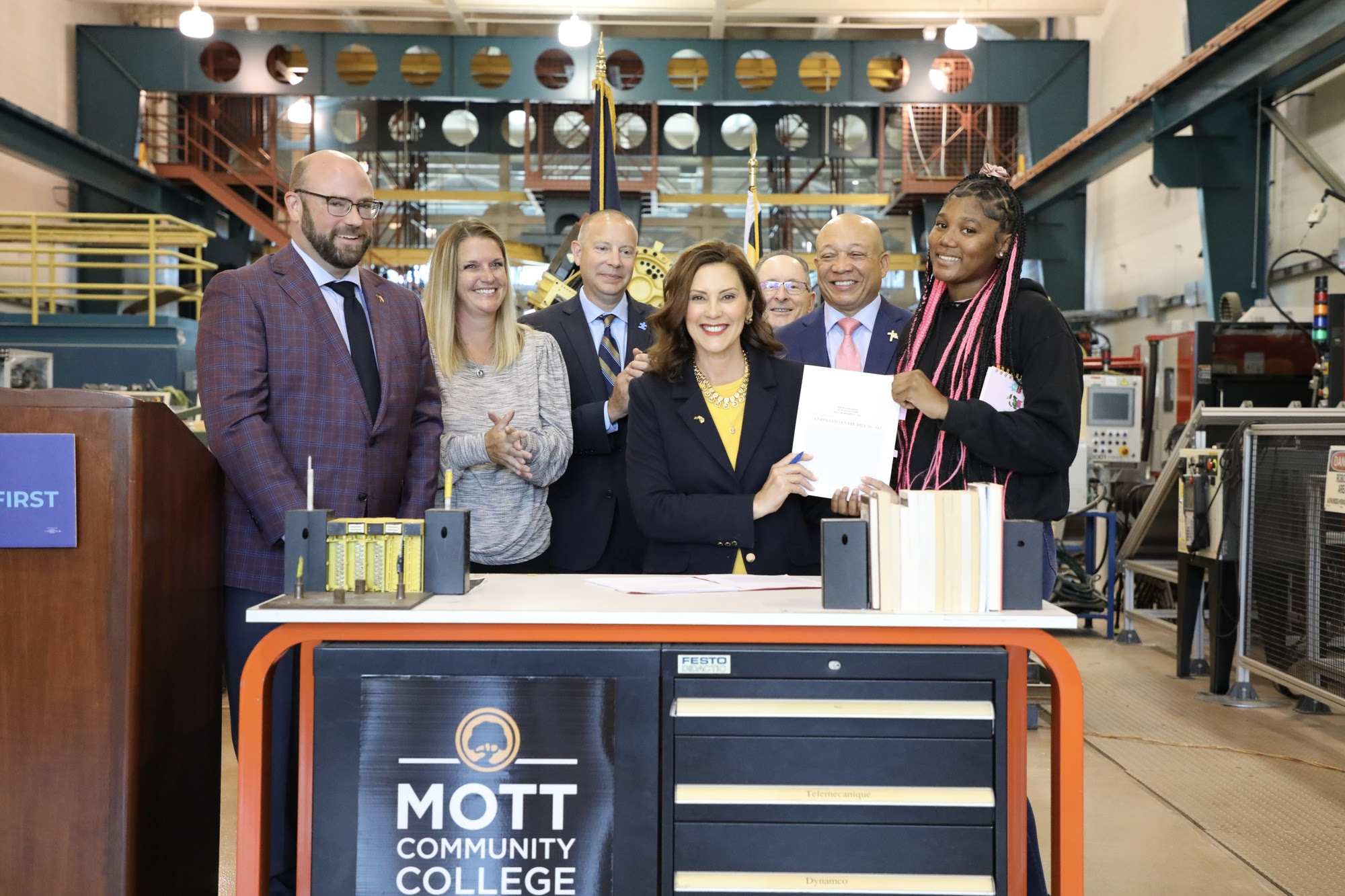
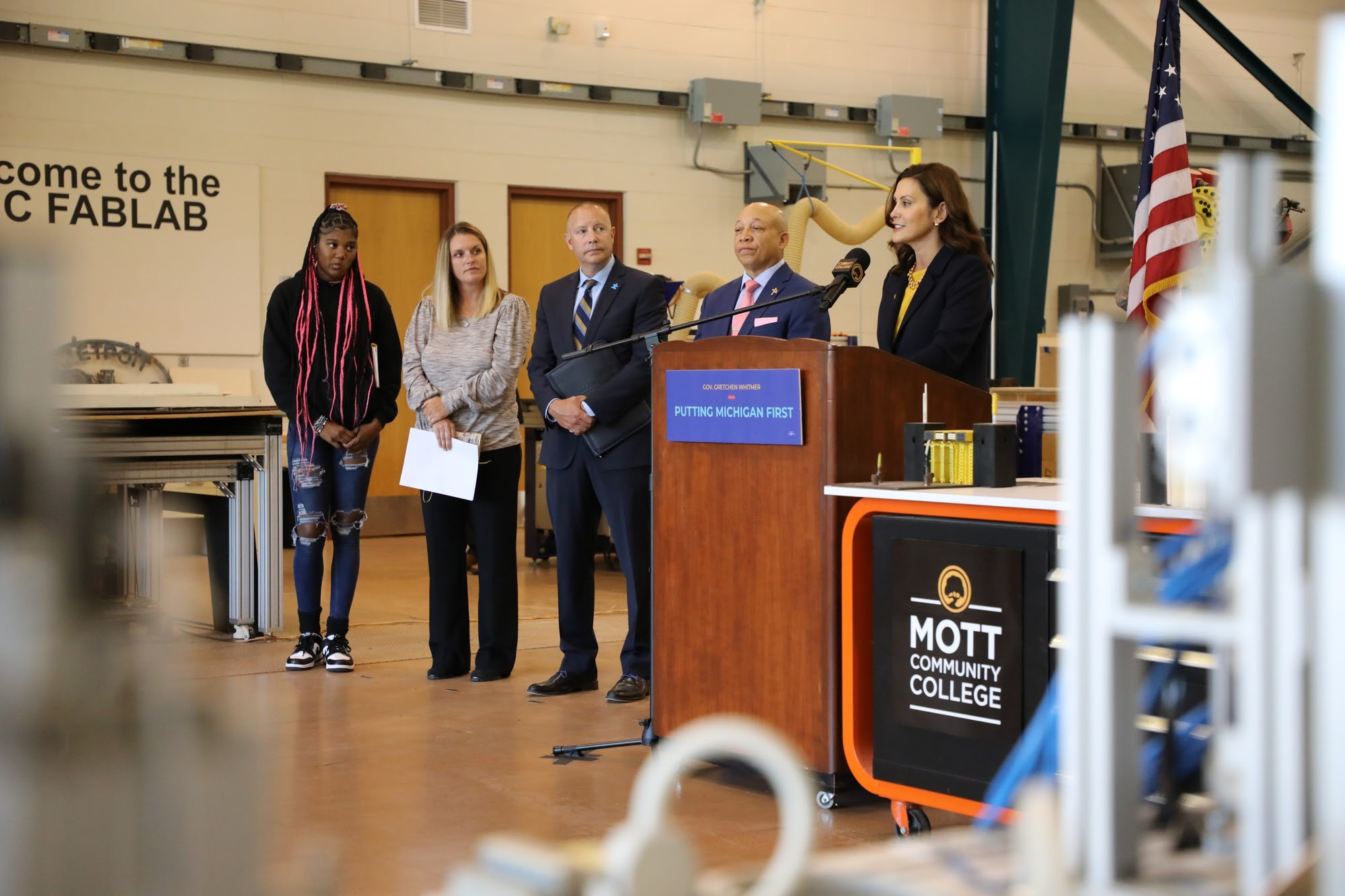
FLINT, Mich. — Today, Governor Gretchen Whitmer signed a bipartisan education budget that will make the highest state per-student investment in Michigan history, invest half a billion dollars in school infrastructure, fund teacher recruitment, bolster school safety, expand mental health resources, and so much more.


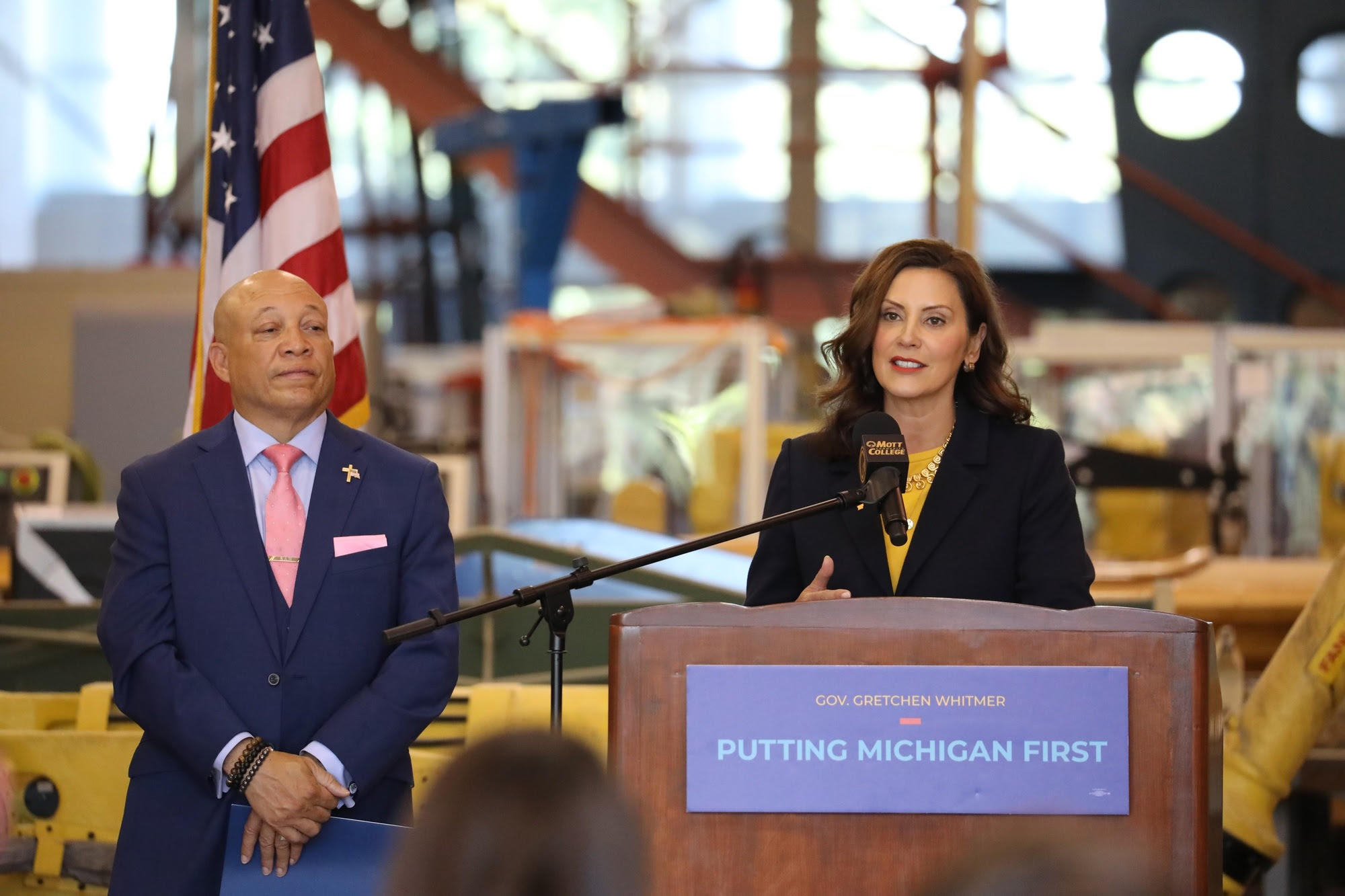
“Every kid in every district deserves to feel safe and supported in school, and I am proud today to sign a historic, bipartisan education budget that will make game-changing investments to improve every student’s in-class experience,” said Governor Gretchen Whitmer. “The budget makes the highest state per-student investment in Michigan history to help schools buy new textbooks, offer more personalized instruction, and bolster AP and honors classes. It also bolsters resources for special education, at-risk funding, and career and technical education while expanding slots in free after-school and preschool programs. Finally, to improve the on-campus experience, the budget invests a quarter of a billion dollars in school infrastructure to build or renovate everything from classrooms, computer labs, and libraries, and significantly expands teacher recruitment programs so we attract and train thousands of educators every year. This budget is proof of what is possible when we put our students first and stay focused on getting things done.”


“On behalf of MEA’s 120,000 members from across the state, we would like to thank Gov. Whitmer for listening to the voices of educators and taking our expertise to heart in developing this transformative education budget,” said Paula Herbart, President of the Michigan Education Association and a veteran teacher from Macomb County. “The governor’s new budget will help address serious challenges in our local schools, including the educator shortage, student mental health, and post-pandemic learning support. Every child deserves a quality education and an opportunity for success, and the governor’s budget will go a long way toward achieving that vital goal.”


“Gov. Whitmer has worked effectively with the legislature and came through for students and educators, this time with a strong budget that represents the largest per-pupil investment in our state’s history. The increase in support for at-risk and special education students is critical, as it will better position schools to set vulnerable kids up for success. The move to further invest in both career and technical education and colleges and universities also reaffirms the governor’s commitment to strengthening our economy and ensuring Michigan students have options for their future,” said David Hecker, President of the American Federation of Teachers Michigan.


“This year’s budget is going to pay huge dividends for our students now and into the future,” said Jason Messenger, Principal of Portage West Middle School and President of the Michigan Association of Secondary School Principals Board of Directors. “In addition to increasing funding for our students with the greatest need, the significant investments in mental health and school safety will help ensure that students are safe and supported at school so they can reach their potential. The funding for new teacher recruitment is an important step in building back our educator workforce so all Michigan students have access to the education professionals who support their learning. Thank you to Governor Whitmer and the legislature for passing a historic budget that invests in all students.”


Education Budget by the Numbers

  • $9,150 per-pupil funding for every kid, in every public school district, highest state amount ever.
  • $214 per-pupil mental health and school safety funding for every kid, in every public school district.
  • Additional funding to meet students’ individual needs for all of the nearly 200,000 special education and 710,000 at-risk students.
  • 1,300 more free preschool slots in the Great Start Readiness Program (GSRP).
  • $250 million for school infrastructure.
  • $10,000 in tuition for 2,500 future Michigan educators every year.


Education Budget Breakdown

The education budget can be divided into six key sections: students, mental health, learning supports, student safety, school infrastructure, and teacher recruitment.


1) Students

For our students, the highest state per-pupil funding in Michigan history—$9,150 for students in every district. Additional support for the nearly 200,000 special education students and 710,000 at-risk students in Michigan. An expansion of free preschool under the Great Start Readiness Program to 1,300 more kids. Expanding funding for career and technical education programs by 27%.


2) Mental Health

Dedicated mental health dollars for every student in every school. Increasing funding for teen centers, district mental health grants, and TRAILS, which offers training to school mental health professionals so they can better serve students with evidence-based services.


3) Learning Supports

An expansion of before and after-school programs to keep kids engaged. Funding for the MI Kids Back on Track, Governor Whitmer’s proposal to offer every kid in Michigan tutoring to help catch up and get on track for long-term success, and resources for districts to develop learning pods for academically at-risk and economically disadvantaged students.


4) Student Safety

Dedicated school safety dollars for every student in every school. Funds to hire more on-campus school resources officers, create an intervention system for at-risk students that brings together law enforcement, schools, and mental health professionals, and establish a school safety commission.


5) School Infrastructure

$250 million for school infrastructure. Resources to help schools build or refurbish classrooms, labs, and libraries. Funds to assess current state of school infrastructure, determine further funding.


6) Teacher Recruitment

Funding MI Future Educator Fellowships, which pay up to $10,000 in tuition for 2,500 future Michigan educators every year, $9,600 stipends a semester for student teachers, and Grow-Your-Own programs that help districts put support staff on no-cost paths to become educators. Additional funding for career and technical education educators and the Troops-to-Teachers program that connects veterans with mentor teachers as they work to become certified educators. Finally, a robust investment to guarantee retired teachers have a stable, secure retirement.


Education Bill Signing

Education Bill Signing

Education Bill Signing


988 crisis line helping connect Michigan residents

988 crisis line helping connect Michigan residents

MDHHS banner with logo no names

Press Release


FOR IMMEDIATE RELEASE: July 14, 2022

CONTACT: Lynn Sutfin, 517-241-2112, Sutfinl1@michigan.gov  

988 crisis line helping connect Michigan residents
experiencing behavioral health crises to resources

LANSING, Mich. – Michiganders in crisis now have an easy-to-remember three-digit number to call for help – 988. Michigan has joined the nation in transitioning to the 988-dialing code, which will operate through the existing National Suicide Prevention Lifeline’s network of more than 200 locally operated and funded crisis centers across the country.988 logo

“The 988 number is another step toward strengthening and transforming crisis care and mental health services in our state, which is a key focus of the department,” said Elizabeth Hertel, Michigan Department of health and Human Services (MDHHS) director. “This
universal number means no matter where you live or call from, you can reach a
trained crisis counselor who can help. We encourage Michigan residents or their family members to call 988 if they are experiencing mental health-related distress, emotional distress or a substance use crisis.”

In 2020, Congress designated the new 988 dialing code to operate through the National Suicide Prevention Lifeline This action expands the existing Lifeline beyond people who are feeling suicidal to all individuals experiencing a behavioral health crisis, including suicidal thoughts or substance abuse issues .

“Crisis is defined by the caller,” said Dr. Debra Pinals, medical director for Behavioral Health and Forensic Programs, Michigan Department of Health and Human Services. “And by providing an easy-to-remember number we are making help more accessible and strengthening support to those in need. Trained counselors will be available 24/7 to field calls. They will listen to the caller’s problems, assess their needs and provide support by connecting them with resources, and alert local emergency crisis teams, if necessary. The roll out of 988 as an easier number to remember will provide a natural extension to the already promising work of the department in implementing the Michigan Crisis and Access Line.”

Anyone with these concerns can call:

  • Mental health-related distress.
  • Thoughts of suicide.
  • Substance use crisis.
  • Emotional distress.
  • There are specialized services available for veterans, LGBTQ individuals and other groups.
  • People who are worried about a loved one who may need support also can call.

The 988-dialing code does not replace the National Suicide Prevention Lifeline (800-273-TALK (8255)) or other locally operated crisis lines. Instead, it serves as a universal entry point to connect individuals in need to trained crisis counselors who can help. MDHHS is working to ensure a solid infrastructure is built through coordination with 911 and other crisis service providers as the 988-dialing code launches.

Prior to the development of 988, the Michigan Crisis and Access Line (MiCAL) was funded by the Michigan Legislature in December 2018. MDHHS was charged with the development of MiCAL, which is currently operating in Oakland County and the Upper Peninsula, and with 988 implementation.

MiCAL is built on the SAMHSA’s National Guidelines for Behavioral Health Crisis Care which is also the foundation for 988. In Michigan, MiCAL is responsible for answering 988 calls in all areas of Michigan. In Macomb and Kent counties, Macomb County Community Mental Health and Network 180 will answer 988 calls with MiCAL providing back-up call coverage.

For more information, visit 988 Suicide & Crisis Lifeline and Michigan Crisis & Access Line.

# # #

Important New Federal Rule to Regulate Ghost Guns

Important New Federal Rule to Regulate Ghost Guns

Michigan Attorney General Dana Nessel
FOR IMMEDIATE RELEASE:

July 12, 2022

Media contact:
AG Press

AG Nessel Joins Coalition of 20 Attorneys General Backing Important New Federal Rule to Regulate Ghost Guns and make Communities Safer

Amicus Brief Continues Efforts to Support Common-Sense Gun Regulations and Improve Public Safety as these Weapons have Proliferated Across the Country

LANSING – Attorney General Dana Nessel joined a group of 20 Attorneys General in filing an amicus brief supporting an important new federal rule regulating “ghost guns”: unserialized weapons that are often made at home from weapon parts kits or partially complete frames and receivers and can be purchased without background checks.

The rule would help ensure that buyers pass background checks before purchasing such kits and that law enforcement officers can trace any self-made guns that are later used in a crime. It would also limit gun traffickers’ ability to distribute these dangerous weapons into Michigan.

“On average, more than 1,200 Michigan residents die each year from gun violence,” Nessel said. “Ghost guns continue to proliferate our streets and I have been asking ATF to close the dangerous loophole that keeps these weapons from being subject to the same regulations as other firearms. So I gladly stand with my colleagues in supporting this new common-sense rule.”

In recent years, Michigan and other states have seen an exponential increase in the number of ghost guns recovered by law enforcement. Absent federal enforcement, these dangerous weapons have continued to proliferate, including in states that have tried to regulate ghost guns themselves. The Final Rule from the Bureau of Alcohol, Tobacco, Firearms, and Explosives (ATF) helps curb this problem by serving as a vital backstop to existing state efforts to stem the flow of ghost guns.

The ATF’s Final Rule regulates ghost guns by clarifying critical definitions in the Gun Control Act. Specifically, the Final Rule makes it clear that weapon parts kits and partially complete frames or receivers—the key building blocks for ghost guns—are “firearms” under the Act if they can be readily converted to function as such. In making this sensible clarification, the Final Rule helps ensure that these kits and partially complete frames or receivers are subject to the same serialization and background check requirements as conventionally manufactured guns. This helps close a dangerous loophole in firearms regulation that enabled people to evade existing gun laws and get their hands on these dangerous weapons.

A copy of the brief is available here.

The brief was led by District of Columbia Attorney General Karl A. Racine and the Attorneys General of New Jersey and Pennsylvania and joined by the Attorneys General of California, Colorado, Connecticut, Delaware, Hawaii, Illinois, Maine, Maryland, Massachusetts, Minnesota, New York, North Carolina, Oregon, Rhode Island, Washington, and Wisconsin.

DNR News Digest: Week of July 11, 2022

DNR News Digest: Week of July 11, 2022

DNR banner

News Digest: Week of July 11, 2022

A Kirtland's warbler sits on a branch, facing the camera with an open mouth in a somewhat comical expression.

“Support species like me with a Michigan wildlife habitat license plate!”

Here are just a few of this week’s stories from the Michigan Department of Natural Resources:

See other news releases, Showcasing the DNR stories, photos and other resources at Michigan.gov/DNRPressRoom.

PHOTO FOLDER: Larger, higher-res versions of the images used below, and others, are available in this folder.


Photo ambassador snapshot: Lake Michigan’s dazzling dusk

Black shadow outline of about a dozen people walking in line, one walking a dog, along the beach, backlit by a bright, increasingly orange skyWant to see more pictures like this, taken by Michigan state parks photo ambassador Tim Largent at Holland State Park in Ottawa County? Visit  Instagram.com/MiStateParks to explore photos and learn more about the photo ambassadors! For more on the photo ambassador program, call Stephanie Yancer at 989-274-6182.

Conservation officer recruits’ 23-week journey is underway

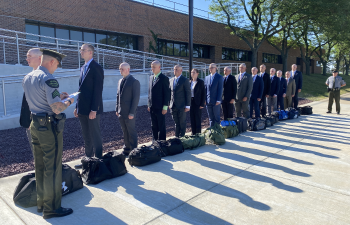
Conservation Officer recruits stand at attention in a line as a CO consults a clipboard. Chosen from a pool of nearly 400 applicants, 15 recruits assembled Sunday in Lansing to start down the path to becoming Michigan DNR conservation officers. The group gathered for day one of Conservation Officer Recruit School #11, during which they received intensive training to test them academically, emotionally and physically.
Follow their 23-week experience by subscribing to the weekly conservation officer academy blog, which also will be shared on DNR social media accounts.

“We have high expectations for this group, all of whom bring diverse life experiences with them,” said Chief Dave Shaw, DNR Law Enforcement Division. “These new recruits will be immersed in the rich history and culture of DNR law enforcement, and they’ll receive instruction from the ‘best of the best’ — veteran conservation officers who excel in the many specialized areas that make conservation officers unique among the law enforcement community.”

Additionally, three certified police officers were also hired as DNR conservation officers. They were sworn in Tuesday and will begin their natural resources law enforcement training as probationary conservation officers.

While conservation officers’ mission is to protect Michigan’s natural resources and the health and safety of the public through effective law enforcement and education, these certified peace officers also enforce all of Michigan’s criminal laws. (Yes, this means they can pull you over for a traffic violation.)

Because of their specialized training and equipment, conservation officers often are first to respond in situations such as medical emergencies, lost or missing persons and public safety threats in all types of weather conditions and environments. In addition to fish and game and general criminal law enforcement, recruits also get training in waterfowl, trapping, firearms, survival tactics, precision driving, off-road vehicle operation and maintenance, water safety, first aid, criminal law, report writing and alcohol enforcement.

Those recruits who successfully complete the academy will join the ranks of Michigan’s conservation officers as part of the DNR Law Enforcement Division, the state’s oldest statewide law enforcement agency — now celebrating its 135th year.

Questions? Contact F/Lt. Jason Wicklund at 906-284-1933.


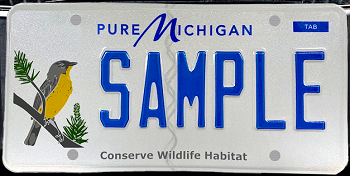
Support wildlife with Kirtland’s warbler license plate purchase

a white license with lettering that says Pure Michigan and Conserve Wildlife Habitat, image of a yellow bird on a pine twig at the leftLooking for a simple, yet powerful, way to help turtles, peregrine falcons, bats, common terns and other nongame wildlife species? Consider purchasing Michigan’s wildlife habitat license plate, currently featuring the Kirtland’s warbler — a unique bird with a remarkable recovery story.

In 2019, the Kirtland’s warbler was removed from the endangered species list. Ongoing efforts by the DNR and a multitude of partners have ensured that ample habitat is, and will continue to be, available for this songbird that nests only in young jack pine stands in Michigan, Wisconsin and Ontario.

All proceeds from the sale of the wildlife habitat license plate support the Nongame Fish and Wildlife Trust Fund and benefit nongame species like the Kirtland’s warbler.

You can buy the wildlife habitat license plate through the Secretary of State for $35, with $25 of that fee going to the Nongame Fish and Wildlife Trust Fund. Since 2006, the fund has received more than $3.9 million from the purchase of wildlife habitat license plates.

Questions? Contact the DNR Wildlife Division at 517-284-9453.


Natural Resources Commission meets Thursday in Lansing

A handful of young Arctic Grayling tumble from a net into a pool of water. The next meeting of the Michigan Natural Resources Committee leads off with a Fisheries Committee agenda that includes an overview of statewide fisheries research.

The meeting also will include an update on the printing of hunting and fishing digests, upcoming fisheries orders, a legislative update and several land transactions.

It will start at 9 a.m. Thursday, July 14, in West Campus Rooms M119-121 at Lansing Community College, 5708 Cornerstone Drive, in Lansing. See the draft meeting agenda at Michigan.gov/NRC.

For more information or to request time to speak at the meeting, contact Victoria Lischalk at 517-599-1067 or NRC@Michigan.gov.


THINGS TO DO

The outdoors is for everyone, and the DNR is working hard to make the natural areas we manage easier for everyone to enjoy. Check out accessible recreation opportunities near you!

BUY & APPLY

Summer’s in full swing, and there’s no better time to head out to a state park, boating access site or state forest campground — just make sure you have a Recreation Passport before you go.

GET INVOLVED

Looking to get outside and do some good? Find stewardship opportunities near or far on the volunteer events calendar. Make sure to dress appropriately and stay hydrated.

We recently launched a new website, and we’d love to hear what you think via this brief survey. Thanks for helping us improve our site for all users!