Whitmer launches Futures for Frontliners program

Whitmer launches Futures for Frontliners program

Governor Gretchen Whitmer Banner - headshot with bridge graphic

FOR IMMEDIATE RELEASE      

September 10, 2020                                                  

Media Contact: Press@Michigan.gov


Gov. Whitmer launches new, first in nation Futures for Frontliners program to offer essential, frontline workers a tuition-free path to community college

Education, labor, business, and workforce leaders join to urge Michigan’s 625,000 COVID-19 essential workers to apply now for tuition-free college


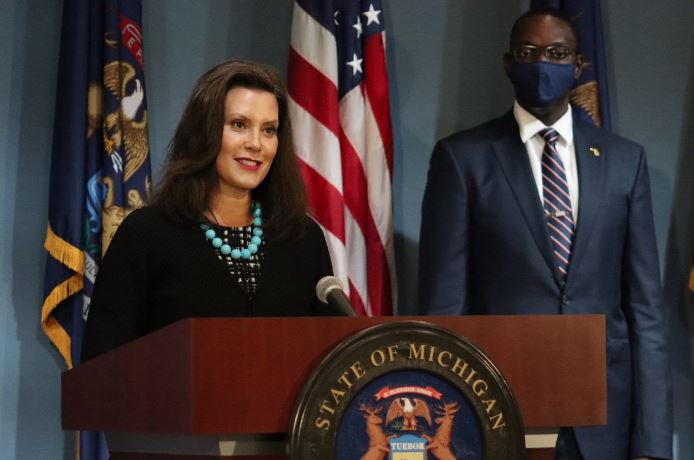
LANSING – Gov. Gretchen Whitmer, along with leaders in education, business, labor and workforce development, today launched the nation’s first program offering tuition-free college to an estimated 625,000 Michiganders who provided essential, frontline services during COVID-19 Stay Home, Stay Safe orders between April – June 2020.

Futures for Frontliners, inspired by the GI Bill which provided college degree to those serving their country in WWII, offers Michigan adults without college degrees or high school diplomas who provided essential services during the pandemic a tuition-free pathway to gaining the skills needed to obtain high-demand, high-wage careers. The funding is not only available to those in the medical field, but also essential workers in manufacturing, nursing homes, grocery stores, sanitation, delivery, retail and more.

“This initiative is Michigan’s way of expressing gratitude to essential workers for protecting public health and keeping our state running,” Whitmer said. “Whether it was stocking shelves, delivering supplies, picking up trash, manufacturing PPE or providing medical care, you were there for us. Now this is your chance to pursue the degree or training you’ve been dreaming about to help you and your own family succeed.”

To be eligible for the program, applicants must:

  • Be a Michigan resident
  • Have worked in an essential industry at least part-time for 11 of the 13 weeks between April 1 – June 30, 2020
  • Have been required by their job to work outside the home at least some of the time between April 1 – June 30, 2020
  • Not have previously earned an associate or bachelor’s degree
  • Not be in default on a Federal student loan
  • Complete a Futures for Frontliners scholarship application by 11:59 p.m., Dec. 31, 2020

Frontline workers are encouraged to visit www.michigan.gov/Frontliners to explore career opportunities, a list of local community colleges and get started on their application – even if they don’t already have a high school diploma.

The program is a $24M investment funded by Governor’s Education Emergency Relief (GEER) Fund – part of the CARES Act, and supports the state’s Sixty by 30 goal announced at the Governor’s first state of the state address to increase the number of working-age Michiganders completing an a industry certificate, college degree or apprenticeship. A more educated workforce is essential to help businesses grow, make Michigan a more competitive state to attract jobs of the future and help families navigate a changing economy and increase income.

“The vast majority of good paying jobs continue to require at least some education beyond high school,” said Michigan Department of Labor and Economic Opportunity Director Jeff Donofrio. “Futures for Frontliners gives those who helped save lives and kept our communities operating during the height of COVID an opportunity to increase their skills and income and helps us close the state’s skills gap. For Michigan’s economy to recover and grow, its critical we continue to provide expanded opportunities to all.”

Advocates for additional career training say Futures for Frontliners also helps them off-set training costs and provide another avenue for retention and long-term career growth.

“Michigan manufacturers have been on the front lines in defense against the COVID-19 threat, creating essential products necessary for daily life; from food and pharmaceuticals, to transportation and even toilet paper,” said John Walsh, President and CEO of the Michigan Manufacturers Association. “The Futures for Frontliners program will recognize these truly-deserving heroes, investing in their personal future as well as the economic future of our state.”

“As an employer of nearly 20,000 frontline associates here in Michigan and beyond, we are proud and thankful for each of our employees who stepped up to feed our customers and our communities during the pandemic,” Rachel Hurst Corporate Affairs Manager for the Kroger Co. of Michigan said. “We’re excited for them to have this hard-earned opportunity to continue their education with support from the Futures for Frontliners program which pairs well with our Feed Your Future program.”

“With short staffing a challenge for our workers across many medical professions, this program helps create a pipeline of talent for our growing healthcare workforce. Whether you are a hospital or nursing home worker, you can take advantage of this opportunity in nearly every workplace. I’m so excited for our union workers who now have the opportunity to add new skills that will help them advance in their careers.”

“Henry Ford College, and I personally, are proud to support the Futures for Frontliners program, and to partner with the State of Michigan and other public and private partners to help frontline workers create a better future,” Russ Kavalhuna, Henry Ford College President. “We believe this program represents a unique, first-of-its-kind opportunity for people who have earned a College education. They put themselves at risk to serve Michigan residents during a pandemic. We will put their futures at the forefront now.”

Several other business organizations, corporations, unions and legislators have volunteered to serve as Frontliners Champions with a commitment to inform their frontline workers, members and constituents about this tuition-free college opportunity.

Futures for Frontliners Champions

Business Groups:

  • Business Leaders for Michigan
  • Community Bankers of Michigan
  • Detroit Chamber of Commerce
  • Detroit Fire Fighters Association
  • Grand Rapids Chamber of Commerce
  • Health Care Association of Michigan
  • MichBusiness
  • Michigan Association for Female Entrepreneurs
  • Michigan Association of Ambulance Services
  • Michigan Association of Chiefs of Police
  • Michigan Association of Counties
  • Michigan Association of Fire Fighters
  • Michigan Bankers Association
  • Michigan Chamber of Commerce
  • Michigan Credit Union League
  • Michigan Health and Hospital Association
  • Michigan HomeCare & Hospice Association
  • Michigan Manufacturers Association
  • Michigan Nonprofit Association
  • Michigan Oil and Gas Association
  • Michigan Petroleum Association & Michigan Association of Convenience Stores
  • Michigan Pharmacists Association
  • Michigan Public Transit Association
  • Michigan Restaurant & Lodging Association
  • Michigan Retailers Associations
  • Michigan Sheriffs Association
  • Michigan Soft Drink Association
  • Michigan State Firemen’s Association
  • Midwest Independent Retailers Association
  • Small Business Association of Michigan
  • Telecommunications Association of Michigan
  • United Dairy Industry of Michigan

Corporations:

  • Consumers Energy
  • DTE
  • Home Depot
  • Kroger
  • Lowes
  • Meijer
  • Target
  • Walmart

Unions (affiliated with AFL-CIO):

  • Amalgamated Transit Union
  • American Federation of Government Employees
  • American Federation of Labor & Congress of Industrial Organizations (AFL-CIO)
  • American Federation of State, County, and Municipal Employees
  • American Federation of Teachers
  • Communication Workers of America
  • International Association of Fire Fighters
  • International Union of Painters and Allied Trades
  • Laborers’ International Union of North America
  • Unite Here
  • United Auto Workers
  • United Steelworkers
  • Utility Workers Union of America

Unions:

  • Michigan Education Association
  • Michigan Nurses Association
  • Michigan Regional Council of Union Carpenters and Millwrights
  • Service Employees International Union
  • Teamsters Joint Council #43
  • United Food and Commercial Workers 876
  • United Food and Commercial Workers 951

Legislators

  • Jim Ananich
  • Rosemary Bayer
  • Stephanie Chang
  • Curtis Hertel, Jr.
  • Adam Hollier
  • Jeff Irwin
  • Sean McCann
  • Mallory McMorrow
  • Jeremy Moss
  • Sylvia Santana
  • Laurie Pohutsky
  • Mari Manoogian
  • Terry J. Sabo
  • Jim Ellison
  • Padma Kuppa
  • Abdullah Hammoud
  • Alex Garza
  • Donna Lasinski
  • Kristy Pagan
  • Tyrone Carter
  • Kara Hope
  • Robert Wittenberg
  • Rachel Hood
  • Brenda Carter
  • Jim Haadsma
  • Cynthia A Johnson
  • Yousef Rabhi
  • Matt Koleszar
  • Leslie Love
  • Angela Witwer
  • Lori Stone
  • John G. Chirkun
  • Rebekah Warren
  • Cara Clemente
  • Sheryl Kennedy
  • Sarah Anthony

For the latest information on the COVID-19 outbreak, visit Michigan.gov/Coronavirus and CDC.gov/Coronavirus.

Whitmer Signs Order Clarifying Face Covering For Organized Sports  

Whitmer Signs Order Clarifying Face Covering For Organized Sports  

Governor Gretchen Whitmer Banner - headshot with bridge graphic

FOR IMMEDIATE RELEASE

September 9, 2020

Contact: Press@michigan.gov


Governor Whitmer Signs Executive Order Clarifying Face Covering Requirements For Organized Sports 


LANSING, Mich. — Governor Whitmer signed Executive Order 2020-180 today clarifying the rules on face coverings for organized sports during training, practice, and competition.


“The COVID-19 virus is easily spread through airborne particles and can affect everyone differently. By wearing a face covering when proper distancing is not possible, athletes will be better protected from contracting the virus and spreading it to family members, frontline workers, and vulnerable populations,” said Governor Whitmer. “We cannot afford to let our guard down. As we continue to fight this virus, we need to make smart and informed choices so we can beat COVID-19 together.”


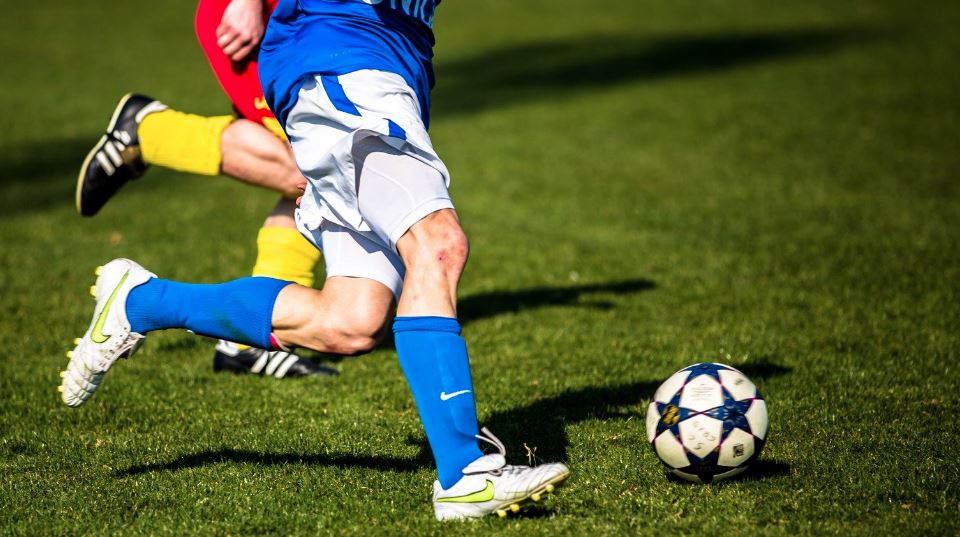
Executive Order 2020-180 specifies that a face covering must be worn at all times by athletes training for, practicing for, or competing in an organized sport when the athlete cannot maintain 6 feet of social distance, except for occasional and fleeting moments. Athletes are not required to wear a face covering if they are swimming. Athletes competing in football, soccer, or volleyball, for example, are not able to maintain 6 feet of social distance as required and therefore would need to wear a facial covering.


“We are not out of the woods yet, and COVID-19 is still a persistent threat to our frontline workers, students, and families,” said Chief Medical Executive and MDHHS Chief Deputy for Health Dr. Joneigh Khaldun. “Individuals have a choice about whether or not to play organized sports. Since contact sports pose a high risk of transmitting COVID-19, MDHHS recommends that people should choose to avoid them. For those who do choose to play organized sports, we expect you to follow these strict safety measures and wear a face covering to reduce your risk and protect the health of your teammates, coaches, officials, and loved ones.”


Last week, the governor signed Executive Order 2020-176 reopening Michigan’s gyms and pools in those regions where they remain closed and allowing for organized sports practices and competitions to resume in those regions where they remain restricted, subject to strict protections meant to limit spread of the virus. The governor also signed Executive Order 2020-175 outlining strict workplace safety measures gyms and pools must follow to protect people from the spread of COVID-19.


Additionally, The Michigan Department of Health and Human Services (DHHS) released guidance on organized sports recommending against contact sports at this time. It also cites the elevated risk associated with activities that involve “shouting, singing, or breathing forcefully,” and notes there have been 30 reported outbreaks associated with athletic clubs, teams, or athletic facilities. MDHHS’ guidance recommends mitigation measures organized sports teams may take to reduce the spread of COVID-19 during training, practices, and competitions. These recommendations include frequent hand washing, not letting players share towels, clothing, or other items they use to wipe their faces or hands, ensuring proper cleaning and disinfection of objects and equipment, prioritizing outdoor practice, and more.


To view Executive Order 2020-180, click the link below:

MDOT research into carbon fiber bridge

MDOT E-mail

MDOT on facebook MDOT on Twitter MDOT on YouTube Mi Drive - Know before you go. MDOT on Instagram Sign up for E-mails form MDOT
 

FOR IMMEDIATE RELEASE WEDNESDAY, SEPTEMBER 9, 2020
CONTACT: Dan Weingarten, MDOT Office of Communications, 906-250-4809
                      WeingartenD@Michigan.gov

MDOT research into carbon fiber bridge components
gains national recognition  

Fast facts:
– The Michigan Department of Transportation (MDOT) pioneered incorporating carbon fiber into bridge designs, building the nation’s first carbon fiber bridge in 2001.
– Carbon fiber components are similar to steel in strength, but they resist corrosion and require less maintenance over time.
– After four years of extensive research by MDOT and Lawrence Technological University in Southfield, bridge designers now have the information they need to predict how carbon fiber components perform under a variety of real-world conditions and the design tools for future bridge projects.
– The project was recently named one of the top 16 research efforts of 2020 by the American Association of State Highway and Transportation Officials (AASHTO).

September 9, 2020 — The Michigan Department of Transportation (MDOT) and university researchers have subjected a high-tech material to trial by fire and ice in a quest for better bridge components.

Steel has historically been the go-to material for reinforcing and pre-tensioning concrete for highway bridges. Steel adds much-needed strength, but it is prone to corrosion and deterioration under assault from extreme temperatures, water, and deicing chemicals. Preventing corrosion and repairing damaged areas require maintenance time and resources.

MDOT and Lawrence Technological University (Lawrence Tech) in Southfield have pioneered an innovative alternative to steel in critical bridge applications: using carbon fiber components. Carbon fiber strands have a tensile strength comparable to steel, but they resist corrosion and require less maintenance over time.

Under the direction of Dr. Nabil Grace, dean of the College of Engineering at Lawrence Tech, the school’s Center for Innovative Materials has been researching carbon fiber reinforced polymer  (CFRP) since 1988, funded through multiple research awards from the National Science Foundation and MDOT.

“In 2001, Lawrence Tech, MDOT and the City of Southfield worked together on the deployment of the first three-span CFRP pre-stressed concrete bridge in the country,” Grace said. The Bridge Street Bridge was outfitted with a variety of sensors and will be monitored by MDOT until 2025.

“CFRP has performed well in the field but its long-term durability wasn’t fully understood,” said Matthew Chynoweth, MDOT chief bridge engineer and director of MDOT’s Bureau of Bridges and Structures.

Carbon fiber components lacked a track record in transportation infrastructure. Also, engineers lacked the technical specs they needed to optimize the CFRP design process and encourage more widespread use of the material. So, beginning in 2013, MDOT again collaborated with Lawrence Tech, this time to test the short- and long-term performance of CFRP strands and beams under a wide range of conditions.

During four years of extensive research, carbon fiber components were subjected to 300 freeze-thaw cycles, combined fire/loading events, severe weather, and other trials. Now, bridge designers have the information and specifications they need to predict how CFRP will perform under a variety of real-world conditions, as well as the design tools for future bridge projects.

“This research allowed us to test every question we had about CFRP and get good data so that we can continue to design bridges that are as safe and durable as normal steel bridges but without steel’s corrosive limitations,” Chynoweth said.

The data from this research confirm what proponents of CFRP have long theorized. Investigators found that CFRP strands held up well to conditions that simulated Michigan’s harsh weather. Moisture, rain, freezing rain, and extreme temperature swings did not significantly affect the material’s strength or mechanical properties over time. In addition, test results showed that some currently accepted parameters for CFRP are conservative and can be updated.

The research generated criteria, guidelines, and recommendations to make MDOT’s design and construction of highway bridges using CFRP components more efficient. Additionally, researchers prepared design examples, valuable reference tools for bridge designers.

These efforts have already received recognition. The study was recently chosen as one of the highest value transportation research projects in the nation. The Research Advisory Committee at the American Association of State Highway and Transportation Officials (AASHTO) named it one of the top 16 research projects of 2020. It is a significant national endorsement of work Michigan has been doing for 20 years.

“Recently, AASHTO published its first design specification for CFRP pre-stressed concrete bridge elements, and this was mostly inspired by the work Dr. Grace has done for the past 30 years,” Chynoweth said.

Practical applications are expanding, as well. Backed by previously unavailable real-world data for CFRP, engineers are making use of the material. Since the first carbon fiber components were used in 2001, more than a dozen bridges have been built throughout the state using CFRP pre-stressing and post tensioning. Some recent examples include the southbound I-75 span over the Sexton-Kilfoil Drain in Detroit, incorporating the longest CFRP pre-stressed beams, at 140 feet; and two bridges being built as part of MDOT’s I-94 modernization project, also in Detroit.

What’s the future outlook for carbon fiber in MDOT bridge design? One barrier to wider adoption is the cost of materials.

“Cost is always an issue. That is why we only do a few bridges per year,” Chynoweth said. “However, one of our main suppliers, Tokyo Rope, built a fabrication facility in Michigan, which has cut down on some costs and delivery times for CFRP.”

Thanks to a deeper understanding of carbon fiber materials, bridge designers are closer to realizing their goal of building longer-lived bridges. A bridge with a minimum 100-year service life is an MDOT, as well as a national, target. AASHTO’s new specification for bridge design focuses on promoting innovative materials to achieve these longer life spans.

“Since CFRP is non-corrosive, we are eliminating the potential of concrete deterioration from steel corrosion, which is the major cause of shorter service lives on bridges,” Chynoweth said.

summary of the report on CFRP in bridge designs is available on the MDOT website, as well as the full final report. For more details on Michigan’s bridges, go to www.Michigan.gov/Bridges.

###

Protect workers. Protect drivers. Safe work zones for all.
www.Michigan.gov/WorkZoneSafety

  www.twitter.com/MDOT_UP | www.facebook.com/MichiganDOT | www.youtube.com/MichiganDOT
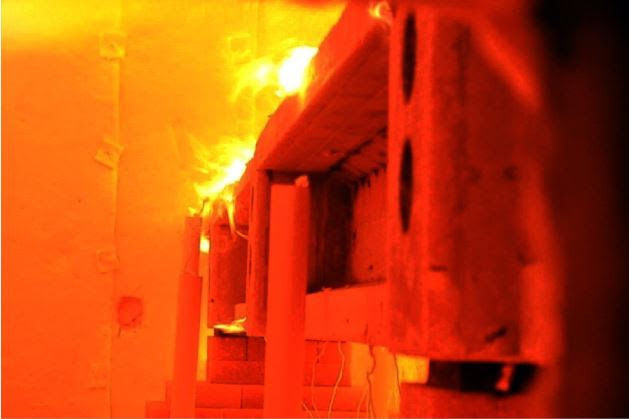
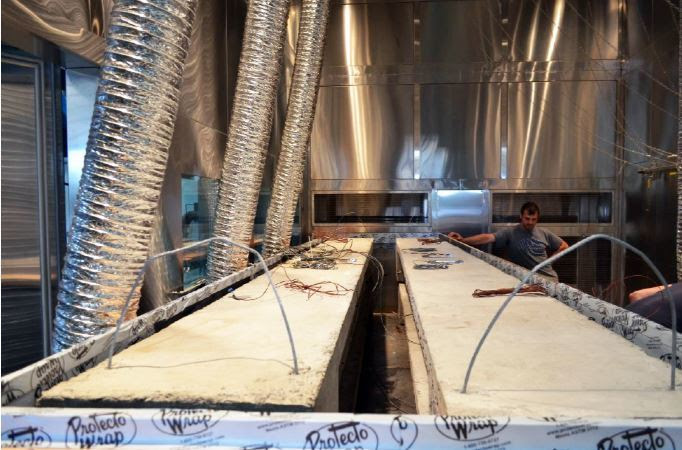
Carbon fiber testing 2

The Michigan Department of Transportation (MDOT) in partnership with Lawrence Technological University prestressed concrete beams with strands of carbon fiber reinforced polymer (CFRP) and then subjected them to fire/loading tests to evaluate their durability. (Lawrence Technological University photo)
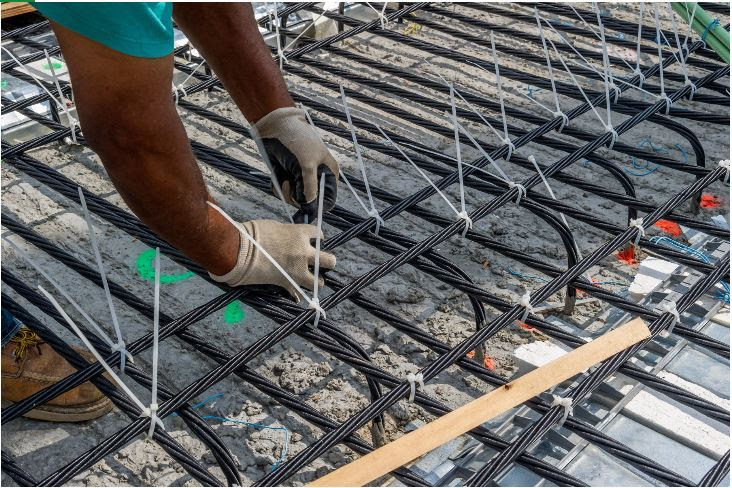
carbon fiber test 1

The Michigan Department of Transportation (MDOT) and Lawrence Technological University conducted a variety of experiments to evaluate the short- and long-term performance of carbon fiber reinforced polymer (CFRP). Here, scaled-down bridge beams using CFRP are being readied to undergo multiple freeze-thaw cycles. (Lawrence Technological University photo)
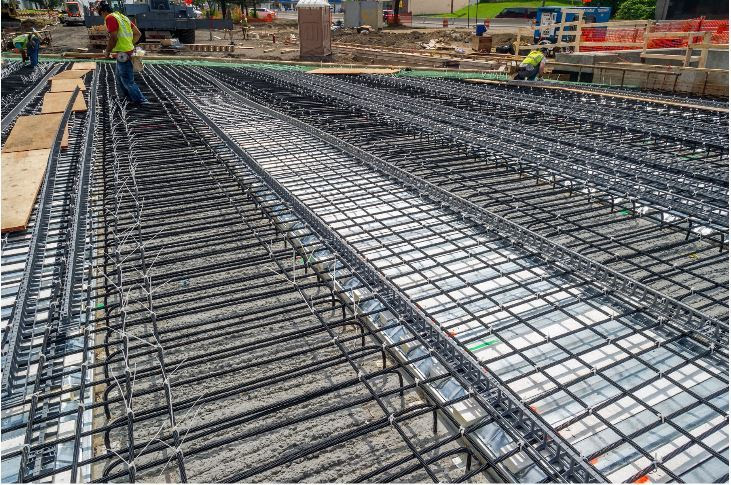
Carbon fiber install 1

Carbon fiber strands being installed on the M-102 bridge deck in Wayne County in 2014.
(MDOT photo)
Carbon fiber install 2

Carbon fiber strands being installed on the M-102 bridge deck in Wayne County in 2014.
(MDOT photo)

$1.9 million EPA grant for lead testing of school drinking water

$1.9 million EPA grant for lead testing of school drinking water

EGLE Main GovD banner
FOR IMMEDIATE RELEASE
Sept. 8, 2020
EGLE Media Office, EGLE-Assist@Michigan.gov, 517-284-9278

Corrects link in last paragraph.

Michigan nets $1.9 million EPA grant for lead testing of school drinking water

The Michigan Department of Environment, Great Lakes, and Energy (EGLE) announced today that it has been awarded a $1.9 million grant from the U.S. Environmental Protection Agency (EPA) for lead testing of drinking water at schools and child care facilities across the state.

Michigan will receive $1,871,000 from the $69.7 million EPA Voluntary Lead Testing in Schools and Child Care grant program.

“This award is due to the hard work that EGLE’s Drinking Water and Environmental Health Division’s newly formed Lead and Copper Unit have put in finding funding sources and new ways to further protect our most vulnerable populations,” said division director Eric Oswald.

EGLE, in partnership with the Department of Health and Human Services (DHHS), is prioritizing this funding toward the protection of children in areas where blood lead levels in the state are higher, where schools are unable to pay for testing, and to enhance community, parent and teacher trust. EGLE has sent invitations to schools and child care facilities that meet the criteria of the grant program. Anyone interested in obtaining more information about the state’s school drinking water programs can visit www.michigan.gov/schoolwater.

EGLE and DHHS have developed a work plan that addresses lead exposure from drinking water in schools and child care facilities by testing the drinking water and working with facilities to remove or remediate locations with elevated lead results.

EGLE’s Office of the Clean Water Public Advocate praised the grant program as an example of federal and state cooperation to reduce children’s lead exposures.

“Seeking opportunities to collaborate with state agencies and federal partners supports our mission of providing cleaner drinking water to all Michiganders,” EGLE Clean Water Public Advocate Ninah Sasy said. “This governmental collaboration combined with our public outreach and Clean Water Ambassador program creates an environment where we can quickly get funding and resources to the communities most in need.”

Find out if there are ways that you can help your community by becoming a Clean Water Ambassador by visiting Michigan.gov/CleanWater for more information. All Michigan residents are encouraged to visit the site to ensure that their community has a Clean Water Ambassador.

Eligible Job Seekers Can Enroll in Free Training

Eligible Job Seekers Can Enroll in Free Training

Eligible Job Seekers Interested in Advanced Manufacturing Careers Can Enroll in Free Training through Oakland County

WATERFORD, Mich. – Sept. 4, 2020 – People interested in pursuing new, in-demand careers in the midst of the COVID-19 pandemic can prepare for opportunities in advanced manufacturing through free training programs offered by Oakland County Michigan Works! and Oakland Community College.

The programs offer training in careers that offer starting wages as high as $25 an hour.

“Many people who lost jobs due to COVID-19 are considering new opportunities as we recover economically,” said Oakland County Executive David Coulter. “Oakland County Michigan Works! in partnership with OCC wants to put these people back to work in long-term, viable positions. Now is the time to take advantage of the free training being offered. Our goal, through the Oakland 80 initiative, is to have 80 percent of our residents obtain a post-secondary degree or industry credential by 2030. These programs are great opportunities to do that.”

Programmable Logic Controller (PLC) and Robotics Technician Program class begins Sept. 14 and lasts 14 weeks. Nearly 140 people have completed the training program since it was launched in 2017, with many now working in the field. Eligible participants receive $7,000 in free tuition through Oakland County Michigan Works! in partnership with the U.S Department of Labor and Workforce Intelligence Network. Upon completion of the program, starting wages range from $15-$25 an hour.

Computer Numerical Control (CNC) Machine Operator Training Program cohort also starts in September at a date to be announced and lasts five weeks. Since its launch last year, 20 people have completed the training. The America’s Promise Grant provides eligible participants with $2,500 in free tuition. Upon completion of the training, starting wages range from $13-$18 per hour.

CNC students can earn up to four National Institute for Metalworking Skills Certifications: Measurement, Materials and Safety; Job Planning, Benchwork and Layout; CNC Mill Operator; and CNC Lathe Operator.

Due to the pandemic, classroom instruction for both training programs is remote, with some hands-on activities at Oakland Community College in Auburn Hills. For more information and to determine eligibility, contact Kristen Charlton at (248) 232-4169 or Mona DeFrancesco at (248) 336-7793.

Applicant requirements for both programs include:

  • U.S. citizen or an eligible non-citizen
  • Not currently registered in school within a local educational agency
  • Registered with the Selective Service (if applicable)
  • Unemployed or underemployed
  • Other eligibility factors may apply

“People looking for a fresh start as the economy continues to open up in our state can take advantage of these two programs, which are free to eligible participants,” said Jennifer Llewellyn, director of Oakland County Michigan Works!  “Employers across the region are looking for talented individuals with these skill sets and are hiring now.”

Oakland County Michigan Works! operates service centers in Novi, Oak Park, Pontiac, Southfield, Troy and Waterford. Combined, they assist more than 105,000 job seekers annually. Services include career coaching, interviewing and job search workshops, placement assistance, training courses and job trend information.

The service centers also assist more than 3,000 employers with talent recruitment, apprenticeship programs, job fairs, candidate pre-screening, hiring and training support, layoff support and labor market data.

Service center staff are available by virtual appointment to work one-on-one with job seekers to build their resumes, prepare for job interviews and help address other needs. To schedule a virtual meeting, call 1-248-858-5520 and select the office nearest to you. Service centers are hosting several virtual workshops for job seekers. A schedule is found at www.OaklandCountyMIWorks.com.

Bill to Provide Enhanced Federal Unemployment Benefits

Governor Gretchen Whitmer Banner - headshot with bridge graphic

FOR IMMEDIATE RELEASE

September 8, 2020

Contact: Press@michigan.gov


Governor Whitmer Signs Bill to Provide 

Funding for Enhanced Federal Unemployment Benefits


LANSING, Mich. — Today, Governor Whitmer signed Senate Bill 745, which appropriates $2.8 billion in supplemental funding from federal revenues awarded by the Federal Emergency Management Agency to cover a temporary $300 per week enhanced federal payment for eligible Michiganders receiving unemployment benefits.


As part of the FEMA program, the additional $300 per week in unemployment benefits will continue until the federal emergency disaster relief funding made available for this program has been exhausted. At this time, it is unknown how many weeks may be covered by existing funds.


“This is good news for the thousands of Michiganders who are still without work as a result of the COVID-19 pandemic, but it’s still a short term band aid that falls short of what’s needed,” said Governor Whitmer. “We need the president, Mitch McConnell, and Congress to put partisanship aside and pass a bipartisan recovery package that will help us save lives and get people back on their feet. Michigan families, frontline workers, and small business owners are counting on the federal government to do the right thing and work together on their behalf.”


At this time, eligible claimants do not have to take any action to receive the additional benefit amount provided by the program.


SB 745 also includes $8 million in funding to facilitate the further development of the Brandon Road Lock and Dam in Illinois, which will provide a critical barrier to prevent invasive carp from entering Lake Michigan. In addition, the bill provides match funding for disaster flood cleanup in Midland and Gladwin counties, as well as funding to cover costs for flood response and mitigation efforts in the City of Detroit.


“I appreciate the good working relationship I have with our appropriations chairs, Sen. Jim Stamas and Rep. Shane Hernandez,” said State Budget Director Chris Kolb. “This bill will provide important unemployment benefits for residents in our state and I look forward to continuing our work with the Legislature as we negotiate the Fiscal Year 2021 budget which begins on October 1.”


“A little more than three months ago, communities in Gladwin and Midland counties saw tremendous flooding and the damage is still impossible to fully comprehend,” said Senator Jim Stamas, R-Midland. “We are is this together, and this state funding will assist our communities recover and rebuild in the aftermath of unimaginable flooding.”


“The crucial funding being sent to the Detroit supporting flood mitigation sets us on a path to save lives and protect our communities. These funds will allow us to create long-term solutions to prevent flooding in our neighborhoods throughout the city. I was proud to advocate for this funding on behalf of Detroiters everywhere, and am grateful that Governor Whitmer made it official today,” said Representative Joe Tate, D-Detroit.


SB 745 was sponsored by Sen. Jim Stamas.