LARA Urge Licensees to Beware of Phishing Emails

LARA Urge Licensees to Beware of Phishing Emails

Attorney General Dana Nessel

Media Contacts:

Ryan Jarvi
(c) 517-599-2746

FOR IMMEDIATE RELEASE:
Tuesday, Oct. 13, 2020

AG, LARA Urge Licensees to Beware of Phishing Emails

LANSING – To ensure Michiganders are aware of the continued attempts to obtain their personal information, Michigan Attorney General Dana Nessel is drawing attention to an urgent alert issued by the Michigan Department of Licensing and Regulatory Affairs (LARA). This alert warns residents to beware of phishing emails sent to Michigan licensees by scammers impersonating LARA officials.

Michigan licensees refers to anyone who holds a professional license issued by LARA, such as those under the Public Health Code, the Occupational Code and other relevant statutes.

State of Michigan licensees have reported receiving fraudulent emails similar to the example linked here with numerous grammatical errors.

“Scammers will stop at nothing to cheat someone out of their personal information and hard-earned money,” said Attorney General Nessel. “My office provides a library of resources for Michiganders to ensure they know how to spot and stop attempts to rob them of their personal information. We all must look for warning signs such as misspelled words, unrecognizable email addresses and suspicious links in the emails we receive.”

Attorney General Nessel wants consumers to keep the following in mind:

  • Misspelled words or poor grammar in the subject line or body of the email are red flags identifying a scam.
  • The name listed on the “from” line is not always an indication of who is emailing you. Pay close attention to the actual email address. If that email address doesn’t match up with what you know to be correct or is abnormally long, it’s likely a phishing scam.
  • Always be cautious of any unsolicited requests for any personal information. LARA will not contact you directly asking for personal information.
  • Do not respond to, or open hyperlinks in email or text messages about validating your personal data.

Remember: Do not reply to any suspicious emails and never provide personal information. If personal information is compromised, it may be used to commit identity theft or in other fraud schemes.

More details on how Michiganders can protect their personal information are available on the Consumer Protection Team’s webpage.

Oct. 12-16 is Michigan School Lunch Week 

Oct. 12-16 is Michigan School Lunch Week 

Governor Gretchen Whitmer Banner - headshot with bridge graphic

FOR IMMEDIATE RELEASE

October 13, 2020

Contact: Press@michigan.gov


Governor Whitmer Proclaims Oct. 12-16

Michigan School Lunch Week


LANSING – School lunches, whether provided in school or to families of children learning at a distance during the pandemic, are important components to ensure healthy children. Governor Gretchen Whitmer declared the week of October 12-16, 2020 as Michigan School Lunch Week.


“No parent should have to worry about how to put food on the table for their children. The National School Lunch Program has helped provide food to Michigan families for more than 70 years,” Gov. Whitmer said. “Federal waivers to provide flexibility in the delivery of school lunches have helped our state continue to provide food for children during the COVID-19 pandemic, so all students can eat free this fall. School Lunch Week will serve as a reminder for all of us to give thanks and underscore the importance of schools meals for students and their families.”


To support schools and families when the COVID-19 pandemic first hit Michigan in mid-March, Michigan was granted waivers from the U.S. Department of Agriculture (USDA) in March and again in late August that permitted:

  • Parents to pick up food for their children outside of school
  • Schools to provide meals for 7 rather than 5 days a week
  • Parents to pick up meals at a single school for children in more than one school
  • Schools to provide free meals for children at all schools


State Superintendent Dr. Michael Rice said this proclamation shines the spotlight on the positive impact nutritious school lunches have on children’s education, development, health, and well-being; and the dedicated people who work hard every day to plan, prepare, and deliver these meals to children.


“We have served a nearly100 million meals to kids in Michigan since the pandemic first hit Michigan in mid-March,” Dr. Rice said. “The federal waivers have just been extended through the rest of the school year so children will not lack the essential nutrition to be healthy. Celebrating school lunch week promotes nutrition education and the awareness of the value school nutrition programs have on the whole child.”


National School Lunch Week (NSLW), which for the past 30 years has commemorated the National School Lunch Program created by President John F. Kennedy in 1962, now serves nearly 30 million children every school day.


To view the proclamation, click the link below:

October is Infant Safe Sleep Awareness Month

October is Infant Safe Sleep Awareness Month

Governor Gretchen Whitmer Banner - headshot with bridge graphic

FOR IMMEDIATE RELEASE:

October 13, 2020

Contact: Bob Wheaton, Wheatonb@michigan.gov, 517-241-2112                                                                    October is Infant Safe Sleep Awareness Month in Michigan

LANSING, Mich. – Governor Gretchen Whitmer has declared October 2020 Infant Safe Sleep Awareness Month to call attention to the importance of infants sleeping safely.

“Far too many Michigan babies die in unsafe sleep environments. Parents, grandparents and caregivers can all play a part to help prevent these deaths,” Governor Whitmer said.

Recently, Governor Whitmer signed the fiscal year 2021 budget which included funding for her Healthy Moms, Healthy Babies plan she announced at her State of the State address this year. The budget includes $23.5 million for the program which ensures women are given the care they need to have a healthy pregnancy and healthy babies. The program will also work to expand support for interventions that are proven to improve outcomes.

Babies 0-12 months of age can be kept safe, while sleeping at night and during naps, when American Academy of Pediatrics guidelines are followed:

  • Place baby on back, in a crib, bassinet or pack ‘n play for every sleep time.
  • Use a firm mattress with a tightly fitted sheet.
  • Keep baby’s sleep space clutter free – no pillows, blankets or toys.
  • Avoid overheating baby or covering baby’s head. Instead of a blanket, consider using a sleep sack, wearable blanket or footed sleeper to keep baby warm.
  • Remind everyone who cares for baby, including babysitters and family members, how to keep baby safe while sleeping.
  • Keep baby in a smoke-free environment.
  • Support breastfeeding and immunizations.


Learn more about these guidelines and why they are recommended to keep babies safe by visiting the MDHHS Safe Sleep website.


As more parents began following the infant safe sleep recommendations in the 1990s, the number of infant sleep-related deaths dramatically decreased. However, over the last decade, that decrease has slowed. From 2010 to 2018, 1,287 Michigan infants died due to sleep-related causes.


During the same period, unacceptable disparities have existed in sleep-related infant deaths. Black babies are dying at more than three times the rate of white babies from unsafe sleep environments.


“Health disparities exist because communities of color often lack access to sufficient  resources, strong support networks, adequate housing, education, jobs, and quality health care,  said Dr. Joneigh Khaldun, MDHHS chief medical executive and chief deputy for health. “Due to these inequities, black mothers experience life stressors at higher rates than white mothers. These stressors can put babies at higher risk of sleep-related infant death. MDHHS is dedicated to raising awareness of the importance of safe sleep to protect newborns so that families don’t have to suffer through these terrible tragedies.”


Compared to white mothers, Black mothers were more than twice likely to lose their job during pregnancy. In addition, they are 2.5 times more likely to report they were in unsafe housing and four times more likely to report being homeless in the year before their new baby was born.


“As a state we have prioritized infants safely sleeping through our Mother Infant Health & Equity Improvement Plan and our vision of zero preventable deaths and zero health disparities. Together we can achieve this vision and ensure that all mothers, infants and families have the right to optimal health, adequate access to appropriate and timely care, and the opportunity to thrive,” Dr. Khaldun said.


As part of the effort to prevent future sleep-related deaths, MDHHS is partnering with families, communities, hospitals, local health departments and organizations statewide to raise awareness and promote system changes that result in Michigan babies surviving and thriving in their first year and beyond.


To learn more about infant safe sleep, visit Michigan.gov/SafeSleep or contact the Infant Safe Sleep Program at MDHHS-InfantSafeSleep@michigan.gov.


To view data related to infant safe sleep practices and sleep-related infant deaths, visit: Michigan.gov/PRAMS, Michigan.gov/vitalstatistics and Keepingkidsalive.org/publications.


To view the proclamation, click the link below:


ONTV Newscast #1110

ONTV Newscast #1110

Whitmer Signs Bipartisan “Clean Slate” Criminal Justice Reform Bills

Whitmer Signs Bipartisan “Clean Slate” Criminal Justice Reform Bills

Governor Gretchen Whitmer Banner - headshot with bridge graphic

FOR IMMEDIATE RELEASE

October 12, 2020

Media Contact: Press@Michigan.gov


Governor Whitmer Signs Bipartisan “Clean Slate” Criminal Justice Reform Bills Expanding Opportunities for Expungement, Breaking Barriers to Employment and Housing Opportunities

Hundreds of thousands of Michiganders could be eligible to have their records expunged after governor signs bills


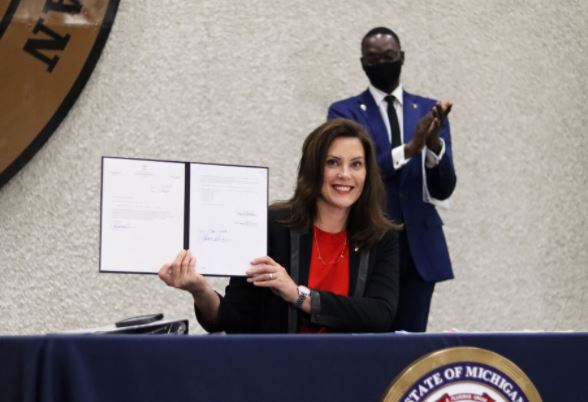
DETROIT, Mich. — Today, Governor Gretchen Whitmer signed bipartisan House Bills 4980-4985 and 5120 reforming Michigan’s criminal expungement laws making it easier for people who have committed certain felonies and misdemeanors to have their record expunged. Changes in the bills include allowing a person to set aside one or more marijuana offenses if the offense would not have been a crime if committed after December 6, 2018  when recreational marijuana use by adults became legal in the state,  due to the referendum that voters approved to legalize marijuana in 2018. During her 2018 campaign for governor, Governor Whitmer made expungement for marijuana convictions one of her key priorities, and today she is following through on that promise.


“This is a historic day in Michigan. These bipartisan bills are a game changer for people who are seeking opportunities for employment, housing, and more, and they will help ensure a clean slate for hundreds of thousands of Michiganders,” said Governor Whitmer. “This is also an opportunity to grow our workforce and expand access to job training and education for so many people. I am proud to sign these bills today alongside Lieutenant Governor Gilchrist and many of the bipartisan leaders who worked on them.”


“This anti-poverty, pro-job opportunity Clean Slate legislation will reinvigorate the economic potential of hundreds of thousands of Michiganders whose records have hindered their availability to get a job or secure housing, and it will help us grow our workforce,” said Lieutenant Governor Garlin Gilchrist II. “This is the right thing to do on behalf of people everywhere who deserve another chance, and will help improve livelihoods. There is more work to do, but Michigan has now established itself as a leader in removing barriers to economic opportunity for people who have made mistakes. I will continue to stand tall for Michiganders across the state who need someone in their corner.”


Research conducted by the University of Michigan law school, which was recently published by the Harvard Law Review, found that people who receive expungements see a 23% increase in income within a year. This means more resources for families and communities, and a broader tax base, without any negative impact on public safety.


The changes proposed by House Bills 4980-4985 and 5120 include the following:

  • Creates an automatic process for setting aside eligible misdemeanors after seven years and eligible non-assaultive felonies after 10 years.
  • Expands the number and revises the types of felonies and misdemeanors eligible to be set aside by application.
  • Revises the waiting periods before being eligible to apply.
  • Treat multiple felonies or misdemeanor offenses arising from the same transaction as a single felony or misdemeanor conviction, provided the offenses happened within 24 hours of one another and are not assaultive crimes, or involves possession or use of a dangerous weapon, or is a crime that carries penalty of 10 or more years in prison.
  • Expands expungement eligibility to various traffic offenses
  • Allow a person to petition to set aside one or more marijuana offenses if the offense would not have been a crime if committed after the use of recreational marijuana by adults became legal in the state.


“Thousands of Detroiters who want to work and be a part of Detroit’s comeback have been held back for too long because of mistakes they’ve made in their past,” said Detroit Mayor Mike Duggan. “Thanks to the Governor and our state legislators, more than 80,000 more Detroiters now will be eligible to have those past mistakes removed from their record and a chance at a new start. Detroit’s Project Clean Slate has helped hundreds of people get their records expunged already. It’s free, helps clients through the entire process and connects them to opportunities through Detroit At Work.”


“Everyone deserves the chance to build a good life for themselves and their families. But far too many people enter the criminal justice system and end up cut off from those opportunities and are pushed toward a cruel cycle of poverty and crime. That’s not right, and it creates bad outcomes for all of us,” said House Speaker Lee Chatfield (R-Levering). “These bills are an important step to righting that wrong and helping good people who’ve paid their debt get back on their feet. I am glad we were able to find common ground on this important issue and deliver  reform that will help people statewide.”


“With the signing of these bills, Michigan becomes a national leader in empowering citizens to lead productive lives,” said Representative David LaGrand (D-Grand Rapids). “Michigan will be the first state in the nation to expunge some felonies automatically. I have planned to do everything I can to encourage other states to follow Michigan’s lead.”


“Every public servant strives to work on policies that give Michiganders more opportunities to access jobs and educational opportunities,” said Representative Graham Filler (R-DeWitt). “These expungement reforms will do just that, while at the same time increasing public safety and helping keep people invested in their communities. I was proud to work in a bipartisan, bicameral fashion to get these nation-leading reforms done.”


“This is a milestone in state criminal record-sealing policy that will help hundreds of thousands of people in Michigan and help drive the national conversation on reform forward,” Safe & Just Michigan Executive Director John S. Cooper said. “Safe & Just Michigan is grateful for all the hard work of Governor Whitmer, Lieutenant Governor Gilchrist, reform advocates, Clean Slate’s legislative champions, and other supporters over the last two years to make this day possible.”


Governor Whitmer and Lieutenant Governor Gilchrist have been committed to enacting criminal justice reforms since the day they took office. In April of 2019, Governor Whitmer created the bipartisan Michigan Task Force on Jail and Pretrial Incarceration, chaired by Lieutenant Governor Gilchrist and Michigan Supreme Court Chief Justice Bridget McCormack, which  reviewed the state’s jail and court data to expand alternatives to jail, safely reduce jail admissions and length of stay, and improve the effectiveness of the front end of Michigan’s justice system. The task force has produced a report and made recommendations.


In May of 2019, Governor Whitmer signed into law, bipartisan bills reforming “Civil Asset Forfeiture,” limiting and in some cases ending the ability  of law enforcement agencies to seize a person’s property before that person has been judged and convicted. Additionally,  Governor Whitmer signed “Raise the Age” into law which was an 18-bill package that increased   the age of who is legally considered a juvenile or an adult in the criminal justice system from 17 to 18 years old With the passage of “Raise the Age,” Michigan joined 46 other states in ending the unjust practice of charging and punishing children as adults when they make mistakes.


Deadline Approaching To Apply For Up To $50K Support Grants

Deadline Approaching To Apply For Up To $50K Support Grants

Deadline Approaching To Apply For Up To $50K In Oakland Together Cultural Institution COVID-19 Support Grants

Pontiac, Michigan – Oakland County arts, cultural and stewardship organizations have until October 14 – less than a week – to apply for a grant of up to $50,000 from the $2 million Oakland Together Cultural Institution COVID-19 Support Grant pool.

The grants, which are made possible through federal CARES Act funding, are designed to help arts, cultural and stewardship organizations preserve jobs while continuing to offer services and programming to Oakland County residents. The grants can be used for salaries, rent or mortgage, purchasing personal protective equipment or utility payments, among other things.

“We know how important these arts, cultural and stewardship institutions are to the fabric of our communities and the well-being of our residents,” Oakland County Executive David Coulter said. “They are valuable partners who provide cultural understanding and diversity, conservation and stewardship while enhancing the quality of life for Oakland County and Southeast Michigan.”

To be eligible, an organization must be a non-profit with tax-exempt status that is physically located in Oakland County and provides most of its services to county residents. A complete list of eligible organizations and how funding must be used as well as an application is found at https://www.oakgov.com/covid/grants/Pages/cultural-institution-support.aspx.

Oakland County has allocated all $219 million it received in federal Coronavirus Aid, Relief, and Economic Security (CARES) Act funding, including more than $140 million in grants to help stabilize and support small businesses, residents and communities in every part of the county since the beginning of the COVID-19 pandemic.

The grants have been awarded to more than 10,000 local businesses, which employ 65,000 employees; 22 local chambers of commerce; 28 local school districts; residents having trouble making rent or mortgage payments, nonprofit entities, retailers, restaurants and communities, among others.