Governor proclaims March for Meals Month in Michigan

Governor proclaims March for Meals Month in Michigan

MDHHS banner with logo no names

Press Release


FOR IMMEDIATE RELEASE: March 11, 2025

CONTACT: Lynn Sutfin, 517-241-2112, Sutfinl1@michigan.gov

Governor Whitmer proclaims March for Meals Month in Michigan
Senior Nutrition Program honored for supporting nutrition services for older adults  

LANSING, Mich. – The Michigan Department of Health and Human Services (MDHHS) is joining with the federal Administration for Community Living and senior nutrition service providers in celebrating the 53rd anniversary of the Senior Nutrition Program as part of March for Meals Month.

“For more than 50 years, senior nutrition services have helped create healthy, strong communities where all members can flourish, including our older residents,” said Elizabeth Hertel, MDHHS director. “The Senior Nutrition Program ensures we provide nutritional and social supports to those in need. It is often the gateway for referrals to other nutrition and wellness services such as nutrition education and counseling services, health promotion and disease prevention programs, and other home and community-based services.”

Since 1972, the national Senior Nutrition Program has supported nutrition services for older adults. Funded by the Older Americans Act, local senior nutrition programs serve as hubs for adults ages 60 and older to access meals and other vital services that strengthen social connections and promote health and well-being. In recognition of the impact of the Senior Nutrition Program, Gov. Gretchen Whitmer has declared this month as March for Meals Month in Michigan.

Each year in the U.S., up to half of adults over 65 are at risk of malnutrition and more than 10 million face hunger. In communities throughout Michigan, older adults sometimes lack access to the high-quality, nutritious food they need to remain healthy and independent.

According to the Current Population Survey Food Security Supplement conducted by the U.S. Census for the U.S. Department of Agriculture for 2021, 9.8% of older adults in Michigan have only marginal food security, meaning their “households had problems at times, or anxiety about, accessing adequate food.” Another 6% experience low food security, with households reducing “the quality, variety and desirability of their diets,” and 2.7% have very low food security where “at times during the year, eating patterns of one or more household members were disrupted and food intake reduced because the household lacked money and other resources for food.” That means more than 337,000 members of Michigan’s population age 65 and older are not fully food secure.

As part of the Senior Nutrition Program network, local Area Agencies on Aging, Commissions on Aging, senior centers and other local organizations help older adults across the state by promoting healthy eating, decreasing social isolation and improving health. These partners also provide connections to home and community-based services, such as home-delivered meals and congregate dining sites that can support independence and overall well-being.

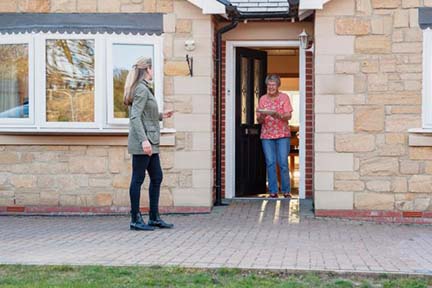
In Michigan in fiscal year 2024, 8.7 million meals were provided to nearly 50,000 home-delivered meal recipients, with another 1.5 million meals served to nearly 42,000 older adults through congregate dining sites at more than 450 different locations, including senior centers and senior housing complexes.

For more information about programs and services for older adults and how you can support senior nutrition, visit the Behavioral and Physical Health and Aging Services Administration or the Senior Nutrition Program promotion video.

Visitor Survey to Shape Comprehensive Tourism & Attraction Plan

Visitor Survey to Shape Comprehensive Tourism & Attraction Plan

Oakland County Launches Visitor Survey to Shape Comprehensive Tourism & Attraction Plan

Post Date:03/10/2025 3:35 PM
  • Residents and visitors may participate in the survey through April 18. It is available online at this link and takes about 15 minutes to complete: Oakland County’s Strategic Plan page.
  • The survey will gauge the perceptions about Oakland County’s downtowns and attractions.
  • The Tourism & Attraction Strategic Plan will measure the value and economic impact of tourism in Oakland County and develop strategies to attract new visitors, businesses and employees while enhancing visitor experiences.

Pontiac, Mich. – Oakland County is launching a new initiative to develop a Tourism & Attraction Strategic Plan aimed at strengthening the county’s tourism sector and enhancing business attraction and retention. As part of this effort, the county is inviting residents and visitors to participate in a survey through April 18.

“This strategic plan will help us build on our county’s strengths and ensure Oakland County remains an inviting destination for visitors,” said Oakland County Executive Dave Coulter. “It also gives us a chance to support and promote our local businesses, cultural institutions and outdoor recreation.

Oakland County encourages community members and visitors to participate in the visitor survey which takes about 15 minutes to complete. It will gather insights on:

  • Tourism assets and experiences in the county
  • Perceptions of Oakland County as a destination
  • Preferred transportation methods for visiting attractions
  • Key factors influencing travel decisions
  • Tourism spending
  • Visitor demographics

The survey will gauge the economic impact and the perceptions of residents and visitors who frequent downtowns and attractions in the county. It is available online at this link: Oakland County’s Strategic Plan page.

In 2023, Oakland County contributed 28 percent of total visitor spending to Metro Detroit’s tourism economy, accounting for 11 percent of Michigan’s statewide tourism spending. The county has a diverse array of attractions including outdoor recreation, historic sites, culinary and cultural experiences, special events and vibrant downtowns, most supported by Main Street Oakland County.

The Tourism Attraction Strategic Plan will help establish sustainable models for tourism development and management, develop strategies to attract new visitors, businesses and employees while enhancing visitor experiences, and explore options for the county’s tourism brand, messaging and marketing approach.

The Oakland County Economic Development Department is leading the effort, partnering with Think Place Agency, BLKDOG, and Tourism Economics to guide the planning process. A Steering Committee of business leaders, local government representatives and venue operators will provide strategic input, while additional stakeholders will be engaged through interviews, focus groups, public meetings and surveys.

“As one of Michigan’s largest paid family attractions, the Detroit Zoo is pleased to work with the county on its tourism strategic plan,” said Randi Hamilton, chief experience officer, Detroit Zoological Society. “The Zoo is deeply committed to the community, and we are thrilled to collaborate with neighboring downtowns and other attractions to create unforgettable experiences — both for local guests and visitors far and wide.

Follow the initiative’s progress and join the conversation on social media using #VisitOaklandPlan.

MPSC Disallows $30 Million in DTE Electric’s Cost Recovery

MPSC Disallows $30 Million in DTE Electric’s Cost Recovery

Michigan Department of Attorney General Press Release banner

FOR IMMEDIATE RELEASE:
March 7, 2025

Media Contact:
Danny Wimmer

MPSC Disallows $30 Million in DTE Electric’s Cost Recovery Proposal

LANSING – Michigan Attorney General Dana Nessel’s arguments before the Michigan Public Service Commission (MPSC) succeeded in convincing the Commission to disallow $33,774,728 in attempted cost recovery sought by DTE Electric, per an order issued by the MPSC last week.

Regulated utilities file cost recovery cases annually with the MPSC (distinct and separate from rate increase request cases) in an effort to recover, from their monopolized ratepayers, costs incurred by the utility corporation to purchase power to satisfy Michigan residents’ grid demand. Often, utility corporations attempt to “recover” from their customers increased costs that benefit only their shareholders or otherwise result from imprudent or unreasonable management of outages, mismanaging or poorly planning their own power generation, or even purchasing power through sweetheart deals with affiliated or formerly affiliated energy companies. In this cost recovery case, the MPSC ruled that DTE improperly attempted to bill their customers for more than $30 million in costs the utility corporation failed to support as necessary or beneficial to their electric customers. Much of the $30 million dealt with DTE’s imprudent management of several power plant outages. The MPSC issued its order on February 27th.

“Regulated utility corporations often seek permission to recover certain increased costs they incur to deliver Michiganders’ energy supply but, in all instances, they must show these expenses were in the interest of their customers and procured at competitive costs,” said Nessel. “DTE failed to make the mark here, and not for the first time. My office will continue to argue before the MPSC to keep unsupported and wasteful cash outlays made to boost corporate profits or for any other improper purpose off Michigan ratepayers’ bills.”

Also on February 27th, the MPSC issued another order disallowing $7,537,566 in unsupported costs requested in a case filed by DTM Michigan Lateral Company, a pipeline owner and operator whose main customer is DTE Gas. The Attorney General’s intervention in this case led to the issues being fully examined before a judge. The order will prevent more than $7.5 million from being billed to DTE Gas customers.

Altogether, the two orders amount to a total Michigan ratepayer savings of $41,312,294.

DTE sells natural gas to 1.3 million customers across the state and electricity to approximately 2.3 million customers in Southeast Michigan. Since taking office, Attorney General Nessel has helped save Michigan ratepayers nearly $3.7 billion.

Gov. Whitmer Makes Appointments to the Bench 

Gov. Whitmer Makes Appointments to the Bench 

Governor Whitmer Header

FOR IMMEDIATE RELEASE

March 6, 2025

Contact: press@michigan.gov

Gov. Whitmer Makes Appointments to the Bench 

LANSING, Mich. —Today, Governor Gretchen Whitmer announced the upcoming appointment of Andrew Stevens to the 65-A District Court in Clinton County.  


“I’m proud to appoint Andrew to the bench in Clinton County,” said Governor Whitmer. “As a former prosecutor in Ingham County myself, I know that he brings decades of invaluable experience to the position. Andrew will keep families safe and uphold the rule of law.”


65-A DISTRICT COURT- CLINTON COUNTY


Andrew Stevens is currently an assistant prosecutor at the Ingham County Prosecutor’s Office, where he has served for over fifteen years. In this role, Stevens has held various professional assignments and currently serves as the District Court Unit Chief, supervising attorneys and acting as a resource and homicide prosecutor in the Complex Crimes Division. Stevens is also involved in community and educational initiatives. He serves on the Lansing Community College—Eaton Regional Education Service Agency Advisory Committee and is a presenter for the Michigan State University Police Department Citizens Academy.


Andrew Stevens holds a Bachelor of Arts in political science from Michigan State University and a Juris Doctor from the Michigan State University College of Law.


“I humbly thank Governor Whitmer for this incredible honor and distinction,” said Andrew Stevens.  “Every day of the past fifteen years, it has been my privilege to represent the People of the State of Michigan and uphold the vow of justice.  I look forward to continuing that commitment as I boldly serve the residents of Clinton County on the 65A District Court.”


This appointment will be made to fill a partial term following the resignation of Judge Michael Clarizio. Judge Stevens’s term will commence on April 14, 2025, and expire at twelve o’clock noon on January 1, 2027.


AG Shares Top Consumer Complaints of 2024

AG Shares Top Consumer Complaints of 2024

Michigan Department of Attorney General Press Release banner

FOR IMMEDIATE RELEASE:
March 3, 2025

Media Contact:
Danny Wimmer

AG Nessel Shares Top Consumer Complaints of 2024

LANSING – As part of National Consumer Protection Week, Michigan Attorney General Dana Nessel is highlighting the accomplishments of the Department’s Consumer Protection Team and the top complaints from consumers in 2024.

Attorney General Nessel and the Consumer Protection Team partner with the Better Business Bureau, the Federal Trade Commission, the AARP, and others to share information and educate Michigan residents about common scams, data breaches, and other consumer-related issues. The Consumer Protection Team receives more than 10,000 written consumer complaints and more than 20,000 phone calls from consumers each year and enforces various statutes, including the Michigan Consumer Protection Act (MCPA).

Violations of the MCPA often affect consumers financially in the form of money lost for products or services not received. In cases where the monies could be recovered, the Department of Attorney General’s Consumer Protection Team recouped $1.9 million for Michigan consumers and businesses in 2024 in the form of consumer complaint mediation recovery, settlements, and refunds.

The top 10 complaints from consumers in 2024 were in the areas of:

  1. Internet: This category includes complaints involving online purchases, as well as computer communications and technology, and internet service providers.
  2. Retail: This category includes purchases that involved late deliveries or products that were never delivered. Other complaints include the purchases of appliances, furniture and other items that were defective or did not work as advertised.
  3. Motor Vehicle/Automobile: This category includes complaints against used car dealers, auto repair shops, new car dealers and passenger car rentals.
  4. Credit/Financial Concerns: This category covers a variety of areas including debt collection and reporting, credit repair, payday lending and mortgage brokering.
  5. Personal Service Providers: This category covers dating services, beauty companies, fitness facilities, spas, home security and tax preparation services.
  6. Health Service Providers: The category includes health service providers like doctors, dentists, hospitals and medical clinics.
  7. Landlord/Tenant: This category involves disputes between renters and apartment owners or property management companies, mobile home parks and site operators, as well as condominium associations.
  8. Gasoline/Fuel/Energy: This category includes complaints against utility companies, gas stations and propane providers.
  9. Contractors: This category covers residential building construction services, snow removal and landscaping services, plumbing, heating and air conditioning services, and special trade contractors such as those providing emergency tree services.
  10. Telecommunications/Cable/Satellite TV: This category includes complaints against wireless communications, cable and satellite TV services with most of the reports being billing and service issues (NOTE:  this category does not include robocalls).

“I am incredibly proud of the work my Consumer Protection Team does every year to help Michigan residents resolve complaints and fight back against fraud,” Nessel said. “I want to thank the thousands of Michiganders that reached out to my office in an effort to hold bad actors accountable. Our efforts are making a real difference. If you think you’ve been scammed, please do not hesitate to contact us.”

These 10 complaint areas represented 8,596 of the total 10,423 written complaints received by the Department’s Consumer Protection Team. The Consumer Protection Team reviews every single complaint received by the office, either via online complaint form or email. Scams change with the season, and the Department issues regular alerts with the latest information when new ploys crop up so residents can spot and avoid scammers. The Department also has a dedicated consumer protection website, which includes an easily searchable library of alerts and resources.

To file a complaint with the Attorney General, or get additional information, contact:

Consumer Protection Team
P.O. Box 30213
Lansing, MI 48909
517-335-7599
Fax: 517-241-3771
Toll-free: 877-765-8388
Online complaint form

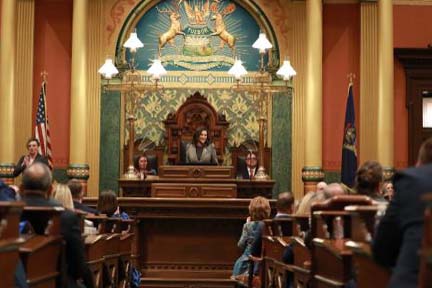
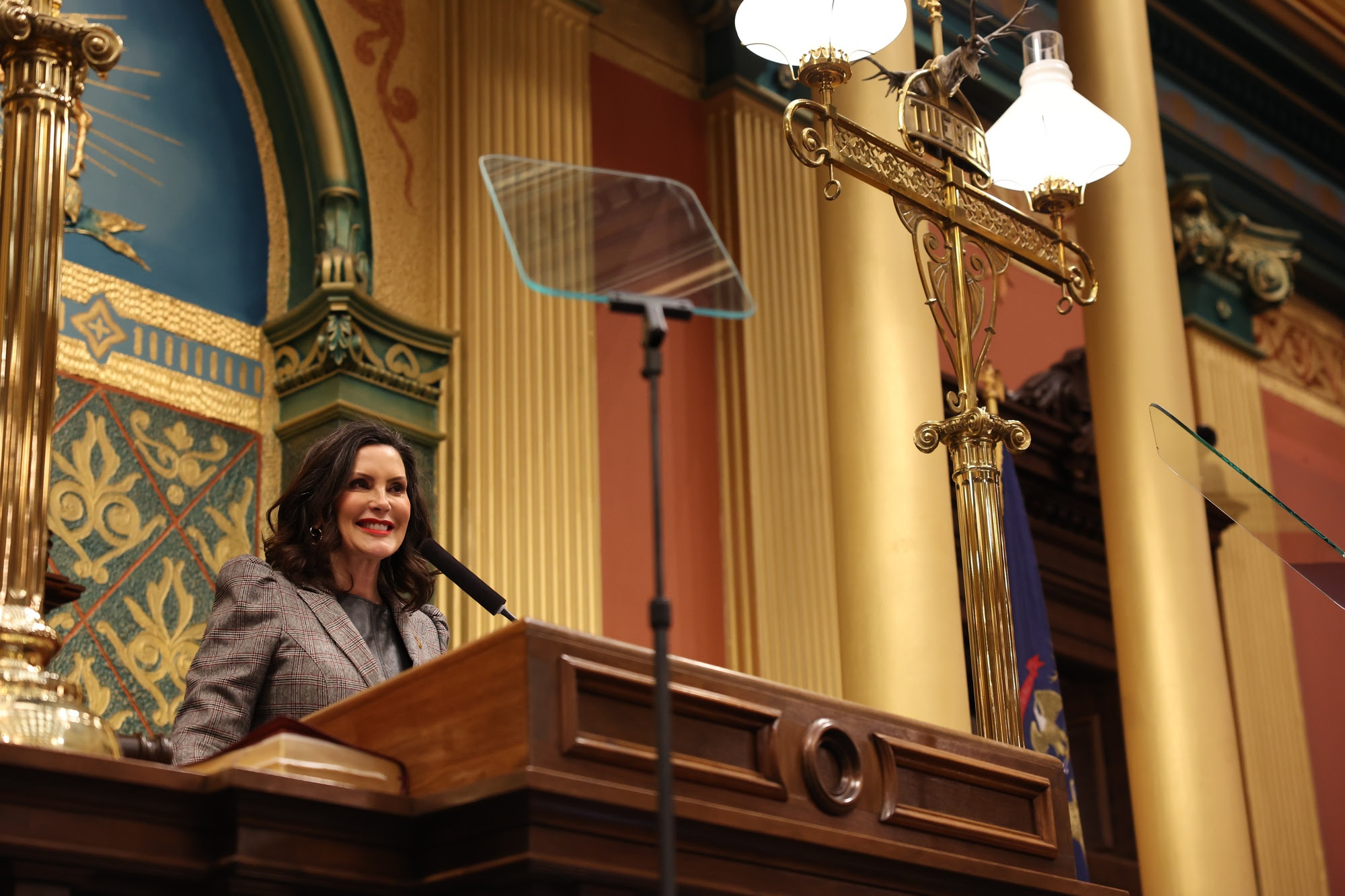
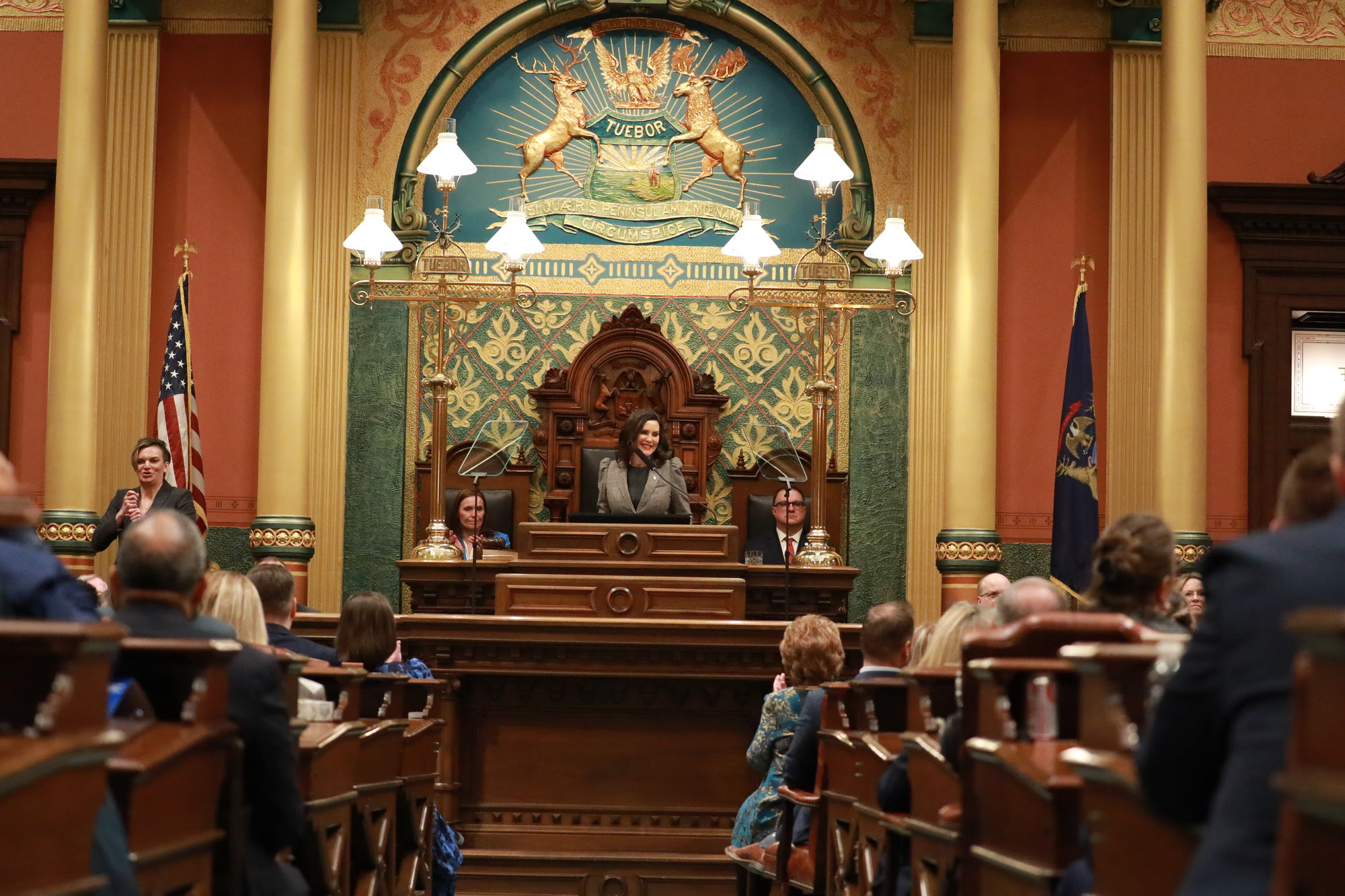
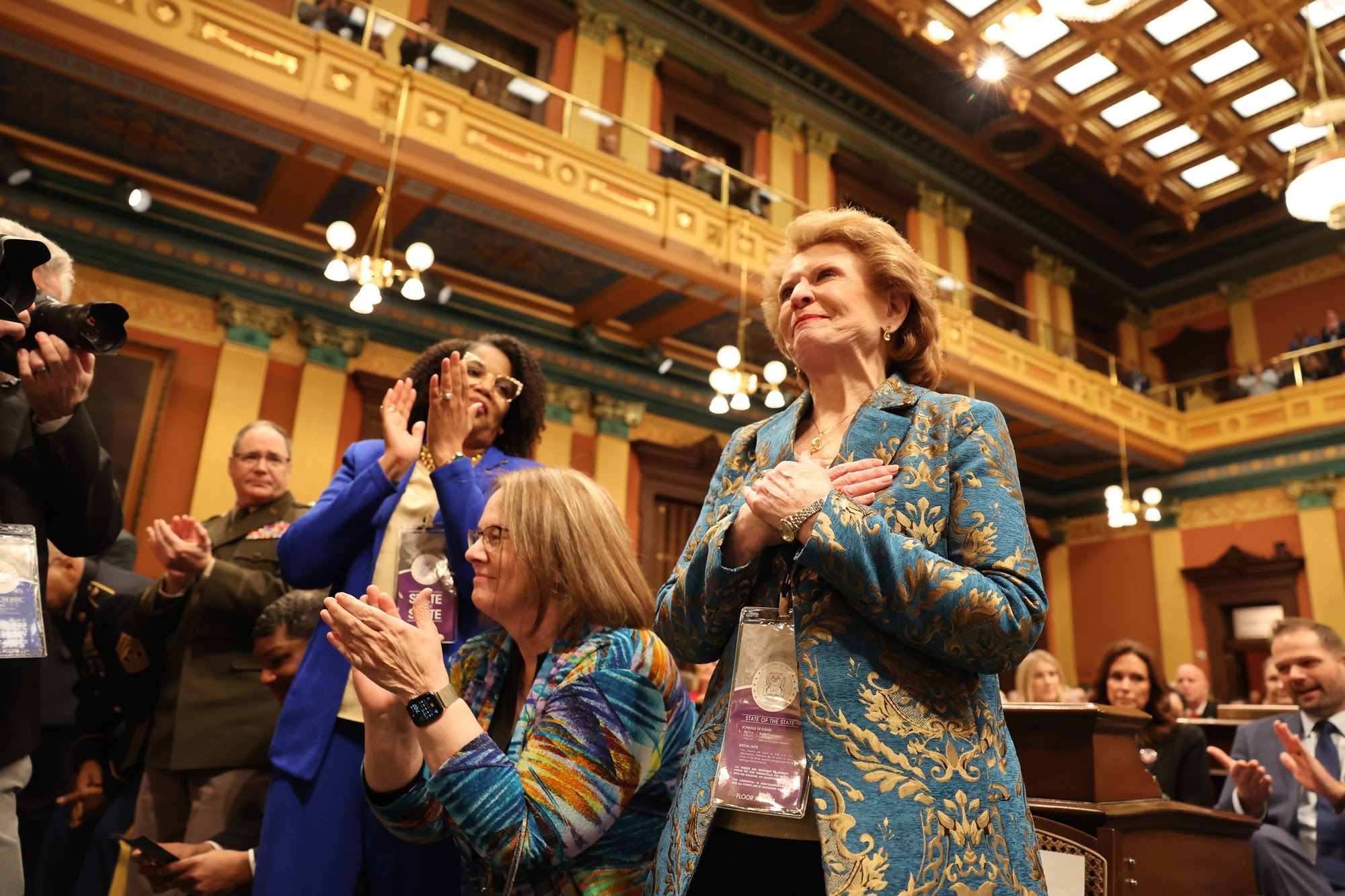
Whitmer Delivers 2025 State of the State Address

Whitmer Delivers 2025 State of the State Address

Governor Whitmer Header

FOR IMMEDIATE RELEASE

February 26, 2025

Contact: press@michigan.gov


Gov. Whitmer Delivers 2025 State of the State Address

Lowering costs of housing, medical debt, energy, and child care amid threat of tariffs

Investments to help young Michiganders get skills, find good jobs, provide for their families

Commonsense plans to streamline permitting & licensing, improve student academic results & health


LANSING, Mich – Today, Governor Gretchen Whitmer delivered her 2025 State of the State Address in front of a joint session of the Michigan Legislature, where she focused on the importance of working with anyone to get things done for Michiganders. She laid out her plans to lower costs for Michigan families, create more good-paying Michigan jobs, and continue delivering results for Michigan taxpayers. The State of the State builds on her Road Ahead Address where, prior to President Trump’s inauguration, she shared her commonsense, bipartisan vision to grow the economy and strengthen the auto industry in anticipation of tariffs. The speech also comes on the heels of her meeting with President Trump where she advocated for Michigan manufacturing and military families.


“In 2025, I’m excited to keep working across the aisle to lower costs, create jobs, and continue delivering results that make a real difference in people’s lives,” said Governor Whitmer. “Right now, families and businesses are facing high costs and uncertainty from tariffs and our national politics are divided. Michiganders are tired of the games and want strong, bipartisan leadership. Let’s lead by example and show the rest of the country how to get things done.”


“Governor Whitmer and I are committed to building a Michigan where every person can be their best selves and access health and wealth,” said Lt. Governor Garlin Gilchrist II. “When we took our oaths, we promised a responsive government that would listen to every Michigander, and this address includes stories and words from Michiganders across our state. This year, we’ll continue focusing on lowering costs, growing Michigan’s economy, and making government more efficient and effective for every Michigander. Let’s keep standing tall for Michigan.”


Governor Whitmer’s 2025 State of the State Address centered stories from Michiganders across the state who all want the same things: a good education, an affordable place to live, more money in their pocket, and a fair shot at a great life.


“Governor Whitmer made herself loud and clear tonight: our collaborative efforts to drive Michigan forward are working,” said Senate Majority Leader Winnie Brinks (D-Grand Rapids). “Since the onset of our Senate Democratic Majority, we’ve worked in tandem with the governor and House to forge a better future for our residents — from expanding civil rights protections and reproductive rights to delivering the largest tax relief plan in state history and making sure no Michigan student goes hungry at school. But our work is not done yet — we’ll continue fighting to lower costs, foster opportunity, and improve our quality of life. And we’ll remain open to working with anyone who puts the real needs of our residents first and foremost. We’re in your corner, and together, we’ll continue to prove to the rest of the country just how great it is being a Michigander.”


“The State of the State Address is always a monumental occasion full of energy and excitement — and tonight did not disappoint. With all three branches of government present, we recognized the sacred balance of our state’s power and the strength of Michigan’s democracy, as dysfunction reigns at the federal level,” said House Democratic Leader Ranjeev Puri (D-Canton). “As House Democratic Leader, my focus is on bringing to life a vision for our state in which all Michiganders can sleep more soundly knowing that they and their family members are safe, secure, and succeeding. For regular, everyday people, that vision looks like lower costs, affordable housing, accessible child care, and strong infrastructure. At the state level, we need to make Michigan more resilient than ever to combat the tariffs, chaos, and cuts coming down from D.C. I am confident that my fellow House Democratic colleagues and I are united in building Michiganders up so that we can weather any and all storms. We are ready to make our Great Lakes State better than ever.”


Key Lines from the Speech: Lowering Costs for Michigan Families

Michigan families and businesses are facing high costs on the essentials right now. President Trump’s proposed 25% tariffs on our closest trading partners would slow down the construction of homes and factories, lead to thousands of layoffs on the auto assembly line, and jack up costs for families by an average of $1,200 a year as companies pass their costs on to consumers.


Governor Whitmer will work with anyone to protect Michigan’s economy against policies that would raise prices and cut jobs. The governor highlighted investments she’s proposed in her budget to cut taxes for seniors and working families, build more housing to lower rents and mortgages, expand assistance on energy bills, and expand quality, affordable child care for working moms and dads.


  • Housing: Since Governor Whitmer took office, the state has made historic progress to build more housing, with MSHDA on track for a third-straight, record-breaking year:
  • “This year, let’s invest $2 billion to build, buy, or fix nearly 11,000 homes…the largest housing investment in Michigan history. Getting this done will create more than 10,000 construction jobs, lower costs, and help more people achieve the American Dream.”
  • Medical Debt: Michigan secured $4.5 million in the FY24 bipartisan state budget to relieve some medical debt, but we are one of just a few states with no protections specifically for this burden that impacts nearly 700,000 Michiganders.
  • “This year, let’s work across the aisle to reduce medical debt so being sick or getting hurt doesn’t also mean being broke for the rest of your life.”
  • Energy: With the threat of tariffs on energy, utility bills could go up. In her speech, the Governor focused on bipartisan legislation she recently signed to expand the Michigan Energy Assistance Program, which already saves 50,000 households $700 a year.
  • “Everyone’s eyebrows raise when that first winter utility bill hits…Republicans and Democrats came together to do something about it…I was proud to sign this expansion, which could save 335,000 more Michigan families hundreds on their energy bills.”
  • Taxes: With high prices on essentials and the looming threat of tariffs, the governor highlighted the retirement tax rollback and Working Families Tax Credit expansion:
  • “This year, hundreds of thousands of senior households will save an average of $1,000 on their taxes and 650,000 families—home to half the kids in Michigan—will get an average tax refund of $3,200 bucks…Together, we put $1 billion back in people’s pockets and lifted 20,000 children out of poverty.”
  • Child Care: Governor Whitmer called on the legislature and federal government to work with her to build on the historic investments we’ve made to expand child care:
  • “If we want to grow our population, we must continue expanding affordable child care. This is pro-family, pro-child, and pro-growth policy. Let’s get it done.”


“I am extremely pleased to see Governor Whitmer propose funding to help pay off medical debt for Michiganders,” said Warren Evans, Wayne County Executive. “Our program in Wayne County has been extremely successful in helping residents in need and I look forward to seeing a state-wide program helping more people across the state. Easing debt ensures that people can keep more money in their pockets, which helps keep the lights on and put food on the table.”


“Governor Whitmer’s call to action on medical debt is a transformational change for Michigan residents as they deal with both the financial and physical stress of health emergencies,” said Oakland County Executive David Coulter. “The first round of our program in Oakland County has wiped out more than $9 million in medical debt for 14,000 residents and that’s just the start of the relief to come, helping families focus on what’s really important – getting healthy.”


Key Lines from the Speech: More Jobs, More Skills, More Money

Governor Whitmer wants to make it as easy as possible for every Michigander to get the skills or education they need to get a good-paying jobs so they can earn more money and protect and provide for themselves and their families.


  • Young Men: Despite record, bipartisan investments to open tuition-free paths to higher ed, career, and technical education, women are outpacing men 2:1. The Governor announced she intends to sign an executive directive to reach more young men and boost their enrollment in these programs.
  • “No matter who you are, we want to help you learn more and earn more. So, look at an apprenticeship, find a scholarship, or sign up for Reconnect. Get your education, debt free, and build the life you deserve.”
  • Selfridge: Protecting Selfridge Air National Guard Base is a bipartisan priority that unites Democrats and Republicans. The Governor will fight for thousands of local jobs and hundreds of military families that rely on Selfridge.
  • “On Saturday, in DC, I spoke with Defense Secretary Pete Hegseth about supporting a fighter mission at Selfridge.”


“MI Reconnect has been a game-changer for expanding educational opportunities in Michigan,” said Brandy Johnson MCCA. “However, the fact that women currently outnumber men 2-to-1 in our enrollment highlights a critical gap. The governor’s directive to actively reach out to young men is essential for ensuring that every Michigander can take advantage of these tuition-free pathways.”


“At Selfridge Air National Guard Base, Michigan service members and their families step up every day to defend our communities and our country,” said U.S. Army Maj. Gen. Paul D. Rogers, adjutant general and director of the Michigan Department of Military and Veterans Affairs. “It’s up to us to support them and have their backs by investing in Selfridge’s infrastructure and winning a new next-generation fighter mission. Michigan’s defense and national security leadership grows our economy and supports our military families. Governor Whitmer and I will keep fighting for Selfridge and working hard to keep Michigan in the lead on national security.”


“Selfridge is Michigan’s hometown airbase, and plays a critical role in our state’s military advantage,” said Macomb County Executive Mark Hackel. “It’s imperative Michigan continues to lead the future of national security and defense through Selfridge.  Investing $100 million in Selfridge is necessary to help secure its next fighter mission. Working together we will continue to protect and grow Michigan’s military advantage.”


“During my entire public service career, I have been proud to fight for Selfridge and the brave men and women who serve there,” said Macomb County Public Works Commissioner Candice S. Miller. “Selfridge is the centerpiece of Michigan’s defense ecosystem and supports thousands of high-skilled jobs and military families. I support the state’s continuing investment in Selfridge, and we must all continue to work towards bringing a new fighter mission to Selfridge.”


Key Lines from the Speech: Results

Since taking office, Governor Whitmer has taken action to cut red tape, streamline government, and make state government more effective, efficient, and responsive for Michiganders. But there is still more to do so we can build stuff faster, create jobs, and improve results for students and parents.


  • Permitting & Licensing: Inefficient permitting and licensing slows down construction and leads to fewer jobs and higher prices. The Governor called for bipartisan collaboration on permitting and licensing including eliminating duplicative exams, honoring out of state trade licensing, giving entrepreneurs more flexibility, and more.
  • “There’s a huge opportunity here for bipartisanship because we all agree that things shouldn’t take so damn long…This year, let’s simplify permitting to get things built on time and on budget.”
  • Academics: Governor Whitmer has made historic investments in education, but we must do more to improve academic outcomes. The Governor highlighted budget investments to tackle literacy and increase transparency so parents can see how their schools are performing.
  • “We spend more and we get less. It’s not acceptable. For our kids, let’s do better…This year, let’s pass a SMART education budget and get our kids on track for the bright futures they all deserve.”
  • Phones: Phones are negatively impacting mental health, physical safety, and academic performance. The Governor called for bipartisan collaboration to limit phones in classrooms.
  • “We’ve seen encouraging data about how commonsense restrictions on phone use during class lead to more learning and less bullying. Kids listen, raise their hands, and make more friends. They talk during field trips. Three-quarters say they feel happy or peaceful without their phone. That’s what school should be about.”
  • Vapes: Almost 14% of high schoolers use vapes. The Governor proposed closing a longstanding loophole and taxing vapes similar to how we tax cigarettes.
  • “32 states—red and blue—already do the same, including all of our neighbors. I’m grateful to Senator Sam Singh who started work on this last year. In 2025, let’s get it done to protect our kids.”


“Improving permitting and licensure isn’t just about cutting red tape, it’s about creating an environment where innovation and growth can flourish,” said state Senator Kevin Hertel (D-St. Clair Shores). “The governor’s emphasis on streamlining procedures and refunding unnecessary fees will not only boost economic activity, but will ensure that our regulatory processes protect both our communities and the environment.”


“When it comes to improving student outcomes in our state, we need to look at all of the factors that may be holding our kids back,” said Terrence Martin Sr., President of AFT Michigan.  “By supporting local school districts curb cellphone use in classrooms, we can help keep our students on the right track, improving mental health, test scores, graduation rates, and more.”


sots 1


sots 2


sots 3