Scam Alerts in Holiday Consumer Protection Campaign

Scam Alerts in Holiday Consumer Protection Campaign

Michigan Department of Attorney General Press Release banner

FOR IMMEDIATE RELEASE:
December 8, 2025

Media Contact:
Danny Wimmer

AG Nessel Highlights Scam Alerts in Holiday Consumer Protection Campaign

LANSING – As part of her holiday consumer protection campaign, Michigan Attorney General Dana Nessel is highlighting five consumer alerts this week to help residents protect their wallets and personal information during the holiday season. This week, the campaign will use themes from popular holiday movies to cover the following topics:

  • Phishing Scams: Residents are urged to avoid clicking suspicious links or opening attachments from unknown senders to protect themselves from fraudsters.
  • Scanner Law: Under Michigan’s Scanner Law, stores must honor the lowest advertised price.
  • Puppy Scams: Consumers seeking to add a furry friend to their family should be aware of fraudulent online pet sellers. Remember to always see the pet in person and verify the breeder before sending any money.
  • AI Scams: Fraudsters are using artificial intelligence to mimic loved ones.
  • Credit Card Charges: Consumers are encouraged to check their credit card statements often and report unfamiliar charges right away to prevent identity theft.

“During the holiday season, it’s more important than ever to stay informed about how scammers attempt to steal your hard-earned money,” Nessel said. “By staying one step ahead, you can better protect yourself and focus on what truly matters: sharing the joy and spirit of the holidays with loved ones.”

To help Michigan residents stay safe from scams, identity theft, and other deceptive schemes, Attorney General Nessel recently launched a new consumer protection social media account, Michigan Consumer Protection (@MIConsumerWatch). The new account will serve as a trusted source for scam alerts, consumer protection tips, education resources, and updates from the Department of Attorney General and will host the holiday campaign. Residents can follow @MIConsumerWatch on Facebook, Instagram, X, and LinkedIn.

Throughout the campaign, the Department of Attorney General will issue press releases each Monday outlining the scams of the week, with daily posts shared through the MI Consumer Alerts social media accounts.

DNR News Digest – Week of Dec. 8, 2025

DNR News Digest – Week of Dec. 8, 2025

DNR banner

News Digest – Week of Dec. 8, 2025

side view of a fat-tire bike next to a snowy forest and trail
Here are a few of this week’s stories from the Michigan Department of Natural Resources:

See other news releases, Showcasing the DNR stories, photos and other resources at Michigan.gov/DNRPressRoom.

Some of the photos used in this email (snowmobiling, American goldfinch and snowy sunrise) are available in the DNR’s public online image collection.


Winter trail reminders for cold-weather adventures

December is off to a snowy start throughout the state, providing lots of opportunities to embrace the elements and take to the trails. It’s also a good time to remember ways to ensure your outdoor exploring is as safe and enjoyable as possible. Here are a few reminders before you head to your favorite pathway.

Snowmobiling: Buy your trail permit, check conditions

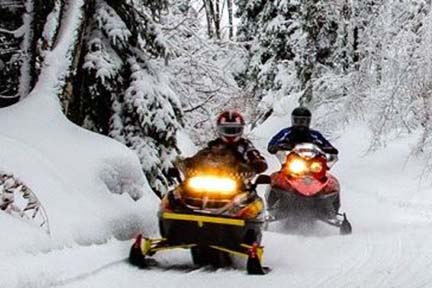
snowmobilers on yellow and blue sleds ride single file on a sunlit, snowy, forested trail in Blue Lake Township, Kalkaska CountyMichigan’s 6,000-plus miles of DNR-designated snowmobile trails, public roads and public lands (only where riding is authorized) are open Dec. 1-March 31, and trail grooming occurs when there is enough snow on the ground. Purchase your trail permit and find maps at Michigan.gov/Snowmobiling. Be sure to check trail reports and trail closures while planning your excursion, and follow Ride Right safety precautions, including staying on the right side of the trail.

ORV riding: Know where you can go

Off-road vehicle riding is allowed on all county roads that are open in the summer, as well as all DNR-designated multiuse trails; note that ORV trails in the Upper Peninsula are marked by letters. Snowmobile-only trails, however, are closed to ORV use Dec. 1-March 31 – snowmobile trails are identified by numbers only on diamond-shaped signs.

In addition, highway rights-of-way are closed until May 1 and therefore are not open to ORVs. These are areas where the trail runs on the side of state and U.S. highways allowing a trail to connect. Always be aware of icy sections, especially on morning and evening rides, and ride in a manner that minimizes trail damage given that some trail terrain may be soft.

In-the-woods exploring: Wear blaze orange, follow trail etiquette

Hiker wearing jeans, red flannel, a backpack and a hunter-orange knit cap walks through a lush, green Michigan forestWith the newer extended late antlerless firearm season (Jan. 2-11) in the southern part of the Lower Peninsula, as well as archery deer season remaining open until Jan. 1, be sure to wear your blaze orange while on the trails for any reason. For more details on these seasons, see Michigan.gov/Deer.

Also know when to yield and how to interact with other trail users by practicing trail etiquette. Remember that courteous communication goes a long way toward safe passing and interacting with others on the trail. Also stay on marked trails, respect trail conditions and closures, and leave no trace – pack it in, pack it out, and if you see litter, please pick it up. And if you’re out in the woods in the northern Lower Peninsula, be aware of hazards related to trees downed or damaged by the March ice storm.

Learn more at Michigan.gov/DNRTrails or contact DNR state trails coordinator Tim Novak at 517-388-8347.


Watch, learn and support birds with Project FeederWatch

Four black and bright yellow, fluffy American goldfinches gather on icy branches around a thistle feeder in Marquette CountyIf you’re an avid wildlife watcher but prefer a perch from the warmth and comfort of indoors, give Project FeederWatch a try. With Michigan temps predicted to stay fairly frigid, it may be the coziest way to connect with nature – and collect helpful birding data.

A November-April survey of birds that visit backyards, nature centers, community areas and other locales in North America, Project FeederWatch is headed up by the Cornell Lab of Ornithology and Birds Canada. People of all ages and skill levels are invited to help: children, families, solo seekers, classrooms, retirees, youth groups, nature centers and bird clubs.

While most people focus on birds coming to feeding stations, DNR wildlife biologist Karen Cleveland said a feeder isn’t a necessity.

“The only requirement is having an area from which you like to watch birds; the location and setting are entirely up to you,” she said. “The schedule is flexible, too. Count the birds you see every week or once all winter. You choose how much time you put into it.”

Participants send their tallies to become part of a collective database, and FeederWatch scientists analyze the data to draw conclusions about winter bird abundance and distribution.

What might you see? Cleveland said the possibilities are many, but likely species include dark-eyed juncos, woodpeckers and American goldfinches. No matter which feathered friends find their way into your view, each one provides valuable data to better understand birding trends.

Questions? For more on Project FeederWatch and winter birding in Michigan, contact Karen Cleveland at 517-388-9795.


Dive deeper into inland lakes learning via online class

colorful graphic for MSUE's inland lakes online course, showing underwater fish, plants, and kids, a dock and house abovegroundWhether you live on a lake, have a favorite hidden fishing spot or recharge with a hike near one of Michigan’s 11,000 inland lakes, you know how lakes contribute to both mental and physical well-being – and why they deserve our care and attention. You can deepen that connection through an upcoming opportunity from Michigan State University Extension.

Introduction to Lakes Online is a nationally recognized, award-winning, six-week course designed for anyone curious or passionate about inland lakes, including lakefront property owners, local officials, lake managers and educators. Led by MSU Extension educators and state agency experts, the course explores lake ecology, watersheds, shoreline management, water law, aquatic plants and community involvement.

Registration and course information

Introduction to Lakes Online runs Jan. 20 to March 27. Register by Jan. 5 for the early-bird discounted rate of $95 per person; after that, the cost is $115. Registration closes Jan. 27. Course details and scholarship information is available on the Introduction to Lakes Online course webpage.

More than 2,000 people across the country have taken the annual course since it was first offered online in 2015. Participants regularly praise the content and level of interaction they enjoy with instructors and other students.

Students will experience:

  • Week-by-week, 24/7 access to six online units, complete with prerecorded video lectures, interactive activities, other resources and quizzes.
  • Lively discussion forums and biweekly webinars with classmates and instructors. Ask-an-expert webinars let you learn from experts at the DNR, MSU and the Michigan Department of Environment, Great Lakes, and Energy.

Upon finishing the course, students receive a certificate of completion. They can also receive continuing education credits, including 16 Michigan Department of Agriculture and Rural Development Pesticide Applicator Re-Certification credits.

Questions? Contact Paige Filice (MSU Extension), 517-676-7291 or Joe Nohner (DNR), 517-599-6825.


Photo ambassador snapshot: Snowy sunrise

Bright orange sunrise breaks through a blue-purple sky and tree over North Higgins Lake, with ice and snow covering the near shoreSee more pictures by Michigan state parks photo ambassadors at Instagram.com/MiStateParks. For more on the program, call Stephanie Yancer at 989-274-6182. (This photo is by Joe Holley, for the Michigan DNR, at North Higgins Lake State Park in Roscommon County.)


THINGS TO DO

Need outdoor recreation inspiration? Visit our winter fun webpage for info on snowshoeing, fat-tire biking, ice fishing, camping, stargazing and other cold-weather capers.

BUY & APPLY

Give the gift of Pure Michigan Hunt: the chance at a prize package that includes elk, bear, spring and fall turkey, and antlerless deer licenses, plus first pick at a managed waterfowl hunt area!

GET INVOLVED

Lend a hand, share your skills, donate to favorite causes – there are many ways to support the natural resources and Michigan history you love! Learn more at our volunteers webpage.

Study: Flashing LED lights can reduce crashes on curves

Study: Flashing LED lights can reduce crashes on curves

 
MDOT header (SOM branding)Talking Michigan Transportation (TMT) banner with the Mackinac Bridge.

Study: Flashing LED lights can reduce crashes on curves

Dec. 4, 2025

On this week’s edition of the Talking Michigan Transportation podcast, a conversation about a new study that confirms that flashing LED lights, used strategically, can improve safety on curves.

M-32 in Montmorency County


Timothy Gates, associate chair for undergraduate studies of Civil and Environmental Engineering at Michigan State UniversityThe study is part of a larger project looking for effective speed warning technologies, said Timothy Gates, a professor of civil and environmental engineering at Michigan State University, who talked about the findings on the podcast.

The research is funded by the Michigan Department of Transportation (MDOT).

The state tallied 128,517 crashes on curved roadways during winter weather conditions between 2018 and 2022, causing 175 serious injuries and fatalities, plus 1,360 less serious and suspected injuries, the study said.

The study concluded that curves on flat roads (called horizontal curves by highway engineers) “present a major challenge to drivers, especially when there is a significant difference between the posted speed limit and the curve advisory speed.”

Listen and subscribe

Listen now at buzzsprout.com/1374205.
Subscribe for Talking Michigan Transportation podcast updates.

December Marks Michigan Christmas Tree Month

December Marks Michigan Christmas Tree Month

bob new header
For immediate release: Dec. 2, 2025

Media contact: Lynsey Mukomel, 517-290-1734


December Marks Michigan Christmas Tree Month


LANSING, Mich. – Governor Gretchen Whitmer has proclaimed December as Michigan Christmas Tree Month, honoring the economic, environmental and social benefits of the state’s Christmas tree industry. To celebrate the start of the month, the Michigan Department of Agriculture and Rural Development (MDARD) and the Michigan Christmas Tree Association (MCTA) toured Peacock Road Family Farm in Laingsburg. Photos are available at this link for use in publication.

“Real Michigan Christmas trees are a holiday tradition for many families, whether you visit a Christmas tree farm or a retail tree lot,” said MDARD Director Tim Boring. “You not only get a fresh, fragrant, beautiful tree as the centerpiece of your celebrations, but at many locations you also get to experience activities like hayrides or sleigh rides, petting farms, visits with Santa and more. We continue to see that Michiganders are interested in connecting directly with agriculture, and establishments like Peacock Road Family Farm are really the fabric of our state culture this time of year.”

Michigan’s integrated network of family farmers, processors, wholesalers and retailers work together to ensure a quality product celebrated by millions throughout our state and country.

The state ranks third in the nation for the number of Christmas trees harvested, supplying about two million fresh trees – with an annual net value of more than $45 million – to the national market each year. There are more than 500 Christmas tree farms on a combined 33,000 acres in Michigan, ranging from large wholesale farms, to choose and cut farms, to small farms with a few acres selling pre-cut trees.

“Michigan’s Christmas tree industry delivers more than just holiday cheer,” said Amy Start, Executive Director of MCTA. “It generates jobs, supports environmental sustainability, and provides joy to millions of families during the holiday season. It means a lot to know Gov. Whitmer supports our industry and celebrates our role as a memory maker for Michiganders.”

Michigan grows and sells more than a dozen Christmas tree varieties on a wholesale level, which is more species than any other state. The most popular types of Christmas trees available in Michigan are Fraser fir, Scotch pine, Colorado blue spruce, Douglas fir, Concolor fir and Canaan fir. In addition to Christmas trees, the industry makes an additional $5 million in sales of wreaths, cut boughs, garland and other fresh greenery products.

“The holidays are always a magical time at Peacock Road Family Farm, and we’re excited to welcome families back to the farm this Christmas season,” said Farm General Manager Christian Voorheis. “You can take a wagon ride out to the field to cut your own tree or choose from our pre-cut lot and visit Santa in his cabin, roast marshmallows at a firepit, sip cocoa, buy lunch or a snack, visit our Christmas store, and leave with a beautiful Christmas tree, a warm heart and lasting holiday memories.”

Real Christmas trees are also a great environmental choice. They grow on rocky soil typically unsuitable for other crops and provide extra woodland for animals, create oxygen, and take carbon dioxide out of the air, helping combat global warming. Christmas trees are renewable resources and 100 percent recyclable. The best way to recycle your tree after Christmas is to chip it into mulch, which can be used for landscaping projects.

Christmas trees take six to eight years to reach marketable height. For every Christmas tree harvested, Michigan growers plant three new trees for future harvests.

Visit MCTA’s website or the Michigan Agritourism website to find a Christmas tree farm or retail/wholesale lot, and places offering family friendly holiday activities near you.

For information on where to recycle Christmas trees after the holiday season, check with your local municipality or area recycler or visit the Michigan Department of Environment, Great Lakes and Energy’s Michigan Recycling Directory and use the keywords “Christmas trees” in the search bar.

Read the Michigan Christmas Tree Month proclamation.

Older Driver Safety Awareness Week

Older Driver Safety Awareness Week

Secretary Benson banner
FOR IMMEDIATE RELEASE
Dec. 1, 2025

Contact: Cheri Hardmon

HardmonC@Michigan.gov


Secretary Benson shares resources to support safety and independence during Older Driver Safety Awareness Week

Visit the Safe Drivers Smart Options website at Michigan.gov/AgingDriver for information and support

LANSING, Mich. – To mark the beginning of Older Driver Safety Awareness Week, Dec. 1-5, Secretary of State Jocelyn Benson is highlighting resources shared on the Safe Drivers Smart Options website that help drivers of all ages stay safe behind the wheel and maintain their mobility and independence.


“As we age, our physical abilities, vision, and health can change,” Secretary Benson said. “Whether you are an active driver or considering the transition toward retirement, it’s important to stay educated on safe driving strategies. Older Driver Safety Awareness Week is a good time to have conversations with your loved ones about next steps, start planning for change, and review the resources available on our Safe Drivers Smart Options website.”


The Safe Drivers Smart Options website, found online at Michigan.gov/AgingDriver, has resources and information to educate, empower, and guide older drivers and their families so they can stay active and safe behind the wheel, decide when it may be time to retire from driving, and find local transportation options. These include:


  • Older driver self-assessment tools and videos
  • Links to driving skill refresher courses
  • Ways specific medications and health problems may affect driving
  • Strategies for initiating conversations about when and how to transition to a non-driving lifestyle
  • Information for law enforcement officers, healthcare providers and other professionals


Aging drivers, family members or community organizations can also order copies of the booklet “Michigan’s Guide for Aging Drivers and Their Families” through the Safe Drivers Smart Options website.


Driving laws in Michigan do not require seniors to retake the driving test strictly based on age. The Department of State can mandate a driver reassessment test only if there is concern of a medical condition impairing safe driving, involvement in a fatal crash, three or more at‑fault crashes within two years, accumulation of 12 or more points within two years, or conviction for violating license terms or restrictions.


Visit Michigan.gov/AgingDriver to find resources that may help you or your loved ones stay safe, mobile, and independent.