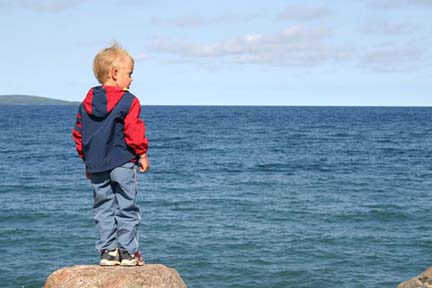
Great Lakes and Fresh Water Week, June 4-12

Great Lakes and Fresh Water Week, June 4-12

EGLE Main GovD banner
FOR IMMEDIATE RELEASE
June 2, 2022
Jeff Johnston, public information officer, JohnstonJ14@Michigan.gov, 517-231-9304

Great Lakes and Fresh Water Week, June 4-12, celebrates Michigan’s ‘water champions’

Commemorations include water use webinar, grant announcements, free fishing weekend

The Great Lakes and Michigan’s abundant freshwater resources have tremendous value to Michiganders. Coming up June 4-12, the annual celebration of Great Lakes and Fresh Water Week focuses on becoming “water champions” – inspiring people to champion the health of this vital ecosystem and to enjoy, appreciate, and safeguard it for current and future generations.

Michigan is home to more than 3,200 miles of coastline along four Great Lakes, 11,000 inland lakes and ponds, 36,000 miles of rivers and streams, and enough groundwater to fill Lake Michigan over again. More than 30 million people in the U.S. and Canada rely on the Great Lakes for their drinking water.

“Michiganders share a special bond as stewards of the world’s largest freshwater system,” said Gov. Gretchen Whitmer, who dedicated the week in a proclamation. “Great Lakes and Fresh Water Week reminds us that this irreplaceable resource powers our lives, our livelihoods, and the ecosystems around us. Being a Michigan water champion means understanding our responsibility to work together to find solutions and overcome challenges such as aging infrastructure, invasive species, extreme weather, and climate change.”

This year’s Great Lakes and Fresh Water Week follows the April 21 release of the MI Healthy Climate Plan, a broad vision for Michigan’s prosperous clean energy future and economywide carbon neutrality by 2050. Gov. Whitmer commissioned the plan, which calls for protecting state land and water.

More recently, Michigan’s Department of Environment, Great Lakes, and Energy (EGLE) hosted a virtual Great Lakes Water Infrastructure Conference, May 10-11, focused on solutions to challenges faced by the Great Lakes region. Recorded sessions from the conference are available on the website.

These latest actions harken back to the MI Clean Water Plan released in 2020 and providing $500 million in funding to help local municipalities upgrade drinking water and wastewater infrastructure.

“By building a shared understanding of how water conservation, water infrastructure, energy, and climate are connected, we can strengthen our collective efforts and protect the health and sustainability of our water resources,” said EGLE Director Liesl Clark. “We want future generations to enjoy the same experiences we do in the Great Lakes State: swimming, boating, fishing, sightseeing, and more.”

EGLE and its Office of the Great Lakes (OGL) partner with the Michigan Department of Natural Resources (DNR), the Southeast Michigan Council of Governments (SEMCOG), and the MiSTEM Network at the Michigan Department of Labor and Economic Opportunity (LEO) to sponsor Great Lakes and Fresh Water Week.

“The celebration of Fresh Water Week takes on even more meaning this year, as we mark the 75th anniversary of the Michigan State Waterways Commission and all of the work done to make the state’s Great Lakes, rivers, and inland lakes more accessible for better boating adventures,” said DNR Director Dan Eichinger. “Michigan’s freshwater resources, in large part, define what it means to live in this state, and the DNR remains committed to protecting and managing these resources that provide the backdrop for amazing recreation experiences you won’t find anywhere else.”

SEMCOG Executive Director Amy O’Leary agreed.

“Southeast Michigan’s Great Lakes shoreline and our inland lakes and streams are among our most prized regional assets,” O’Leary said. “The health and sustainability of our waters are supported by an army of water champions, including our state and federal partners, the Great Lakes Water Authority, local governments, educators, gardeners, anglers, paddlers, nature lovers, nonprofit partners such as watershed organizations, and so many more. If you want to learn more about how to be a water champion in your Southeast Michigan community, visit miOneWater.org.”

There are many ways to participate in Great Lakes and Fresh Water Week:

  • Visit EGLE on Facebook for news and info from the department. A video June 6 by EGLE Director Liesl Clark will highlight Michigan water champions and the opportunity to share how you and those you know live out water champion principles.
  • Virtually attend a webinar titled “Water: We are the Champions,” part of SEMCOG’s One Water webinar series, at 1 p.m. Monday, June 6. Presenters from SEMCOG, EGLE, and the Great Lakes Water Authority will discuss what it means to be a water champion. Register on SEMCOG’s website or watch the presentation live on SEMCOG’s Facebook page.
  • Virtually attend an EGLE webinar titled “How Michigan’s Water Use Program Preserves and Manages our Water Resources” at 1 p.m. Tuesday, June 7, to learn why Michigan has water use regulations, how they work, and what they mean for the state’s residents, industries, and future generations. Register on EGLE’s website.
  • Tease your brain with daily Great Lakes trivia, posted to the DNR’s Mi Nature Facebook page and at EGLE’s Twitter feed June 6-10.
  • Fish for free June 11-12. On these two days, the DNR will waive the need for a fishing license, as well as off-road vehicle license, trail permit, and the Recreation Passport requirement for admission to state parks and boating access sites.
  • Settle in at the beach with a great summer read like the 2021 State of the Great Lakes report.
  • Enjoy the outdoors safely and sustainably by following tips for responsible recreation in and around Michigan waterways.
  • Teachers, explore the From Students to Stewards toolkit for place-based educational resources that will instill a desire to learn about water resources and protect our lakes and streams.
  • Public officials, study up on issues around drinking water infrastructure investments and resources available to your communities. Check the Michigan Municipal League Foundation’s MI Water Navigator website as a guide to navigating infrastructure funding opportunities.
  • Watch the Department of Labor and Economic Opportunity’s (LEO) MiSTEM Network website June 8 for the announcement of grant recipients from a combined $200,000 allocated by LEO and EGLE in February. The grants, a continuation of the 2020 From Students to Stewards Initiative and 2021 MiSTEM Transformative Playbook grants, will boost freshwater literacy programs and access to real-world STEM experiences for Michigan K-12 students.   

More details about the week are available on the OGL’s Stewarding the Great Lakes webpage, including links to local events, videos, educational resources on topics such as invasive species identification and proper disposal of old medications, and information on how to volunteer with the Michigan Clean Water Corps.

Oakland County Wins Silver in Environmental Leadership

Oakland County Wins Silver in Environmental Leadership

Oakland County Wins Silver in Environmental Leadership

Oakland County achieved silver status for exemplary action in the Michigan Green Communities program.

  • Oakland County is measuring greenhouse gas emissions, has a campus-wide sustainability plan, will integrate solar energy in an upcoming renovation, and plans to install electric vehicle charging stations.

Pontiac, Michigan – The Michigan Green Communities (MGC) program has recognized Oakland County for its environmental leadership. The county achieved silver status for exemplary action in multiple categories, including planning, climate resilience and adaptation, energy efficiency, renewable energy, water conservation and protection, and mobility.

“One of my first pledges to the residents when I became the county executive in 2019 was to reduce greenhouse gas emissions at the county government campus in Pontiac and Waterford by 2030 and in the county overall by 2050,” said Oakland County Executive David Coulter. “I’m honored that the Michigan Green Communities program has recognized the county for the environmental sustainability plans we’re developing that will ensure future generations have a safe and clean county where they can live, succeed and thrive.”

Since hiring its first chief environmental sustainability officer, Oakland County has begun tracking and measuring greenhouse gas (GHG) emissions, developed a campus-wide sustainability plan, integrated solar energy in an upcoming renovation, and plans to install electric vehicle charging stations in two parking lot projects.

The county was also recently accepted into the 2022 LEED for Cities program which provides technical assistance to help communities reach their sustainability goals.

“You cannot manage what you do not measure – metrics and data are critical to sustainability – and we are already gauging our performance in reaching our sustainability goals,” Erin Quetell, Oakland County’s chief environmental sustainability officer, said. “The Michigan Green Communities Challenge is a great way for municipalities of all sizes to track and measure their sustainability successes.”

As part of the 2021 MGC Challenge, 44 participating local governments were awarded gold, silver, or bronze seals of achievement reflecting community leadership in areas such as energy efficiency, climate adaptation and resilience, recycling, environmental justice, and more. Ten communities received bronze certification, 12 received silver certification, and 22 received gold certification.

The MGC program is open to all local governments in Michigan. MGC is a sustainability networking, benchmarking, and technical assistance program. It guides and supports communities in adapting to a changing climate, protecting infrastructure, improving the quality of life for residents, and creating a more environmentally and economically sustainable future for the state of Michigan.

MGC is supported by the Michigan Department of Environment, Great Lakes, and Energy; the Michigan Department of Health and Human Services; the Michigan Economic Development Corporation; the Michigan Association of Counties; the Michigan Municipal League; and the Michigan Townships Association. More details about this program can be found at www.migreencommunities.com.

Michigan Now a Top State for Small Business Revenue Growth

Michigan Now a Top State for Small Business Revenue Growth

Governor Whitmer Header

FOR IMMEDIATE RELEASE
May 31, 2022
Contact: Press@michigan.gov

Gov. Whitmer Announces Michigan Now a Top State for Small Business Revenue Growth


LANSING, Mich. – Today, Governor Gretchen Whitmer highlighted new small business data indicating Michigan’s continued economic growth. According to Opportunity Insight’s Track the Recovery, January 2022 saw small business revenue in Michigan increase by 24% compared to January 2020, while the nation experienced a 6.9% increase over the same period. According to the Bureau of Labor Market Information and Strategic Initiatives, Michigan ranks tenth in small business revenue growth over the last two years.


“Small businesses are the backbone of our economy and they continue to create jobs and get things done,” said Governor Gretchen Whitmer. “The data continues to show that small businesses are at the forefront of driving innovation, jobs and economic growth in our state. I’m committed to getting small businesses the support they need to retain and recruit more workers and expand operations so we can keep this momentum going and see even better numbers in the future.”


This latest positive data closely follows the recent announcement that Michigan had the fastest small business job growth in 23 years and that 150,000 new small business applications were filed in 2021, 59% more than in 2019. Governor Whitmer also recently announced that the State has been approved for up to $236,990,950 in State Small Business Credit Initiative funding from the U.S. Department of Treasury.


Over 900,000 small businesses employ 1.9 million people. COVID-19 impacted small businesses nationally and here in Michigan. Governor Whitmer, through her MI New Economy plan is setting a bold goal for Michigan’s small businesses to build on this momentum and have Top 10 growth during the next five years.


Governor Whitmer remains committed to supporting small businesses as Michigan continues growing its economy. Under the MI New Economy plan, the governor laid out a $2.1 billion proposal to grow Michigan’s middle class, support small businesses and invest in communities. As Michigan’s economy grows, bolstered by a multi-billion-dollar surplus and increasing momentum, Governor Whitmer’s proposals will tackle underlying issues faced by small businesses and make bold investments needed to create economic prosperity for all.


  • $500 million to build on the Michigan Mainstreet Initiative, which offers grants to restaurants, place-based businesses, and microenterprises with further dollars to attract more start-ups.
  • $200 million to create a more conducive business environment for high-tech, high-growth start-ups and create jobs of the future in Michigan.
  • Added 220,000 jobs in 2021, drove down unemployment and took Michigan from a projected $3 billion deficit to a $7 billion surplus.
  • Enacted a bipartisan tax cut for small businesses, enabling them to grow and create jobs.
  • Signed a Buy Michigan executive directive to increase state procurement and contracts with small and geographically disadvantaged businesses.
  • Signed the bipartisan Strategic Outreach and Attraction Reserve (SOAR) package, which supports business by fully funding a competitive economic development toolkit to help make Michigan a national leader in business attraction.
  • Launched over $400 million to support small businesses through Growing MI Business grants.
  • In partnership with the Michigan Economic Development Corporation, the Governor implemented 23 economic relief programs for businesses, supporting more than 25,000 companies and retaining more than 200,000 jobs, and provided $100 million through the Small Business Restart Program to help restaurants and other place-based businesses cover costs by providing grants up to $20,000 for mortgage, rent, taxes, payroll and other operating expenses.


Electric vehicle chargers in Michigan state parks

Electric vehicle chargers in Michigan state parks

DNR banner

DNR News

The following news release was issued earlier today by the Office of Gov. Gretchen Whitmer, and we’re sharing it with our subscribers. The version linked in this note includes photos from today’s event at Holland State Park.


May 26, 2022
Media contact: Press@Michigan.gov

Gov. Whitmer celebrates partnership with Adopt a Charger, Rivian to install electric vehicle chargers in Michigan state parks

Installation at Holland State Park kicks off phased state park EV charging installations as part of Lake Michigan EV Circuit and across the state

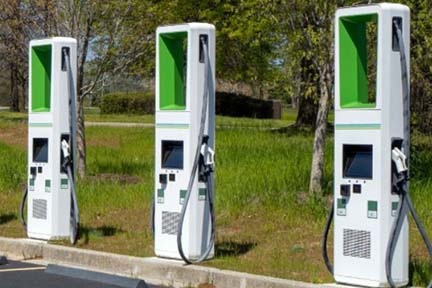
Near the beautiful, sandy beaches of Lake Michigan at Holland State Park, Gov. Gretchen Whitmer today joined state and local officials and representatives from Adopt a Charger and electric vehicle automaker Rivian to celebrate the first of approximately 15 electric vehicle charging sites to be installed at state parks and a state fish hatchery in Michigan over the next few years.

Two Rivian Waypoints chargers were unveiled today at the 142-acre state park in Ottawa County, followed by an inaugural charge featuring a Rivian R1T pickup.

“This partnership to install charging stations in our state parks speaks to the collaborative approach we are taking to grow our economy and address climate change head-on through clean, reliable energy,” said Governor Gretchen Whitmer. “These charging stations along the Lake Michigan EV Circuit build on our rich Pure Michigan tradition of exploration and bringing together communities and businesses to ensure that we honor our past as the place that put the world on wheels and continue to invest in our workforce as we lead the transition to electric vehicles. Together, we will keep growing our economy, creating good-paying jobs, and lowering costs for drivers and working families.”

Rivian, an electric vehicle maker and automotive technology company, under an operating agreement between Adopt a Charger and the Michigan Department of Natural Resources, will be providing open-network, Level 2 Rivian Waypoints chargers at no cost to the state or taxpayers.

“We applaud the state for continuing to adopt policies that keep Michigan at the forefront of innovative electric mobility which is why we’re proud to take our collaboration with the state up a notch today at Holland State Park,” said Chris Nevers, Senior Director of Public Policy at Rivian. “Our state parks charging program is how we come together with our partners to offer a solution to EV-charging gaps. We’re making this investment because we believe that exploring the natural world should be possible without contributing to local air pollution, climate change, or damaging the environment.”

Adopt a Charger, a nonprofit organization, will provide technical, marketing and sponsorship support for the operation of the chargers throughout the duration of the agreement. ITC, an electric transmission company, will provide the funding for the electrical use for two years. Consumers Energy, through the Power MI Drive program, is providing the funds to pay for upgrades to the electrical systems at state parks necessary for charger installation.

From Warren Dunes State Park in the southwest corner of the Lower Peninsula, north along the Lake Michigan “gold coast” and additional points inland, an estimated total of 30 chargers are scheduled to be installed as part of the first phase of the project with the next installations beginning in summer and continuing through the year.

“This project will not only benefit Michigan in the near term but will also pay dividends far into the future as we move toward a sustainable energy future,” DNR Director Dan Eichinger said. “From these EV charging stations, to installations of solar arrays that power fish hatcheries and other facilities, to building with mass timber and our innovative carbon sequestration development, we are working to improve the environment as we update our own portfolio.”

The state park charger installations deliver on Gov. Whitmer’s announcement in 2021 of a Lake Michigan EV circuit, an electric vehicle route with reliable charging options along Lake Michigan and key tourism clusters, creating the best new road-trip for EV owners in America. The Lake Michigan EV Circuit is part of ongoing efforts, such as the Charge Up Michigan program, to employ green technologies throughout the state, including solar-powered amenities, carbon sequestration and numerous efficiencies.

One example of this are solar panels recently installed at Holland State Park by Utopian Power, on a building adjacent to the electric vehicle chargers. The arrays will provide power for some of the park functions.

“As the transition to an electrified mobility future continues to accelerate, innovative initiatives like these are vital to ensuring EVs can be more easily incorporated into our everyday lives, regardless of where you are in the state,” said Trevor Pawl, Chief Mobility Officer with the Office of Future Mobility and Electrification. “By identifying creative partnerships and opportunities, we are making significant progress in creating a safer, more equitable and environmentally conscious transportation future for all Michiganders.”

The ability to link state parks with electric vehicle travelers will benefit both parties by increasing the number of visitors at parks, while providing convenience and significantly increasing range for EV motorists. Rivian’s Level 2 Waypoints chargers are equipped with a J1772 plug, suitable for all electric vehicles including Rivian’s R1T pickup and R1S SUV.

The rollout of the accessible chargers across the state is being done in phases. State parks in the Upper Peninsula are scheduled to be part of the second phase, targeted to take place next year.

The tentative list of installations for this year includes two Rivian Waypoints chargers at Warren Dunes (Berrien County), P.J. Hoffmaster (Muskegon County), Charles Mears (Oceana County), Ludington (Mason County), Orchard Beach (Manistee County), Leelanau (Leelanau County), Young (Charlevoix County), Petoskey (Emmet County), Wilderness (Emmet County) and Interlochen (Grand Traverse County) state parks, four at Holland and Grand Haven state parks, both in Ottawa County, and two at the Oden State Fish Hatchery in Emmet County. Installations are anticipated in subsequent years at Palms Book State Park (Schoolcraft County) and Fayette Historic State Park (Delta County).

As Michigan continues to welcome travelers to the state, increased access to EV charging sites is one way to continue to bring new leisure travelers to the state.
With tourism one of the industries hit hardest by the impacts of COVID-19, the Lake Michigan EV circuit builds on the continued success of the state’s Pure Michigan campaign to help the industry recover by offering an exciting ecotourism attraction and reducing range anxiety for out-of-state EV drivers from population centers along Lake Michigan, like Chicago and Milwaukee.

To learn more about how Michigan is leading in transportation mobility and electrification, visit MichiganBusiness.org/Mobility/.

Additional partner quotes:

“The Adopt a Charger goal is to enable zero emission tourism in Michigan, and inspire visitors of all ages to consider the impact of their decisions on the environment,” said Kitty Adams Hoksbergen, executive director of Adopt a Charger. “I am grateful to everyone at DNR for proactively planning and offering EV charging at state parks, and to Rivian for their generosity in making it happen. Thanks to ITC for sponsoring the electrical usage so EV motorists can charge their vehicles fee-free for the first two years. I grew up camping with my family at Michigan State Parks, and am grateful to be promoting what I believe in while supporting the places special to me.”

“Consumers Energy is excited to work with Governor Whitmer and Rivian to help launch the Lake Michigan circuit of EV charging infrastructure. Our PowerMIDrive program analyzed the network needed to support EV charging and to optimize the final locations, collaborating with the State of Michigan to help enable charging ports that will be installed in a number of state parks,” said Jeff Myrom, Consumers Energy’s director of electric vehicle programs. “Consumers Energy’s partnership with the State of Michigan will help enable Pure Michigan tourism and convenient charging infrastructure over the largest segment of the Lake Michigan Circuit.”

“Today’s announced partnership between the DNR and Adopt a Charger fits nicely with MDOT’s goal to enhance connectivity,” said Michigan Department of Transportation Director Paul C. Ajegba. “This also compliments the ongoing work by MDOT and our colleagues in other state departments to deliver on a vision for a Lake Michigan Electric Vehicle Circuit.”

“These EV chargers are an important way to encourage sustainable travel across our state, while sharing the tremendous beauty and recreation offered by our world class state parks here in Michigan,” said Dave Lorenz, Vice President of Travel Michigan, part of the Michigan Economic Development Corporation. “As we encourage travelers to Pursue their Pure this summer, ensuring easy, reliable access to EV charging helps us continue to share these amazing opportunities with new travelers.”

MDHHS urges to recognize World No Tobacco Day

MDHHS urges to recognize World No Tobacco Day

MDHHS banner with logo no names

Press Release


FOR IMMEDIATE RELEASE: May 31, 2022

CONTACT: Chelsea Wuth, 517-241-2112, WuthC@michigan.gov

MDHHS urges Michiganders to recognize World No Tobacco Day on May 31 by quitting commercial tobacco

LANSING, Mich. – The Michigan Department of Health and Human Services (MDHHS) is recognizing World No Tobacco Day by urging Michiganders to quit commercial tobacco.

World No Tobacco Day is an initiative created by the World Health Organization (WHO) and is observed each year on May 31. The annual health observance was created to draw the world’s attention to the tobacco epidemic, and the preventable death and diseases it causes. This year’s campaign focuses on the negative impact that the tobacco industry has on the environment, and calls attention to the environmental impact the tobacco industry has on the planet, which further harms human health.

“We know that the use of tobacco takes a significant toll on a people’s health,” said Dr. Natasha Bagdasarian, chief medical executive at MDHHS. “It damages nearly every organ in the body, including the lungs, heart, blood vessels, reproductive organs, mouth, skin, eyes and bones. However, something that people may not consider is the significant impact that the tobacco industry has had on our natural resources. This year’s World No Tobacco Day campaign sheds a light on that fact.”

The tobacco industry damages the earth’s ecosystem by contributing 84 megatons of greenhouse gases every year. Growing tobacco also contributes to deforestation. The WHO reports that around 3.5 million hectares of land are destroyed each year. Additionally, because 90% of tobacco production occurs in the developing world, the environmental burden most heavily affects countries that lack the resources to cope with these problems. Reducing commercial tobacco use would increase the overall well-being of populations by reducing death and disease and increasing environmental sustainability.

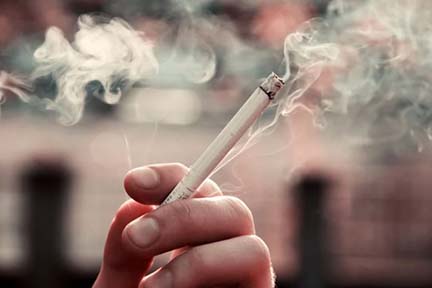
In addition to affecting the earth’s eco-system, cigarette waste has a large negative impact on local communities. Cigarette butts are the most littered item on earth, and major cities spend millions of dollars each year to clean up the waste that smokers leave behind. Cigarette waste is toxic and when littered, it can contaminate water, poison fish and hurt animals that consume it.

The WHO provides several resources to those who are interested in helping raise awareness of the harmful effects of tobacco. Learn more ways to help on the WHO website.

For residents in need of assistance in quitting tobacco, the Michigan Tobacco Quitline – 800-QUIT-NOW (800-784-8669) – is available 24 hours a day, seven days a week. From now through Sept. 30, all new enrollees at the Michigan Tobacco Quitline will receive two weeks of free nicotine replacement therapy along with a coaching session.

For more information about the Quitline, visit Michigan.gov/tobacco.