$17.8 million awarded to MI Department of Labor and Economic Opportunity

$17.8 million awarded to MI Department of Labor and Economic Opportunity

Governor Gretchen Whitmer Banner - headshot with bridge graphic

FOR IMMEDIATE RELEASE

October 20, 2020

Media contact: Mike Murray, 517-275-1820


More than $17.8 million awarded to Michigan Department of Labor and Economic Opportunity to connect Michiganders to Opportunity


LANSING — The Michigan Department of Labor and Economic Opportunity (LEO) has been awarded $17,827,178.11 million in a U.S. Department of Education competitive grant to respond to the economic impact of COVID-19 in the state. These federal funds will help Michigan jobseekers make the jump from education and training to employment by delivering short- and mid-term customized training solutions.


“As we create pathways to education for hundreds of thousands of Michiganders with programs like Futures for Frontliners and Michigan Reconnect, this funding is critical in ensuring we help our workforce move on to the next step,” Governor Gretchen Whitmer said. “This funding will help connect more families to better jobs and bigger paychecks.”


LEO’s Office of Employment and Training will implement the Michigan Learning and Education Advancement Program (MiLEAP) with the new grant award. MiLEAP will provide funds to subgrantees to assist jobseekers in transitioning from short- and mid-term education and training programs to high-skill, high-wage career pathways, resulting in industry-recognized credential attainment and reduced educational debt.


“Michigan’s workforce and postsecondary education systems are ready to leap into action by serving jobseekers looking to earn credentials, gain skills to employment, return to work, and advance in a career pathway,” said LEO Employment and Training Director Stephanie Beckhorn. “This is yet another example of the many ways Michigan is working diligently to support essential workers and others with the next steps on their career path.”


Key workforce development partners who will support this grant include employers, labor, Michigan Works! Agencies, Michigan Community Colleges and other institutions of higher education and the Michigan Department of Health and Human Services.


Michigan employers will be engaged in MiLEAP by joining multi-employer consortia to address regional workforce needs and advance existing employees through re- and upskilling.


MiLEAP will intentionally target services to individuals who are dislocated, underemployed, serving as essential workers, living in distressed rural and urban communities and economically disadvantaged.


Additionally, the program will create MiLEAP Navigators who will provide jobseekers with assistance in assessing and overcoming barriers, identifying resources and providing guidance and support. MiLEAP participants will receive individualized competency-based assessments and learning plans that include skills assessments, remote learning opportunities, high school and industry credential attainment and contextual learning opportunities.


More information about postsecondary opportunities in Michigan is available at Michigan.gov/Workforce.

MDHHS expands Behavioral and Opioid Health Home services

MDHHS expands Behavioral and Opioid Health Home services

MDHHS banner with logo no names

Press Release


FOR IMMEDIATE RELEASE: Oct. 19, 2020

CONTACT: Lynn Sutfin, 517-241-2112, SutfinL1@michigan.gov

MDHHS expands Behavioral and Opioid
Health Home services

LANSING, Mich. – The Michigan Department of Health and Human Services (MDHHS) will expand the Behavioral Health Home (BHH) and Opioid Health Home (OHH) initiatives in select Michigan counties to provide intensive care management and care coordination services for Medicaid beneficiaries with a serious mental illness (SMI) or serious emotional disturbance (SED), and an opioid use disorder (OUD), respectively.

The US Centers for Medicare & Medicaid Services (CMS) recently approved Michigan’s State Plan Amendments (SPAs) to expand its Behavioral and Opioid Health Home initiatives. The expanded SPAs will allow thousands of Medicaid beneficiaries meeting the eligibility criteria to receive BHH or OHH services in the following Prepaid Inpatient Health Plan (PIHP) regions:


BHH

  • PIHP Region 1 (counties in the Upper Peninsula)
  • PIHP Region 2 (21 northern-most counties of the Lower Peninsula)
  • PIHP Region 8 (Oakland County)

OHH

  • PIHP Region 1 (counties in the Upper Peninsula)
  • PIHP Region 2 (21 northern-most counties of the Lower Peninsula)
  • PIHP Region 4 (specifically Calhoun and Kalamazoo Counties)
  • PIHP Region 9 (Macomb County)

“The expansion of these initiatives will help address the complexity of physical and behavioral health conditions in Michigan and improve access to essential services,” said Al Jansen, Senior Deputy Director, MDHHS Behavioral Health and Developmental Disabilities Administration. “For enrolled beneficiaries, the Health Home will function as the central point of contact for directing patient-centered care across the broader health care system.”


In Michigan, half of Medicaid beneficiaries have an untreated mental illness and more than two-thirds have an untreated substance use disorder. Health Homes are a proven model to increase access to coordinated and integrated care, which is especially important during the COVID-19 pandemic.


Building off the success of the current Health Homes, the recently signed Fiscal Year 2021 budget appropriates nearly $2.6 million in general funds (over $26 million total with federal matching funds) for the Behavioral and Opioid Health Home expansions.


For more information, visit Michigan.gov/IHH.


For BHH-specific information, including eligibility and available resources, visit Michigan.gov/BHH; for OHH-specific information, including eligibility and available resources, visit Michigan.gov/OHH.

Whitmer Statement on GM’s $150 Million Investment

Whitmer Statement on GM’s $150 Million Investment

Governor Gretchen Whitmer Banner - headshot with bridge graphic

FOR IMMEDIATE RELEASE

October 20, 2020

Media Contact: Press@Michigan.gov

Governor Whitmer Statement on GM’s Over $150 Million Investment in Michigan Assembly Plants

LANSING, Mich. – Today, Governor Gretchen Whitmer released the following statement after GM announced investments in five Michigan plants, including the Lansing Delta Township Assembly and Flint Assembly for future crossover and full-size pickup production.

“This is good news for Michigan families and hardworking UAW workers, providing critical momentum to our economic recovery across the state,” said Governor Gretchen Whitmer. “Since I was sworn in as governor, we have brought in historic investments to our auto plants, creating more than 12,000 Michigan jobs. I will continue to work closely with GM and every other business that wants to invest in the great state of Michigan.”

GM’s announcement today included:

  • A more than $100 million in the Lansing Delta Township Assembly plant to produce the next-generation GMC Acadia.
  • A $32 million investment at the Flint Assembly plan for future production of heavy-duty Chevrolet Silverado and GMC Sierra pickups.
  • A $17 million investment in the Romulus, Michigan propulsion plant to enhance automation and increase capacity of GM’s 10-speed truck transmission, which is used in full-size pickups and other key products, including the all-new Chevrolet Tahoe and Suburban, GMC Yukon and Yukon XL, and the Cadillac Escalade.
  • And a $3.5 million investment at Orion Assembly. And additional $750,000 will be invested at GM’s site in Brownstown Charter Township, Michigan. Both investments are related to additional production of the Cruise AV test vehicle at Orion Assembly.

Last week, GM announced Detroit-Hamtramck Assembly will now be Factory ZERO, establishing the facility, and the state of Michigan, as the “launchpad” of the company’s multi-brand EV strategy. Together, these announcements solidify Michigan’s continued global leadership in automotive manufacturing and future mobility and electrification.

Whitmer Announces $1 Million Investment: Lost Health Insurance

Whitmer Announces $1 Million Investment: Lost Health Insurance

Governor Gretchen Whitmer Banner - headshot with bridge graphic

 FOR IMMEDIATE RELEASE:

October 19, 2020

Media Contact: Laura Hall, (517) 290-3779, halll17@michigan.gov 

Consumer Hotline: 877-999-6442, Michigan.gov/DIFScomplaints


Governor Whitmer Announces $1 Million Investment to Contact 1 Million Michiganders and Help Those Who May Have Lost Health Insurance in 2020 Get Covered 


LANSING, Mich. — Governor Gretchen Whitmer announced today that the state is investing more than $1 million and will contact more than 1 million Michiganders to help those who may have lost health insurance during the COVID-19 pandemic get covered. There are a number ways for people to get no- or low-cost health insurance, and this investment will help raise awareness and increase access to those programs.


“Access to medical care is more important than ever, yet job and income losses during the COVID-19 pandemic have caused many Michiganders to lose their health insurance,” said Governor Whitmer. “Signing up for insurance can be a confusing process, but this funding will ensure people have access to local help and the resources they need to understand their options and get themselves and their families covered.”


The $1 million investment, through the U.S. Coronavirus Aid, Relief, and Economic Security (CARES) Act, will support community-based organizations that help people enroll in coverage, virtual health insurance educational programs, and an advertising campaign that will target communities impacted by COVID-19-related job losses. A report from the National Center for Coverage Innovation found that Michigan experienced a 46% increase in the number of uninsured adults from February to May 2020.


There are a number of ways for people to get covered, and depending on income and their situation, consumers may qualify for no- or low-cost coverage through cost sharing reductions, premium tax credits, coverage programs for children, the Healthy Michigan Plan, or Medicaid. MiBridges and the Marketplace will direct consumers to the programs they are eligible for, so there is no wrong door to begin the process to get covered. To get started:

  • Open enrollment for the Marketplace runs Nov. 1 to Dec. 15, 2020, with coverage beginning Jan. 1, 2021. Assistance is available to help people at no-cost by visiting localhelp.healthcare.gov.
  • Special enrollment periods may also be available to people who experienced a qualifying life event in 2020, including job loss or reduction in income, but who have not yet enrolled in a new plan. Also, American Indians and Alaska Natives can enroll in a Marketplace plan at any time and can change plans once a month. For more information about special enrollment periods, visit healthcare.gov/screener.
  • Depending on income and other factors, coverage is also available through Medicaid and the Healthy Michigan Plan. Those eligible can apply for coverage at any time through Michigan.gov/MIBridges or by calling the Michigan 211 COVID-19 Resource Navigation line at 844-587-2485.
  • Seniors who have lost employer-provided health insurance during the pandemic may also be able to sign up for Medicare during a special enrollment period. For more information about signing up for Medicare or eligibility for a special enrollment period seniors may visit Medicare.gov or call the Michigan Medicare Medicaid Assistance Program at 1-800-803-7174.


“Increasing the number of insured Michiganders means improved access to care, financial security, quality of care, and health outcomes, which is why we are encouraging everyone who needs coverage to contact local help or log on to Healthcare.gov starting Nov. 1,” said Department of Health and Human Services Director Robert Gordon. “There’s no wrong door to get coverage, so if you qualify for coverage through Medicaid or another program, the systems will direct you to sign up for those programs as well.”


“It’s important for consumers to know nearly 80% of Michiganders who enrolled in a Marketplace plan last year received subsidies resulting in no or reduced cost coverage,” said Department of Insurance and Financial Services Director Anita Fox. “The only mistake you can make is to wait and potentially miss the deadline for enrollment. It’s important to find out about your options early and to get yourself and your family covered.”


For assistance with private insurance, consumers should visit the Health Insurance Marketplace at www.healthcare.gov or call the Marketplace Call Center at 800-318-2596 (TTY: 1-855-889-4325). Consumers can also contact DIFS Monday through Friday from 8 a.m. to 5 p.m. at 877-999-6442 or DIFS-HICAP@michigan.gov if they need assistance.


For assistance with Healthy Michigan Plan and Medicaid, visit Michigan.gov/MIBridges or by calling the Michigan 211 COVID-19 Resource Navigation line at 844-587-2485.

DNR: News Digest – Week of Oct. 19, 2020

DNR: News Digest – Week of Oct. 19, 2020

News Digest – Week of Oct. 19, 2020

leaves header

Always check fire conditions before burning leaves or brush.

Some of the items in this week’s news digest reflect the impact of COVID-19 and how the Michigan Department of Natural Resources is adapting to meet customers’ needs. Public health and safety are our biggest priorities, and we will continue to share news and information about the safest, and sometimes new, ways to enjoy our state’s natural and cultural resources.

Follow our COVID-19 response page for FAQs and updates on facilities and reopening dates. For the latest public health guidelines and news, visit Michigan.gov/Coronavirus and CDC.gov/Coronavirus.

Here’s a look at some of this week’s stories from the Department of Natural Resources:

See other news releases, Showcasing the DNR stories, photos and other resources at Michigan.gov/DNRPressRoom.

PHOTO FOLDER: Larger, higher-res versions of the images used below, and additional ones, are available in this folder.


Doing fall yard cleanup? Don’t forget to check for a burn permit

rakeLeaves are turning red and gold across Michigan, and for many, that means it’s time to take care of fall yard cleanup before the snow flies.

Before lighting that match to ignite leaf piles and brush, remember to check if conditions are safe for burning and know your local fire ordinances. You can also consider mulching or composting fallen leaves, which enriches the soil and does not pose a wildfire hazard. Get composting tips in this Michigan State University Extension article.

If you’re in the Upper Peninsula and northern Lower Peninsula, visit Michigan.gov/BurnPermit or call 866-922-BURN to find out whether burning is allowed. Southern Lower Peninsula residents can get burn permits from their local government or fire department.

“Although temperatures are getting cooler, dry weather and high winds can still carry sparks with the potential to start wildfires,” said Paul Rogers, DNR fire prevention specialist.

When burning, always have a water source nearby and never leave a fire unattended. It’s ok to burn natural materials like leaves, branches and logs, but not legal to burn plastic or other trash.

Visit Michigan.gov/BurnPermit for more information on responsible burning.

Questions? Contact Paul Rogers at 616-260-8406.


Elevate your bird-watching with some community science

birderOne of the best ways to enjoy Michigan’s fall colors and fresh air is to take in the many majestic migratory birds that dot our skies and landscapes this time each year. Better yet, birders of all experience levels can lend bird research a hand by sharing observations of what they see and when and where they see it.

Michigan’s fall migration includes waterfowl, shorebirds, waterbirds, songbirds and raptors that head south to their wintering grounds. Such bird patterns, often complex and misunderstood, are key to helping identify conservation priorities that best support these winged wanderers.

Why does that matter to you? Well, researchers need help. You can help advance Audubon’s Migratory Bird Initiative by visiting public lands and reporting bird sightings on eBird – an online database of bird observations providing scientists, researchers and amateur naturalists with real-time data about bird distribution and abundance. Plus, eBird makes it easy to keep track of your own bird observations, photos and audio files.

The DNR owns and manages half of Michigan’s 103 Important Bird Areas (sites of international significance for the conservation of the world’s birds), and it’s no surprise these make for excellent birding destinations. Many are in DNR-managed state wildlife and game areas. Before you go, though, become familiar with hunting season start dates at these locations; check the Michigan Hunting Digest or call your local DNR office. Birders are advised to wear brightly colored clothing, as fall hunting seasons are getting underway, and remember that a Recreation Passport is needed for vehicle entry at state parks and recreation areas.

See the full list of Michigan IBAs at Audubon.org. Other resources include a list of Michigan’s birding trails and sanctuaries, plus the MI Birds blog with tips on making the most of your fall birding experience.

For more birding inspiration, explore MI Birds, your one-stop shop for all things birds in Michigan. Follow along on FacebookTwitter and Instagram.


Celebrate 2-by-4s and much more during National Forest Products Week

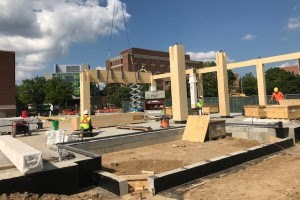
mass timber buildingDo you feel a yawn coming on when someone says: “forest products industry?”

Stifle it! Then look around your home or workspace and celebrate National Forest Products week with the rest of us. Forest products make up a lot of what we see around us, including the lumber most houses are made of, the office paper that spits out of your printer and, yes, even the toilet paper that was in such short supply during the early weeks of the COVID-19 pandemic.

“Michigan’s forest products industry contributes $21.2 billion and supports more than 99,000 jobs in Michigan’s economy,” said Jeff Stampfly, acting chief of the DNR Forest Resources Division.

More than 300 active mills in Michigan produce lumber, high-end veneer, posts and poles, particleboard, plywood, oriented strand board, paper, wood pulp and industrial fuelwood. National Forest Products Week, Oct. 18-24 this year, was established by Congress to recognize the value of forest products and commit to conservation practices that help responsibly manage U.S. forests.

Although people have been using wood for thousands of years, wood technology is still emerging. The DNR co-sponsored a recent summit on mass timber construction, which uses engineered wood columns, beams and panels to build large or tall structures. The DNR will use that construction method to replace its current offices in Newberry. The state-of-the-art, $5 million mass timber building will include a public meeting room.

“We’re excited about the opportunity to share the possibilities of this building technique in Michigan,” Stampfly said.

There’s much to learn about Michigan’s forest products industry, like certifications that ensure Michigan’s 4 million acres of state forest are managed to be sustainable. It’s an important part of our state’s economy and helps create more products than you might think.

Questions? Contact David Neumann at 517-490-7640.


THINGS TO DO

Looking to go on a road trip to some of Michigan’s historical sites? Find your favorite markers and plan your route with the historical marker map!

BUY & APPLY

NotMISpecies, a new, monthly webinar series exploring Michigan’s Invasive Species Program, kicks off 9 a.m. Oct. 22. Register for free at Michigan.gov/EGLEEvents.


GET INVOLVED

No matter who you’re voting for, make sure to plan ahead! Today is the last day to register to vote online and request an absent voter ballot at Michigan.gov/Vote.

DNR COVID-19 RESPONSE: For details on affected DNR facilities and services, visit this webpage. Follow state actions and guidelines at Michigan.gov/Coronavirus.