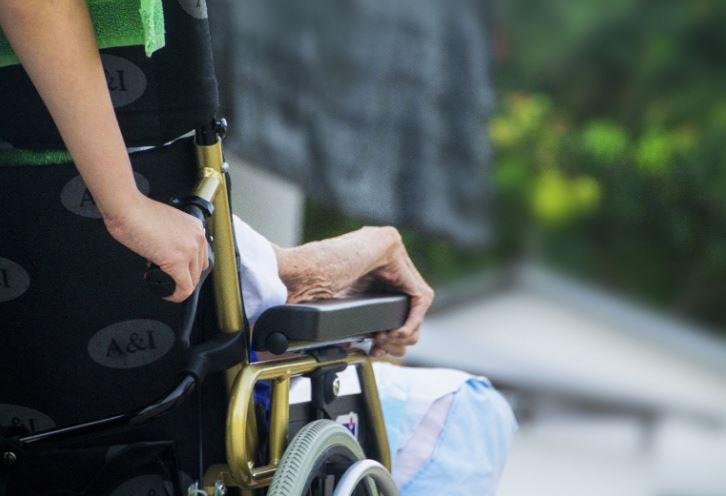
MDHHS Adds Testing Requirements for Homes for the Aged

MDHHS Adds Testing Requirements for Homes for the Aged

FOR IMMEDIATE RELEASE: Oct. 28, 2020

CONTACT: Lynn Sutfin, 517-241-2112

LANSING, Mich. – Today the Michigan Department of Health and Human Services (MDHHS) issued an epidemic order adding requirements for COVID-19 diagnostic testing in homes for the aged (HFAs) and larger adult foster care facilities, and modifying requirements for skilled nursing facilities (SNFs).

The state has already provided direct support that has resulted in nearly 70,000 samples that have been tested from patients and staff in nursing homes and other long-term care settings, and given the significant risk of outbreaks in long-term care facilities and the higher likelihood of severe health outcomes from COVID-19 among the elderly, it is imperative that routine testing be provided to identify infections quickly and contain spread. As of this week, more than 100 new or ongoing outbreaks were reported in long-term care facilities.

Today’s order makes modest updates to testing requirements that have been in place for skilled nursing facilities since June 15, with new requirements that homes for the aged and large adult foster care facilities conduct the same testing. Testing is part of a comprehensive prevention and infection control plan for congregate care settings. MDHHS has provided financial support to facilities for PPE, provided technical assistance and support on infection prevention measures, and put in place preventative measures like safety protocols for visitation to prevent COVID-19 spread in long-term care facilities.

“COVID targets individuals who live in group care, and it’s our job as Michiganders to protect them,” said MDHHS Director Robert Gordon. “Less COVID in the community means less COVID in group homes, so each of us helps when we wear masks, watch our distance, and wash hands. But these homes also need a second line of defense, and that defense is regular testing for residents, staff, and visitors.”

The testing order requires that all SNFs, all HFAs, and AFCs licensed to serve 13 or more individuals provide for the following:

Initial testing of all residents and staff;

  • Testing any resident or staff member with symptoms of COVID-19 or suspected exposure;
  • Weekly testing of all residents and staff in facilities with any positive cases among residents or staff, until 14 days after the last new positive;
  • Weekly testing of all staff in counties of risk levels A through E on the MI Safe Start Map;
  • Testing of all new or returning residents during intake unless tested in the 72 hours prior to intake;
  • Testing of all newly hired staff on their start date or in the 72 hours prior to start date.

MDHHS’s Oct. 21 Epidemic Order “Requirements in residential care facilities” also requires testing of visitors to residential care facilities that have an MDHHS-required resident and staff testing regimen. This will include HFAs and AFCs serving 13 or more individuals, as well as SNFs, after today’s testing order takes effect.

To help implement these testing requirements, the state will provide antigen testing supplies for all facilities affected by this order, and MDHHS has established a system for refilling antigen supplies provided directly by the federal government. Facilities may alternatively develop their own testing program and seek reimbursement; MDHHS will reimburse testing expenses not covered by insurance.

Hospice facilities licensed by the state as a nursing home must test all staff at the same intervals of nursing home staff, and may test a hospice patient with consent of the individual or other person legally authorized to make medical care decisions for the individual.

Nursing homes have been testing under a prior order and must continue it under the new order. HFAs must begin as soon as practicable and not later than Nov. 18.

AFCs serving 13 individuals or more must begin testing as soon as practicable and no later than Nov. 24 for testing individuals with symptoms or exposure, weekly testing in facilities with positives, and testing of new residents or staff. AFCs must begin initial testing of all residents and staff, as well as weekly staff testing, by December 2. However, AFCs must test any resident leaving the facility to spend the Thanksgiving holiday in a residential home or for an overnight stay in the community prior to that resident’s departure and upon return to the facility.

Consistent with MCL 333.2261, violation of this order is punishable by a civil fine of up to $1,000, and may also be treated as a misdemeanor punishable by imprisonment for not more than six months, or a fine of not more than $200, or both.

This order is effective immediately and remains in effect until rescinded. Persons with suggestions and concerns are invited to submit their comments via email to COVID19@michigan.govAn infographic that explains visitation requirements in long-term care facilities can be found on the MDHHS website.

Information around the COVID-19 outbreak is changing rapidly. The latest information is available at Michigan.gov/Coronavirus and CDC.gov/Coronavirus.
Governor Whitmer Signs Bills Into Law 

Governor Whitmer Signs Bills Into Law 

Governor Gretchen Whitmer Banner - headshot with bridge graphic

FOR IMMEDIATE RELEASE

October 28, 2020

Contact: Press@michigan.gov


Governor Whitmer Signs Bills Into Law


LANSING, Mich. — Today, Governor Whitmer signed House Bills 5756 and 5757 into law. The governor also vetoed House Bill 4476.


House Bill 5756 and 5757  extend the validity of enhanced driver licenses, enhanced official state personal identification cards, and official state personal identification cards that expired on or after March 1, 2020. Each will now be valid until December 11, 2020. The bills also waive late fees for renewal of these cards. The bills were sponsored by Representative Mike Mueller, R-Linden.


House Bill 4476 was vetoed by the governor. The bill would have increased the threshold for certain competitive bidding contracts for a wide variety of local road projects, but also created a cap for certain projects. This would have effectively cancelled certain ongoing road maintenance projects. The bill was sponsored by Representative Gary Eisen, R-Saint Clair Township.


To view the governor’s veto letter for HB 4476, click the link below:

Michigan Leaders Encourage Citizens to Make a Plan to Vote

Michigan Leaders Encourage Citizens to Make a Plan to Vote

Governor Gretchen Whitmer Banner - headshot with bridge graphic

FOR IMMEDIATE RELEASE

October 28, 2020

Media Contact: Press@Michigan.gov


Michigan Leaders Encourage Citizens to Make a Plan to Vote

Voters can be confident all valid ballots will be counted

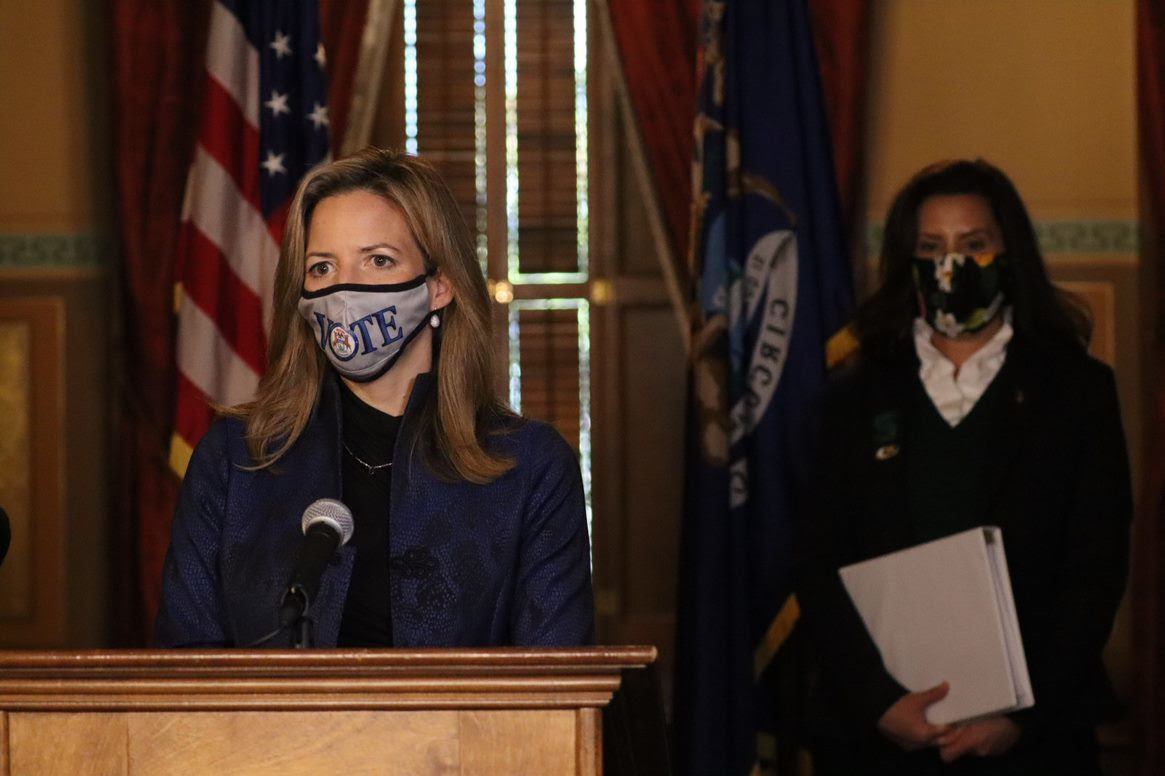
Lansing – Michigan state government’s four highest elected officials held a joint press conference today to encourage citizens to make a plan to vote as soon as possible, and assure them that all valid ballots will be counted.

“In this election, voters will be able to cast their vote with confidence and know that their voice matters,” said Governor Gretchen Whitmer. “Everyone needs to make a plan. Schedule time in your day to fill out your ballot and take it in. If you don’t yet have an absentee ballot and would like one, whether you have requested it or not, you should go to your clerk’s office to request one, fill it out, sign the envelope and submit it.”

Registered voters can request an absentee ballot at their clerk’s office until 4 p.m. on Monday Nov. 2 or vote at their polling place on Nov. 3. Unregistered voters can register and request and absentee ballot at their clerk’s office until 8 p.m. on Nov. 3.

With less than a week until Election Day, voters should not rely on the United States Postal Service to deliver their absentee ballots, and should instead go in person to their clerk’s office or a ballot drop box in their jurisdiction. Voters can find their clerk office and drop box locations at Michigan.gov/Vote. They can also track their absentee ballot at the same site to ensure it is received. All absentee ballots must be received by 8 p.m. on Election Day, Nov. 3, in an envelope with a signature that matches the voter’s signature on file with their clerk.

“In Michigan every valid absentee ballot will be counted as they always have been, by a pair of election workers – one from each major political party – trained to count together without political bias,” said Secretary of State Jocelyn Benson. “Further, even after the counting is done, which could take until Friday in some jurisdictions, boards at the county and state levels, comprised of people from both parties, must then review the procedures and counts of the entire election, before the results can be certified as official.”

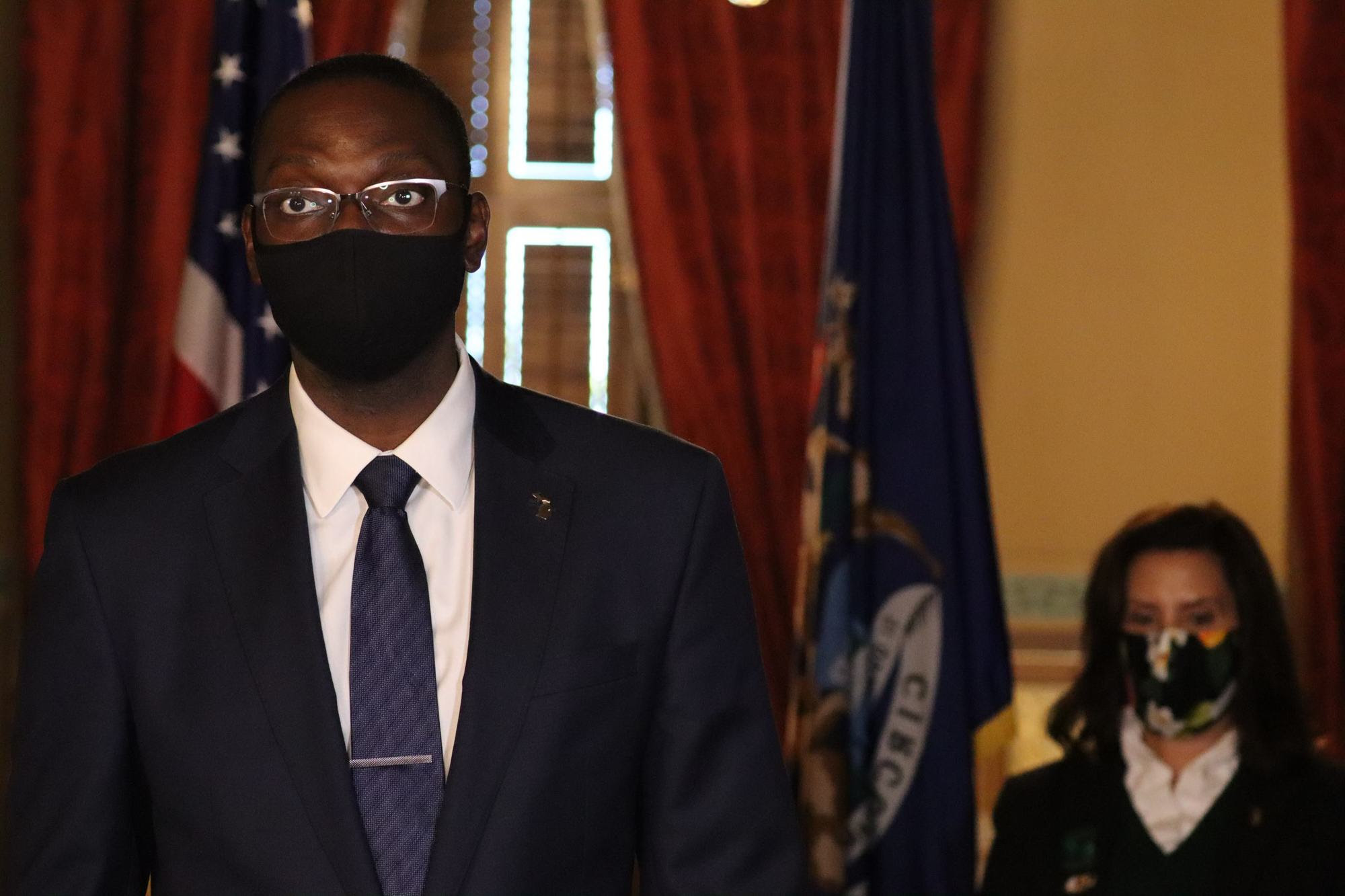
“I’ve been traveling across our state encouraging Michiganders to make a plan to vote early with an absentee ballot,” said Lieutenant Governor Garlin Gilchrist II. “If you do plan to go to the polls on Election Day, remember that voter intimidation of any kind is illegal, and everyone has the right to vote without fear of intimidation. Unregistered voters can register and vote at their clerk’s office, including during their clerk’s office hours this weekend. Election workers are required to wear masks, and all voters are strongly encouraged to do so.”

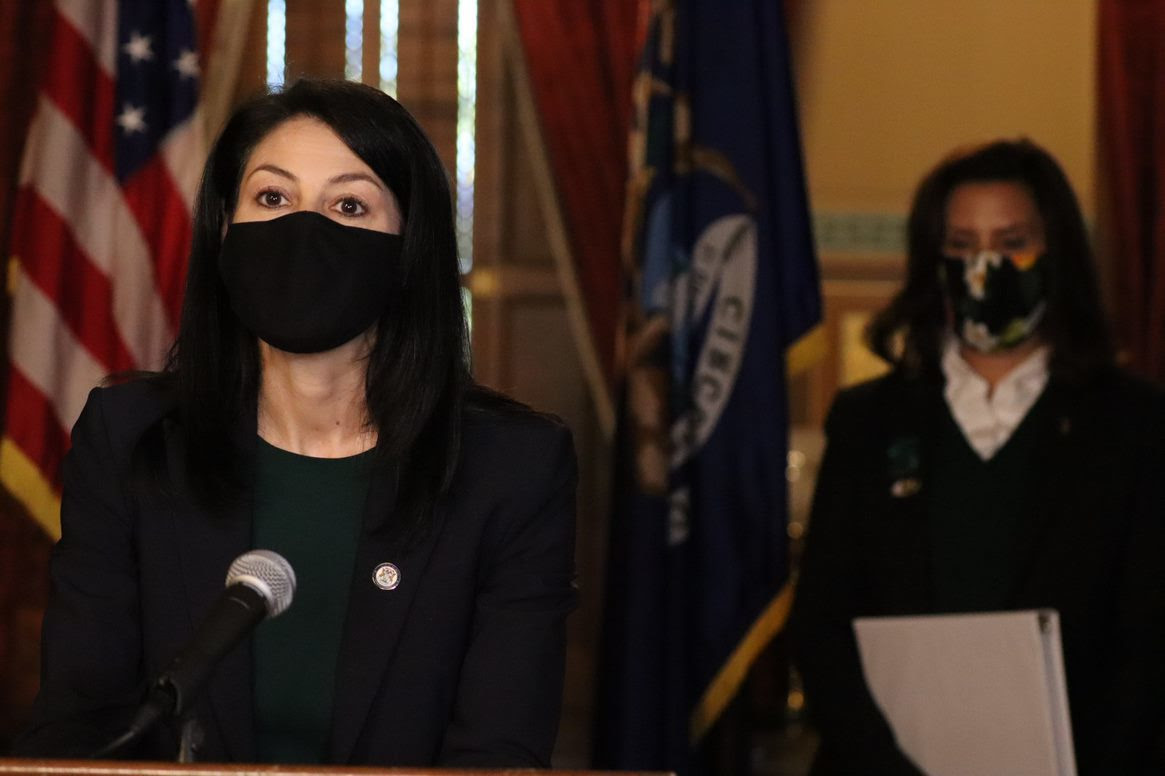
“Voting is a fundamental right and we will make sure every eligible person is able to fulfill that right without intimidation just like we have in every past election,” Attorney General Dana Nessel said. “This election – thanks to no-reason absentee voting – Michiganders have already turned out in record numbers to cast their ballot. But, we’re not done yet. If you haven’t voted, you can still do so by dropping off your absentee ballot at the clerk’s office or voting in person on Nov. 3. You can even visit your clerk’s office before Election Day, get a ballot and vote in person right then and there – just be sure to cancel your absentee ballot if you had requested one. All are safe and secure and guarantee that your voice will be heard in this year’s elections.”

See below for photos from today’s press conference:

1

2

lg

dn

MDHHS recognizes October 29 as World Stroke Day

MDHHS recognizes October 29 as World Stroke Day

MDHHS banner with logo no names

Press Release


FOR IMMEDIATE RELEASE: Oct. 28, 2020

CONTACT: Lynn Sutfin, 517-241-2112, SutfinL1@michigan.gov

MDHHS recognizes October 29 as World Stroke Day
Michigan continues to focus on stroke reduction, providing quality stroke care

­­­­­LANSING, Mich. – In Michigan and the United States, stroke is the fifth leading cause of death and is a major cause of long-term disability. To raise awareness and educate residents about ways to recognize, prevent and treat strokes, the Michigan Department of Health and Human Services (MDHHS) is joining organizations across the country in recognizing October 29 as World Stroke Day.

There are 17 million strokes worldwide each year. In the United States, approximately 795,000 people experience a new or recurrent stroke each year resulting in one of every 19 deaths.

“Maintaining a healthy lifestyle can help reduce the risk of heart disease, stroke and cardiovascular disease,” said Dr. Joneigh Khaldun, chief medical executive and chief deputy for health. “World Stroke Day is an excellent reminder to focus on your health and consult with your physician regarding any concerns you may have.”

Healthy lifestyle behaviors include not smoking; getting regular physical activity; maintaining a healthy diet and body weight; and controlling cholesterol, blood pressure and blood sugar

Strokes occur when the blood supply to any part of the brain is disrupted. Without blood, brain cells may be damaged or die. Strokes can affect one’s body, mobility and speech, resulting in a significant impact on stroke survivors and their families. A stroke is a complex medical issue but there are ways to significantly reduce its impact. Recognizing the signs of stroke early, calling 911, and accessing specialized stroke care as quickly as possible can substantially improve outcomes.

If you think someone is having a stroke, do the FAST check to determine if the person is suffering from these symptoms:

  • Face – Face weakness
  • Arm – Arm weakness
  • Speech – Speech difficulties
  • Time – Time to call 911

MDHHS’ Michigan’s Ongoing Stroke Registry to Accelerate Improvement and Care (MOSAIC), is leading an effort to promote stroke awareness through the recognition of acute stroke victims and survivors. The color blue symbolizes the victims, while the color silver recognizes the survivors. All Michiganders are encouraged to wear these colors and ribbons to help raise awareness and spread the message that early recognition and care can make a difference.  MOSAIC hospital and EMS partners serve as ambassadors for change in their communities and support efforts to recognize stroke and stroke survivors.

For more information about MOSAIC and stroke prevention, visit Michigan.gov/stroke.

# # #


MDHHS provides recommendations to vote safely

MDHHS provides recommendations to vote safely

MDHHS banner with logo no names

Press Release


FOR IMMEDIATE RELEASE: Oct. 27, 2020

CONTACT: Lynn Sutfin, 517-241-2112,  SutfinL1@michigan.gov

MDHHS provides recommendations for
Michiganders to vote safely during COVID-19 

LANSING, Mich. –To ensure Michigan voters remain healthy and reduce the spread of COVID-19 during the Nov. 3 general election, the Michigan Department of Health and Human Services (MDHHS) has released recommendations for voterspoll workers and election officials.

“This guidance allows Michiganders to carry out their right to vote while doing it safely during the pandemic,” said Dr. Joneigh Khaldun, chief medical executive and chief deputy for health. “I encourage registered voters to consider voting alternatives to limit the number of people they come in contact with and to help reduce the spread of the virus.”

“Michigan citizens can cast their ballots safely and with confidence in this election,” said Secretary of State Jocelyn Benson. “All election workers are required to wear masks and all voters are strongly encouraged to do so. Voters who already have absentee ballots can drop them off at their city or township clerk’s office or ballot drop box. Voters can also go to their local clerk’s office through Nov. 2 to vote early by requesting and submitting an absentee ballot.”

All registered voters may vote early by visiting their city or township clerk’s office through Nov. 2. There they can request, fill out and submit an absentee ballot all in one trip, or take their ballot home to fill out and sign the envelope before returning it to one of their jurisdiction’s ballot drop boxes by 8 p.m. on Nov 3. Election workers, who are required to wear masks, will ask voters to show photo ID.


Eligible citizens who are not yet registered may register, request and submit an absentee ballot at their local clerk’s office through 8 p.m. on Nov. 3


When you vote or return your ballot, practice healthy behaviors to protect yourself and slow the spread of the virus. These behaviors include:

  • Wearing a mask that covers your mouth and nose.
  • Washing hands before entering and after leaving the polling location.
  • While in the polling location, frequently use alcohol-based hand sanitizer containing at least 60% alcohol.
  • Covering coughs and sneezes with a tissue or the inside of your elbow.
  • Maintain at least 6 feet (about two arms’ length) of distance from others.

If you are sick or concerned you have been exposed to COVID-19, seek medical care. If you don’t have an absentee ballot, contact your local election office for guidance about voting options.


Guidance is based on the most current Centers for Disease Control and Prevention (CDC) and MDHHS recommendations for prevention of the spread of COVID-19. Read the “Recommendations for Healthy Voting in Michigan” for more helpful tips for voting this year.


Information around this outbreak is changing rapidly. The latest information is available at Michigan.gov/Coronavirus and CDC.gov/Coronavirus.

# # #