Governor Proclaims November 11, 2020 as Veterans Day

Governor Proclaims November 11, 2020 as Veterans Day

Governor Gretchen Whitmer Banner - headshot with bridge graphic

FOR IMMEDIATE RELEASE

November 11, 2020

Contact: Press@michigan.gov


Governor Whitmer Honors Veterans and Proclaims November 11, 2020 as Veterans Day in Michigan 


LANSING, MICH. — Governor Gretchen Whitmer has proclaimed today, November 11, 2020 as Veterans Day, honoring the 600,000 veterans living in Michigan and approximately 20 million across the nation. On this day we honor these men and women, and the many more who served before them, for their courageous and selfless sacrifice to protect our state and country.


“This Veterans Day, I’d like to offer my sincere gratitude to the Michiganders who have sacrificed and served on behalf of this nation,” Governor Gretchen Whitmer said. “Service members have been on the front lines fighting COVID-19, continuing a legacy of military service in Michigan that spans 180 years. These brave men and women are the pride of this great state.”


Yesterday, Governor Whitmer, LARA Director Orlene Hawks, MVAA Director Zaneta Adams, and DMVA Director Major General Paul Rogers announced the introduction of bipartisan legislation that supports military personnel, veterans, and their families by reducing barriers to professional licensure. The bipartisan legislation introduced will make current military personnel, veterans, and their dependents eligible for license reciprocity in Michigan.


Governor Whitmer also urged veterans to use the resources available to aid them on behalf of the state through the MVAA, which works closely with local organizations, the federal VA and other state agencies. They can be reached at 24/7 at the 1-800-MICH-VET hotline and at MichiganVeterans.com.


To view the proclamation, click the link below:

MDHHS shares gains in reforming state’s child welfare system

MDHHS shares gains in reforming state’s child welfare system

MDHHS banner with logo no names

Press Release


FOR IMMEDIATE RELEASE: Nov. 10, 2020 

CONTACT: Bob Wheaton, 517-241-2112, wheatonb@michigan.gov 

MDHHS shares gains in reforming state’s child welfare system to improve child safety, keep families together

Department’s new leadership and team praised by federal judge for being
‘devoted to moving this case forward in a way that no prior team has’

LANSING, Mich. – With new leadership in place, Michigan is making needed improvements to its child welfare system to keep children safer and families together. Michigan Department of Health and Human Services (MDHHS) officials today shared successes during the early stages of their reform efforts and promised even more significant progress as new plans are put into place.

MDHHS was in federal court virtually via Zoom to report on child welfare system improvements during the last six months of 2019 and listen to a report from court-appointed monitors. That monitoring period coincided with the beginning of JooYeun Chang’s tenure as executive director of the department’s Children’s Services Agency.

“We are making good progress,” said MDHHS Director Robert Gordon. “The improvements we shared today are modest but real. Our focus during the brief period covered by today’s report was to develop strategies to set the stage for more rapid improvements in the months to come – particularly in the area of child safety. That progress is already occurring. We look forward to demonstrating greater improvements in outcomes for children and families during the months ahead.”

Chang took over as head of the Children’s Services Agency in May 2019. Speaking to Judge Nancy G. Edmunds of the U.S. District Court for the Eastern District of Michigan, she highlighted progress MDHHS is making in three areas that demonstrates its commitment to improve critical child safety outcomes. She said MDHHS has:

  • Eliminated a previous backlog of 1,300 Children’s Protective Services investigations when Chang came to MDHHS. The department has taken swift action by sending additional staff to county field offices, improving policy to eliminate redundancies and outdated requirements, and problem-solving weekly with county offices that were behind. As a result, backlogs were eliminated within four months.
  • Taken steps to reduce maltreatment of children in foster care. Among other things, the department has created a new unit that follows up on concerns that children in care are being abused or neglected.
  • Provided increased support to relative caregivers so they can keep children safe. MDHHS – which believes children are better off when they are placed with appropriate family members – now provides financial support to relative foster families even if they are not licensed.

“We know there is much more work to do,” Chang said. “We will persist in our efforts to transform our system until we are able to meet a child’s safety needs before family problems become a crisis and we will dedicate the best evidence-informed programs to support the remaining children who need the temporary protection that foster care provides.”

Michigan’s child welfare system is under federal court oversight as a result of a lawsuit filed by the advocacy group Children’s Rights in 2006. In June 2019 – five months after Gov. Gretchen Whitmer took office – Judge Edmunds approved a new agreement that streamlined the monitoring compliance process so MDHHS could devote more resources to getting results.

Tuesday she noted issues remain to be addressed, but she said she’s been impressed by the department’s new leadership based on what she’s heard from court monitor Kevin Ryan.

“My information from Mr. Ryan is that this team that you have assembled is passionate, hardworking and really devoted to moving this case forward in a way that no prior team has,” Judge Edmunds told Gordon. “And that’s good news for the children and everyone in the state of Michigan.”

In addition to working to meet the court’s requirements, Chang said MDHHS in the last year has focused on transforming the child welfare system. She said that has included:

  • Improving the process for handling reports of suspected child abuse and neglect to the state’s toll-free hotline – 855-444-3911. That means decisions about whether complaints should be investigated are more consistent.
  • Investing in early intervention and prevention so that families can be assisted before children are at risk of imminent harm or need to be removed from their families. MDHHS partnered with Chapin Hall at the University of Chicago to analyze data to determine which families are most at risk so the department can intervene.
  • Ensuring that children are placed in family-like settings whenever possible and increased monitoring of child-caring institutions where some children in foster care are placed so they are safe from harm.

Gordon and Chang also informed the court how MDHHS has responded to a pair of crises during 2020 – the death of a child at a child-caring institution in Kalamazoo and the COVID-19 pandemic.

A 16-year-old died May 1 after he was wrongfully restrained at Lakeside for Children. Since then, MDHHS has moved to revoke Lakeside’s license, eliminate the use of dangerous restraints in child-caring facilities and support family-based settings for children in care rather than large institutional facilities.

During the pandemic, MDHHS initiated a rapid review and reunification process, resulting in 432 children in care being safely reunified with their parents. While families spent more time at home due to COVID-19, MDHHS successfully contacted more than 8,000 families beginning in April who had recent CPS cases and more than 5,300 families beginning in August to provide support and resources.

MDHHS also shared with the court significant progress the Children’s Services Agency has made in improving its use of technology.

Since the last court hearing, MDHHS has developed and implemented a plan for a new information technology system that will improve the ability to track and analyze data related to cases. The department is close to awarding a contract to build the first part of the new system, which will be constructed in modules as MDHHS phases out the Michigan Statewide Automated Child Welfare Information System (MISACWIS) that has been plagued by problems. The first module is expected to be finished by the end of 2021, with the entire project being completed within three to five years.

To view the latest federal court monitor report and other information, go to www.michigan.gov/ChildWelfareAgreement.

Philo Awards: ONTV Honored at Virtual Ceremony

Philo Awards: ONTV Honored at Virtual Ceremony

https://www.youtube.com/watch?v=rBjcDXNWAUk

Philo Awards:

ONTV Honored at Virtual Ceremony

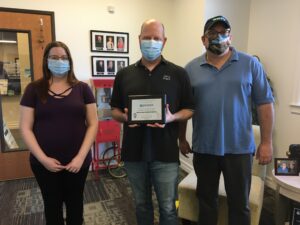
Orion Neighborhood Television was honored at the Philo Festival of Media Arts, earning two awards for excellence in local programming. The Central States Alliance of Community Media hosted a virtual ceremony on Oct. 29. The Philo Awards in an annual public access television cable TV competition within the Ohio, Indiana, Kentucky, and Michigan region. The “PHILO” is awarded for excellence in community media in various categories.

ONTV was the winner in the community event professional category for its “Miracle League Grand Opening” program. The “ONTV Newscast” was also recognized as a finalist in the news professional category.

On Aug. 9, 2019 Orion Township celebrated the grand opening of Miracle League Field, which is an accessible baseball diamond for people of all abilities. “ONTV had multiple cameras at the event to cover the opening ceremony and following game,” says station manager Joe Johnson.  “It was amazing to see the entire community come together to make this happen and we were happy to document this historic moment.  To be recognized for our efforts by the ACM is just frosting on the cake.”  “This program is a perfect example of why community television is so important,” says Ian Locke, executive director. “Local news stations came out and covered the event as a news story. ONTV covered the event from the opening ceremony to the final out.”

Over the years, ONTV has taken home awards at both the regional Philo and the national Hometown Media Awards.  “We feel that our staff and producers create programs that are considered to be the best in the country and our facility sets a standard that others hope to replicate,” says Johnson.  “The feedback we get from the community regarding our programs and classes inspires us to keep doing what we’re doing.”

The Philo Awards is named after Philo T. Farnsworth, the father of modern television. The ACM Central States Region honors the memory of Philo T. Farnsworth by recognizing the effort of access producers who promote the use of media in their community.


Community Energy Management program grants available

Community Energy Management program grants available

EGLE Main GovD banner
FOR IMMEDIATE RELEASE
Nov. 10, 2020
Nick Assendelft, Public Information Officer, AssendelftN@Michigan.gov, 517-388-3135
Julie Staveland, Acting Manager, Sustainability Section, StavelandJ@michigan.gov, 517-420-8544

Community Energy Management program grants available for energy efficiency efforts

Communities, school districts or postsecondary institutions and other public organizations can apply for Community Energy Management (CEM) grants for energy-related implementation projects or energy audits and assessments in 2021, the Michigan Department of Environment, Great Lakes, and Energy announced today.

The program provides funding to successful applicants for a range of activities from developing plans or benchmarking buildings to performing energy efficiency retrofits and upgrades or even installing renewable energy projects.

“Our CEM program has been a great success this year and EGLE is excited to see the many projects around the state that are helping communities and institutions save energy and money,” said Robert Jackson, assistant director of EGLE’s Materials Management Division. “We hope to build on that success in 2021 with funding for more energy management initiatives that will serve as local points of pride.”

Grants of up to $15,000 are available and will be awarded on a first-come, first-served basis until the funding is exhausted. For more information, contact Julie Staveland, Acting Manager, Sustainability Section, at StavelandJ@michigan.gov or 517-420-8544.

In 2020, EGLE’s Energy Services program funded 11 projects throughout Michigan by the Bay Mills Indian Community, City of Beaverton, Detroit Community Schools, Village of Elkton, City of Gladwin, Gladwin City Housing Commission, Ogemaw County Sheriff’s Office, City of River Rouge, 44th District Court in Royal Oak, City of Sandusky and the Western Upper Peninsula Planning and Development Region. The projects included solar installations, LED lighting retrofits, building benchmarking and audits, roof replacements and HVAC equipment upgrades.

At Gladwin Zettel Memorial Airport, the City of Gladwin installed a 2.72 kilowatt solar array, which was partly funded through a CEM grant.

“We know that energy efficiency is important. It is one of the proactive things that we can do to keep operating expenses as low as possible,” City Manager Christopher Shannon said. “The Energy Services program helped us secure funding to install our first solar array in Gladwin. We are now offsetting operating costs with local generation of clean electricity. We hope to grow our capacity as costs come down.”

EGLE’s Energy Services program promotes healthy communities, economic growth and environmental sustainability through energy efficiency and renewable energy. The program supports individuals, businesses and communities by providing educational awareness as well as technical, financial and other assistance.

# # #

EGLE COVID-19 RESPONSE: For details on EGLE’s work during the pandemic, visit our COVID-19 response webpage. Follow state actions and guidelines at Michigan.gov/Coronavirus.

DNR: News Digest – Week of Nov. 9, 2020

News Digest – Week of Nov. 9, 2020

fire header

How you select and store wood can help maximize your fire’s potential. 

Some of the items in this week’s news digest reflect the impact of COVID-19 and how the Michigan Department of Natural Resources is adapting to meet customers’ needs. Public health and safety are our biggest priorities, and we will continue to share news and information about the safest, and sometimes new, ways to enjoy our state’s natural and cultural resources.

Follow our COVID-19 response page for FAQs and updates on facilities and reopening dates. For the latest public health guidelines and news, visit Michigan.gov/Coronavirus and CDC.gov/Coronavirus.

Here’s a look at some of this week’s stories from the Department of Natural Resources:

See other news releases, Showcasing the DNR stories, photos and other resources at Michigan.gov/DNRPressRoom.

PHOTO FOLDER: Larger, higher-res versions of the images used below, and additional ones, are available in this folder.


Get the most out of your firewood

woodshedThe crackle and pop of burning logs in a fireplace are comforting winter sounds, but hauling and splitting firewood are no easy tasks. Maximizing this fuel is important. Careful firewood selection and storage can increase efficiency and yield cleaner, longer burning fires.

Seasonal permits to collect downed fuelwood from state forest lands are available from April through December and are valid for 90 days from the date received. Fees were eliminated in the 2020 season due to COVID-19. Learn about harvest locations and collection rules at Michigan.gov/Fuelwood. It’s also a good idea to buy and collect wood close to where you live to help stop the spread of invasive insects and diseases.

“Whether you purchase fuelwood or harvest your own, it is best practice to dry – or season – the wood before use,” said Doug Heym, DNR fuelwood program manager. “Hardwoods may take a year to dry, while softwoods can be ready to burn after about six months.”

How do you know when firewood is ready to burn? Use your senses! Seasoned wood:

  • Sounds hollow when you tap two pieces together.
  • Feels lighter than fresh wood.
  • Has ends that look cracked or split.
  • Does not have a strong odor. Wet wood can smell strongly of sap.

Moisture meters are useful tools for measuring complete seasoning. Firewood should clock in at below 20% moisture for best results.

To help ensure complete combustion, split wedges of firewood should be no larger than 6 inches across. Incomplete combustion from thick or wet wood can make smoky fires that create creosote, a tarry buildup that, left unchecked, can cause chimney fires.

Airflow is key to keeping fuelwood dry. To stop seasoned firewood from sucking up moisture, don’t let it rest directly on the ground. Place it on a raised surface like recycled pallets or a concrete pad. Cover wood with a tarp or roof to ward off rain and snow, but leave the sides open for air circulation. It’s also important to store wood away from your living space in a woodshed or against a detached garage.

“If a store of dry fuel is stacked on a porch or next to a home and is ignited by a grass fire, it can quickly overwhelm the structure with flames,” said Paul Rogers, DNR fire prevention specialist.

Get more information about safe, efficient wood burning on the U.S. Environmental Protection Agency’s Burn Wise webpage.


Five-day quiet period for hunters begins Tuesday

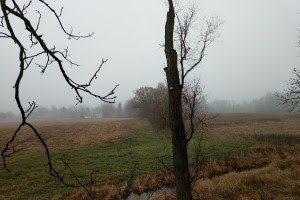
quiet period‘Twas days before firearm deer season, and all through the state, hunters are readying stands, blinds and camps, hoping crafty deer will cooperate.

We get it. Hunters are ready to hit the woods! However, it’s important to honor the five-day “quiet period” (Nov. 10-14), giving the woods a chance to calm down before the Sunday opener. During these days, it is unlawful to transport or possess a rifle or shotgun with buckshot, slug load, ball load or cut shell in an area frequented by deer. Unloaded firearms securely encased or carried in the trunk of a vehicle, however, may be transported to or from a hunting camp. Refer to page 21 of the Hunting Digest for more information.

If you’re hunting for small game or waterfowl, or fur harvesting, you can still carry the appropriate firearm for your season. Small game and waterfowl hunters may carry a shotgun with shotshells for hunting small game, but cannot possess buckshot, slugs, ball loads or cut shells during this time. Fur harvesters may carry a rimfire firearm .22-caliber or smaller while actively hunting or checking trap lines during the open fur bearing animals season.

No matter what you’re hunting, make sure you have the proper license.

For current rules and regulations, visit Michigan.gov/Hunting.

Questions? Contact the DNR Law Enforcement Division, 517-284-6000.


Firearm deer season opens statewide Sunday

deerMore than 540,000 hunters participated in Michigan’s 2019 deer hunting season overall, and as many or more hunters are expected to head out for this year’s Nov. 15 firearm opener.

Before the hunt, everyone should review current deer hunting regulations, found in the 2020 Hunting Digest. Changes to antler point restrictions made this year can be found on pages 42-43 and 48-49.

New this year, hunters in the mainland Lower Peninsula have the option to take an antlered or antlerless deer on their deer or deer combo licenses during archery, firearm and muzzleloader seasons.

Deer check station procedures and hours of operation will be different this year for the safety of hunters and staff. At check stations, hunters are required to wear masks and follow social distancing guidelines. At many locations, hunters will be required to stay in their vehicles.

There are also changes to chronic wasting disease testing this year. Deer heads from southern Jackson, southern Isabella and western Gratiot counties, and the core CWD surveillance area in the Upper Peninsula, will be accepted for CWD testing through Jan. 4. Deer heads from Clinton, Dickinson, Eaton, Gratiot, Ingham, Ionia, Jackson, Kent and Montcalm counties will be accepted for testing Nov. 15-18 only.

Anyone interested in submitting a deer for CWD testing outside the above listed areas/time frames can submit samples to a U.S. Department of Agriculture-approved lab for testing. Hunters will be charged a fee to have deer heads tested. Visit the “For Hunters” section at Michigan.gov/CWD for information about outside labs offering testing.

Overall, DNR officials say conditions are looking excellent for the 2020 deer seasons, and hunters can expect conditions that meet or exceed 2019. See the 2020 deer hunting preview for regional forecasts, an overview of regulation changes, tips on preparing for the season and other useful information at Michigan.gov/Deer.

The DNR wishes all hunters a safe, successful and enjoyable deer season!

Questions? Contact the DNR Wildlife Division at 517-284-9453.


Safety is key to every successful hunt

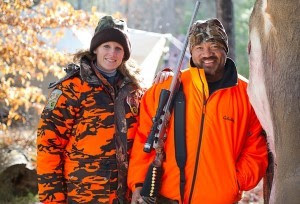
huntersWith Michigan’s firearm deer season starting this weekend, the DNR reminds new and veteran hunters to always put safety first.

Lt. Tom Wanless, who heads the DNR’s recreational safety programs, said although some safety tips seem like common sense, it’s critical for anyone hunting with firearms to understand safety basics.

“You’re not successful unless you’re safe,” Lt. Wanless said. “We want everyone to return home to their families and friends. While many safety recommendations may seem obvious, hunters shouldn’t take them for granted.”

All hunters should:

  • Treat every firearm as if it is loaded.
  • Be aware of their surroundings – know the target and what is beyond it.
  • Unload firearms when crossing obstacles and/or getting in or out of a tree stand.
  • Obey “no trespassing” signs; they are there for a reason.
  • Obtain landowner permission to retrieve game if it wandered onto private property.
  • Wear as much hunter orange as possible to increase visibility to other hunters.

Get more hunting safety tips and resources at Michigan.gov/HuntingSafety. For season and regulation details, see the 2020 Hunting Digest.

Questions? Contact Lt. Tom Wanless at 517-284-6026.


Get ready to run! The Happy Little 5K is back in 2021

Bob RossThe second annual Run for the Trees / Happy Little 5K is set for spring! No matter how participants reach the finish line of this virtual race – walk, run or hike – they pick the pace and the place, anywhere outdoors. It just needs to be completed over nine days (April 22-30).

Fittingly, Earth Day and Arbor Day will bookend this state parks-supporting race that builds on Bob Ross’ passion for natural landscapes and “happy little trees.”

Last year, the DNR and Bob Ross Inc. created an innovative partnership and renamed the DNR’s state park tree-planting program as Happy Little Trees. The program, which originated with help from the Michigan Department of Corrections and funding from the Great Lakes Restoration Initiative, helps restore the tree canopy and protect trees and ecosystems threatened by invasive forest pests. With the aid of volunteers, hundreds of trees have been planted in state parks. The Happy Little 5K is an extension of this longstanding stewardship program in state parks.

“The 2020 Happy Little 5K was huge for Michigan! We raised significant funds to support the planting, protection and preservation of locally sourced trees and brought together 20,000 registered virtual racers,” said Michelle Coss, volunteer and donor coordinator for the DNR Parks and Recreation Division, who coordinated the race. “Nearly 75% of racers hailed from Michigan, but all 50 states were represented. Neighboring states Ohio, Illinois, Indiana and Wisconsin brought the next highest participation.”

Coss said all proceeds for this year’s event will support tree-planting and preservation efforts in state parks, including locations that have been hard-hit by tree pests and diseases like emerald ash borer and oak wilt.

The cost is $34 per person, and all participants receive a newly designed commemorative bib number, a keepsake race Happy Little T-shirt and a finisher’s medal featuring a real Bob Ross painting.

Registration opens at 9 a.m. Tuesday, Dec. 1. Interested racers are encouraged to sign up for preregistration notifications – friendly reminders about a week before registration opens. Strong early signups will help the DNR predict race participation caps.

Questions? Contact Michelle Coss at 517-881-5884 or visit Michigan.gov/DNRHappyLittleTrees.


ICYMI: New invasive plant found in Calhoun County

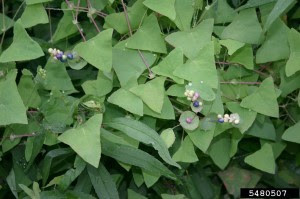
mile a minute weedAlthough it doesn’t spread as fast as its name suggests, mile-a-minute weed has made its way to Michigan. In case you missed it, this fast-growing, invasive vine recently was verified at the Whitehouse Nature Center at Albion College in Calhoun County. The plant is native to India, Asia and the Philippine Islands, and can cause harm to Christmas tree farms, reforestation projects and restoration areas by smothering young plants and trees under its dense growth.

Mile-a-minute weed can be identified by its triangular leaves, spikes of pea-sized blue fruits and recurved barbs lining the stems and leaf margins. Unusual circular leaves called ocreae clasp the stem beneath each fruit spike.

Anyone encountering a vine that could be mile-a-minute weed should visit Michigan.gov/Invasives to review identification information and learn about the best ways to report sightings.


THINGS TO DO

NotMISpecies, a monthly webinar series exploring Michigan’s Invasive
Species Program, features red swamp crayfish at 9 a.m. Nov. 17. Register for free at the EGLE events website.

BUY & APPLY

Winter is coming up soon, so don’t wait to get your snowmobile safety certificate. Take the class online, review the safety tips and get ready for some winter fun out on the trails!

GET INVOLVED

Want to help Michigan’s nongame and endangered species? When you purchase a wildlife habitat license plate, $25 goes toward the Nongame Wildlife Fund.

DNR COVID-19 RESPONSE: For details on affected DNR facilities and services, visit this webpage. Follow state actions and guidelines at Michigan.gov/Coronavirus.