
The Lake Orion Village Council/DDA Joint meeting of 12-8-2020

The Lake Orion Village Council/DDA Joint meeting of 12-8-2020

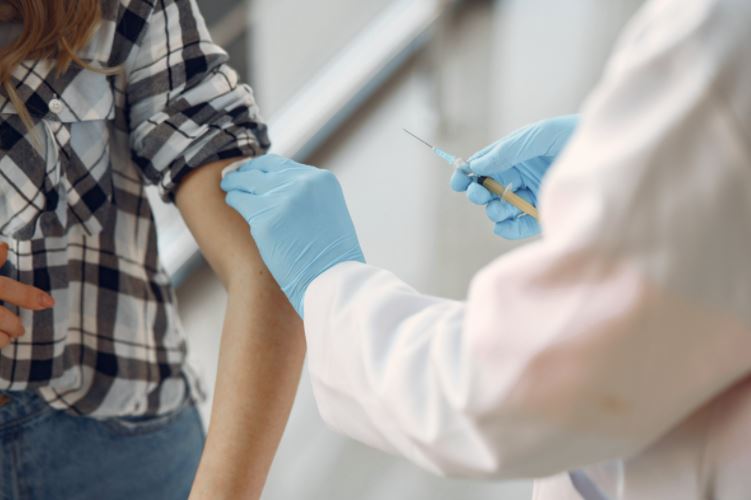
MDHHS announces priority groups for COVID-19 vaccination

MDHHS announces priority groups for COVID-19 vaccination

FOR IMMEDIATE RELEASE
December 11, 2020
Contact: Lynn Sutfin, 517-241-2112

LANSING, Mich.  Michigan Department of Health and Human Services (MDHHS) officials today provided additional information about COVID-19 vaccination plans for Michigan, including priority groups for vaccination administration, the vaccine development and safety process and where Michiganders can find more details.

Yesterday, a U.S. Food and Drug Administration advisory panel recommended approval for one of the vaccines that could be ready for distribution as early as next week. Gov. Gretchen Whitmer also signed Executive Order 2020-193, creating the bipartisan Protect Michigan Commission to help educate Michiganders about an approved vaccine. Michigan health officials have set a goal of vaccinating 70% of Michiganders 18 years of age or older, about 5.4 million adults, by the end of 2021.

“The COVID-19 vaccine will help all our communities eliminate the virus,” said Dr. Joneigh Khaldun, MDHHS chief medical executive and chief deputy for health. “Because initial allocations of vaccine will be limited, we must prioritize how the vaccine will be distributed across the state and will use the guidance and principles outlined by the CDC and national experts. We want every adult to be planning now for how they will get their vaccine once it becomes available to them.”

MDHHS is following the Centers for Disease Control and Prevention recommendations for prioritization of distribution and administration of COVID-19 vaccines. CDC recommendations are based on input from the Advisory Committee on Immunization Practices (ACIP). ACIP is a federal advisory committee made up of medical and public health experts who develop recommendations on the use of vaccines in the United States. MDHHS has also obtained input from a stakeholder group of Michigan public health and health care leaders and reviewed correspondence from the public.

Distribution of the vaccine will be in a phased approach, with an emphasis on both ensuring the continuing functioning of the health care system and essential services in the community and protecting people at increased risk for severe COVID-19 illness. These prioritizations may change as more information on vaccine effectiveness and additional vaccination products become available.

Phases are as follows:

  • Phase 1A includes paid and unpaid persons serving in health care settings who have direct or indirect exposure to patients or infectious materials and are unable to work from home, as well as residents of long-term care facilities.
  • Phase 1B includes some workers in essential and critical industries, including workers with unique skill sets such as non-hospital or non-public health laboratories and mortuary services.
  • Phase 1C includes people at high risk for severe COVID-19 illness due to underlying medical conditions, and people 65 years and older.
  • Phase 2 is a mass vaccination campaign for all adults.

MDHHS has provided additional prioritization guidance within these categories. It is important to note that vaccination in one phase may not be complete before vaccination in another phase begins. Vaccination in these phases will likely overlap. The timing of the start of vaccination in a phase is dependent on guidance from CDC and ACIP, the supply of vaccine from the manufacturer, how vaccine is allocated from the federal level to Michigan and the capacity to administer the vaccine to populations.

Vaccine distribution will roll out over a series of weeks, and current estimates are that by late Spring 2021 enough vaccine will be available for everyone who is recommended to receive it. A variety of partners will be engaged in the distribution and administration process, including hospitals, pharmacies, local health departments, EMS providers and outpatient clinics. The Michigan National Guard is also supporting vaccination efforts in some settings.

There will be no out-of-pocket costs to individuals for the vaccine, however, healthcare providers may bill insurance for administrative costs. The COVID-19 vaccine will require two doses, separated by three or four weeks depending on the manufacturer. Michiganders should receive both doses in order to have full protection from the virus. Individuals who receive the vaccine may experience mild side effects such as low-grade fever, sore arm and fatigue, which indicate that the vaccine is working. There is a robust state and national process for tracking vaccines and reporting side effects.

MDHHS stresses Michiganders should continue to wear masks, social distance from those not in their household and wash their hands often, even after receiving the vaccine.

Khaldun said it is important to note that while scientists worldwide are working to develop a COVID-19 vaccine faster than any vaccine before, they are still following the proven process. Scientists had already begun research for coronavirus vaccines during previous outbreaks caused by related coronaviruses such as SARS (Severe Acute Respiratory Syndrome) and MERS (Middle East Respiratory Syndrome). That earlier research provided a head start for rapid development of vaccines to protect against infection with COVID-19.

“The process for approval of a COVID-19 vaccine is scientifically sound, and no steps have been skipped,” Khaldun said. “People should know what to expect when they get a vaccine- such as mild side effects like a sore arm or low-grade fever. They should also plan on making sure they get their second dose to make sure they get the full benefit of the vaccine.”

Michigan residents seeking more information about the COVID-19 vaccine can visit Michigan.gov/COVIDvaccine. As additional information and resources become available, it will be posted to this site.

Information around this outbreak is changing rapidly. The latest information is available at Michigan.gov/Coronavirus and CDC.gov/Coronavirus.
Whitmer Makes Appointments to Boards and Commissions 

Whitmer Makes Appointments to Boards and Commissions 

Governor Gretchen Whitmer Banner - headshot with bridge graphic

FOR IMMEDIATE RELEASE 

December 11, 2020

Contact: press@michigan.gov


Governor Whitmer Makes Appointments to Boards and Commissions


LANSING, Mich. – Governor Gretchen Whitmer today announced the following appointments to the Michigan Citizen-Community Emergency Response Coordinating Council, Human Trafficking Health Advisory Board, Michigan Humanities Council, Michigan Committee on Juvenile Justice, Michigan Law Enforcement Officers Memorial Monument Fund Commission, State of Michigan Retirement Board, Michigan Pharmacy and Therapeutics Committee, State Police Retirement Board, Michigan PreK-12 Literacy Commission, and the Public Health Advisory Council.


Michigan Citizen-Community Emergency Response Coordinating Council 


S. Tutt Gorman, of Portland, is the city manager for the City of Portland. He holds a Bachelor of Science in Business Management from the University of Phoenix and a Juris Doctor degree from Thomas M. Cooley Law School. Mr. Gorman is reappointed to represent the general public for a term commencing January 1, 2021 and expiring December 31, 2024.


Hassan Hammoud, of Dearborn, is the executive director of Michigan 2-1-1. He holds a Bachelor of Social Work and Master of Social Work from Wayne State University. Mr. Hammoud is reappointed to represent the general public for a term commencing January 1, 2021 and expiring December 31, 2024.


Abigail B. Watkins, of Reed City, is the director of emergency services for the County of Newaygo and a medical first responder for Hersey Township Fire Department. She holds a professional emergency management certification from the Michigan State Police Emergency Management and Homeland Security Division and a critical incident stress management certification from The International Critical Incident Stress Foundation. Mrs. Watkins is appointed to represent individuals with technical expertise related to emergency response for a term commencing January 1, 2021 and expiring December 31, 2024. She succeeds Phillip Schertzing whose term expires December 31, 2020.


The Michigan Citizen-Community Emergency Response Coordinating Council (MCCERCC) assists in developing, maintaining, implementing and in supporting and promoting emergency response principles, strategies and practices within governmental agencies and private sector organizations in Michigan.


These appointments are not subject to the advice and consent of the Senate.


Human Trafficking Health Advisory Board


Rodica E. Richmond, of Linden, is a direct care worker for Genesis In-Home Care. She earned her medical assistant certification from Ross Medical Center. Ms. Richmond is appointed to represent human trafficking survivors for a term commencing January 1, 2021 and expiring December 31, 2024. She succeeds Ruth Rondon whose term expires December 31, 2020.


The Human Trafficking Health Advisory Board was established to collect and analyze information concerning medical and mental health services available to survivors of human trafficking, identify state, federal and local agencies that are involved with issues relating to human trafficking, and coordinate the dissemination of information concerning medical and mental health services available to survivors of human trafficking in this state. The Board may establish a program to improve public awareness of medical and mental health services available to survivors of human trafficking in this state.


This appointment is not subject to the advice and consent of the Senate.


Michigan Humanities Council


April Clobes, of Bath, is the president and CEO of Michigan State University Federal Credit Union. She holds a Bachelor of Arts in Marketing and a Master of Arts in Advertising from Michigan State University as well as a Master of Business Administration from Western Michigan University. Ms. Clobes is reappointed for a term commencing January 1, 2021 and expiring December 31, 2023.


James D. Napolitano, of Dryden, is the North American experience creation account director for Dassault Systèmes 3DEXCITE. He holds a Bachelor of Arts in Communications from Michigan State University. Mr. Napolitano is reappointed for a term commencing January 1, 2021 and expiring December 31, 2023.


The Michigan Humanities Council, as one of 56 state (and territories) humanities councils in the country, was founded in 1974 as a result of federal legislation. Funded in part by the National Endowment for the Humanities, Michigan Humanities also actively seeks grants, sponsorships, and individual donations to further support cultural programming for Michigan communities. The Council’s mission is to connect people and communities by fostering and supporting quality cultural programs.


These appointments are not subject to the advice and consent of the Senate.


Michigan Committee on Juvenile Justice


Jose M. Burgos, of Ecorse, is a reentry specialist with the State Appellate Defenders Office. Mr. Burgos is appointed to represent members who have been or are currently under the jurisdiction of the juvenile justice system for a term commencing January 1, 2021 and expiring December 31, 2023. He succeeds Antonio Leija whose term expires December 31, 2020.


Terence G. Green, of Flint, is the chief of police for the City of Flint. He holds a Bachelor of Arts in Criminal Justice from Minnesota State University-Moorhead. Chief Green is appointed to represent law enforcement and juvenile justice agencies for a term commencing January 1, 2021 and expiring December 31, 2023. He succeeds Corey Haines whose term expires December 31, 2020.


Caprice A. Jackson, of Southfield, is a policy analyst with the Detroit City Council. She holds a Bachelor of Arts in Social Relations and Policy from Michigan State University James Madison College. Miss Jackson is appointed to represent members who have been or are currently under the jurisdiction of the juvenile justice system, and under the age of 28 at the time of initial appointment, for a term commencing January 1, 2021 and expiring December 31, 2023. She succeeds Marquaun Kane whose term expires December 31, 2020.


Brooke Kimbrough, of Southfield, is an online program coordinator for the Bay Area Urban Debate Leagues. She holds a Bachelor of Arts in African American Studies from the University of Iowa. Ms. Kimbrough is appointed to represent members under the age of 28 at the time of initial appointment for a term commencing January 1, 2021 and expiring December 31, 2023. She succeeds Nyeli Castanon-Velasquez whose term expires December 31, 2020.


Brian Philson, of Onondaga, is the president and CEO of Highfields, Inc. He holds a Bachelor of Ars in Social Work from Spring Arbor University and a Master of Social Work from Michigan State University. Mr. Philson is appointed to represent public agencies concerned with delinquency prevention or treatment for a term commencing January 1, 2021 and expiring December 31, 2023. He succeeds Sara McCauley whose term expires December 31, 2020.


MaryAnn Sarosi, of Ann Arbor, is the principal of Sarosi Group. She holds a Bachelor of Arts in History from the University of Michigan and a Juris Doctor degree from the University of Michigan Law School. Ms. Sarosi is reappointed to represent volunteers who work with delinquent youth or youth at risk of delinquency for a term commencing January 1, 2021 and expiring December 31, 2023.


Richard L. Smart, III, of Southfield, is the deputy court administrator of the juvenile division of the 3rd Circuit Court of Wayne County. He holds a Bachelor of Arts from Michigan State University and a Juris Doctor degree from Wayne State University Law School. Mr. Smart is appointed to represent public agencies concerned with delinquency prevention or treatment for a term commencing January 1, 2021 and expiring December 31, 2023. He succeeds Terri Gilbert whose term expires December 31, 2020.


The Michigan Committee on Juvenile Justice is an advisory body within the Department of Human Services that promotes the effective implementation of juvenile justice policy and greater administrative efficiency for juvenile justice programs. The Committee was created in accordance with the federal requirements under the Juvenile Justice and Delinquency Prevention Act of 1974 for receiving grant funds to support juvenile justice initiatives.


These appointments are not subject to the advice and consent of the Senate.


Michigan Law Enforcement Officers Memorial Monument Fund Commission


Lydia Amaya, of Muskegon, is a co-founder of Concerns of Police Survivors (COPS), a current member of the Michigan Chapter, and an active fundraiser for the Michigan Law Enforcement Officers Memorial Monument. She is also a retired fitness instructor and business owner. Ms. Amaya is appointed to represent a member nominated by the Michigan State Troopers Association who is a survivor of an officer of the Michigan State Police killed while on duty. She succeeds Mary Johnson who has resigned and will serve for a term commencing December 11, 2020 and expiring June 30, 2024.


Lawrence W. Garner, of New Baltimore, is a captain with the Warren Police Department. He is a graduate of the Macomb Police Academy and holds a Bachelor of Science in Criminal Justice from Grand Valley State University. Mr. Garner is appointed to represent a member nominated by the executive director of the Michigan Fraternal Order of Police who is a survivor of an officer killed while on duty who served with a municipal police department of a municipality with a population of 500,000 or less. He succeeds Linda Emmert whose term expired June 30, 2020. He will serve for a term commencing December 11, 2020 and expiring June 30, 2024.


Kathleen Sherwood, of Farwell, is a forensic interviewer for the Northern Michigan Alliance for Children. She holds a Bachelor of Arts in Psychology from Saginaw Valley State University. Ms. Sherwood is reappointed to represent a member nominated by the executive director of the Sheriff’s Association of Michigan who is a survivor of an officer of a county sheriff’s department killed while on duty. She will serve for a term commencing December 11, 2020 and expiring June 30, 2024.


The Michigan Law Enforcement Officers Memorial Monument Fund Commission, created by Public Act 177 of 2004, was established to oversee the financing, design, and construction of Michigan’s Law Enforcement Officers Memorial.


These appointments are not subject to the advice and consent of the Senate.


State of Michigan Retirement Board


David A. Berridge, of Dimondale, is a retired transportation planning specialist for the Michigan Department of Transportation. He holds a Bachelor of Science and Master of Science in Civil Engineering from Michigan State University. Mr. Berridge is appointed to represent a member or retirant of the State Employees’ Retirement System for a term commencing January 1, 2021 and expiring December 31, 2024. He succeeds Matthew Fedorchuk whose term expires December 31, 2020.


The State of Michigan Retirement Board was created by Executive Order No. 2015-13, and consolidated the State Employees’ Retirement System Board, the Judges’ Retirement System Board, and the Military Retirement Provisions. Housed in the Department of Technology, Management, and Budget, in the Office of Retirement Services, the Retirement Board will provide oversight of the three systems that service nearly 88,000 active and retired employees.


This appointment is not subject to the advice and consent of the Senate.


Michigan Pharmacy and Therapeutics Committee


Barika M. Butler-Quarles, M.D., of Grosse Pointe Park, is the medical director for the Behavioral Center of Michigan and Samaritan Behavioral Center. Dr. Butler-Quarles also serves as a consultation liaison psychiatrist from Beaumont Health System. She earned her Doctor of Medicine from Wayne State University School of Medicine. Dr. Butler-Quarles is appointed to represent physicians for a term commencing December 11, 2020 and expiring October 1, 2022. She succeeds Debera Eggleston whose term expired October 1, 2020.


Jayne E. Courts, M.D., of Caledonia, is the executive medical director of internal medicine and geriatrics for Mercy Health Physician Partners. She earned her Doctor of Medicine from the University of Michigan Medical School. Dr. Courts is reappointed to represent physicians for a term commencing December 11, 2020 and expiring October 1, 2022.


Nora Fakhoury, Pharm.D., of Troy, is a pharmacist with Rite Aid Pharmacy in Auburn Hills. She earned her Doctor of Pharmacy from the Ohio Northern University Raabe College of Pharmacy. Dr. Fakhoury is appointed to represent pharmacists for a term commencing December 11, 2020 and expiring October 1, 2022. She succeeds Brian Peltz whose term expired October 1, 2020.


Melanie Manary, M.D., of Petoskey, is an internal medicine physician with McLaren Northern Internal Medicine and medical director for Northern Physicians Organization. She earned her Doctor of Medicine from Wayne State University. Dr. Manary is reappointed to represent physicians for a term commencing December 11, 2020 and expiring October 1, 2022.


Katie L. Axford, Pharm.D., of Rockford, is a clinical pharmacist with Mercy Health Saint Mary’s and a relief pharmacist with HomeTown Pharmacy in Newaygo. She serves as the co-curriculum coordinator and an associate professor at the Ferris State University College of Pharmacy, where she also earned her Doctor of Pharmacy. Dr. Axford is appointed to represent pharmacists for a term commencing December 11, 2020 and expiring October 1, 2022. She succeeds Andrew Mac whose term expired October 1, 2020.


Eric D. Roath, Pharm.D., of Lansing, is the clinical care coordinator for SpartanNash and an affiliate preceptor at Ferris State University. He earned his Doctor of Pharmacy from Ferris State University College of Pharmacy. Dr. Roath is appointed to represent pharmacists for a term commencing December 11, 2020 and expiring October 1, 2021. He succeeds Samira Saad who has resigned.


MDOT: Talking Michigan Transportation

Talking Michigan Transportation: Gordie Howe International Bridge and the future of Delray

Listen now: https://www.buzzsprout.com/1374205/6839584-gordie-howe-international-bridge-and-the-future-of-delray

This week on the Talking Michigan Transportation podcast, conversations about the rich history of the Delray neighborhood in southwest Detroit and why an author and archivist believes building the Gordie Howe International Bridge (GHIB) is helping to fuel a rebirth of the community. Karen Dybis, who has been researching the history and culture of Delray for several years, talks about what she’s learned researching history and recording oral histories with residents.

TMT Gordie Howe

Later, Mohammed Alghurabi, the long-time Michigan Department of Transportation (MDOT) project manager on the GHIB, talks about the relationships he’s developed in the neighborhood over many years and his appreciation for the residents. Mohammed shared his background with other projects and his work on the GHIB on the podcast in 2019.

Mohammed Alghurabi

In an extensive Detroit News story (subscription) published Dec. 10, reporter Christine Ferretti wrote: “After more than a half-century of neglect, the industrialized southwest Detroit community in the footprint of the under-construction $4.4 billion Gordie Howe International Bridge is finally getting attention. The city is in the midst of what’s believed to be the first planning effort of its kind to help define Delray’s future with a mix of development to spur jobs and amenities for its long haulers.”

Also discussed: the ongoing redevelopment of the Detroit Riverfront and MDOT’s collaboration with other partners on projects that will enhance opportunities for pedestrians and cyclists from east of downtown to the multi-modal components of the GHIB.

Karen Dybis

Dybis also explains how the Windsor-Detroit Bridge Authority’s Community Benefits Plan promises to ensure economic, environmental and social benefits for residents and business owners in neighborhoods on both sides of the bridge.

As she told the News, “You expect the bridge to be the enemy or the bad guys, and they are so not. That’s the reason why things are getting better. They are actually trying to get money to people who haven’t had money in decades.”

Listen now at https://www.buzzsprout.com/1374205.

Stay connected by subscribing to Talking Michigan Transportation e-mail updates.

Whitmer Statement on FDA Approval for Pfizer’s Vaccine 

Whitmer Statement on FDA Approval for Pfizer’s Vaccine 

Governor Gretchen Whitmer Banner - headshot with bridge graphic

FOR IMMEDIATE RELEASE

December 11, 2020

Media Contact: Press@Michigan.gov


Governor Whitmer Statement on FDA Approval for Pfizer’s Safe, Effective Vaccine


LANSING, Mich. — Today, Governor Gretchen Whitmer released the following statement after the United States Food and Drug Administration approved Pfizer’s Emergency Use Authorization for the COVID-19 Vaccine:


“This is great news for our families, frontline workers, small businesses, and economy. In Michigan, a state built on hard work and innovation, a safe and effective COVID-19 vaccine will be manufactured by Michigan workers at a Michigan business. I want to thank all of our dedicated Pfizer employees for their hard work. My administration, led by Dr. Joneigh Khaldun, is developing a plan to distribute the vaccine, with a focus on our most vulnerable populations. And today, I announced the bipartisan Protect Michigan Commission to help raise awareness of the safety and effectiveness of an approved COVID-19 vaccine, educate the people of this state, and help protect the health and safety of all Michigan residents. One of the most important things every adult should be doing now is planning for how they will get the vaccine when it becomes available to them. I want to remind everyone that we must not let our guard down. It will take time to widely distribute the vaccine, and we must all continue to do our part by wearing a mask, practicing social distancing, and washing our hands frequently.”


On Thursday, Governor Whitmer signed Executive Order 202-193 to create the Protect Michigan Commission, chaired by Lieutenant Governor Garlin Gilchrist II; Former Lieutenant Governor Brian Calley; Chief Medical Executive and DHHS Chief Deputy for Health Dr. Joneigh Khaldun; Detroit Pistons player Blake Griffin; Dr. Mona Hanna-Attisha, MD, MPH, FAAP, Associate Professor of Pediatrics and C.S. Mott Endowed Professor of Public Health; SER Metro CEO Eva Dewaelsche; Grand Traverse Band of Ottawa and Chippewa Health Director Soumit Pendharkar; Spectrum Health President & CEO Tina Freese-Decker; and Jamie Brown, Registered Nurse and member of the Michigan Nurses Association. The commission will consist of at least 50 members that will represent the great diversity of our state.