
$39M in Going PRO Talent Fund grants awarded

|

|
FOR IMMEDIATE RELEASE
January 19, 2021
Contact: Lynn Sutfin, 517-241-2112
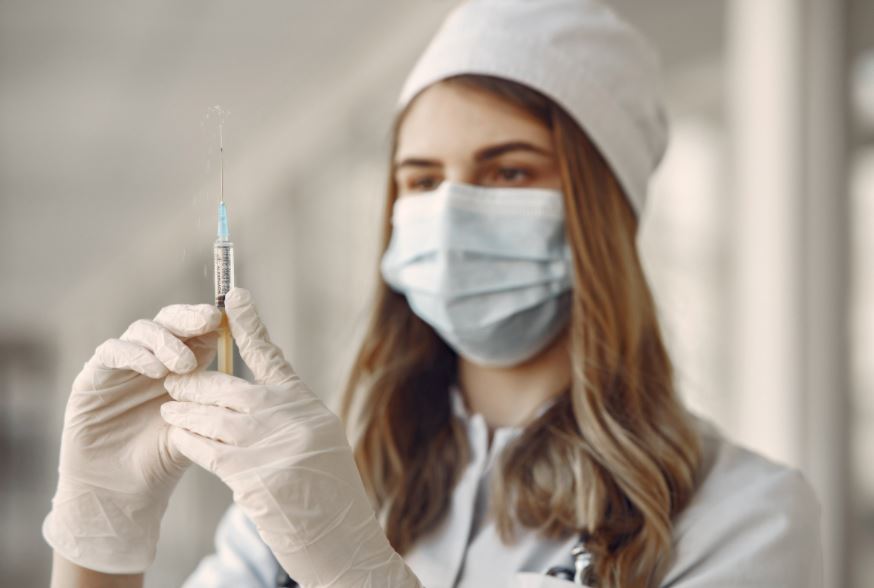
LANSING, Mich. – The Michigan Department of Health and Human Services (MDHHS) has launched a statewide paid media campaign to inform Michiganders about the safe and effective COVID-19 vaccine in response to research about attitudes toward the vaccine and to address vaccine hesitancy among Michigan residents.
“We want all Michiganders to get the facts about this safe and effective vaccine and the steps that were taken to develop it,” said Dr. Joneigh Khaldun, chief medical executive and chief deputy for health. “I am grateful and proud to have gotten both doses of my vaccine and I urge Michiganders to make and plan and get vaccinated when it is their turn. This is the way forward out of the pandemic and our chance to return to a sense of normalcy.”
MDHHS is committed to accelerating vaccine delivery as we work to reach our goal of vaccinating 70% of Michiganders over age 16 as quickly as possible with the safe and effective COVID-19 vaccine. Vaccine is currently available to health care workers, long-term care residents and staff, Michiganders over age 65, preK-12, day care staff and other essential frontline workers.
The $1.5 million campaign was developed after conducting a statewide survey and six focus groups among key target audiences. It includes television, connected TV, radio, streaming audio, YouTube, search, print in minority publications, social media and digital media.
Digital ads with specific messaging and targeting parameters were also developed to connect with our vaccine hesitant segments.
According to research, 66% of Michiganders are likely or very likely to get the COVID-19 vaccine and 34% would like to get it as soon as possible. However, there are disparities when it comes to who is likely to get the vaccine with 47% of white Michiganders very likely to get the vaccine versus 25% of black Michiganders.
Top reasons for not getting the vaccine as soon as possible include concerns about side effects (67%); not wanting to feel like a test subject (66%); needing to know more about its safety (65%); wanting to learn more about how the vaccine performs over time (62%); needing to know more about its effectiveness (61%); and concerns about politicians pushing out the vaccine before it’s safe (58%).
Khaldun encourages Michiganders wanting to know more about the COVID-19 vaccine to visit Michigan.gov/COVIDVaccine. As new information is learned, it will be posted to this website.
Information around this outbreak is changing rapidly. The latest information is available at Michigan.gov/Coronavirus and CDC.gov/Coronavirus.
FOR IMMEDIATE RELEASE
January 19, 2021
Contact: Lynn Sutfin, 517-241-2112
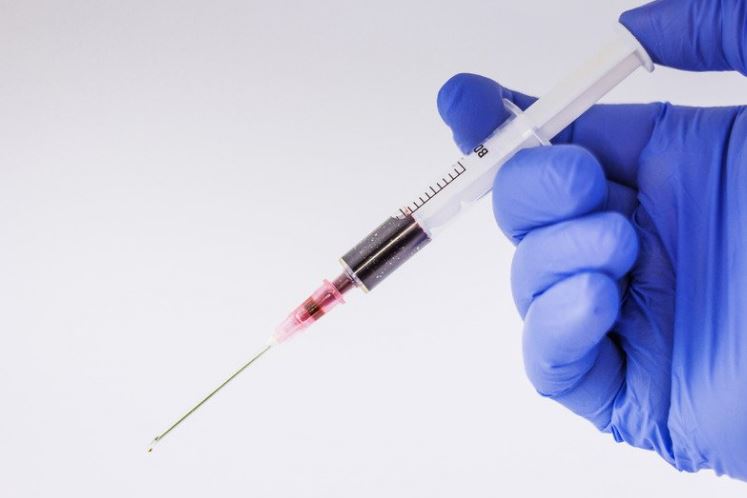
LANSING, Mich. – The Michigan Department of Health and Human Services (MDHHS) has been notified by McKesson that several shipments of Moderna vaccine shipped on Sunday, Jan. 17, had their temperature reported as going out of range and getting too cold. The cause of this is under investigation by McKesson.
Each vaccine shipment is equipped with a temperature monitoring device used to monitor the vaccine temperature while in transport. McKesson is working quickly to repack additional vaccine to ship out as replacement doses for those that may be compromised and the majority of the 21 shipments were resent on Monday night with the rest being sent Tuesday. An additional six shipments were held back to check that there were no issues with the vaccine which may delay scheduled vaccinations at those six vaccine provider sites.
“We are committed to accelerating vaccine delivery as we work to reach our goal of vaccinating 70% of Michiganders over age 16 as quickly as possible with the safe and effective COVID-19 vaccine,” said Dr. Joneigh Khaldun, chief medical executive and chief deputy for health. “Although it is unfortunate that this vaccine will not be able to be used, we are pleased that the safeguards put into place to ensure the integrity of the vaccine worked. This is the first report of vaccine potentially being compromised during shipment in Michigan and we are working quickly with the distributor to have replacement vaccine shipped out.”
Vaccines are shipped to vaccine providers across the state by the manufacturers and distributors. No vaccine is shipped or distributed by MDHHS.
Information around this outbreak is changing rapidly. The latest information is available at Michigan.gov/Coronavirus and CDC.gov/Coronavirus. To learn more about the COVID-19 vaccine, visit Michigan.gov/COVIDVaccine.


Media Contacts: Ryan Jarvi FOR IMMEDIATE RELEASE: AG Nessel Encourages Residents to Read Fine Print Before Registering with Online Gaming SitesLANSING – Following the Michigan Gaming Control Board’s (MGCB) authorization of online sports betting and gaming, Michigan Attorney General Dana Nessel is encouraging anyone who may be interested in using those services to first read the fine print before signing up. Advertisements promoting internet gaming and sports betting websites have been prolific in the past several weeks, with many sites offering free play or site credits for signing up. However, a number of those promotional incentives have strings attached, such as investing a certain amount of money before a player receives the site credit. “Authorization of these programs is very recent, and I urge anyone who is interested in registering to carefully read and understand the terms and conditions related to the promotional packages being offered so that you are not confused about what might be expected,” Nessel said. “In some instances, site users may be required to spend or deposit a certain amount of money into an account before receiving their free play credits, and users should make themselves aware of such conditions so they are not taken off guard.” While free play promotional offerings are common practices in standard casinos, the online gambling arena is new to Michigan and the Attorney General’s office wants consumers to be aware of the details surrounding the advertisements. |

FOR IMMEDIATE RELEASE
January 19, 2021
Contact: Lynn Sutfin, 517-241-2112
LANSING, MICH. Today, the Michigan Department of Health and Human Services (MDHHS) released new guidance encouraging colleges and universities to require COVID-19 testing of students who live in the immediate university community, even if the students do not live on campus.
“We know there have been outbreaks of COVID-19 on college campuses across the country, and it has an impact on disease spread beyond the campus community,” said Dr. Joneigh Khaldun, chief medical executive and chief deputy for health, “Colleges have stepped up throughout this pandemic to slow disease spread through testing and quarantine protocols. With the arrival of the new variant in Michigan and risk of virus spread both on- and off-campus, it is best practice to implement robust testing protocols in these settings. Colleges and universities have an important role to play in ending this pandemic.”
Numerous studies published by the Centers for Disease Control and Prevention have demonstrated that, while social distancing in college classrooms is important, transmission of COVID-19 around colleges likely occurs primarily outside of the classroom. In Michigan, more than 180 identified cases of COVID-19 were associated with one gathering at one bar in East Lansing. Risks of transmission have increased with the new arrival of the new, more contagious COVID-19 variant in Michigan.
The guidance released today, on which MDHHS has consulted with colleges and universities across the state, identifies numerous strategies they can use to test broadly within their communities. These include:
The bounds of the university community will vary, but generally include a surrounding area with a significant concentration of students who socialize on or near the campus. Residential fraternities and sororities would be included.
Whatever testing strategy is used, results should lead to specific actions such as immediate isolation of those with a positive test or symptoms and exposure to someone with a positive test, robust contact tracing of roommates, classmates and social contacts once a case is identified, quarantining close contacts of cases and reviewing and altering infection prevention and control practices and implemented mitigation strategies.
“We are grateful for all that colleges are doing so that there are fewer campus outbreaks this spring,” said MDHHS Director Robert Gordon. “Based on what we have seen, required testing for students around universities is critical to protecting lives and minimizing interruptions to learning.”
Information around this outbreak is changing rapidly. The latest information is available at Michigan.gov/Coronavirus and CDC.gov/Coronavirus. To learn more about the COVID-19 vaccine, visit Michigan.gov/COVIDVaccine.