
Michigan Expanding Access to COVID-19 Vaccine Starting Monday

Michigan Expanding Access to COVID-19 Vaccine Starting Monday

Michiganders over age 50 with medical conditions and disabilities and caregivers of children with special health care needs will be eligible March 8; all Michiganders over age 50 eligible March 22

FOR IMMEDIATE RELEASE
March 3, 2021
Contact: Lynn Sutfin, 517-241-2112

LANSING, MICH. To help reach the state’s goal of vaccinating 70% of Michiganders over age 16 and bring a quicker end to the COVID-19 pandemic in Michigan, Gov. Gretchen Whitmer and Michigan Department of Health and Human Services (MDHHS) officials today announced the state is expanding vaccination eligibility beginning Monday, March 8. This change follows the announcement by President Joe Biden that ramped-up production will provide enough doses for 300 million Americans by the end May.

MDHHS is moving forward with the vaccination of Michiganders age 50 and older with medical conditions or disabilities and caregiver family members and guardians who care for children with special health care needs. Beginning Monday, March 22, vaccine eligibility will again expand to include all Michiganders 50 and older. To date, more than 40% of Michiganders age 65 and older have been vaccinated.

“The more people we can get the safe and effective vaccine, the faster we can return to a sense of normalcy,” said Governor Whitmer. “I urge all eligible Michiganders to get one of the three COVID-19 vaccines to protect you, your family and your community. We’ve already administered over 2.3 million doses to Michiganders of all races and backgrounds, and yesterday’s announcement that our national supply will be enough to protect all Americans by the end of May is incredible news. And as always: mask up, practice safe social distancing and avoid large indoor gatherings where COVID-19 can easily spread from person to person. We will eliminate this virus together.”

“Over 2.3 million doses of the safe and effective COVID vaccines have been administered in Michigan, and we know more vaccine is coming into the state,” said Dr. Joneigh Khaldun, chief medical executive and chief deputy for health at MDHHS. “We are pleased to expand eligibility for more people to get vaccinated as we continue to focus on our most vulnerable and those at highest risk of severe illness due to COVID-19. We are well on our way to vaccinating 70% of Michiganders age 16 and up. With three safe and effective vaccines now authorized for use, people should get the first vaccine available to them. These vaccines are the way we are going to end this pandemic.”

All vaccine providers may begin vaccinating the two new priority groups of 50 and older with medical conditions or disabilities and caregiver family members and guardians who care for children with special health care needs by Monday. Those eligible to receive a vaccine should:

  • Check the website of the local health department or hospital to find out their process or for registration forms; or
  • Check additional vaccination sites, such as local pharmacies like MeijerRite Aid or Cardinal Health (U.P. residents); or
  • Residents who don’t have access to the internet or who need assistance navigating the vaccine scheduling process can call the COVID-19 Hotline at 888-535-6136 (press 1), Monday through Friday from 8 a.m. to 5 p.m., Saturday and Sunday, 8 a.m. to 1 p.m. or can call 2-1-1.

It is important to note that, while supplies are increasing, there remains a limited amount of vaccine available, so there may be a waitlist for available appointments. As more vaccine becomes available, the state will continue to move more quickly through the priority groups.

Last weekend, the U.S. Food and Drug Administration (FDA) authorized Johnson & Johnson’s COVID-19 vaccine for adults ages 18 and older. The vaccine is deemed 85% effective in preventing severe disease. Michigan will receive 82,700 doses of the Johnson & Johnson vaccine this week.

All three vaccines in circulation demonstrate high efficacy against COVID-19, particularly with preventing hospitalizations, severe illness and deaths. The vaccines have comparable safety profiles, with the Johnson & Johnson vaccine having the benefit of a single dose.

MDHHS is accelerating vaccination of these individuals due to concern around disparity in life expectancy and in an effort to remove barriers to vaccine access. The state recently launched a COVID-19 vaccination strategy guided by the following guiding principles:

  • All Michiganders have equitable access to vaccines.
  • Vaccine planning and distribution is inclusive, and actively engages state and local government, public and private partners; and draws upon the experience and expertise of leaders from historically marginalized populations.
  • Communications are transparent, accurate, and frequent public communications to build public trust.
  • Data is used to promote equity, track progress and guide decision making.
  • Resource stewardship, efficiency, and continuous quality improvement drive strategic implementation.

MDHHS follows the Centers for Disease Control and Prevention (CDC) recommendations for prioritization of distribution and administration of COVID-19 vaccines. CDC recommendations are based on input from the Advisory Committee on Immunization Practices, the federal advisory committee made up of medical and public health experts who develop recommendations on the use of vaccines in the United States.

The most recent vaccine prioritization guidance can be found on Michigan’s COVID-19 website.

Even with the increase of COVID-19 vaccinations, Khaldun urges everyone to continue to practice preventative measures such as properly wearing masks, social distancing and frequent handwashing to reduce the spread of the virus until the vast majority of people have been vaccinated.

Michigan residents seeking more information about the COVID-19 vaccine can visit Michigan.gov/COVIDvaccine. Information around this outbreak is changing rapidly. The latest information is available at Michigan.gov/Coronavirus and CDC.gov/Coronavirus.

DNR: The search for Michigan’s ghost cat

Centennial banner

– Showcasing the DNR –

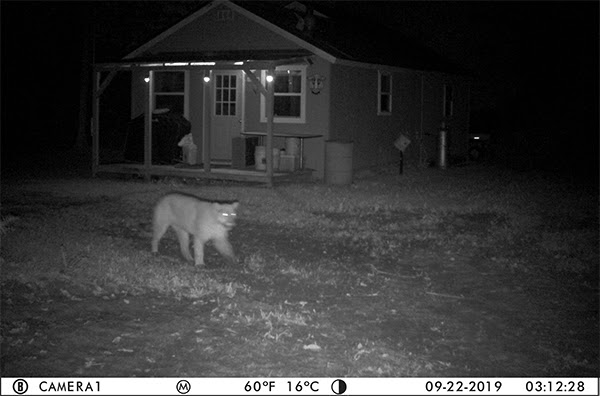
A ghostly, nighttime trail camera image shows a suspected cougar from Delta County.

The search for Michigan’s ghost cat

By KAREN CLEVELAND and CODY NORTON
Michigan Department of Natural Resources

You may have read the stories on Facebook or on other social media platforms.

Tantalizing and captivating claims from across Michigan: cougars seen wandering backyards in the suburbs around Detroit, black panthers skulking through farm fields and attacks all over the state on pets and livestock.

But what’s the truth about mountain lions in Michigan?

How many are there? Where are they? And how worried should we be?

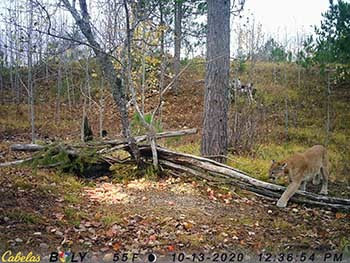
A daytime trail camera image shows a cougar at a baiting site in the Upper Peninsula.Cougars, also called mountain lions or pumas, are native to Michigan and would have been found here prior to European colonization of the region. Early European settlers, however, saw the cat as a threat to them and their livestock, as well as a competitor for venison and other wild game.
Consequently, by the late 1800s, cougars were almost eliminated from the eastern United States, driven by these fears. Wholesale logging of the forests the cougars called home also played a role, as waves of settlement converted much of the state to farmland.

Many states and the federal government created bounties, money paid to people to kill cougars and other predators, with the goal of erasing them from the landscape. These efforts worked so well that cougars were eliminated from Michigan by the early 20th century.

While memories of these big cats persisted in communities across the state, trying to find physical evidence to support reported sightings proved to be a bit like chasing a ghost.

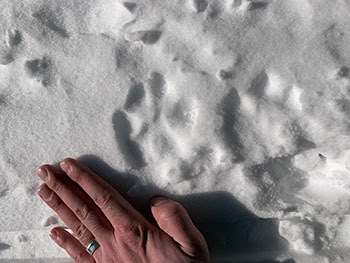
Tracks from a mountain line are shown in the snow in the Upper Peninsula.When evidence was collected at the scene of a reported cougar sighting, like photographs, the culprit was often found to be something other than a mountain lion.
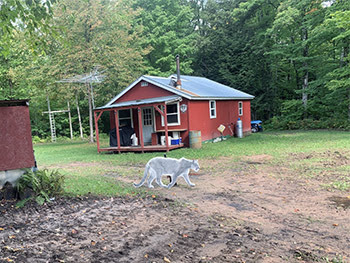
These would-be cougars were actually animals as mundane as a large housecat seen from an angle that made it appear much larger or as unusual and exotic as an escaped pet serval – a large wild cat from Africa that’s definitely not legal to keep as a pet in Michigan.

As reported sightings became more common, the Michigan Department of Natural Resources created a “cougar team” in 2008 to review reports of cougars and to try to verify them.

Brian Roell, a DNR wildlife biologist at Marquette, takes the mission of the cougar team very seriously.

“The team is made up of wildlife biologists for the DNR who have received specialized training in how to identify cougars from photos, as well as from tracks, scat and other physical evidence they may leave behind,” Roell said. “It’s important that we’re able to identify these animals correctly, not just for conservation purposes but also so that residents can be informed about the wildlife living around them and take commonsense precautions.”

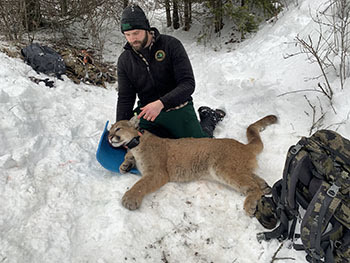
Cody Norton, the DNR's large carnivore specialist, places a tracking collar on a cougar in Idaho.Over the 13 years since the formation of the cougar team, its members have met weekly to review reports with supporting evidence submitted to the DNR.
If the evidence appears to have come from a cougar, DNR staffers will follow up with a site visit. This helps the biologists verify that photos haven’t been faked or reported from false locations. The visits also let the biologists measure trees and other objects to help estimate the size of animals in photos submitted with reports.

Sometimes, the team members even use a life-sized, cardboard cougar silhouette to try to recreate the photo to help arrive at a correct identification.

So far, their hard work has verified 65 cougar reports in Michigan.

“We don’t think these are all different cougars,” Roell said. “Many of these reports include photos from trail cameras, and it’s very likely that the same cat is being spotted in different places as it moves through the forest.”

A photo showing a cardboard cougar silhouette placed at a potential cougar sighting location.What does this tell us about how many cougars are in Michigan?
“There’s no evidence of a breeding population here – no signs of kittens in any verified report, and all of the animals where we’ve been able to determine their sex have been male,” said Kristie Sitar, DNR wildlife biologist at Newberry.

Sitar said some DNA studies have been conducted on the cougars found here, using evidence collected from verified reports or a cougar poached in Schoolcraft County several years ago.

This testing has shown the animals being reported in Michigan have traced back to a population found in South Dakota, Wyoming and Nebraska.

“These are likely young male cougars looking for areas far from home where they can find mates and establish their own territories, and they just keep moving when they don’t find any female cougars,” Sitar said.

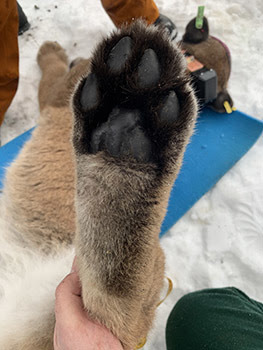
A close-up image of a cougar's paw is shown.Should you be worried about seeing a mountain lion near your home?

All but one of the verified cougar sightings the team has reviewed have been from the Upper Peninsula. Chances of seeing one in the Lower Peninsula are extremely low.

Like with most wildlife, there are some simple preventative steps you can take to make your home less attractive to cougars.

Remove sources of food, shelter and safety. For cougars, this means not letting pets roam outside alone, providing shelter for livestock, not feeding wildlife, removing landscaping that provides shrubby cover for animals to hide in near buildings and installing outside lighting with motion detectors.

If you encounter a cougar when you’re outdoors, your best bet is to try to appear too dangerous to tangle with: don’t turn your back on the animal, look as large as you can by standing tall and waving your arms, and talk loudly.

Never run from a cougar, though you can move away slowly. If you are attacked, fight back and never play dead. Remember that the likelihood that you’ll ever see a cougar in Michigan is extremely low, and the likelihood of an attack is even lower.

“These cats are very rare in Michigan,” said Pete Kailing, a DNR wildlife biologist in Paris. “Much of the data we’ve been able to gather so far is thanks to the willingness of Michiganders to share their photos and other evidence with us.”

If you’re interested in learning more about cougars in Michigan, Kailing suggests starting at Michigan.gov/Cougars, where you can find tips on how to tell if the animal you’ve seen is a cougar, how to report a cougar sighting and the current status on where cougars have been confirmed in Michigan.

Check out previous Showcasing the DNR stories in our archive at Michigan.gov/DNRStories. To subscribe to upcoming Showcasing articles, sign up for free email delivery at Michigan.gov/DNR.


/Note to editors: Contact: John Pepin, Showcasing the DNR series editor, at 906-250-7260. Accompanying photos and a text-only version of this story are available below for download and media use. Suggested captions follow. Credit: Michigan Department of Natural Resources, unless otherwise noted.

Text-only version of this story.

Baiting: A cougar is captured by a trail camera at a deer baiting site in Mackinac County.

Blood: Contractors for the Idaho Department of Fish and Game show a member of the Michigan Department of Natural Resources’ cougar team how to draw a blood sample from an immobilized cougar. From left, Sam Smith, Boone Smith and Matt Borg, all from the contractor’s team.

Delta: A trail camera photo of a suspected cougar from Delta County submitted to the Michigan Department of Natural Resources’ cougar team in September 2019.

Paw: A cougar in Idaho has a radio collar attached for research purposes during the Michigan Department of Natural Resources’ cougar team’s training. A cougar’s paw leaves a track that measures 3-4 inches across.

Silhouette: The DNR’s cougar team uses a life-size cougar silhouette to compare with the size of an animal captured on a trail camera in Delta County.

Tracks: Cougar tracks are one type of evidence used by the Michigan Department of Natural Resources’ cougar team to verify submitted reports. These tracks were spotted by DNR staff during wolf track surveys in February 2020 in Schoolcraft County.

Training: Cody Norton, the Michigan Department of Natural Resources’ large carnivore specialist, handles a cougar as part of training the DNR cougar team received on how to tranquilize and handle cougars./

DNR COVID-19 RESPONSE: For details on affected DNR facilities and services, visit this webpage. Follow state actions and guidelines at Michigan.gov/Coronavirus.

I-75 lane and ramp closures begins March 8

MDOT E-mail

MDOT on facebook MDOT on Twitter MDOT on YouTube Mi Drive - Know before you go. MDOT on Instagram Sign up for E-mails form MDOT
Having trouble viewing this email? View it as a Web page.

Bookmark and Share

FOR IMMEDIATE RELEASE                                            THURSDAY, MARCH 4, 2021


CONTACT: Rob Morosi, MDOT Office of Communications, 248-483-5107, MorosiR@Michigan.gov


I-75 lane and ramp closures begin Monday, March 8,

in Oakland County


Fast facts:

– Northbound I-75 will have lane closures from Big Beaver to Wattles roads.   

– All ramps at the I-75/Big Beaver Road interchange will close for two weeks.


March 4, 2021 — Weather permitting, lane and ramp closures will begin at 7 a.m. Monday, March 8, on I-75 for punch list items and sound wall construction in the city of Troy. Beginning at 7 a.m., the following restrictions will be in place:

– Only the left lane will be open on northbound I-75 at Big Beaver Road as crews work on repairing a drainage connection. The double-lane closures are expected to remain in place until sunset on March 15.

– Pavement work will require closing all ramps at the I-75/Big Beaver Road interchange for two weeks. Northbound ramp traffic will be detoured to the Crooks Road/Corporate Drive interchange while southbound ramp traffic will be directed to Rochester Road.

– Northbound I-75 will have two lanes open near Wattles Road as crews build a new sound wall. The lane closures are expected to remain in place until mid-April.

Follow I-75 modernization progress on the web at www.Modernize75.com, or follow on Facebook at www.facebook.com/Modernize75 or on Twitter at www.twitter.com/Modernize75.    

AG Supporting Schools’ Ability To Protect Students From Bullying 

AG Supporting Schools’ Ability To Protect Students From Bullying 

Attorney General Dana Nessel

Media Contacts:

Ryan Jarvi
(c) 517-599-2746

FOR IMMEDIATE RELEASE:
Wednesday, March 3, 2021

AG Nessel Joins Coalition Supporting Schools’ Ability To Protect Students From Bullying

Coalition Urges Supreme Court to Permit Schools to Address Harmful Off-Campus Speech that Substantially Disrupts School or Interferes with Students’ Learning 

LANSING – Michigan Attorney General Dana Nessel joined a coalition of attorneys general in filing a friend-of-the-court brief urging the Supreme Court to preserve schools’ ability to address cyberbullying and other forms of off-campus bullying that substantially affects students’ education.

The coalition filed the brief in Mahanoy Area School District v. B.L., a case concerning the ability of schools to hold students accountable for off-campus speech, and does not support either party. Because of public schools’ obligation to protect students and promote learning, the Supreme Court has long given them more leeway to regulate student speech under the First Amendment than states have regarding adults’ speech. But the lower court in this case ruled that schools may never regulate students’ off-campus speech.

In their brief, the attorneys general urge the court to reject this rule, arguing that it would undermine state anti-bullying laws and prevent schools from addressing in-person and online bullying that originates off-campus. Instead, the coalition encourages the court to uphold an existing legal standard, which empowers schools to regulate speech that substantially disrupts school or interferes with other students’ ability to learn.

“Regardless of where it originates, bullying can have serious, long-lasting consequences on students and hinder their ability to learn,” Nessel said. “Education offers a wealth of opportunities for students, and we must make every effort to provide the world’s future leaders with the support they need to prepare for the challenges they will face. Schools must also have the ability to use every tool at their disposal to protect those students, and that’s why my colleagues and I urge the court to preserve their abilities to address this issue.”

In Tinker v. Des Moines Independent Community School District, a landmark 1969 decision, the Supreme Court affirmed that students have First Amendment rights in public school settings but also recognized that school officials may regulate student speech that would “materially and substantially disrupt the work and discipline of the school” or interfere with the rights of other students. Every federal appellate court in the country, except the Third Circuit in the case now before the Supreme Court, has applied the Tinker standard to student speech that causes substantial disruption or harm at school, regardless of where the speech originates.

Bullying is a harmful and disruptive form of student behavior—often involving speech—that public schools across the country prohibit. Bullying can take many forms, including physical violence, threats, offensive insults or mocking. It can also take the form of indirect aggression, such as spreading false or harmful rumors or distributing embarrassing images of a targeted student. All 50 states have passed school anti-bullying laws, including laws requiring schools to establish anti-bullying policies and implement procedures to investigate and respond to bullying. More than two-thirds of these laws cover some bullying that occurs or originates off-campus, and most state anti-bullying laws incorporate Tinker’s standard of disruption to the school environment to determine when schools have authority to act.

In their amicus brief filed in Mahanoy Area School District v. B.L., the attorneys general do not take a position on the underlying facts of the case. Instead, they urge the court to treat students’ off-campus speech like any other students’ speech, allowing schools to regulate it when it has substantial effects on the school or other students’ learning, because:

  • Schools have a duty to provide a high-quality education to all students: Millions of school children experience bullying each year, and it oftentimes harms their ability to learn. In addition to making students feel unsafe at school, bullying has been shown to lower both short- and long-term academic performance of victims and perpetrators.
  • The line between on- and off-campus has been blurred by technology: Technology, electronic communications and social media allow students to remain connected to their school communities even outside of school hours and when they are not physically present at school. During the COVID-19 pandemic, virtual learning has further blurred the line between on-campus and off-campus speech.
  • Cyberbullying is a growing problem: Technology has created new opportunities for bullying to occur and a growing number of school-aged children report being bullied by other students online, on their cell phones or on other electronic media. One recent survey found that 59% of teenagers in the United States have personally experienced cyberbullying at some point in their lives. In a 2019 nationally representative survey by the Centers for Disease Control and Prevention, 15.7% of high school students reported being bullied by another student through texting, Instagram, Facebook or other social media during the past year.
  • Bullying can become disruptive at school regardless of where it originates: Regardless of when and where it occurs, bullying can create a school climate in which student victims feel unsafe and unable to engage in learning. For example, children who are cyberbullied are more likely to report missing school because they feel unsafe at school or when traveling to or from school.
  • Students will lose critical protections from cyberbullying: The laws of 35 states and the District of Columbia require or permit schools to regulate cyberbullying that occurs off-campus, on non-school devices and on non-school online platforms. Students would lose these important protections if the court limits schools’ power to regulate off-campus speech.

Joining Attorney General Nessel in filing this brief are the attorneys general of California, Colorado, Delaware, the District of Columbia, Hawaii, Illinois, Iowa, Maine, Maryland, Massachusetts Minnesota, Nevada, New Hampshire, New Jersey, New Mexico, New York, North Carolina, Oregon, Pennsylvania, Rhode Island, Vermont, Washington, and Wisconsin.

AG Opposes Proposal to Eliminate Immigration Programs

AG Opposes Proposal to Eliminate Immigration Programs

Attorney General Dana Nessel

Media Contacts:

Ryan Jarvi
(c) 517-599-2746

FOR IMMEDIATE RELEASE:
Wednesday, March 3, 2021

AG Nessel Opposes Proposal to Eliminate Immigration Programs That Promote Family Reunification

LANSING – Michigan Attorney General Dana Nessel recently joined a coalition of attorneys general urging the U.S. Department of Homeland Security (DHS) and U.S. Citizenship and Immigration Services (USCIS) to withdraw the decision to terminate the Haitian Family Reunification Parole Program (HFRP) and the Filipino World War II Veteran Parole Program (FWVP).

The HFRP, started in 2014, provides a pathway for Haitians with approved family-based immigrant visa applications to join family members in the United States prior to receiving their visas. USCIS later implemented the FWVP Program to similarly provide a pathway for reunifying Filipino World War II veterans in the United States with family members. The coalition asserts that these programs have brought relief to immigrants seeking to rejoin their families and escape increasingly dire conditions at home.

“These programs have allowed eligible immigrants to reunite more quickly with their families, and that is what our focus should be,” Nessel said. “The United States should not be in the business of prolonging the separation of families, and I stand by my colleagues to call on these federal agencies to reconsider their decisions and continue these programs that benefit our immigrant populations.”

The HFRP was established in December 2014 to assist with the reunification of families. The program gave eligible Haitians the opportunity to safely and legally immigrate to the United States more quickly while Haiti continued to face devastation and destruction following a catastrophic 2010 earthquake. The goal of the program continues to be promoting lawful, orderly migration and supporting Haiti’s long-term reconstruction and continued development. Two years following the successful implementation of the HFRP, the FWVP was created to assist aging Filipino World War II veterans living in the United States by allowing their family members to join them in the United States to offer care and support.

In their comments, the attorneys general argue that these programs should remain in place because:

  • The decision to terminate the programs has no basis in law and violates the Administrative Procedure Act. The coalition argues that the notice announcing the elimination of these programs relies upon an executive order and policy memorandum from the previous administration that are no longer in effect. Further, these documents provided no justification for ending the programs by their own terms and the stated rationale for ending the programs ignores the basis for their promulgation in the first place. The coalition also argues that the justifications for initiating these programs are just as compelling today as they were when first created, especially given current conditions in Haiti.
  • Termination of family reunification programs harms the states. The United States is home to the largest Haitian and Filipino migrant populations in the world. Denying Haitian and Filipino migrants a pathway for rapid reunification with their families would undermine the progress of these communities and the important social and economic contributions immigrants make to the states in which they reside. Moreover, the unnecessary separation of families can result in negative health outcomes and can be particularly traumatizing to children. The states, their residents and their health care programs would be forced to bear the burden of the effect of this separation.

Joining Nessel in the comment are the attorneys general of California, Colorado, Connecticut, the District of Columbia, Hawaii, Illinois, Iowa, Maine, Maryland, Massachusetts, Minnesota, Nevada, New Jersey, New Mexico, New York, Oregon, Pennsylvania, Rhode Island and Vermont.