COVID-19 variant B.1.351 identified in Jackson County

FOR IMMEDIATE RELEASE
March 8, 2021
Contact: Lynn Sutfin, 517-241-2112

LANSING, Mich. – The first Michigan case of the COVID-19 variant B.1.351 was identified in a male child living in Jackson County by the Michigan Department of Health and Human Services (MDHHS) Bureau of Laboratories today. Case investigation is currently underway to determine close contacts and if there are additional cases associated with this case.

Originally detected in early October 2020 in South Africa, B.1.351 shares some mutations with B.1.1.7. Cases caused by this variant were reported in the United States at the end of January 2021. B.1.351 is believed to be more contagious, but there has been no indication that it affects the clinical outcomes or disease severity compared to the SARS-CoV-2 virus that has been circulating across the United States for months. Scientists are still evaluating how well COVID-19 vaccines work against this new variant.

However, a higher rate of transmission could increase the number of people who need to be hospitalized or who lose their lives to COVID-19 should the new variant begin circulating widely in Michigan. To date, the virus has been identified in at least 20 other states and jurisdictions in the U.S. This is the only known case in Michigan at this time, however it is possible that there are more that have not been identified.

“We are concerned about the discovery of another variant in Michigan, although it was not unexpected,” said Dr. Joneigh Khaldun, chief medical executive and chief deputy for health at MDHHS. “We continue to urge Michiganders to follow a research-based approach by wearing their masks properly, socially distancing, avoiding crowds, washing their hands often, and making a plan to get the safe and effective COVID-19 vaccine once it is their turn. We all have a personal responsibility to slow the spread of COVID-19 and end this pandemic as quickly as possible.”

Based on available evidence, current tests can identify COVID-19 in these cases. The available COVID-19 vaccines also work against this new variant. Protective actions that prevent the spread of COVID-19 will also prevent the spread of both identified variants in Michigan, B.1.1.7 and B.1.351. Michiganders should:

  • Get vaccinated for COVID-19.
  • Wear a mask around others.
  • Stay six feet apart from others.
  • Wash hands often.
  • Ventilate indoor spaces.

Viruses constantly change through mutation, and new variants of a virus are expected to occur over time. MDHHS’s Bureau of Laboratories is a national leader in whole genome sequencing for SARS-CoV-2. MDHHS identified the variant in this individual’s sample and will continue to conduct whole genome sequencing to quickly identify any variants of interest, including B.1.351.

Whole genome sequencing allows scientists to examine the genetic material of pathogens, including SARS-CoV-2. Over the past 10 months, laboratories across Michigan have been submitting samples to the state public health laboratory for surveillance to help monitor the emergence of any variants of concern. MDHHS Bureau of Laboratories prioritizes additional specimens for whole genome sequencing when there is increased concern for a new variant of the virus, such as in people with a travel history to places where the variant is known to be circulating.

As of March 8, Michigan has also identified 516 cases of the B.1.1.7 variant in 23 Michigan jurisdictions.

Information changes frequently regarding the outbreak and vaccine updates.  For the most current information check with the Jackson County Health Department webpage located at Jackson County Health Department COVID vaccine webpage or check us out on our Facebook page.   .

Jackson County vaccine updates are also available by calling the COVID Vaccine Information Line at 517-817-4469.

At this time, information is limited and changing rapidly. The latest information is available at Michigan.gov/Coronavirus and CDC.gov/Coronavirus.
Update On Vaccine Clinics And Doses For March 9-15

Update On Vaccine Clinics And Doses For March 9-15

Oakland County Health Division COVID-19 Update On Vaccine Clinics And Doses For The Week Of March 9-15

Pontiac, Michigan – Oakland County Health Division will conduct 17 COVID-19 vaccine clinics by appointment only the week of Tuesday, March 9 – Monday, March 15 in the following communities: Holly, Novi, Pontiac, Rochester, Southfield, Waterford, and West Bloomfield. In addition, the Health Division will administer COVID-19 vaccine at seven long-term care centers. To date, 26 long-term care centers have received a first or second dose of vaccine. The county also is redistributing vaccine to 13 providers this week.

The State of Michigan distributed 17,710 doses of COVID-19 vaccine to Oakland County Health Division this week. Here is the breakdown by manufacturer:

Johnson & Johnson

  • 1st Dose: 0
  • 2nd Does: N/A
  • Total Doses: 0


Moderna

  • 1st Dose: 1,100
  • 2nd Dose: 1,400
  • Total Doses: 2,500


Pfizer

  • 1st Dose: 9,360
  • 2nd Dose: 5,850
  • Total Doses: 15,210

Meanwhile, an update on progress vaccinating Oakland County residents, according to the State of Michigan COVID-19 Vaccine Dashboard as of March 8, 2021:

  • Total eligible residents: 1,029,737
    • Number of residents who have received first dose: 226,549
    • Number of residents who have completed vaccination: 128,068
    • Vaccine coverage: 22%
  • Total eligible senior residents 65 and older: 217,676
    • Number of senior residents who have received first dose: 119,915
    • Number of senior residents who have completed vaccination: 59,771
    • Vaccine coverage for senior residents: 55%
  • Total doses distributed by state within Oakland County: 372,305
    • Total doses administered within Oakland County: 354,600
    • Percentage of doses administered within Oakland County: 95%

zebra mussels found in aquarium moss products

March 10, 2021
Contact: Lucas Nathan, 517-599-9323 or Joanne Foreman, 517-284-5814

Invasive zebra mussels found in aquarium moss products

Alert employee’s report launches nationwide response

When an observant employee at a Petco store in Seattle, Wash. reported finding invasive zebra mussels in moss balls sold as aquarium plants, it set off a rapid response across the U.S.

March 3, aquatic invasive species coordinators across the country received notification from the U.S. Geological Survey about the concerning report made to the agency’s Nonindigenous Aquatic Species online reporting system.

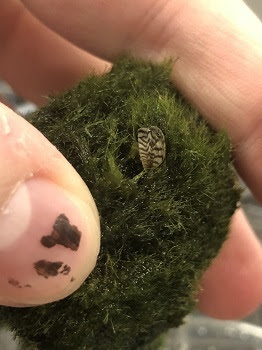
zebra mussel in moss ballWithin 24 hours, aquatic invasive species program staff from several states confirmed finding zebra mussels in supplies of moss balls distributed as Mini Marimo Moss Balls (SKU 5292944) and Marimo Moss Balls (SKU 5164031) at local Petco and PetSmart stores.
Marimo moss is a form of algae from Northern Europe and Asia, and marimo moss balls are a popular aquarium plant used to generate oxygen and remove nitrates from tanks.

While the corporate stores were working to quarantine stock in compliance with an order from Petco headquarters, inspectors began finding contaminated stock on the shelves of independent stores and in store aquarium systems. The Michigan Department of Natural Resources Law Enforcement Division confirmed that infested moss balls have been found in several stores throughout the state.

As the effort to track down infested stock continues, reports indicate that other brands including Betta Buddies and Shrimp Buddies products also may contain the invasive mussels.

Consumers should note that potentially infested products have been sold online as well as through retail outlets. It is not clear how long these products have been on the market or what other brands may be infested.

What is the concern?

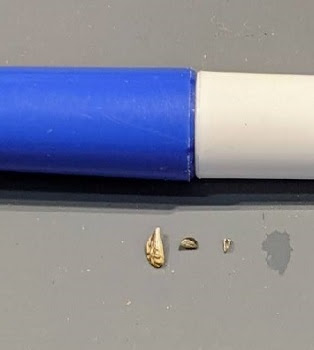
Zebra mussels next to ink penZebra mussels are considered an invasive species in Michigan and are listed as an injurious species under the federal Lacey Act. They are extremely efficient filter feeders that can negatively affect aquatic ecosystems, clog water intake pipes and be a nuisance to boaters and swimmers.

In Michigan, an invasive species is defined as one that is not native and whose introduction causes harm, or is likely to cause harm, to the economy, environment or human health.

Regular discoveries of goldfish and other aquarium species in Michigan waters indicate that aquarium dumping – disposing of unwanted pets and plants into natural waterways – is still occurring in the state. If contaminated moss balls are not properly disposed of, or if tanks that held them are not properly decontaminated, there is a risk of zebra mussels being released into waterways.

What is being done?

March 5, the DNR notified more than 3,000 aquatic pet and plant suppliers and hobbyists of the potential infestation, requiring them to dispose of any infested stock. Suppliers and hobbyists are assisting in notification by sharing information on their websites and to social media groups.

Conservation officers are visiting retailers to assist with identification and disposal of contaminated materials. The Department of Environment, Great Lakes and Energy and the DNR continue to coordinate response efforts with states across the nation and with the federal Aquatic Nuisance Species Task Force.

What if I purchased moss balls?

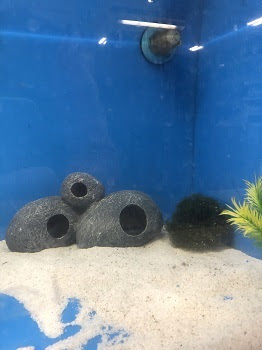
Moss ball in aquarium tankZebra mussels are listed as restricted under Michigan’s Natural Resources Environmental Protection Act (Part 413 of Act 451). This means that it is unlawful to possess, introduce, import, sell or offer that species for sale as a live organism, except under certain circumstances.

If zebra mussels are found on any moss balls in containers or in aquariums, infested moss balls and packaging should be frozen for 24 hours, boiled for one full minute, or submerged in bleach or vinegar for 20 minutes before double-bagging, sealing and disposing in the trash.

The DNR recommends that tank water from aquariums holding infested moss balls be decontaminated by removing plants and pets, adding 1/10 cup bleach to every gallon of water and allowing at least 10 minutes of contact time before draining.

Report zebra mussel detections

All discoveries of zebra mussels in moss balls must be reported to the state.
Reports should be made to Lucas Nathan, DNR aquatic invasive species coordinator, at NathanL@Michigan.gov. You can also use this contact information for assistance with inspection or proper disposal.

Prevent invasive species introduction and spread

“It is always important for sellers and consumers to check products for anything that shouldn’t be there, like hitchhiking plants, seeds, insects or, in this case, mussels,” said Nathan.

Michigan’s Reduce Invasive Pet and Plant Escapes (RIPPLE) program provides guidance for sellers and consumers on preventing aquatic invasive species introduction and spread. More information is available at CANR.MSU.edu/Invasive_Species/Ripple/.


Michigan’s Invasive Species Program is cooperatively implemented by the Department of Environment, Great Lakes, and Energy: the Department of Natural Resources: and the Department of Agriculture and Rural Development.


/Note to editors: Accompanying photos are available below for download. Suggested captions and photo credit information follow:

Moss: An invasive zebra mussel in a moss ball. Photo courtesy of U.S. Geological Survey.

ZM: Zebra mussels, shown here next to an ink pen, are usually less than 1 inch in length with stripes varying from tan to brown. Photo courtesy of Virginia Department of Conservation and Recreation.

Aquarium: Moss balls are often placed in aquariums to generate oxygen and remove nitrates from tanks. Photo courtesy of U.S. Geological Survey./

supplemental funding to support COVID-19 recovery plan

supplemental funding to support COVID-19 recovery plan

Governor Gretchen Whitmer Banner - headshot with bridge graphic

FOR IMMEDIATE RELEASE

March 9, 2021 Contact: Press@Michigan.gov

                Kurt Weiss, Weissk1@michigan.gov


Gov. Whitmer signs supplemental funding to support COVID-19 recovery plan, additional work now needed to fully utilize federal aid

Funding secured for wage increase for direct care workersschoolsemergency rental assistancevaccine administration, and testing.


LANSING, Mich. — Today Governor Gretchen Whitmer signed legislation that supports the COVID-19 recovery plan she sent to the legislature in January. It includes key provisions of the governor’s MI COVID Recovery Plan, including a $2.25/hour wage increase for direct care workers, $283 million in federal emergency rental assistance to help ensure people can stay in their homes, up to $110 million in federal funding for vaccine administration, and up to $555 million in federal funding for testing and tracing.


“I think it’s great news that we’ve been able to get some of the federal funding available to us appropriated, including passing two of my key proposals to provide a wage increase for direct care workers and increased funding to help expand vaccinations for Michiganders who are 50 years old or older,” said Governor Whitmer. “However, the reality is that there is more work to be done and there are still billions of dollars in federal funding that we need to get out the door to help businesses and families across the state. The bills I received were not negotiated with me or my administration, and I continue to call on the legislature to ensure that we work together to ensure we maximize every penny that is available. There were problems in the bills that I had to veto, and I expect the legislature to step up to fix the bill to allocate all of the money so we can get back to normal as soon as possible.”


State Budget Director David Massaron also sent a letter to the appropriations chairs in the House and Senate, asking again for a joint meeting no later than Friday, March 12 where formal negotiations can occur, with the goal of getting the remaining more than $2 billion in federal funding appropriated. In the letter, Director Massaron shares his desire to provide meaningful help to businesses impacted by the pandemic.


“We are on a good path to recovery and our key metrics and numbers are improving, but we need to put the rest of the available federal funding to work, much of it aimed at helping businesses and aiding their recovery,” added Governor Whitmer. “The light at the end of the tunnel is getting brighter and I thank every Michigander who has done their part in the response to the pandemic.”


As part of the MI COVID Recovery Plan, Governor Whitmer proposed $665 million to expand the state’s vaccine and testing programs, and $2.1 billion for schools. Unfortunately, the legislature inserted boilerplate that aims to block expenditure of these funds unless the governor signs separate legislation undercutting Michigan’s pandemic response. The governor has called on the legislature to return to the table to fully appropriate the more than $2 billion in unused federal funds.


Governor Whitmer proposed fully allocating $622 million for rent and utility assistance, but the legislature only provided $283 million – withholding $339 million that was meant to keep families safely in their homes and provide direct aid to landlords. The COVID Emergency Rental Assistance (CERA) program replaces the popular Eviction Diversion Program (EDP) MSHDA launched in July 2020, which helped approximately 16,000 households across the state avoid eviction and get current on owed rent. MSHDA will administer CERA through its statewide network of Housing Assessment and Resource Agencies (HARAs), which will be responsible for working directly with tenants and landlords so that the rental arrearages are paid and housing stability is preserved. For more information, visit Michigan.gov/CERA.


Governor Whitmer also proposed fully allocating $2.7 billion to help residents feed their families, but the legislature only provided $600 million – withholding $2.1 billion in food assistance through the federal Supplemental Nutrition Assistance Program (SNAP). Michiganders can apply for food assistance by going online to www.michigan.gov/MIBridges.


“Unfortunately, the legislature tried to prohibit expenditure of funds for vaccine distribution and the return to school unless the governor signs legislation stripping powers from the executive branch. Rather than these political games, we need to focus instead on how to best help businesses and individuals most impacted by the pandemic,” said Director Massaron. “Vetoes were necessary and now we need to collectively refocus efforts on the best way to get resources out the door to speed our recovery from the pandemic. I again encourage the chairs of the appropriations committees to accept my offer to get in a room and figure out how we can effectively align our resources with the need.”


In a transmittal letter, Governor Whitmer observed that the 48-day delay since the release of her COVID Recovery Plan necessitated immediate signature of the supplemental funding bill, but that legal review of budget boilerplate was ongoing. When the legal review of this bill’s budget boilerplate is completed, the governor will direct state departments to implement this legislation consistent with constitutional requirements. Governor Whitmer also disapproved two items in each bill, pursuant to article 5, section 19 of the Michigan Constitution of 1963.

Flags lowered to Honor One-Year Anniversary of COVID-19  

s

FOR IMMEDIATE RELEASE   

March 9, 2021

Contact: Press@michigan.gov   


Gov. Whitmer Lowers Flags to Honor One-Year Anniversary of COVID-19 in Michigan

 As of this order, the coronavirus has infected 598,014 and killed 15,670 people in Michigan.   


LANSING, Mich. – Gov. Gretchen Whitmer has ordered U.S. and Michigan flags within the State Capitol Complex and upon all public buildings and grounds across the State of Michigan to be lowered to half-staff on Wednesday, March 10 to honor the one-year anniversary of the coronavirus in Michigan and mourn those who have lost their lives to COVID-19. Michiganders are also being asked to turn on the lights outside of their homes on Wednesday, March 10, from 8:00 PM to 9:00 PM, in remembrance of the Michiganders we have lost.


“One year ago, our world changed forever as we confronted the greatest challenge of our generation,” Whitmer said. “By lowering the flags to honor the one-year anniversary of the virus’s confirmed presence in Michigan, we remember the nearly 16,000 sons and daughters, moms and dads, and neighbors and friends who passed away from COVID-19 in Michigan. As we honor their legacies, let us also take a moment to grieve together, and know that we are not alone in our mourning.


“One year after our first confirmed case, we now have three safe and effective vaccines to prevent the spread of the coronavirus. I encourage all Michiganders to continue to practice social distancing and proper hygiene and get vaccinated once they are eligible because this is the most effective way to protect you, your family, and others from COVID-19. There is light at the end of the tunnel, and we will get through this pandemic together.”


The State of Michigan recognizes and mourns the lives lost to COVID-19 by lowering flags to half-staff. Michigan residents, businesses, schools, local governments and other organizations also are encouraged to display the flag at half-staff.


To lower flags to half-staff, flags should be hoisted first to the peak for an instant and then lowered to the half-staff position. The process is reversed before the flag is lowered for the day.


Flags should remain lowered through Saturday, March 20 in accordance with the previous announcement for former Attorney General Frank J. Kelley. Flags should be returned to full-staff on Sunday, March 21.