Governor Whitmer Makes Appointments to Board and Commissions 

Governor Whitmer Makes Appointments to Board and Commissions 

Governor Gretchen Whitmer Banner - headshot with bridge graphic

FOR IMMEDIATE RELEASE

March 25, 2021

Contact: press@michigan.gov


Governor Whitmer Makes Appointments to Board and Commissions


LANSING, Mich. — Today, Governor Gretchen Whitmer announced the following reappointments to the Barrier Free Design Board, Child Abuse and Neglect Prevention Board (“Children’s Trust Fund”), Michigan Civil Rights Commission, Michigan Board of Cosmetology, Data Collection Agency Governing Board, Grand Valley State University Board of Trustees, Board of Mechanical Rules, Michigan Public School Employees’ Retirement System Board, Michigan Natural Resources Commission, Northern Michigan University Board of Trustees, Rural Development Fund Board, Michigan Travel Commission, Michigan Technological University Board of Trustees, and the Director of the Office of Children’s Ombudsman.


Barrier Free Design Board 


Ronald R. Campbell, of Davison, is the principal planner and preservation architect for Oakland County. Mr. Campbell is reappointed to represent registered architects for a term commencing March 25, 2021 and expiring October 31, 2023.


The Barrier Free Design Board has the responsibility to receive, review, and process requests for exceptions to the barrier free design specifications, and requires appropriate equivalent alternatives when exceptions are granted. The Board receives, processes, and makes recommendations for barrier free design rules.

This appointment is subject to the advice and consent of the Senate.


Child Abuse and Neglect Prevention Board (“Children’s Trust Fund”) 


Kristin Totten, of Kalamazoo, is an education attorney for ACLU of Michigan. Ms. Totten is reappointed to represent the legal community for a term commencing March 25, 2021 and expiring December 19, 2023.


The Children’s Trust Fund (CTF) was established by the Michigan Legislature in 1982 and serves as a voice for Michigan’s children and families and promotes their health, safety, and welfare by funding effective local programs and services that prevent child abuse and neglect.


This appointment is subject to the advice and consent of the Senate.


Michigan Civil Rights Commission 


Richard Corriveau, of Northville, is a trial attorney and the president of Richard J. Corriveau Law, P.C. Mr. Corriveau is reappointed to represent Democrats for a term commencing March 25, 2021 and expiring December 31, 2024.


The Michigan Civil Rights Commission was created by the Michigan Constitution of 1963 to carry out the guarantees against discrimination articulated in Article I, Section 2.  As further stated in Article V, Section 29, the State Constitution directs the Commission to investigate alleged discrimination against any person because of religion, race, color or national origin, and to “secure the equal protection of such civil rights without such discrimination.”  Public Acts 453 and 220 of 1976 and subsequent amendments have added sex, age, marital status, height, weight, arrest record, and physical and mental disabilities to the original four protected categories.


This appointment is subject to the advice and consent of the Senate.


Michigan Board of Cosmetology 


Gabriella Abel, of Okemos, is a communications strategist with Rock Central. Ms. Abel is reappointed to represent the general public for a term commencing March 25, 2021 and expiring December 31, 2024.


The Michigan Board of Cosmetology was created to license and regulate the practice of cosmetology in Michigan. The statute defines cosmetology as one of the following services or a combination of the following services: hair care services, skin care services, manicuring services, and electrology. The members of the cosmetology industry who are licensed by the department include public and private schools of cosmetology, beauty shops, cosmetologists, manicurists, cosmetology instructors, electrologists, estheticians, and natural hair culturists.


This appointment is subject to the advice and consent of the Senate.


Data Collection Agency Governing Board 


Emily McDonough, of Williamston, is the administrator for the Funds Administration and Self-Insured Program Division in the Department of Labor and Economic Opportunity. Ms. McDonough is reappointed to represent the executive branch of state government for a term commencing March 25, 2021 and expiring December 31, 2021.


The Data Collection Agency Governing Board is responsible for the determination of workers’ compensation data requirements for establishing workers’ disability compensation insurance rates. One member of the board is appointed by the Governor to represent the Executive Branch of state government.


This appointment is subject to the advice and consent of the Senate.


Grand Valley State University Board of Trustees 


Mikyia S. Aaron, of Taylor, is the general counsel and external business affairs director for the Laborers’ International Union of North America (LiUNA!) Local 1191. Ms. Aaron is reappointed for a term commencing March 25, 2021 and expiring December 31, 2028.


Noreen K. Myers, of East Grand Rapids, is an attorney and the owner of Noreen K. Myers, PLC. Ms. Myers is reappointed for a term commencing March 25, 2021 and expiring December 31, 2028.


Article VIII § 6 of the Michigan Constitution of 1963 establishes that Michigan’s institutions of higher education, that are established by law as having authority to grant baccalaureate degrees, shall each be governed by a Board of Control which shall be a body corporate. The Board has general supervision of the institution and the control and direction of all expenditures from the institution’s funds. The Board also, as often as necessary, elects a president of the institution under its supervision. Each Board of Control consists of eight members appointed by the Governor for eight-year terms.


These appointments are subject to the advice and consent of the Senate.


Board of Mechanical Rules 


Terry A. Gilligan, of Livonia, is the business manager for Pipefitters Local 636. Mr. Gilligan is reappointed to represent a member of organized labor who represents the mechanical trades for a term commencing March 25, 2021 and expiring July 30, 2024.


Dennis R. Mowbray, Jr., of New Boston, is the senior trades manager of mechanical power systems for the Wayne County Airport Authority and an instructor with Operating Engineers Local 324. Mr. Mowbray is reappointed to represent unlimited service in heating or refrigeration for a term commencing March 25, 2021 and expiring July 30, 2024.


The Board of Mechanical Rules was created to make recommendations for mechanical code rules, issue mechanical contractor’s licenses to qualified applicants, and make all orders, rules, and regulations necessary for enforcement of the provisions of the act.


These appointments are subject to the advice and consent of the Senate.


Michigan Public School Employees’ Retirement System Board 


James Pearson, of Highland, is a retired public school teacher of nearly 40 years. Mr. Pearson taught in elementary, middle, and high schools but spent much of his career at Milford High School where he taught World History, International Relations, and other subjects. Mr. Pearson is reappointed to represent a member who retired from a classroom teacher position for a term commencing March 25, 2021 and expiring March 30, 2022.


The Michigan Public School Employees’ Retirement System Board is responsible for general oversight of retirement, survivor, and disability benefits to employees in public school districts, intermediate school districts, community colleges and certain universities.


This appointment is subject to the advice and consent of the Senate.


Michigan Natural Resources Commission 


Thomas A. Baird, of Elk Rapids, is the owner of Thomas Baird Consultants. Mr. Baird is reappointed to represent Democrats for a term commencing March 25, 2021 and expiring December 31, 2024.


David Cozad, of Bay City, is the president of Mainstream Resources. Mr. Cozad is reappointed to represent Democrats for a term commencing March 25, 2021 and expiring December 31, 2024.


The Michigan Natural Resources Commission (NRC) has exclusive authority to regulate the taking of game and sportfish and is authorized to designate game species and authorize the establishment of the first open season for animals through the issuance of orders.


These appointments are subject to the advice and consent of the Senate.’


Northern Michigan University Board of Trustees 


Jason T. Morgan, of Ann Arbor, currently serves as the 8th district commissioner and chair of the Washtenaw County Board of Commissioners. Commissioner Morgan is reappointed for a term commencing March 25, 2021 and expiring December 31, 2028.


Article VIII § 6 of the Michigan Constitution of 1963 establishes that Michigan’s institutions of higher education, that are established by law as having authority to grant baccalaureate degrees, shall each be governed by a Board of Control which shall be a body corporate. The Board has general supervision of the institution and the control and direction of all expenditures from the institution’s funds. The Board also, as often as necessary, elects a president of the institution under its supervision. Each Board of Control consists of eight members appointed by the Governor for eight-year terms.


This appointment is subject to the advice and consent of the Senate.


Rural Development Fund Board 


Erin K. Kricher, of Traverse City, is the director of renewable development at Invenergy LLC. Mrs. Kricher is reappointed to represent Democrats and residents of the Lower Peninsula for a term commencing March 25, 2021 and expiring December 31, 2024.


The Rural Development Fund Board, housed in the Department of Agriculture and Rural Development, has oversight of the Rural Development Fund. The Board is charged with advising the Department on how to distribute tax revenue collected from mines to improve and strengthen local communities.


This appointment is subject to the advice and consent of the Senate.


Michigan Travel Commission 


Amy B. Cox, of Warren, is the senior director of sales and earned revenue for The Henry Ford. Ms. Cox is reappointed for a term commencing March 25, 2021 and expiring August 20, 2023.


The Michigan Travel Commission was established to promote, maintain, and develop the orderly growth of the Michigan travel industry. The Commission assists the Michigan Travel Bureau with the development of a comprehensive long-range master plan, annually assesses the activities and accomplishments of the Michigan Travel Bureau, and works to the maximum extent practicable with those private associations, nonprofit corporations, organizations, or other private entities which promote tourism in this state.


This appointment is subject to the advice and consent of the Senate.


Michigan Technological University Board of Trustees 


Andrea Dickson, of Grosse Pointe Farms, is the former CEO and co-founder of ENT Biotech Solutions, Inc. and is currently a principal at the start-up telemedicine company Quintree. Ms. Dickson is reappointed for a term commencing March 25, 2021 and expiring December 31, 2028.


Article VIII § 6 of the Michigan Constitution of 1963 establishes that Michigan’s institutions of higher education, that are established by law as having authority to grant baccalaureate degrees, shall each be governed by a Board of Control which shall be a body corporate. The Board has general supervision of the institution and the control and direction of all expenditures from the institution’s funds. The Board also, as often as necessary, elects a president of the institution under its supervision. Each Board of Control consists of eight members appointed by the Governor for eight-year terms.


This appointment is subject to the advice and consent of the Senate.


Director of the Office of Children’s Ombudsman


COVID-19 symptom tracker surpasses 3 million entries 

COVID-19 symptom tracker surpasses 3 million entries 

MDHHS banner with logo no names

Press Release


FOR IMMEDIATE RELEASE: March 25, 2021

CONTACT: Chelsea Wuth, 517-241-2112, WuthC@michigan.gov

MI Symptoms COVID-19 symptom tracker surpasses 3 million entries 

LANSING, Mich. – MI Symptoms, a free, secure online symptom screening tool designed to help organizations screen members and employees for COVID-19 symptoms, has surpassed 3 million entries.

MI Symptoms was created by the Michigan Department of Health and Human Services (MDHHS) and the University of Michigan to make compliance with symptom screening rules as easy and seamless as possible, ensuring that businesses are able to open safely with simple compliance measures. The online tool is updated regularly to reflect the latest state and Centers for Disease Control and Prevention (CDC) guidance.

“Screening for COVID-19 symptoms prior to entering the workplace is still required for most in-person work settings, and remains an important way to help prevent spread of COVID-19 in the workplace,” said Dr. Joneigh Khaldun, MDHHS chief medical executive and chief deputy director for health. “While vaccination efforts are ongoing, it is important that people get tested if they have been exposed or have symptoms, and to continue to wear masks, socially distance and wash hands frequently.”

MI Symptoms receives more than 20,000 submissions per day, with consistent engagement across the state. Participation varies from small businesses to schools, and from law firms to hospitals and other health care settings.

Employers that use this tool also help inform public health officials of potential COVID-19 hotspots through the collected symptom data. The results are used anonymously to create a county and regional map of symptoms and COVID-19 cases across the state so Michiganders can see overall changes relevant to their area of residence. In addition, if a user has COVID-like symptoms, the state or local health department may reach out to inquire about his/her health and programs that could help find testing or services.

“Instead of a local health department having to wait for lab tests to come back, the department will have an indication if there is a group of individuals working in a place where symptoms have been reported,” said Sarah Lyon-Callo, MDHHS state epidemiologist.

Screening employees for health is currently required by MIOHSA and keeps businesses, employees and customers safer by proactively monitoring employee symptoms.

MI Symptoms is for use by non-employer organizations as well, including athletic organizations and schools. Encouraging symptom screening for athletes, coaches, teachers and students prior to in-person interactions is recommended in current state guidance to reduce the risk of virus transmission.

MI Symptoms is easily accessible by both mobile phones and desktop devices. Along with the user surveys and helpful COVID-19 information, the organization admin dashboard offers a real-time view of individuals’ symptom survey results in that organization and allows for easy download of historical symptom screening records.

MI Symptoms is available in English, Spanish and Arabic.

For more information or to sign-up, visit the MI Symptoms website.

Showcasing the DNR: Exploring the path less traveled

Showcasing the DNR: Exploring the path less traveled

State forests have a great deal to offer

Centennial banner

– Showcasing the DNR –

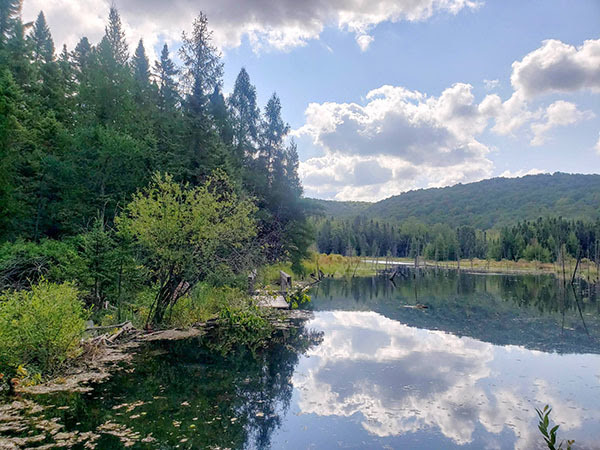
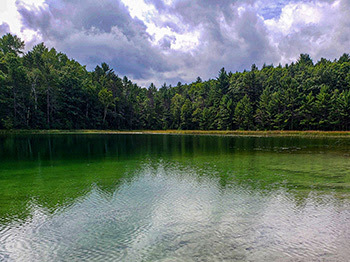
A tranquil scene shows a quiet lake from the Jordan River Valley in Antrim County.

Exploring the path less traveled

By RACHEL COALE
Michigan Department of Natural Resources

Deep in the forest, streams are rushing with snowmelt and tips of green are emerging from gaps between fallen leaves. Blooming time for northern Michigan’s three-petaled wild orchid, the trillium, is just around the corner. Colorful songbirds are making the long trip back to their summer homes with a season of abundance before them.

With this natural beauty in store, now is the time to start planning a getaway to the forest. Make lifetime memories while hunting for mushrooms, casting a line into a trout stream or catching sight of a free-roaming elk.

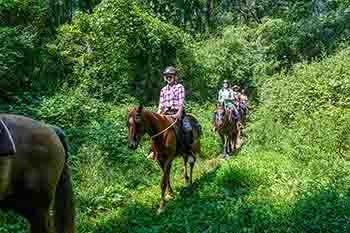
Horseback riders are pictured on a trail ride through a wooded area on a sunny day.Want to get out there? Check out our online state forest tour to inspire your trip. State forests can be found in the Upper Peninsula and northern Lower Peninsula, although there are plenty of forested areas to see in parks and recreation areas across the state as well.
The wild character of forests comes with seclusion, so get a hard copy map or download your route before you arrive as cell service can be spotty. Once there, it’s time to unplug – the only reason you’ll need to take out your phone is to use the camera to capture memories.

State forest pathways, part of the state’s trails system, and state forest roads open to ORVs and snowmobiles are two ways to navigate state forests. Some forest roads are maintained seasonally, so do your research in advance before heading out during the winter. Road maps are updated April 1 each year.

Only a small fraction of state forest land is harvested annually, but if you come across an active timber job or planting operation, there are a few things you should know for safety.

First, stay on the trail. Logging companies must keep trails passable and post signage about upcoming activities. Let on-the-ground staff know you’re passing through if you’ll be close to the action, and don’t approach logging or cultivation equipment.

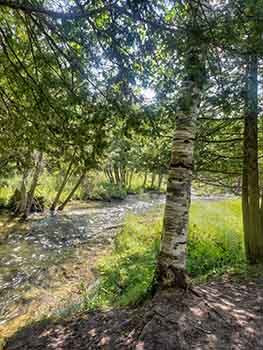
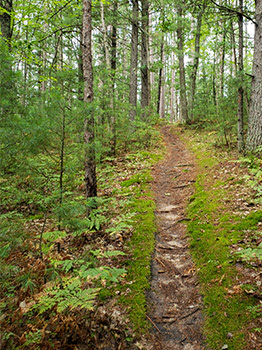
A peaceful trail from the Sands Lake Quiet Area is shown from Grand Traverse County.“A machinery operator may not be able to see or hear you while working,” said Michigan Department of Natural Resources Forest Resources Division Acting Assistant Chief Dave Lemmien. “Splinters and wood debris from cutting can sometimes fly through the air and could accidentally hit a passerby if they get too close.”
Timber harvesters can accommodate equestrian groups if notified in advance. Ride organizers should work with the Michigan Trail Riders Association and the local forest resources unit office in the area you plan to ride.

Ready to call it a day? A state forest campground is where a day hike turns into an overnight adventure, complete with starry skies, a crackling campfire and a true wilderness experience.

“Rustic” is the best way to describe these unique campgrounds. Many of these secluded sites are hike-in or paddle-in only and are available on a first-come, first-served basis. Facilities available include basic vault toilets, fire rings and picnic tables. Drinking water comes from a hand pump, a novelty that often delights young adventurers and many adults, too.

Many state forest campgrounds are associated with bodies of water and state pathways for cool hiking opportunities right at the campgrounds.

Here are a few state forest destinations to visit, suggested by DNR staff:

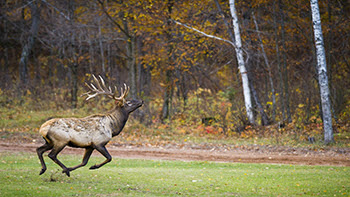
A bull elk is shown from the Pigeon River Country in the northern Lower Peninsula.Pigeon River Country State Forest

A must-see is the famed Pigeon River Country State Forest – “the Big Wild,” which at 109,000 acres is the largest block of undeveloped land in the northern Lower Peninsula. This forest land is home to Michigan’s elk herd and offers opportunities to camp, hike, fish and ride on horseback. Flowing trout streams, cool sinkhole lakes and a network of trails offer scenic views.

For a challenging adventure in this storied landscape, plan a hike on the High Country Pathway, a rugged, weeklong backpacking trail. Shorter trails are perfect for day hikes and picnics. An interpretive center is a great place to learn about the area’s history and stage your hike.

Jordan River Valley

It’s worth a drive off the beaten path to visit two scenic overlooks perched over the Jordan River Valley in Antrim County. Landslide Hill Scenic Overlook and Dead Man’s Hill Overlook provide spectacular views of the forest and river floodplain below, especially when autumn colors begin to turn.

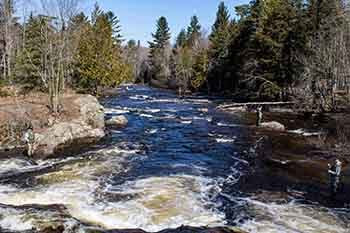
An inviting scene from the Jordan River Valley is shown.“The Jordan River Pathway is a great area to visit with many points of interest along the trail,” said DNR forest management specialist Jason Stephens. “Maybe it’s my local bias, but this area is really special.”
The Dead Man’s Hill Overlook, whose name recalls a tragic lumbering accident a century ago, is the trailhead for 3- and 18-mile hiking loops on the Jordan River Pathway. The 18-mile loop, part of the 4,600-mile North Country National Scenic Trail, is popular among backpackers who camp at the Pinney Bridge State Forest Campground.

In addition to excellent hiking in the valley, the Jordan River is a popular water trail for intermediate paddlers. If you don’t own a kayak or canoe, local outfitters can help plan a trip.

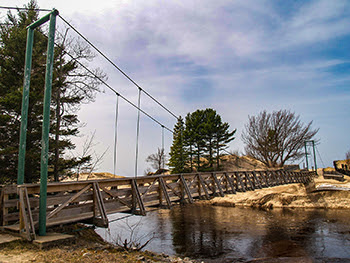
A walking bridge is shown over the Two-hearted River in northern Luce County.Mouth of the Two-Hearted River

The mighty Two-Hearted River meets Lake Superior’s icy waters along the coastline in Luce County. In this setting perfect for exploration, a walking bridge leads visitors to a rocky beach strewn with a rainbow of stones. Rockhounds can attempt to get lucky and find an agate as they catch a lakeside sunset before retiring next to the fire at a 39-campsite state forest campground. A nearby boat launch is an access point on the Lake Superior East Water Trail, and a short trip inland takes visitors to the spectacular Upper and Lower Tahquamenon Falls.

A pretty marl lake is shown from the Sands River Quiet Area.Sands Lake Quiet Area

In contrast to the nearby bustle of Traverse City, the Sand Lakes Quiet Area in Grand Traverse County is a serene forest designated in 1973 exclusively for nonmotorized uses including hiking, mountain biking, horseback riding, fishing and birdwatching. Five small, distinctive “marl lakes” can be found along hiking trails that ramble over 2,800 acres of rolling hills. These glacial lakes have an ethereal teal hue due to calcium carbonate content in the water. A few of the lakes are stocked with trout. Trails and lakes can be accessed starting at the Guernsey Lake State Forest Campground.

Spring steelhead fishermen are trying their luck at the Huron River at Big Eric's Bridge in Baraga County.Big Eric’s Bridge State Forest Campground
In the Upper Peninsula, Big Eric’s Bridge State Forest Campground, along the banks of the Huron River in Baraga County, is a secluded destination. Visitors will enjoy hiking, camping, fishing, ORV riding and viewing nearby waterfalls, including Big Eric’s Falls, flowing over the rocky riverbed.

“It’s just a really peaceful, beautiful place,” said DNR training coordinator Jan Hebekeuser.

With a campground, road, bridge and falls named after him, who was Big Eric? Eric Erickson, a well-known local figure of an imposing stature, was Henry Ford’s lumber camp foreman more than a century ago.

Before you head out, pack the following information with you.

In the outdoors, Leave No Trace principles are the gold standard for responsible recreation, encouraging people to leave the places they love wild and in better shape than they found them.

That means packing out trash of all kinds and leaving wildflowers alone. Occasionally, you may run into something worse than a few candy wrappers – a dump site. In addition to being unsightly, piles of trash in the woods are a danger to people and wildlife. If you encounter one, report it to the Report All Poaching hotline at 1-800-292-7800 or log it with the Adopt-a-Forest Program so a team can take care of it.

Learn more about Michigan’s wonderful state forest campgrounds.

Check out previous Showcasing the DNR stories in our archive at Michigan.gov/DNRStories. To subscribe to upcoming Showcasing articles, sign up for free email delivery at Michigan.gov/DNR.


/Note to editors: Contact: John Pepin, Showcasing the DNR series editor, at 906-250-7260. Accompanying photos and a text-only version of this story are available below for download and media use. Suggested captions follow. Credit: Michigan Department of Natural Resources, unless otherwise noted.

Text-only version of this story.

Bridge: A bridge at the mouth of the Two-Hearted River is shown in northern Luce County.

Elk: A bull elk is photographed running at the famed Pigeon River Country in the northern Lower Peninsula.

Horseback: Horseback riders out for a nice outing.

Huron: Springtime steelhead anglers are trying their luck on the Huron River at Big Eric’s Bridge in Baraga County.

Jordan: An inviting scene from the Jordan River Valley in Antrim County is shown.

Marl: A marl lake is shown from the Sand Lakes Quiet Area in Grand Traverse County.

Sand: A peaceful trail is shown from the Sand Lakes Quiet Area in Grand Traverse County.

Trilliums: Springtime brings elegant trilliums to bloom across Michigan.

Valley: A beautiful and tranquil scene from the Jordan River Valley in Antrim County is shown./


DNR COVID-19 RESPONSE: For details on affected DNR facilities and services, visit this webpage. Follow state actions and guidelines at Michigan.gov/Coronavirus.
bill signed to update Industrial Hemp Growers Act  

bill signed to update Industrial Hemp Growers Act  

header

For immediate release: March 24, 2021

Program contact: Gina Alessandri, 517-284-5637

Media contact: Jennifer Holton, 517-284-5724


Whitmer signs bill to update Michigan’s Industrial Hemp Growers Act 

Key updates bring state into compliance with final USDA rule


LANSING, Mich. – Today, Governor Gretchen Whitmer signed Senate Bill 0816, sponsored by Senator Dan Lauwers (R-Brockway Township), which updates Michigan’s Industrial Hemp Growers Act (Public Act 220 of 2020) to ensure the state’s hemp program is in alignment with the U.S. Department of Agriculture’s (USDA) final hemp rule, which went into effect on March 22, 2021.


“Updating our industrial hemp growers act was a critical step in maintaining regulatory certainty for hemp cultivation in Michigan,” said Gary McDowell, director of the Michigan Department of Agriculture and Rural Development. “This helps our hemp growers and processors ensure they’re aligned nationally and signals the importance of supporting this emerging part of our agriculture economy. I appreciate the bi-partisan support and swift movement ensuring Michigan’s legislative framework meets federal requirements.”


Key revisions and updates to the state’s Industrial Hemp Growers Act include the following:

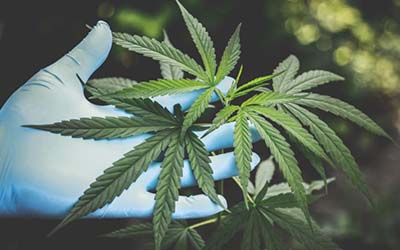
  • The hemp harvest window has increased from 15 to 30 days.
  • The grower registration cycle has been changed from December 1 – November 30 to February 1 – January 31. This means grower registrations already issued for the 2021 growing season will be valid until January 31, 2022.
  • USDA modified sampling provisions allowing states to develop performance-based sampling requirements. This added flexibility lets MDARD take into consideration variables such as seed certification, grower compliance, variety performance, etc. when developing its sampling plan.
  • Growers can now remediate non-compliant hemp instead of disposing of it. Specific options for remediation are identified and require post remediation sampling to ensure compliance with acceptable THC levels.
  • The negligence threshold has been raised from 0.5 percent to one percent, and the maximum number of negligent violations a grower can receive in a growing season (a calendar year) has been limited to one.
  • Effective December 31, 2022, all laboratories testing industrial hemp, including those laboratories testing hemp throughout the growing season to monitor THC levels, must be registered with the United States Drug Enforcement Agency.

A copy of SB 186 can be found here.


Additional information about the Michigan industrial hemp program is available at www.michigan.gov/industrialhemp. To receive email updates from MDARD—which include important program news, including updates on the federal hemp rules, changes to state hemp laws, and regulatory reminders for hemp licensees—click on the red envelope found on the right-hand side of the webpage.


Michigan Works Workshops To Promote Financial Fitness

Michigan Works Workshops To Promote Financial Fitness

Oakland County Michigan Works! Launches Year-Long Series Of Free Workshops To Promote Financial Fitness

Waterford, Michigan – Oakland County Michigan Works! is launching a new, year-long series of free, virtual financial wellness workshops next month, to help people make smart decisions with their money.

Hosted by national, state and regional experts, the no-cost Financial Fitness workshops are open to anyone who is interested in better managing their finances. Subject areas include budgeting, investing, credit scores, paying for higher education, retirement planning, home ownership, elderly care and more.

“As we emerge from the pandemic, financial wellness is at the top of so many people’s minds and getting sound advice from leading experts in the field is important as we all move forward,” said Oakland County Executive David Coulter. “I’m excited to see Oakland County Michigan Works! expand its popular week of free workshops into a full-year schedule. There really is something for everyone and I hope people take full advantage of this opportunity.”

The county’s Financial Fitness program kicks off on Tuesday, April 6, with “Realizing the American Dream: Achieving Home Ownership” and 11 more workshops are scheduled during the month:


  • April 8 Why Debt is Not the Problem
  • April 9 Saving Money on Groceries (Budgeting)
  • April 13 Recovering from the Pandemic – Financial Planning for Gen X, Y, and Z
  • April 15 Foiling Identity Theft
  • April 16 Five Money Questions for Women
  • April 20 Learn How to Position the Student for 100% Funding (Paying for Higher Education)
  • April 22 Writing a Business Plan
  • April 23 Debt: Both Useful and Dangerous
  • April 27 Preparing your Investment Portfolio: Retirement and Taxes
  • April 29 A Dollar Stretches Further Than You May Think
  • April 30 Recognizing and Avoiding Predatory Lending

The full schedule of workshops through June and registration links can be found at OaklandCountyMiWorks.com/FinancialFitness. Directions for logging into the virtual workshops are sent to registered participants.

“Financial wellness not only enhances a person’s quality of life, but also contributes to employability,” said Oakland County Michigan Works! Director Jennifer Llewellyn. “We’ve brought together an impressive lineup of speakers to share their knowledge and insights on accomplishing these goals. Visit our website for a full list of workshops.”

Oakland County Michigan Works! operates service centers in Novi, Oak Park, Pontiac, Southfield, Troy and Waterford. Combined, they assist more than 105,000 job seekers annually. Services include career coaching, interviewing and job search workshops, placement assistance, training courses and job trend information.

The service centers also assist more than 3,000 employers seeking assistance with talent recruitment, apprenticeship programs, job fairs, candidate pre-screening, hiring and training support, layoff support and labor market data.

Service center staffs remain available by virtual appointment to work one-on-one with job seekers to build their resumes, prepare for job interviews and help address other needs. To schedule a virtual meeting, call 1-248-858-5520 and select the office nearest to you. The service centers are hosting several virtual workshops for job seekers. A schedule can be found at OaklandCountyMIWorks.com.