
SMART launches SMART Flex, first on-demand transit service

SMART launches SMART Flex, first on-demand transit service

SMART launches SMART Flex, Detroit’s first on-demand transit service with Via

SMART Flex will extend access to public transit and provide trips to vaccine centers across the Detroit Metro area through a mobile app

Detroit – SMART, in partnership with Via, the leader in TransitTech, announces a first-of-its-kind mobility solution for Wayne, Oakland, and Macomb counties that will transform the way residents are able to access public transit. This week SMART began to operate its on-demand public transit service, called SMART Flex which will complement and extend the reach of convenient service in its existing transit system.

“SMART is taking several giant steps forward with the introduction of the Flex service, it helps to better meet the varying transit needs across the region with quick, affordable service,” said Kahlil Rahal, Chairman, SMART Board of Directors and Wayne County Deputy County Executive. “The new SMART Flex service in Dearborn, Troy and the Hall Road corridor is a flexible, technology based, vital transit service that helps people to easily move around to get to the places they need to go.”

Cities across the globe like Berlin, Miami, and Seattle rely on digitally-enabled transit solutions to create flexible, equitable, and resilient public transportation networks. SMART Flex is the Authority’s first venture into microtransit, and will strengthen a comprehensive transit network across the region by encouraging first-and-last mile connections to existing bus routes including SMART’s successful FAST service. The service will also facilitate local trips to hospitals, universities, and commercial destinations.

Using the SMART Flex mobile app, anyone within the zones, including residents and workers in Dearborn, Troy, and the Hall Road corridor between Utica and New Baltimore will be able to hail a vehicle directly from their smartphone or by calling the call center at (734) 212-8429. Via’s advanced algorithms create quick and efficient trips by matching passengers and vehicles together in real time, and directing riders to a nearby “virtual bus stop” for pick up and drop off. The service will offer wheelchair-accessible vehicles and offer door-to-door service for those with limited mobility. SMART is hosting community events this week to increase awareness of the new service in each of the three areas.

“The launch of SMART Flex is a pivotal moment for transit in the Metro Detroit area,” said Daniel Ramot, Via CEO and co-founder. “A technology-enabled mobility solution will enhance and extend the strong transit network that SMART has already established, and offer a new way for residents to access critical opportunities across the region.”

SMART Flex will offer microtransit trips from 6 a.m. to 9 p.m., seven days a week. Rides start at $2, with a maximum price of $8, depending on distance. Payment can be made by credit card or with Dart or SMART Passes. The SMART Flex app is available in English and Arabic. When a rider combines both SMART fixed route service and SMART Flex to complete their trip, the first $2 of the ride are included as part of the fixed route total fare – providing more convenient service as part of a fixed route trip.

SMART Vax Transportation Eliminates Transit as a barrier for Vaccinations
Technology-enabled transit allows the service to be flexible, and allows SMART to make informed decisions throughout the duration of this initiative based on the changing needs of the community. As a result, SMART decided to launch free rides to-and-from vaccination sites in Metro Detroit starting on March 10th, without the need for a private vehicle. Trips to vaccine centers are door-to-door, and are available weekdays from 8 a.m. to 6 p.m. and on weekends from 10 a.m. to 4 p.m. This offering is in addition to the microtransit service. SMART was able to use Via’s flexible transit platform to adjust and expand the SMART Flex service area for vaccination trips as more vaccine sites open throughout the region. To date, SMART has directly provided more than 500 rides for residents to get their vaccination helping to eliminate transit as a barrier.

The microtransit service is an added transit service that will help SMART’s effort, as a transit provider, to ensure a ride is available for anyone in the region to get vaccinated.

“SMART is excited to launch SMART Flex in these three zones across our region to start the next innovation in public transportation” said Robert Cramer, Deputy General Manager of SMART. “This service builds on SMART’s most successful and convenient fixed routes to provide convenient service across these entire zones.”

Via works with more than 200 partners in over 20 countries to help connect more people to transit, including Green Bay Metro, Columbus Ohio Transit Authority (COTA), and Sydney’s Transport for New South Wales

About SMART:
Serving residents since 1967, SMART is southeast Michigan’s regional public transportation provider, offering convenient, reliable and safe transportation for Macomb, Oakland and Wayne Counties. SMART fixed route, small bus and the new Flex on-demand services connect people to employment and educational institutions, medical appointments and shopping centers. For routes and fare information, and COVID-19 Updates, visit smartbus.org.

About Via:
Founded in 2012, Via pioneered the TransitTech category by using new technologies to power public mobility systems, optimizing networks of dynamic shuttles, buses, wheelchair accessible vehicles, school buses, and autonomous vehicles around the globe. Building the world’s most efficient, equitable, and sustainable transportation network for all riders — including those with limited mobility, those without smartphones, and unbanked populations — Via works with its partners to lower the cost of public transit and provide accessible options that rival the convenience of a personal car at a much reduced environmental impact. At the intersection of transportation and technology, Via is a visionary market leader that combines software innovation with sophisticated service design and operational expertise to fundamentally improve the way the world moves, with 200 global partners on six continents, and counting.


Transparency Dashboard Promotes Public Trust

Transparency Dashboard Promotes Public Trust

Transparency Dashboard Promotes Public Trust In Law Enforcement

Waterford, MI – Oakland County is paving the way to easier access to information about law enforcement interactions through a Transparency Dashboard that local law enforcement agencies can make available on their websites.

“Community trust in their government, including law enforcement, is an important part of working together to strengthen the fabric of our communities” said Oakland County Executive Dave Coulter. “We hope communities find the Transparency Dashboard a useful tool to enhance their local transparency efforts.”

In partnership with Oakland County’s Courts and Law Enforcement Management Information System (CLEMIS) and Arx Community, Oakland County led the development of the tool, which features information about citations, arrests, and calls for service. Users can drill down to more detailed information about arrest trends, including breakdown by age, race and gender. Agencies can also add information and data to their dashboards.

Oakland County Sheriff’s Office, and police departments in Novi, Lathrup Village and Southfield helped to develop the dashboard and their data is available as a model. The dashboards are being provided free of charge for the first two years and all agencies are invited to participate.

“We have always been an open book in our service to the community and this is another opportunity for us to showcase that ongoing transparency,” Oakland County Sheriff Michael J. Bouchard said.

“The Novi Police Department has always believed that an open and transparent government is crucial to building public trust,” said Chief David Molloy, director of public safety for the City of Novi. “We applaud County Executive Coulter for his vision in making the Transparency Dashboard a reality.”

The way the dashboard works is, a report is initiated by the law enforcement agency, which is then verified, approved and entered into the CLEMIS records management system. CLEMIS provides the data to Arx Community, which pushes the data to the agencies’ Transparency Dashboard for the public. Refreshing the data every 24 hours ensures that the information is always current.

“The transparency tool is a great tool that we have at our disposal,” said Deputy Chief Jeffrey A. Jagielski of Southfield Police Department. “It lets our community know what we are doing in the best interest of transparency.”

“The feedback I am receiving from my elected officials and the community is all positive. The Transparency Dashboard is a useful tool for the residents, so they can see exactly what their police department is doing,” said Chief of Lathrup Village Police Scott McKee. “I believe this dashboard will aid in bridging the gap and building trust between our police department and the residents we serve.

Oakland County’s CLEMIS is a consortium of criminal justice and public safety agencies that share information with each other. It promotes communication among multiple agencies through its innovative computer technology and sharing of criminal justice information. A total of 126 Michigan police agencies are members of CLEMIS, including every police agency in Oakland County.

Lt. Governor Gilchrist Tours Vaccine Facility in Dearborn 

Lt. Governor Gilchrist Tours Vaccine Facility in Dearborn 

1

FOR IMMEDIATE RELEASE

March 29, 2021

Contact: Press@Michigan.gov


PHOTOS: Lt. Governor Gilchrist Tours Vaccine Facility in Dearborn


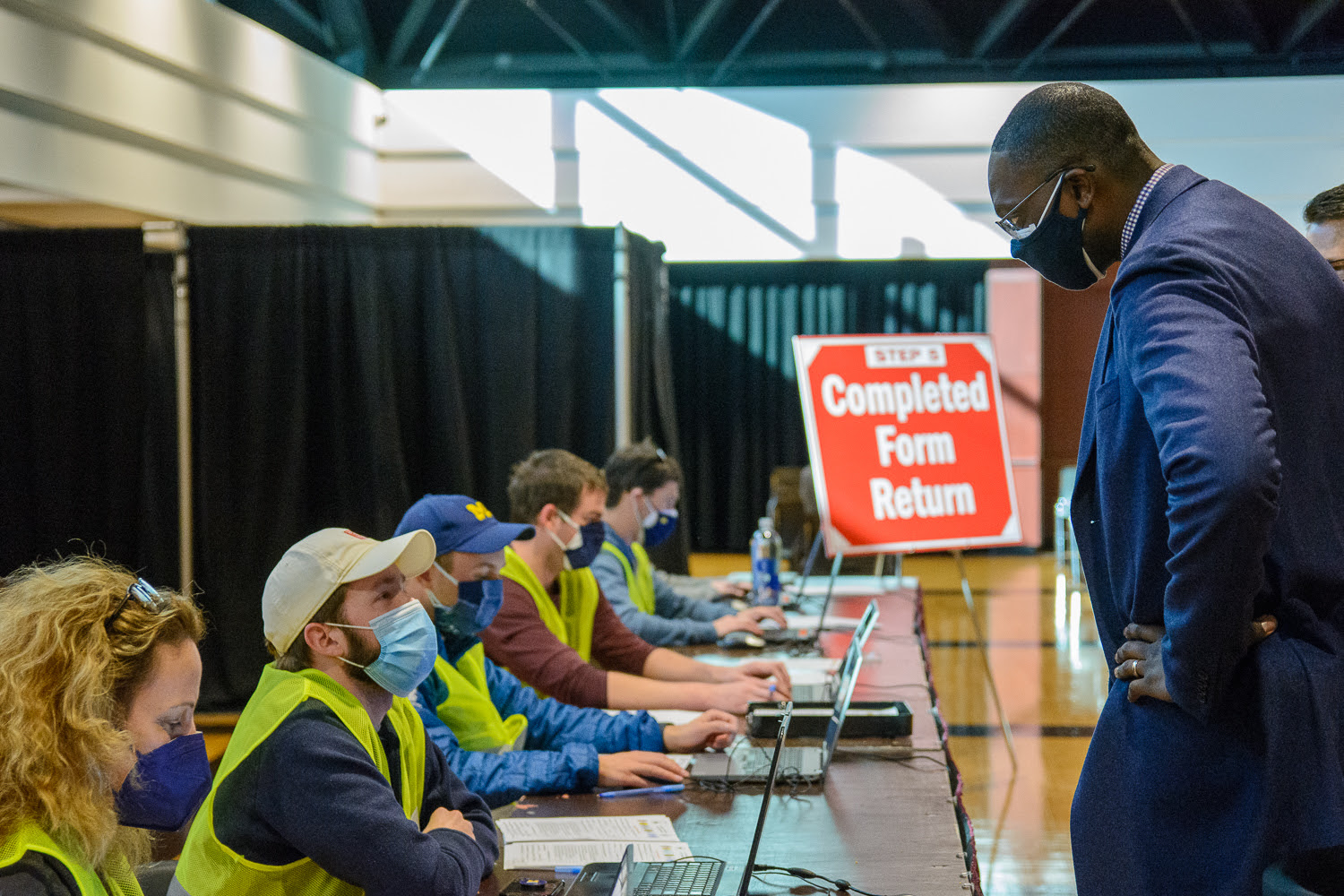
LANSING, Mich. — Today, Lt. Governor Garlin Gilchrist traveled to the Ford Community and Performing Arts Center vaccination site in Dearborn to observe ongoing COVID-19 vaccination efforts and ensure that vaccines are being distributed efficiently and equitably. He was joined by Senator Sylvia Santana, Rep. Abdullah Hammoud, Wayne County Commissioner Sam Baydoun, and Dearborn City Council President Susan Dabaja.


“Our administration has been working around the clock to expand our vaccine program in an efficient and equitable manner so that every Michigander has access to the safe and effective vaccines,” said Lt. Governor Gilchrist. “I am grateful to the Dearborn Fire Department, local officials, and volunteers working together to create a welcoming, inclusive, and accessible approach to keeping people safe and healthy. The vaccination efforts like the one in Dearborn are crucial to beating COVID-19, and I encourage all Michiganders to get any of the three vaccines once they become eligible.”


To date, Michigan has administered 3,919,796 vaccines, moving the state closer to its goal of equitably vaccinating at least 70% of Michiganders ages 16 and older as soon as possible. As part of these efforts, Michigan is working to administer 50,000 shots per day, partnering with organizations like the Ford Community and Performing Arts Center to create more opportunities for Michigan residents to receive a vaccine.


9


11


1

Orion Township ZBA Meeting of March 22, 2021

Orion Township ZBA Meeting of March 22, 2021


Court Reinstates Claim Against Opioid Defendants 

Court Reinstates Claim Against Opioid Defendants 

Attorney General Dana Nessel

Media Contact:

 Kelly Rossman-McKinney
(c) 517-512-9342

FOR IMMEDIATE RELEASE:
Monday, March 29, 2021

Court Reinstates AG Nessel Claim Against Opioid Defendants

LANSING – Michigan’s lawsuit in Wayne County Circuit Court against major opioid distributors scored a significant win, Attorney General Dana Nessel announced today.

Judge Patricia Perez Fresard granted a motion filed by Nessel seeking to reinstate a claim against the defendants that had been previously dismissed.

Attorney General Dana Nessel, representing the State of Michigan, filed a lawsuit in December 2019 against Cardinal Health Inc., McKesson Corp., AmerisourceBergen Drug Corp. and Walgreens for their lack of oversight of the distribution and sale of opioid products.

“We appreciate the court determining our claim of statutory nuisance against these companies is appropriate to proceed,” Nessel said. “This ruling reflects some of the hard work going on every day in my office and beyond to hold those with shared responsibility for the opioid epidemic accountable.”

The suit alleges these companies knowingly participated in the illegal distribution of prescription opioids purchased by Michigan residents and are liable to the State of Michigan under the Drug Dealer Liability Act as well as statutory nuisance grounds.