Michigan budget has good news for studying road usage charges
|

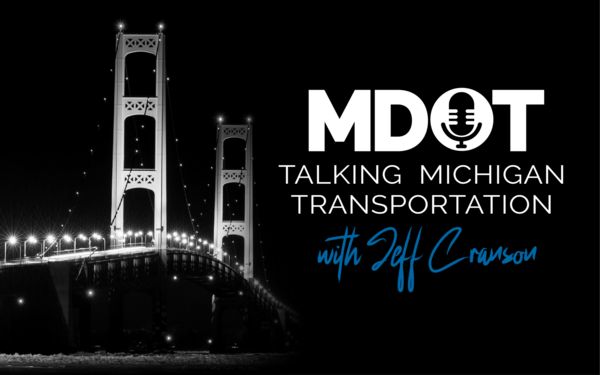

 First, State Sen. Veronica Klinefelt of Eastpointe, who chairs the Senate Transportation Appropriations Subcommittee and has been a strong advocate for studying alternative ways to fund transportation, explains why she advocated for the RUC pilot.
Connect with us:
 |
 |
 |
 |
 |
 |
 |
 |
|
Connect with us:
|
|
|
|
|
|
|
|

|

Press Release FOR IMMEDIATE RELEASE: Oct. 8, 2025 CONTACT: Lynn Sutfin, 517-241-2112, SutfinL1@michigan.gov Prescription drugs covered by Medicaid plans topic of October 20 meeting LANSING, Mich. – The public is invited to attend a virtual meeting hosted by the Michigan Department of Health and Human Services (MDHHS) from 9:30 a.m. to noon, Monday, Oct. 20, about the list of prescription drugs covered under Michigan’s Medicaid health plans known as the Medicaid Health Plan Common Formulary. The purpose of the meeting is to provide an annual forum for the public, partners and interested parties to comment on the prescription list. This forum is in addition to the quarterly written public comment periods. The annual Michigan Medicaid Health Plan Common Formulary stakeholder meeting will be held virtually via Zoom using the password SLVU14. Participants may also access the meeting by phone by dialing 408-961-3928 and entering access code 351013. Attendees are asked to RSVP by emailing KrepsD@michigan.gov by Wednesday, Oct. 15. MDHHS created the common formulary in 2016 to streamline drug coverage policies for Medicaid and Healthy Michigan Plan beneficiaries and providers. The common formulary is required in state law and in the Medicaid health plan contract to ensure that prescription drugs are common across all contracted plans. Medicaid health plans may be less restrictive – but not more restrictive – than the coverage in the common formulary for products not on the Michigan Preferred Drug List, which is a subset of the drugs listed on the common formulary. As of Oct. 1, 2020, the common formulary coverage for products began aligning with the Michigan Preferred Drug List – including any prior authorization and step therapy requirements. Find more information about the common formulary including the list of covered prescription drugs at Michigan.gov/MCOpharmacy. If you need special services including ASL interpreters, written information in other formats or language translation services, email krepsd@michigan.gov no later than 5 p.m., Friday, Oct. 10, to allow sufficient time to set up arrangements. Those unable to attend can submit questions or comments to the Common Formulary mailbox at MDHHSCommonFormulary@michigan. |

Press Release FOR IMMEDIATE RELEASE: Oct. 7, 2025 CONTACT: Laina Stebbins, 517-241-2112, StebbinsL@michigan.gov MDHHS warns of smoking and vaping fire risks LANSING, Mich. – In recognition of October as Fire Prevention Month, the Michigan Department of Health and Human Services (MDHHS) Smoke-Free Housing Initiative is raising awareness about the critical role that smoking and vaping play in fire risks, in addition to the serious health issues they can cause. Smoking remains the leading cause of fatal fires in Michigan, accounting for 48% in 2024 and 25% of all fire deaths so far in 2025. Of these, 11% are linked to smoking while on medical oxygen. These fires often start when smoking materials, like cigarettes or hot ashes, are left unattended or are not properly discarded, potentially causing furniture, bedding or trash to catch fire. Fire Prevention Month coincides with the National Fire Prevention Association’s Fire Prevention Week that starts Sunday, Oct. 5. This year’s theme focuses on lithium-ion batteries, which are used to power e-cigarettes and vapes. Lithium-ion batteries can overheat, catch fire or even explode if damaged or misused. “Creating smoke-free and vape-free environments is not only a public health priority — it’s critical for fire safety,” said Dr. Natasha Bagdasarian, chief medical executive. “By increasing access to smoke-free housing and supporting Michigan residents who want to quit smoking or vaping, we can save lives and reduce fire-related deaths, injuries and property damage.” The benefits of smoke-free housing include:
Free smoke-free housing technical assistance and resources are available to support residents, property managers, public health partners and fire departments at Michigan.gov/SmokeFreeHousing. To learn safety tips to reduce the risk of house fires, visit MI Prevention. Free tobacco and nicotine quit support is available through the National Cancer Institute’s Smoking Quitline at 1–877–44U–QUIT (1–877–448–7848). For more tobacco information and resources, visit Michigan.gov/Tobacco. |

|
| FOR IMMEDIATE RELEASE October 8, 2025 |
MEDIA CONTACT Michael Frezell 517-281-6519 FrezellM@Michigan.gov |
MDOT contracted carrier Indian Trails
named 2025 best bus service in US
LANSING, Mich. – The Michigan Department of Transportation (MDOT) congratulates Indian Trails for being selected as number one of the 10 best bus services for 2025 by USA Today. Indian Trails was the only Michigan-based bus service to make the list, outperforming other well-known bus companies across the nation.
“We are proud to have an exceptional partnership with Indian Trails,” said Jean Ruestman, MDOT Office of Passenger Transportation (OPT) administrator. “Only through first class transportation professionals, such as Indian Trails, can MDOT achieve its vision to provide Michiganders with a safe, interconnected multimodal transportation network with equitable options. I applaud Indian Trails for their outstanding achievement.”
Based in Owosso, Indian Trails is a family-owned, intercity motorcoach carrier operating one of the largest and newest fleets in the state. Their buses are equipped with environmentally friendly features geared toward the safety and comfort of their passengers. Indian Trails connects 80 towns throughout Michigan and specifically partners with MDOT to provide service on five state-sponsored routes. Additionally, Indian Trails provides the popular Michigan Flyer airport shuttle service, which connects East Lansing, Whitmore Lake, Ann Arbor and Detroit Metro Airport.
“Generations of Indian Trails employees truly earned this honor by operating a top-notch bus transportation company for more than 115 consecutive years,” said Chad Cushman, president of Indian Trails. “We must also thank the nearly 1 million loyal passengers who rely on us each year to carry them safely to their destinations, as well as the partner agencies, MDOT and the Wisconsin Department of Transportation, who support our routes connecting rural communities.”
For more information on the Intercity Bus Program, visit the MDOT OPT website or download Michigan’s Intercity Bus System Map for available routes.