| Here are a few of this week’s stories from the Michigan Department of Natural Resources:
See other news releases, Showcasing the DNR stories, photos and other resources at Michigan.gov/DNRPressRoom.
PHOTO FOLDER: Larger, higher-res versions of photos from the butterfly and explorer guide stories are in this folder. Others, including sunset, volunteer stewardship and Battery D reenactment, are available in the DNR’s public image gallery.
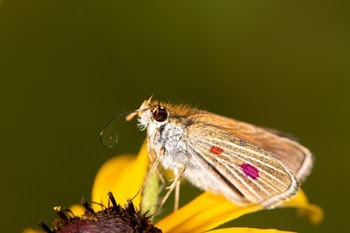 Though there is something almost magical about crossing paths with a butterfly, most people stop to enjoy the sight without giving the encounter much thought. Unfortunately, the long-term existence of several butterfly species isn’t a given – but the DNR and partners are working to turn the tide in their favor, and good news for two of the state’s tiniest butterflies means good things for the bigger habitat picture, too. Though there is something almost magical about crossing paths with a butterfly, most people stop to enjoy the sight without giving the encounter much thought. Unfortunately, the long-term existence of several butterfly species isn’t a given – but the DNR and partners are working to turn the tide in their favor, and good news for two of the state’s tiniest butterflies means good things for the bigger habitat picture, too.
The Michigan Wildlife Action Plan serves as a strategic blueprint for conserving the state’s native wildlife and the habitats they depend on. Central to the plan is the identification of Species of Greatest Conservation Need – wildlife facing significant threats to their survival. Among these are two critically endangered butterflies: the Poweshiek skipperling and Mitchell’s satyr. In Michigan, both species are now limited to a few remaining prairie fens, ecosystems vital to their life cycles.
“The state Wildlife Action Plan helps us focus our conservation efforts where they matter most,” said Tony Henehan, the DNR’s coordinator of that plan. “By identifying species at greatest risk – like the Poweshiek skipperling and Mitchell’s satyr – we’re able to prioritize resources and partnerships that give these species a fighting chance.” |
The powerful prairie fen
Once common across the Midwest, the Poweshiek skipperling is now found only in a few prairie fens in Michigan and Manitoba, having disappeared from the rest of its historical range. This species depends on the presence of prairie dropseed and black-eyed Susan, which serve as host and nectar plants. Prairie fens – wetland ecosystems fed by mineral-rich groundwater – support a unique array of plant and animal life, making them essential to the survival of specialized species like the skipperling.
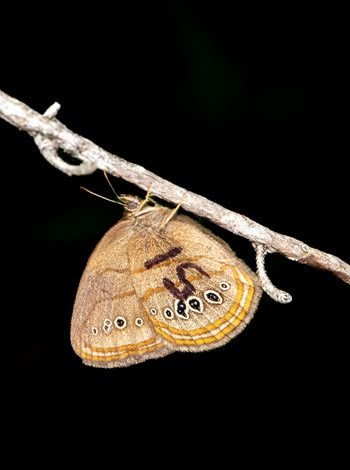 Similarly, Mitchell’s satyr (shown here) is restricted to a handful of prairie fens in Michigan, and considered extirpated, or no longer existing in former habitats in states including Indiana, Ohio and New Jersey. Unlike the skipperling, the satyr favors more shaded areas and doesn’t rely on nectar. Its caterpillars feed primarily on grasslike sedges, particularly Carex stricta. Both species continue to decline, highlighting the urgent need for targeted conservation of prairie fens and their biodiversity. Similarly, Mitchell’s satyr (shown here) is restricted to a handful of prairie fens in Michigan, and considered extirpated, or no longer existing in former habitats in states including Indiana, Ohio and New Jersey. Unlike the skipperling, the satyr favors more shaded areas and doesn’t rely on nectar. Its caterpillars feed primarily on grasslike sedges, particularly Carex stricta. Both species continue to decline, highlighting the urgent need for targeted conservation of prairie fens and their biodiversity.
“The prairie fen is a hidden gem of biodiversity,” said Dave Pavlik, research assistant with the Haddad Lab at Michigan State University. “When we protect these habitats, we’re not just saving one species, we are preserving entire ecosystems that many rare plants and animals rely on.” |
Signs of life
Over the last decade, the DNR has worked with a growing network of partners to conserve these imperiled species. One such partner, the John Ball Zoo in Grand Rapids, has been breeding and rearing both butterflies for release in the wild. When the population levels of a species become too low, that species becomes more vulnerable to environmental events such as severe weather or disease and may not be able to recover on its own. Adding individuals to these small populations can help in population growth and recovery.
In collaboration with the Haddad Lab, the John Ball Zoo began captive rearing and breeding Poweshiek skipperlings in 2021. Because populations were dangerously low in the wild, this “insurance” population was vital to recovery plans and management. The insurance population also provides hope for the butterflies’ future in the face of extinction in the wild.
 Starting with 32 butterflies in 2021, the John Ball Zoo has bred over 100 pairs of Poweshiek skipperlings and helped release thousands of butterflies into the wild. Last year, these efforts resulted in the first-ever reintroduction of Poweshiek skipperlings at a site where they’d once thrived in Michigan. Populations have started to show positive signs of continued growth since 2022, an indication that this species can be brought back from the brink of extinction. Starting with 32 butterflies in 2021, the John Ball Zoo has bred over 100 pairs of Poweshiek skipperlings and helped release thousands of butterflies into the wild. Last year, these efforts resulted in the first-ever reintroduction of Poweshiek skipperlings at a site where they’d once thrived in Michigan. Populations have started to show positive signs of continued growth since 2022, an indication that this species can be brought back from the brink of extinction.
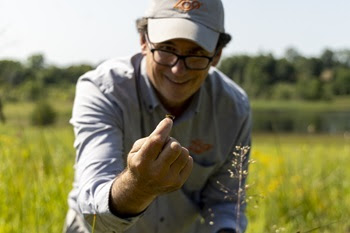
“To see a butterfly once feared extinct take flight again in its native habitat is incredibly moving,” said Bill Flanagan (shown here), conservation manager at John Ball Zoo. “It’s a reminder that recovery is possible when we work together.” |
Numbers don’t lie
In 2023, the zoo and the Haddad Lab expanded their work to include Mitchell’s satyr rearing. Though challenging to breed in captivity, recent husbandry breakthroughs have made it possible. In 2024, 44 Mitchell’s satyrs were released into the wild, and more than 100 are expected to follow in 2025. These early successes have paved the way for scaled-up releases and potential reintroductions that could help stabilize the species in the near future.
Together, these efforts offer hope that even species on the edge of extinction can recover – if we continue to invest in science, partnerships and the protection of vital habitats like prairie fens.
This story was written by the DNR’s Tony Henehan and the Haddad Lab’s Dave Pavlik.
Questions? Contact Tony Henehan at HenehanT@Michigan.gov.
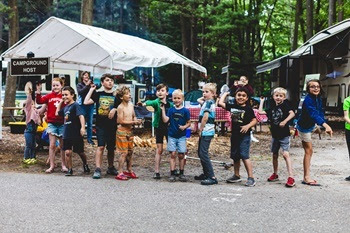 Nearly 120,000 guests took advantage of free educational activities at state parks last summer, courtesy of the DNR’s explorer guide program. This season, you can do the same at 30 state parks with similar programming that everyone in the family can enjoy! Nearly 120,000 guests took advantage of free educational activities at state parks last summer, courtesy of the DNR’s explorer guide program. This season, you can do the same at 30 state parks with similar programming that everyone in the family can enjoy!
If you want to join the fun and learn something new, here’s a peek at what’s happening around the state.
Many explorer guide programs focus on wildlife, with topics ranging from scat identification to ecosystem diversity. Want to learn about the world’s only flying mammals and how to help protect them? Check out the bat programs happening June 28 at Lakeport State Park, near Port Huron, and at Van Riper State Park, near Ishpeming.
“Bats are super cool creatures that do great things for our ecosystem,” said Paige Setzer, the explorer guide at Lakeport State Park. “They help us by eating hundreds of mosquitoes each night. They also do a lot of pollinating for agave, which is used to make tequila, and cacao, which is used to make chocolate.”
In addition to teaching about wildlife, many explorer guides lead hands-on activities in which you can pick up new skills or form a deeper connection with nature. For instance, at Wilderness State Park, located near Mackinaw City, you can learn how to tie knots in an emergency, and at Metamora-Hadley Recreation Area, near Flint, you can make a pollinator kite. |
 “Art is a great way to get the attention of different types of people, because creativity has no limitations,” said Margo Gilbert, the explorer guide at Metamora-Hadley. “Because recognizable pollinators like bees and butterflies fly, using a kite to showcase pollination allows for connections to be made in the participants’ minds as they’re interacting with the hands-on craft.” “Art is a great way to get the attention of different types of people, because creativity has no limitations,” said Margo Gilbert, the explorer guide at Metamora-Hadley. “Because recognizable pollinators like bees and butterflies fly, using a kite to showcase pollination allows for connections to be made in the participants’ minds as they’re interacting with the hands-on craft.”
Guided hikes are another way to enjoy the explorer guide program this summer. Hikes can focus on topics such as tree or bird identification or simply enjoying nature in a group setting, like the sunset hike June 27 at Van Buren State Park, by South Haven.
“Our park has an incredible view of the sun at sunset, especially as it reflects off the lake surface,” said Sam Burgess, the explorer guide at Van Buren State Park. “We have many programs that focus on biological or geological elements, but I want to make sure we have dedicated time to enjoy the beauty of our park as well.”
For more information and weekly nature program schedules at the 30 explorer guide parks, visit Michigan.gov/NaturePrograms. Questions about the DNR’s explorer guide program? Contact Shaun McKeon at 989-370-0789. |
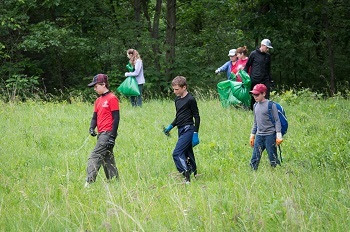 Several state parks in southern Michigan will host stewardship workdays in July, perfect opportunities for volunteers to help remove invasive plants that threaten the high-quality ecosystems within these parks. Several state parks in southern Michigan will host stewardship workdays in July, perfect opportunities for volunteers to help remove invasive plants that threaten the high-quality ecosystems within these parks.
Stewardship efforts are a big part of what helps keep invasive species contained and the landscape healthy at some of your favorite parks. If you can spare a few hours (and a little sweat equity!), sign up for one of the following workdays:
- Warren Dunes State Park (Berrien County)
Saturday, July 12, 10 a.m. to noon
- Muskegon State Park (Muskegon County)
Sunday, July 13, 10 a.m. to noon
- Yankee Springs Recreation Area (Barry County)
Saturday, July 19 and July 26, 10 a.m. to noon
- Fort Custer Recreation Area (Kalamazoo County)
Sunday, July 20, 9:30 a.m. to noon
- Saugatuck Dunes State Park (Allegan County)
Sunday, July 27, 10 a.m. to 12:30 p.m.
Get more details, including how to register, how to dress and what to bring, on the volunteer stewardship page. If pulling invasive plants isn’t your speed, find other ways to help the places and resources you love at Michigan.gov/DNRVolunteers. |
 Although summer officially just started, it’s not too soon to think about making the most of July in Michigan’s great outdoors and historic places. Although summer officially just started, it’s not too soon to think about making the most of July in Michigan’s great outdoors and historic places.
From Detroit to Copper Harbor and plenty of spots in between, the DNR’s events calendar is full of fun and learning for everyone. Here’s a look at some of the highlights:
- Looking for a little bit of Up North in downtown Detroit? Sign up now for the Family Campout at the Outdoor Adventure Center July 11-12. Pitch a tent on our front lawn and enjoy fishing, archery, games and more. Close out the evening with a campfire and s’mores, and wake up to a pancake breakfast Saturday morning.
- Ready to cast your line into the world of fly fishing? Mark your calendar for the Outdoor Skills Academy’s Fly Fishing Clinic July 12 at the Carl T. Johnson Hunting and Fishing Center in Cadillac. You’ll learn the fundamental fly-casting techniques, discover the secrets of fly selection based on your target species and gain the skills to confidently approach your next fishing adventure.
- If you or someone you know is looking for the latest gear to help make the outdoors more accessible, head to Interlochen State Park for DiversAbility Day July 16. It’s a great opportunity to experience track chairs, pontoon boat rides, and adaptive kayaking, cycling, e-bikes and fishing. All equipment will be provided.
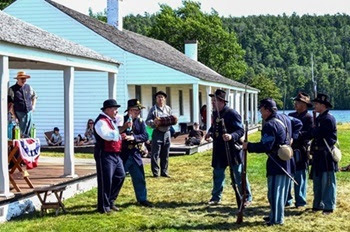
- Join the Battery D, 1st Michigan Light Artillery, a Civil War-era living history group, for an artillery encampment July 25-27 on the parade grounds at Fort Wilkins Historic State Park in Copper Harbor. Catch the sights and sounds of mid-19th-century army life with artillery demonstrations, small arms drills, period cooking, soldiers’ pastimes and civilian impersonations.
|
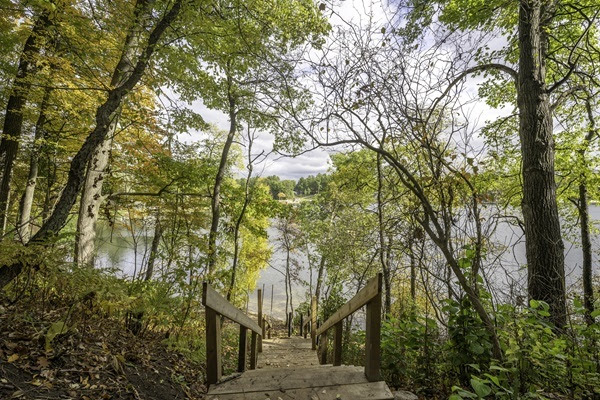 See more pictures by Michigan state parks photo ambassadors at Instagram.com/MiStateParks. For more on the program, call Stephanie Yancer at 989-274-6182. (This photo is by Lillian Dotzlaf, for the Michigan DNR, at Wilson State Park in Clare County.) See more pictures by Michigan state parks photo ambassadors at Instagram.com/MiStateParks. For more on the program, call Stephanie Yancer at 989-274-6182. (This photo is by Lillian Dotzlaf, for the Michigan DNR, at Wilson State Park in Clare County.)
|