Kirtland’s Warbler Conservation decline in songbird’s population

Kirtland’s Warbler Conservation decline in songbird’s population

 
DNR banner with link to website

DNR News

A male Kirtland's warbler is shown perched in a jack pine tree in Lower Michigan.July 28, 2025
Contact (Kirtland’s warbler species and survey): Erin Victory, 231-394-0896 / (Kirtland’s warbler habitat): Jason Hartman, 989-745-3337

Kirtland’s Warbler Conservation Team addresses decline in songbird’s population

A team of conservation experts from state and federal agencies and nonprofit groups is undertaking a long-term plan to stabilize the population of the once-endangered Kirtland’s warbler.

The 2025 census of the colorful songbird indicates a decline in the population. According to the recent survey, there are 1,477 breeding pairs of Kirtland’s warblers in Michigan, which is home to 98% of the global population. Another 12 pairs were counted in Wisconsin, for a global population of 1,489 pairs, with Ontario’s numbers yet to be reported.

The last census, in 2021, estimated the global population at 2,245 pairs.

The decline is projected to continue over the next few years before the Kirtland’s Warbler Conservation Team’s efforts can stabilize the population through innovative strategies to manage the bird’s habitat. The team is a collaborative network of partner organizations including the Michigan Department of Natural Resources, U.S. Fish and Wildlife Service, U.S. Forest Service, Wisconsin Department of Natural Resources, American Bird Conservancy, Huron Pines and others.

“This is a situation we’ve been monitoring and addressing for several years now,” said Erin Victory, a wildlife biologist and Kirtland’s warbler management coordinator for the Michigan DNR. “From a habitat management perspective, we anticipated a decline in the population and have been taking action to address it. We are confident we have enough tools and resources available to us, collectively within the conservation team, to reverse the decline and stabilize the population.”

The Michigan survey was conducted June 6-26 in the northern Lower Peninsula and Upper Peninsula. The census resulted in:

  • 814 pairs of Kirtland’s warblers on DNR-managed land in the northern Lower Peninsula.
  • 597 pairs on Forest Service land in the northern Lower Peninsula.
  • 49 pairs on DNR-managed land in the Upper Peninsula.
  • 17 pairs on Forest Service land in the Upper Peninsula.

Small numbers of the songbird also live in Wisconsin and Ontario (in 2021, Ontario reported 22 pairs).

One reason for the decline in the bird’s population is a reduced acreage of suitable breeding habitat. The ground-nesting Kirtland’s warbler relies exclusively on young jack pine forests to breed, with the vast majority of the birds living on designated state- and federally-managed acreage in northern Lower Michigan. But there currently aren’t enough young jack pine stands available to maintain a stable population of Kirtland’s warblers, so the state and federal agencies will adjust the tree-harvesting strategy to create more breeding habitat in designated management areas.

The Michigan DNR has worked closely with the Fish and Wildlife Service, the Forest Service and other groups for decades to create habitat for the Kirtland’s warbler through jack pine plantings (the bird will only nest in jack pine stands that are about 6-20 years old). The goal is to maintain at least 1,000 pairs of Kirtland’s warblers. By selling timber to clearcut mature jack pine followed by planting jack pine seedlings, land managers provided a consistent amount of young habitat to support this goal. The strategy mimics how jack pine naturally regenerates after wildfire by creating a mosaic of thickets and openings. Many other early-successional plant and animal species benefit from this commitment on the landscape.

However, in recent years it has become evident that previous management practices need to be updated. Early intensive efforts to create habitat ramped up in the late 1980s and 40 years of implementing jack pine plantings have resulted in a majority of the management areas with 30- to 40-year-old jack pine stands. Because these stands are intentionally planted at higher densities for better habitat compared to other types of planted stands, they are not commercially marketable for clearcutting until they are at least 60 years old. This has left land managers with less opportunity to create young habitat over the last decade.

“While a population decline is not what we wanted to see this census, it is encouraging that we already understand the principal cause and conservation team members are taking steps to address the issue,” said Steve Roels, coordinator of the Kirtland’s Warbler Conservation Team and Kirtland’s warbler program director for the American Bird Conservancy.

The conservation team is developing a 10-year Breeding Range Conservation Plan to effectively manage the habitat. The primary strategy is to use novel approaches to cut jack pine stands in the surplus 20- and 30-year age classes, in addition to 60-year-old stands, to ensure annual habitat goals are met consistently. To the extent possible, the younger timber will be sold as mulch or as a renewable energy resource on the biomass market. Land managers are also evaluating the feasibility and safety of increasing prescribed fire use.

“This strategy continues to create habitat and also allows the 40-year age class to continue growing and become merchantable. If we kept trying to harvest from the 40-year age class we would be perpetuating the problem,” said Jason Hartman, silvicultural specialist for the Michigan DNR. This strategy will benefit local economies, Kirtland’s warblers and other species associated with the jack pine ecosystem.

Other strategies in the management plan include transitioning away from jack pine plantations where possible in favor of lower-cost natural regeneration and partnering with university researchers to evaluate new habitat management techniques. The plan also calls for periodic monitoring of brown-headed cowbird nest parasitism. Cowbirds lay eggs in the nests of Kirtland’s warblers and other bird species. The larger cowbird chicks out-compete warbler chicks for food, which causes them to die, while the warbler parents unknowingly raise the cowbird chick.

Unforeseen factors affect the Kirtland warbler’s population as well. Victory referenced a 2023 hailstorm that wiped out half of the jack pine seedlings at a DNR-contracted nursery that were slated for planting and wildfire in the breeding areas that can change the amount of habitat. Additionally, hurricanes during migration and dry winters on the species’ wintering grounds in the Bahamas can stress or kill birds, with fewer birds returning to northern Michigan the following year.

“The decline in the Kirtland’s warbler population is likely due to a decline in available breeding habitat, but there are other factors that we can’t control that are associated with higher bird mortality,” Victory said.

The Kirtland’s warbler was federally endangered for nearly 50 years. The population dropped to fewer than 200 pairs in the 1970s and again in the 1980s when the population was restricted to only 14 townships in six counties in northern Lower Michigan. Thanks to a decades-long, collaborative effort to recover the species by federal, state and private partners, the bird was removed from the federal endangered species list in 2019.

“The Kirtland’s Warbler Conservation Team is a highly collaborative group that has been working to ensure the survival of the Kirtland’s warbler for more than 50 years,” said Phil Huber, a wildlife biologist and chair of the conservation team. “I am confident that this group will continue to do what is necessary for this at-risk species and other plants and animals in the jack pine ecosystem.”

The Kirtland’s warbler remains a state-threatened species in Michigan because it is conservation-reliant, meaning it will not persist without intensive management. The majority of the population nests in a 10-county area in the northern Lower Peninsula, primarily from Grayling to Oscoda.

Kirtland’s warbler surveys have been conducted in Michigan since 1951. A full survey, or census, is conducted every two to four years. State and federal agency staff and volunteers survey jack pine nesting areas, listening for singing males advertising and defending nesting territories. Each recorded male is presumed to have a mate, so the number of males also indicates the number of breeding pairs.

While Victory said surveys in coming years may show the bird’s numbers coming close to or even dropping below the population threshold of 1,000 breeding pairs, she’s confident the population will rebound with the conservation team’s habitat management strategies.

“The real strength of the management of the Kirtland’s warbler lies in the collective efforts of the conservation team,” Victory said. “The collaborations and partnerships that we’ve leveraged among our state, federal and private partners will continue to be a driving force behind maintaining a sustainable population of the Kirtland’s warbler and other species in the jack pine ecosystem.”


Note to editors: Several Kirtland’s warbler images and a short video are available in the DNR’s online photo collection.

Invasive red swamp crayfish found in pond at Wolf Lake

Invasive red swamp crayfish found in pond at Wolf Lake

 
Michigan Invasive Species Program banner

News Release

July 24, 2025
Contact: Aaron Switzer, 231-383-2565, for hatchery information or Lucas Nathan, 517-599-9323, for invasive species information

Invasive red swamp crayfish found in pond at Wolf Lake State Fish Hatchery

The Michigan Department of Natural Resources recently confirmed the presence of invasive red swamp crayfish in an outdoor muskellunge rearing pond at Wolf Lake State Fish Hatchery in Mattawan, Van Buren County, Michigan.

After stocking muskellunge in Thornapple Lake in Barry County and Lake Hudson in Lenawee County, hatchery staff found the carcasses of two unusual crayfish in the collection basket of Wolf Lake Hatchery Pond 20 (where the fish were reared) after the pond was drained. Crayfish traps were quickly deployed in Pond 20 and two adjacent ponds, resulting in the capture of one live, positively identified red swamp crayfish in Pond 20.

A red swamp crayfish being held between a person's thumb and forefinger. Raised red bumps on its claws help to identify the species.Though native to the southern U.S., red swamp crayfish have been prohibited in Michigan since 2014 and considered invasive in the state because of their ability to aggressively outcompete native crayfish for food and habitat, their high reproductive rate and their destructive burrowing along shorelines that can destabilize banks and infrastructure.

Populations of red swamp crayfish were first detected in Michigan in 2017, with simultaneous discoveries in Sunset Lake in Kalamazoo and a drainage pond in Pontiac. To date, isolated infestations have been confirmed in Kalamazoo, Livingston, Macomb, Oakland, Van Buren and Wayne counties. Infestations are believed to result from the release or escape of aquarium pets, live bait or live crayfish brought to Michigan for crawfish boils.

Potentially affected lakes

Most fish stocked from Michigan’s state hatcheries are raised in tanks within hatchery buildings, inaccessible to outside species. Some fish, like muskellunge and walleye, are moved to outdoor rearing ponds to grow and improve survivability before being released.

The muskie sent to Thornapple Lake and Lake Hudson from Wolf Lake Hatchery in July were 12 to 13 inches in length, and each was individually handled and tagged before release, significantly reducing the likelihood that red swamp crayfish were transferred with them to the receiving waters.

Out of an abundance of caution, the DNR is developing a monitoring plan for both lakes and will alert lake users to report any sightings of the invasive crayfish.

Hatchery operations

The outdoor ponds at Wolf Lake State Fish Hatchery are sourced from well water, along with natural spring water that circulates through the ponds and is then released into a drain that eventually connects to the Paw Paw River.

According to Joe Mickevich, DNR southern area hatcheries manager, such an open system cannot easily prevent undesired species – including crayfish, tadpoles and even some small fish – from finding their way into the ponds, either over land or from bird and waterfowl movement.

When collecting fish from ponds for stocking at Wolf Lake Hatchery, the ponds are drained into the kettle, or collection box. Fish are netted from the collection box and loaded onto stocking units while staff attempt to remove as much bycatch, or undesired species, as possible. When needed, ponds are treated with rotenone, an aquatic pesticide, before the next use.

Response actions

Two DNR employees in waders stand in a pond. One is holding a trapezoid-shaped crayfish trap.While the source of the adult red swamp crayfish in Pond 20 is still unknown, Michigan’s Invasive Species Program staff is exploring several possibilities, including a known population 15 miles away, bait or aquarium release into the pond or nearby Wolf Lake, or accidental transport through forage fish used to feed the fish reared in Pond 20 but sourced from other states.


The DNR and MISP are working together to determine the extent of the infestation and minimize the possibility of spreading the invasive crayfish to new locations.

  • In the last week, 165 traps were set, spanning all 11 earthen bottom ponds at Wolf Lake Hatchery to determine the range of infestation at the site.
  • The DNR is exploring the use of environmental DNA, or eDNA, to help determine the potential source, spread and presence of red swamp crayfish in the hatchery and surrounding waters.
  • Suppliers and officials from states where minnows were sourced are fully cooperating with Michigan’s efforts to trace shipments and verify quality control measures to prevent contamination.
  • Pending the results of trapping and assessment of risk, the DNR plans to explore potential control options at Wolf Lake Hatchery ponds, such as draining and drying ponds over the winter or adding pesticide, which has been used successfully on an experimental basis in some infested ponds in southeast Michigan.
  • MISP and DNR staff are working to evaluate additional biosecurity measures, including improved screening of intake and outlet waters, additional screening methods to prevent bycatch from being transported with stocked fish and the use of only clean well water for fish transport.
  • Wolf Lake Hatchery’s lined muskellunge ponds will be offline in 2026 for previously planned construction. Young muskie from this year’s harvest will be reared at Thompson State Fish Hatchery in Manistique, Michigan.

Because red swamp crayfish is a prohibited species in Michigan, it is illegal to knowingly possess, introduce, import, sell or offer the species for sale as a live organism, except under certain circumstances.

People can help prevent the spread of invasive species by knowing the laws, never releasing aquarium pets or plants into the wild, using bait only in the waters where it was captured and disposing of unused bait in the trash.

For more information on invasive red swamp crayfish, including identifying characteristics, visit Michigan.gov/Invasives. To report sightings of red swamp crayfish, collect and freeze a sample or take photos, note the location, and email information to Kathleen Quebedeaux, DNR Fisheries Division, QuebedeauxK@Michigan.gov.


Michigan’s Invasive Species Program is cooperatively implemented by the Michigan departments of Agriculture and Rural Development; Environment, Great Lakes, and Energy; and Natural Resources.


Note to editors: Accompanying photos are available below for download. Caption information follows.

  • RSC Wolf Lake: The live red swamp crayfish trapped in Pond 20 at Wolf Lake Hatchery. Despite its dark color, the raised red bumps on its claws and hourglass shape on its back help to identify it as an invasive red swamp crayfish.
  • RSC Trap: DNR Fisheries Division staff check red swamp crayfish traps at an infested pond in Novi, Michigan.
  • Photos of red swamp crayfish management efforts in southeast Michigan can be found on the Michigan DNR Canto site.
DNR Logo 24 bit PNGDept of Environment, Great Lakes and Energy logoMDARD Logo
DNR News: Prevent wildfires this Independence Day

DNR News: Prevent wildfires this Independence Day

 
DNR banner with link to website

DNR News

July 3, 2025
Contact: Jeff Corser (Lower Peninsula), 989-385-5617 or Celeste Chingwa (Upper Peninsula), 906-250-2466

Celebrate safely: Prevent wildfires this Independence Day

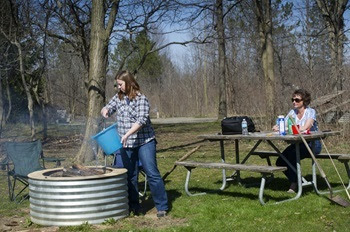
woman in jeans and long-sleeved shirt pours a bucket of water on a campfire as another woman sits at a picnic table next to herAs you plan for a fun-filled Fourth of July holiday, whether it includes fireworks, camping, off-roading or simply tackling projects around the yard, don’t forget to take precautions to prevent wildfires.

“Nine out of 10 wildfires are caused by people,” said Paul Rogers, fire prevention specialist with the Michigan Department of Natural Resources. “With fireworks, campfires and outdoor equipment in use during the holiday, it’s important to stay alert and take simple steps to protect people, property and the outdoor places we love.”

Fire danger has been on the lower side this year due to regular rain, but that doesn’t mean the risk is zero, especially with fireworks. There is currently an area of drought extending from Muskegon to Saginaw Bay (as shown on this U.S. Drought Monitor map) that is experiencing above-normal drought conditions – everyone is advised to use great caution in that area.

“Fireworks can ignite dry grass or brush in an instant,” Rogers said. “Avoid aiming them into wooded areas or tall vegetation. And always check your local ordinances – many communities only allow fireworks on the holiday itself and the days immediately before and after.”

Rogers encouraged Michigan residents and visitors to put safety first with any celebrations or yardwork.

Fireworks safety

  • If lighting fireworks on grass, wet the area first and keep a hose and water bucket nearby.
  • Soak used sparklers and spent fireworks in water before throwing away.
  • Sky lanterns and aerial fireworks are not allowed in Michigan state parks or recreation areas.

Campfire safety

  • Use a designated fire ring on bare soil, away from trees and low-hanging branches.
  • When extinguishing your fire, drench it with water, stir the ashes and repeat until the embers are cool to the touch.
  • Be cautious of floating embers, which can ignite dry grass, leaves or brush.

Debris burning

  • Check current burn permits; burning isn’t allowed on hot, dry or windy days.
  • Keep burn piles manageable and no larger than 3 feet high and wide.
  • Always have a water source nearby.
  • Instead of burning, consider composting or recycling yard debris.
  • Fires should be at least 10 feet from logs, stumps and other flammable materials.

For more information on fire prevention and safe burning practices, visit Michigan.gov/FireManagement.


Note to editors: Accompanying photos are available below for download. Caption information follows.

Parks and campgrounds open after ice storm damage

Parks and campgrounds open after ice storm damage

 
DNR banner with link to website

DNR News

July 1, 2025
Contact: Kerry Heckman, 517-643-1256 or Beth Fults, 517-282-5985

Parks and campgrounds open after ice storm damage; be careful on forest roads and trails

On the North Branch ORV Trail, an orange flag marks a section of downed, dead trees, and low-hanging brush and trees block the sandy trailIf you’re heading to northern Michigan or planning to spend time in state parks or forests in that area over the Fourth of July weekend, be aware of lingering hazards and damage from the March 28-30 ice storm.
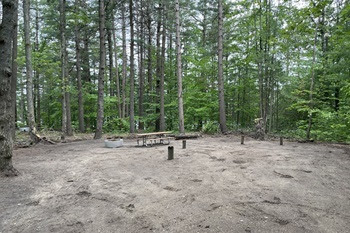
All state parks and boating access sites that closed following the storm have reopened, and all state forest campgrounds are expected to be open by this weekend. Michigan Department of Natural Resources staff has spent thousands of hours since the storm clearing fallen trees and branches and repairing damage. Initially, the damage from the storm caused the DNR to temporarily close 19 state parks, 54 state forest campgrounds and 162 boating access sites.

Although roughly 60 percent of DNR-managed trails in the region remain temporarily closed, the North Western State Trail, North Central State Trail and North Eastern State Trail have been cleared and are open. Please respect closure signs on the motorized and nonmotorized trails that still need to be cleared.

“We’ve made a strong effort to get people safely back into the outdoors,” said Chris Stark, one of the leaders of the DNR’s ice storm response team. “People will still notice some effects of the storm and will need to be careful to stay on open trails to avoid any accidents. In the forest, broken branches remain underfoot and above our heads. Leaning trees and broken branches still hanging in trees can fall without warning.”

A changed landscape

a metal fire ring, picnic table and grill in a clearing at one of Michigan's state forest campgrounds, recently cleared of downed trees, debris.Parts of the forest that suffered heavy damage look different now. Travelers may notice this along I-75 while driving north of Gaylord. Some conifer trees are broken, with trunks that look like toothpicks sticking out of the ground. Treetops of deciduous trees (those that shed their leaves seasonally) may look sparse if the trees lost ice-laden branches during the storm. Over 1,200 miles of state forest roads remain impassable.

You can find a map and dashboard with the latest status (open, partially open, temporarily closed) of state-managed facilities, trails and forest roads; an interactive map; safety updates; and more on the DNR’s ice storm response page. There’s also a story map detailing the impact of the ice storm and the response and recovery efforts.

Next steps

DNR staff continues to assess the damage and conduct cleanup throughout the area and is also working to implement longer-term strategies, such as conducting timber salvage operations and replanting trees.

The ice storm affected much of northern Michigan beginning March 28, leaving trees coated with up to an inch of ice. Gov. Gretchen Whitmer declared a 12-county disaster area encompassing Alcona, Alpena, Antrim, Charlevoix, Cheboygan, Crawford, Emmet, Mackinac, Montmorency, Oscoda, Otsego and Presque Isle counties.

The storm profoundly affected nearly 1 million acres of DNR-managed lands, 3,400 miles of state forest roads and 3,290 miles of state-managed trails, including 1,700 miles of state-designated ORV trails and routes.


Note to editors: Accompanying photos are available below for download. Caption information follows. Photos courtesy of Michigan Department of Natural Resources.

  • North Branch ORV Trail: A portion of the North Branch ORV Trail (near Gaylord), which remains temporarily closed.
  • SFC post-cleanup: One of Michigan’s state forest campgrounds that has been cleared of debris and recently reopened within the 12-county area affected by the March 2025 ice storm.
DNR News Digest – Week of June 30, 2025

DNR News Digest – Week of June 30, 2025

DNR banner

News Digest – Week of June 30, 2025

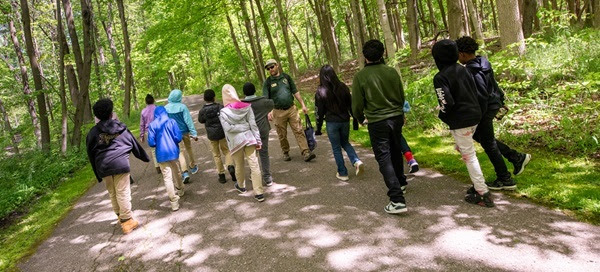
A DNR park interpreter leads a group of about a dozen kids on a nature hike through Maybury State Park
Ready for the long holiday weekend? Here are a few of this week’s stories from the Michigan Department of Natural Resources to get you started, keep you safe and inspire some outdoor independence!

See other news releases, Showcasing the DNR stories, photos and other resources at Michigan.gov/DNRPressRoom.

PHOTOS: Larger, higher-res versions of some of the images used in this email (forest bathing and kids on beach) are available in the DNR’s public online image collection. Others – patrol boat, explorer guide and ORVs – are available in this folder.


‘Forest bathing’ can cleanse the mind, refresh the soul

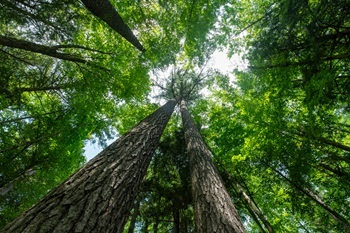
Daylight breaks through the lush green canopy of the tall, dark-barked trees at Hartwick Pines State Park in Crawford County, MichiganFeeling stressed out over the news, work pressures, a too-busy life? Or just feeling a deep desire to get away from it all? The forest is here to help.
Yes, the forest!

Take advantage of the long Fourth of July holiday weekend to immerse yourself in a little forest bathing, or shinrin-yoku, a form of nature therapy that originated in Japan. The idea: Get far enough into the woods that you’re disconnected from the daily grind. Walk, sit, do yoga or tai chi, hug a tree, look up, take it all in. Try to use all five senses to truly experience the forest’s green embrace.

According to a report from National Public Radio, studies show that forest bathing can help your immune system, lower blood pressure, stabilize blood sugar and help with depression. For an even deeper dive, check out this Showcasing the DNR story penned by a former DNR staff member who described their experience connecting with the forest.

You can enjoy forest bathing just about anywhere – a local park, your back yard – but you also might consider one of Michigan’s 103 state parks, nearly 4 million acres of state forest land or more than 13,000 miles of state-designated trails.

Questions? Email Matt Watkeys at WatkeysM@Michigan.gov.


Operation Dry Water promotes sober boating July 4-6

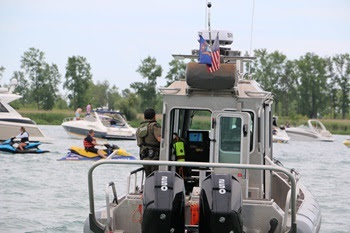
A male DNR conservation officer holds onto the side of a patrol boat moving among boats and personal watercrafts on a Michigan lakeBoating is a big part of summer fun in Michigan, and the season regularly ramps up with the Fourth of July holiday. To ensure greater public safety and awareness, DNR conservation officers will have an increased presence on Michigan waterways July 4-6 as part of Operation Dry Water, a national campaign to promote sober boating.
According to the most recent U.S. Coast Guard report, alcohol use is the leading known contributing factor in boating fatalities and a significant cause of on-the-water incidents.

Alcohol impairs a boater’s judgment, balance, vision and reaction time, and can increase fatigue and susceptibility to the effects of cold-water immersion. Sun, wind, noise, vibration and motion – elements common to the boating environment – intensify the side effects of alcohol, drugs and some medications.

What can you do to protect yourself and loved ones? In addition to riding with a sober operator who has successfully completed an accredited boater safety course, boaters also should wear U.S. Coast Guard-approved life jackets. Data shows that 87% of victims who drown in recreational boating accidents were not wearing life jackets.

Boaters also are urged to always:

  • Use an engine cut-off switch.
  • Check that all safety equipment is present and functional.
  • Share trip details with a trusted person before heading out.
  • Monitor weather conditions and be prepared for changes.
  • Follow navigation rules and consistently look out for other boaters.

For more information, including more safety resources, visit Michigan.gov/Boating.

Questions? Email Cpl. Jill Miller at MillerJ86@Michigan.gov.


Free family fun with DNR’s explorer guide program

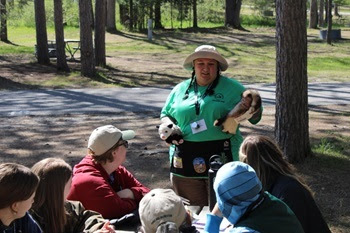
Falechia Barry, explorer guide at Interlochen State Park, shows animal furs to a group of kids and parents gathered in a forest areaThere are more than a hundred fun and free activities happening over the holiday week thanks to the DNR’s explorer guide program! You can join our guides at 30 different state parks throughout Michigan, where you’ll find activities ranging from guided nature walks and creative crafts to stories shared around a campfire.
On July 4, you can take a break from the parades and fireworks by writing and sharing nature poetry at Port Crescent State Park in Huron County.

“I see art and beauty within science,” said explorer guide Natasha Swoish. “I’m hoping people can walk away feeling inspired by nature, and by extension, feel more inclined to take small actions to help protect it in the future.”

Port Crescent State Park, stretching across 3 miles of sandy Lake Huron shoreline, offers unique overnight accommodations, including geodesic domes and cottages, along with a dark sky preserve that is perfect for stargazing.

On July 5, visitors can learn about the 360-million-year-old fossils they might find on the beach or even in the campground at Hoeft State Park in Presque Isle County.

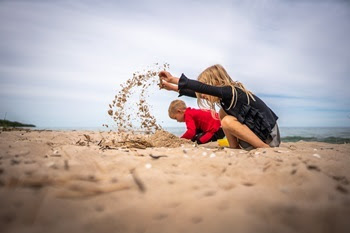
A little girl and little boy crouch down on the beach at Hoeft State Park as they dig through the sand, sending sand up in the air“The coral fossils visitors are finding here are much older than dinosaurs,” said explorer guide Dana Roof. “They are close to the surface because the glaciers in this area scraped away all of the layers of fossils above them and left only the older fossils behind.”

Visiting history buffs also will appreciate Hoeft State Park’s picnic shelter. It was built by the Civilian Conservation Corps in the 1930s and offers visitors a chance to learn about the park’s importance in conservation history.

On July 8, guests can join Interlochen State Park’s explorer guide, Falechia Barry, at Platte River State Fish Hatchery for a guided tour. The hatchery, located in Benzie County, focuses on raising coolwater fish like Chinook, coho and Atlantic salmon – species that support both the ecosystem and Michigan’s recreational fishing industry.

“The excitement kids feel when they see 100,000 fish at once is irreplaceable,” said Barry. “It’s a moment that sticks with them, and the knowledge they gain from the tour stays with them, too.”

For more information and weekly nature program schedules at the 30 explorer guide parks, visit Michigan.gov/NaturePrograms. Questions about the DNR’s explorer guide program? Contact Shaun McKeon at 989-370-0789.


‘Ride Right’ for safe, responsible, off-road adventure

Tall, black off-road vehicles drive single-file down a dusty trail framed by thick, green forest and yellow flowersOff-road vehicles are fun year-round, but activity in Michigan tends to increase around the Fourth of July holiday as people head to trails and ORV scramble areas to enjoy world-class riding experiences.
Keeping safety in mind is vital on any ride, for you and others. According to 2023 statewide ORV crash data, 93% of ORV fatalities could have been prevented. These crashes and injuries primarily were due to excessive speed and a lack of helmet/seat belt use. Parents are reminded, too, that they must have visual supervision of all children under the age of 16 when those children are operating an ORV.

“Always ride within your and the machine’s capabilities,” said Cpl. Mike Hearn, DNR law enforcement ORV and snowmobile specialist. “When you ride too fast, you are more likely to lose control when hitting even the smallest bump or trying to make turns or stop.”

All ORV operators are urged to “Ride Right” and keep other important guidance in mind:

  • Ride at a safe speed.
  • Ride sober.
  • Ride on the right side of the trail.
  • Keep lights on when riding.
  • Always wear a helmet.

Please keep in mind that about 60% of motorized and nonmotorized DNR-managed trails in northern Michigan remain temporarily closed due to effects of the March 28-30 ice storm. For status updates on state-managed facilities, trails and forest roads, refer to the map and dashboard on the DNR’s ice storm response page.

Additionally, ORV operators who are transporting children should refer to the ORV manufacturer owner’s manual regarding use of car seats or boosters.

Do your part to ensure everyone returns home safely; read more about ORV safety at Michigan.gov/RideRight.

For more on where to ride and ORV laws in Michigan, visit Michigan.gov/ORVInfo.

Questions? Email Cpl. Mike Hearn at HearnM@Michigan.gov.


Photo ambassador snapshot: Heading toward sunset

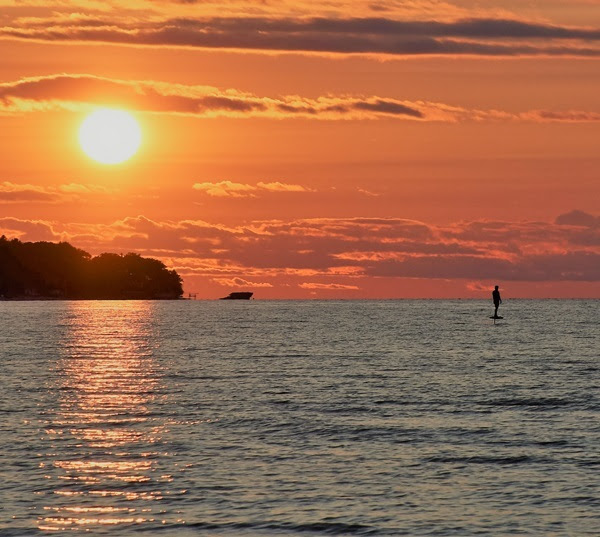
A standup paddle boarder far offshore from Port Crescent State Park framed against the orange sunset and flat-bottomed cloudsSee more pictures by Michigan state parks photo ambassadors at Instagram.com/MiStateParks. For more on the program, call Stephanie Yancer at 989-274-6182. (This photo is by Karen Allmond, for the Michigan DNR, at Port Crescent State Park in Huron County.)


THINGS TO DO

Michigan’s great outdoors is for everyone! From color-blind scenic viewers and track chairs to beach walkways and hunt seasons, explore accessible outdoor recreation options.

BUY & APPLY

If you want to learn more about fishing, hunting, beekeeping, foraging and other outdoor fun but are nervous about getting started, the Outdoor Skills Academy is for you. Check the schedule!

GET INVOLVED

You can help researchers and natural resource managers learn about wildlife, invasive species, water quality, climate change and more. Find a community science project near you.

Following the unprecedented March 28-30 ice storm in northern Michigan, Department of Natural Resources teams from across the state have been working tirelessly to assess the damage and continue the monumental cleanup.  All impacted state parks and boating access sites have reopened. Find a map and dashboard with the latest status of state-managed trails and state forest campgrounds; an interactive map; safety updates; and more on the DNR’s ice storm response page.

DNR News Digest – Week of June 23, 2025

DNR News Digest – Week of June 23, 2025

DNR banner

News Digest – Week of June 23, 2025

man in a ballcap holding a young boy, framed in shadow on the shore as the pink-orange sun sets on Little Traverse Bay

Don’t let the sun set on your summer fun! Get inspired by the DNR events calendar.

Here are a few of this week’s stories from the Michigan Department of Natural Resources:

See other news releases, Showcasing the DNR stories, photos and other resources at Michigan.gov/DNRPressRoom.

PHOTO FOLDER: Larger, higher-res versions of photos from the butterfly and explorer guide stories are in this folder. Others, including sunsetvolunteer stewardship and Battery D reenactment, are available in the DNR’s public image gallery.


From cocoon to comeback: Breeding butterflies for the wild

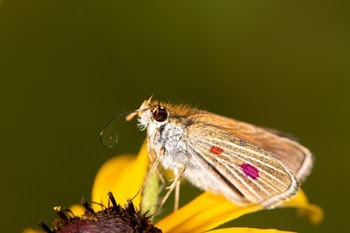
A Poweshiek skipperling butterfly, with pale peach and gray wings and two pink-red dots, rests on the yellow petal of a flowerThough there is something almost magical about crossing paths with a butterfly, most people stop to enjoy the sight without giving the encounter much thought. Unfortunately, the long-term existence of several butterfly species isn’t a given – but the DNR and partners are working to turn the tide in their favor, and good news for two of the state’s tiniest butterflies means good things for the bigger habitat picture, too.
The Michigan Wildlife Action Plan serves as a strategic blueprint for conserving the state’s native wildlife and the habitats they depend on. Central to the plan is the identification of Species of Greatest Conservation Need – wildlife facing significant threats to their survival. Among these are two critically endangered butterflies: the Poweshiek skipperling and Mitchell’s satyr. In Michigan, both species are now limited to a few remaining prairie fens, ecosystems vital to their life cycles.

“The state Wildlife Action Plan helps us focus our conservation efforts where they matter most,” said Tony Henehan, the DNR’s coordinator of that plan. “By identifying species at greatest risk – like the Poweshiek skipperling and Mitchell’s satyr – we’re able to prioritize resources and partnerships that give these species a fighting chance.”

The powerful prairie fen

Once common across the Midwest, the Poweshiek skipperling is now found only in a few prairie fens in Michigan and Manitoba, having disappeared from the rest of its historical range. This species depends on the presence of prairie dropseed and black-eyed Susan, which serve as host and nectar plants. Prairie fens – wetland ecosystems fed by mineral-rich groundwater – support a unique array of plant and animal life, making them essential to the survival of specialized species like the skipperling.

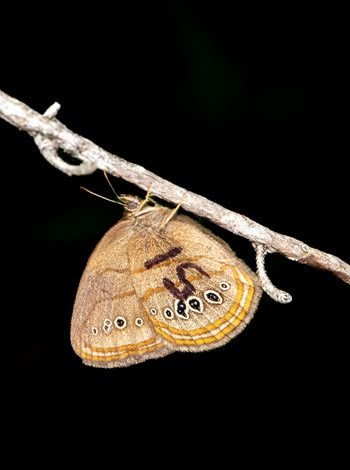
A Mitchell's satyr butterfly, with pale orange double wings, delicate black circle patterns and marked with the numbers 51, hangs from a twigSimilarly, Mitchell’s satyr (shown here) is restricted to a handful of prairie fens in Michigan, and considered extirpated, or no longer existing in former habitats in states including Indiana, Ohio and New Jersey. Unlike the skipperling, the satyr favors more shaded areas and doesn’t rely on nectar. Its caterpillars feed primarily on grasslike sedges, particularly Carex stricta. Both species continue to decline, highlighting the urgent need for targeted conservation of prairie fens and their biodiversity.
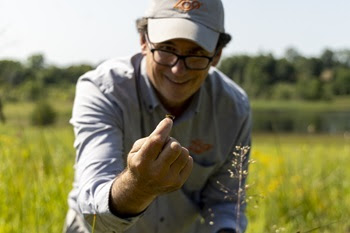
“The prairie fen is a hidden gem of biodiversity,” said Dave Pavlik, research assistant with the Haddad Lab at Michigan State University. “When we protect these habitats, we’re not just saving one species, we are preserving entire ecosystems that many rare plants and animals rely on.”

Signs of life

Over the last decade, the DNR has worked with a growing network of partners to conserve these imperiled species. One such partner, the John Ball Zoo in Grand Rapids, has been breeding and rearing both butterflies for release in the wild. When the population levels of a species become too low, that species becomes more vulnerable to environmental events such as severe weather or disease and may not be able to recover on its own. Adding individuals to these small populations can help in population growth and recovery.

In collaboration with the Haddad Lab, the John Ball Zoo began captive rearing and breeding Poweshiek skipperlings in 2021. Because populations were dangerously low in the wild, this “insurance” population was vital to recovery plans and management. The insurance population also provides hope for the butterflies’ future in the face of extinction in the wild.

smiling man in gray shirt and ballcap and glasses kneels in a grassy field, a small orange and black butterfly resting atop his fingersStarting with 32 butterflies in 2021, the John Ball Zoo has bred over 100 pairs of Poweshiek skipperlings and helped release thousands of butterflies into the wild. Last year, these efforts resulted in the first-ever reintroduction of Poweshiek skipperlings at a site where they’d once thrived in Michigan. Populations have started to show positive signs of continued growth since 2022, an indication that this species can be brought back from the brink of extinction.
“To see a butterfly once feared extinct take flight again in its native habitat is incredibly moving,” said Bill Flanagan (shown here), conservation manager at John Ball Zoo. “It’s a reminder that recovery is possible when we work together.”

Numbers don’t lie

In 2023, the zoo and the Haddad Lab expanded their work to include Mitchell’s satyr rearing. Though challenging to breed in captivity, recent husbandry breakthroughs have made it possible. In 2024, 44 Mitchell’s satyrs were released into the wild, and more than 100 are expected to follow in 2025. These early successes have paved the way for scaled-up releases and potential reintroductions that could help stabilize the species in the near future.

Together, these efforts offer hope that even species on the edge of extinction can recover – if we continue to invest in science, partnerships and the protection of vital habitats like prairie fens.

This story was written by the DNR’s Tony Henehan and the Haddad Lab’s Dave Pavlik.

Questions? Contact Tony Henehan at HenehanT@Michigan.gov.


Discover, have fun at state parks with explorer guides

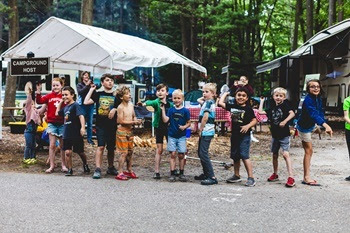
a group of about a dozen boys and girls stand in a line, ready to launch their crafty "bats" as part of Hoffmaster State Park's Bats Bats Bats programNearly 120,000 guests took advantage of free educational activities at state parks last summer, courtesy of the DNR’s explorer guide program. This season, you can do the same at 30 state parks with similar programming that everyone in the family can enjoy!

If you want to join the fun and learn something new, here’s a peek at what’s happening around the state.

Many explorer guide programs focus on wildlife, with topics ranging from scat identification to ecosystem diversity. Want to learn about the world’s only flying mammals and how to help protect them? Check out the bat programs happening June 28 at Lakeport State Park, near Port Huron, and at Van Riper State Park, near Ishpeming.

“Bats are super cool creatures that do great things for our ecosystem,” said Paige Setzer, the explorer guide at Lakeport State Park. “They help us by eating hundreds of mosquitoes each night. They also do a lot of pollinating for agave, which is used to make tequila, and cacao, which is used to make chocolate.”

In addition to teaching about wildlife, many explorer guides lead hands-on activities in which you can pick up new skills or form a deeper connection with nature. For instance, at Wilderness State Park, located near Mackinaw City, you can learn how to tie knots in an emergency, and at Metamora-Hadley Recreation Area, near Flint, you can make a pollinator kite.

a woman in T-shirt, backpack and wide-brim hat holds a salamander in her hands as she talks to kids and adults in the forested park area“Art is a great way to get the attention of different types of people, because creativity has no limitations,” said Margo Gilbert, the explorer guide at Metamora-Hadley. “Because recognizable pollinators like bees and butterflies fly, using a kite to showcase pollination allows for connections to be made in the participants’ minds as they’re interacting with the hands-on craft.”
Guided hikes are another way to enjoy the explorer guide program this summer. Hikes can focus on topics such as tree or bird identification or simply enjoying nature in a group setting, like the sunset hike June 27 at Van Buren State Park, by South Haven.

“Our park has an incredible view of the sun at sunset, especially as it reflects off the lake surface,” said Sam Burgess, the explorer guide at Van Buren State Park. “We have many programs that focus on biological or geological elements, but I want to make sure we have dedicated time to enjoy the beauty of our park as well.”

For more information and weekly nature program schedules at the 30 explorer guide parks, visit Michigan.gov/NaturePrograms. Questions about the DNR’s explorer guide program? Contact Shaun McKeon at 989-370-0789.


Do good, feel good: Help remove invasive plants

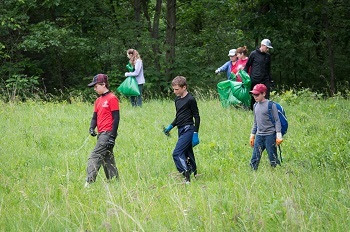
three young boys in jeans and long-sleeve shirts walk through grassy area with bags, while adults behind them pull invasive plantsSeveral state parks in southern Michigan will host stewardship workdays in July, perfect opportunities for volunteers to help remove invasive plants that threaten the high-quality ecosystems within these parks.
Stewardship efforts are a big part of what helps keep invasive species contained and the landscape healthy at some of your favorite parks. If you can spare a few hours (and a little sweat equity!), sign up for one of the following workdays:

  • Warren Dunes State Park (Berrien County)
    Saturday, July 12, 10 a.m. to noon
  • Muskegon State Park (Muskegon County)
    Sunday, July 13, 10 a.m. to noon
  • Yankee Springs Recreation Area (Barry County)
    Saturday, July 19 and July 26, 10 a.m. to noon
  • Fort Custer Recreation Area (Kalamazoo County)
    Sunday, July 20, 9:30 a.m. to noon
  • Saugatuck Dunes State Park (Allegan County)
    Sunday, July 27, 10 a.m. to 12:30 p.m.

Get more details, including how to register, how to dress and what to bring, on the volunteer stewardship page. If pulling invasive plants isn’t your speed, find other ways to help the places and resources you love at Michigan.gov/DNRVolunteers.


July fun: Family campouts, fly fishing, Civil War and more

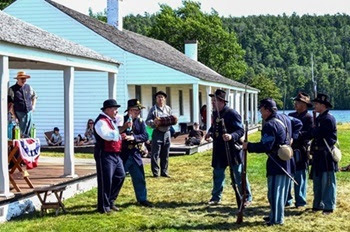
Battery D 1st Michigan Light Artillery reenactors demonstrate 1800s military life and a medicine show at Fort Wilkins Historic State ParkAlthough summer officially just started, it’s not too soon to think about making the most of July in Michigan’s great outdoors and historic places.
From Detroit to Copper Harbor and plenty of spots in between, the DNR’s events calendar is full of fun and learning for everyone. Here’s a look at some of the highlights:

  • Looking for a little bit of Up North in downtown Detroit? Sign up now for the Family Campout at the Outdoor Adventure Center July 11-12. Pitch a tent on our front lawn and enjoy fishing, archery, games and more. Close out the evening with a campfire and s’mores, and wake up to a pancake breakfast Saturday morning.
  • Ready to cast your line into the world of fly fishing? Mark your calendar for the Outdoor Skills Academy’s Fly Fishing Clinic July 12 at the Carl T. Johnson Hunting and Fishing Center in Cadillac. You’ll learn the fundamental fly-casting techniques, discover the secrets of fly selection based on your target species and gain the skills to confidently approach your next fishing adventure.
  • If you or someone you know is looking for the latest gear to help make the outdoors more accessible, head to Interlochen State Park for DiversAbility Day July 16. It’s a great opportunity to experience track chairs, pontoon boat rides, and adaptive kayaking, cycling, e-bikes and fishing. All equipment will be provided.
  • Join the Battery D, 1st Michigan Light Artillery, a Civil War-era living history group, for an artillery encampment July 25-27 on the parade grounds at Fort Wilkins Historic State Park in Copper Harbor. Catch the sights and sounds of mid-19th-century army life with artillery demonstrations, small arms drills, period cooking, soldiers’ pastimes and civilian impersonations.

Photo ambassador snapshot: Picture-perfect path

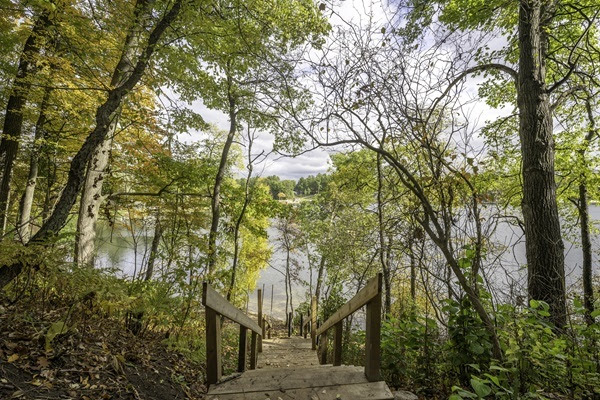
a wooden stairway slopes down through a lush, green, forested area to a calm waterway below at Wilson State Park in Clare CountySee more pictures by Michigan state parks photo ambassadors at Instagram.com/MiStateParks. For more on the program, call Stephanie Yancer at 989-274-6182. (This photo is by Lillian Dotzlaf, for the Michigan DNR, at Wilson State Park in Clare County.)


THINGS TO DO

Tying knots, setting up your pole, casting, choosing bait and more, our free Hook, Line and Sinker classes at 20-plus Michigan state parks can show you the ropes!

BUY & APPLY

Already a seasoned Michigan angler? State waterways are waiting for you; just be sure to purchase a current fishing license before you go.

GET INVOLVED

From the annual Manistee River cleanup to removing European frogbit at Shiawassee River, MUCC On the Ground events welcome your support!

Following the severe March 28-30 ice storm in northern Michigan, the Department of Natural Resources continues assessments and cleanup at many DNR-managed locations. Find a dashboard with the latest status (open, partially open, temporarily closed) of state parks, state-managed trails, boating access sites and state forest campgrounds; an interactive map; safety updates; and more on the DNR’s ice storm response page.