New trout regulations now in place for several UP inland lakes

New trout regulations now in place for several UP inland lakes

DNR banner with link to website

DNR News

Oct. 10, 2025
Contact: Christian LeSage, 517-449-7073 or Lucas Nathan, 517-599-9323

New trout regulations now in place for several UP inland lakes

A large brown trout captured during a fish survey by Department of Natural Resources staff. The Michigan Natural Resources Commission on Thursday enacted regulation changes on several inland trout lakes in the Upper Peninsula, effective Oct. 10, 2025. Four lakes have changed regulation types and four others have been removed from the list of designated trout lakes and no longer have a type designation. These changes will expand fishing opportunities for other species and better reflect the fish communities present in those waters.

The NRC, which is a public body whose members are appointed by the governor, has the exclusive authority to regulate the taking of game and sportfish in Michigan.

Michigan Department of Natural Resources fisheries managers use fish survey data to determine which regulations should apply to a waterbody and recommend changes to the NRC when necessary to benefit the resource and angling community.

Modifications

An angler in a float tube holds up a brook trout.

  • High Banks Lake (Chippewa County): This lake was changed from Type A to Type B trout fishing regulations. This will extend the season to the entire year and allow the use of all tackle and bait. Per a 2023 survey, panfish are present in the lake, which has primarily been managed for rainbow trout. Changing the regulations to Type B will expand fishing opportunities here to allow anglers to use live bait to target panfish, including allowing ice fishing.
  • Moon Lake (Luce County): Moon Lake has been changed from Type D to Type A trout fishing regulations to match trout growth potential with harvest opportunities. Recent survey information indicated a decline in the average size of brook trout collected. Type A trout lakes have a lower minimum size limit (10 inches) and a higher daily possession limit (up to five fish), which should result in more angler opportunities.
  • South Kidney Lake (Marquette County): This waterbody was modified from Type D to Type A trout fishing regulations, informed by a survey conducted in 2024 that demonstrated stocked brook trout were not reaching the 15-inch minimum size limit, limiting angler harvest there. The change will result in a lower minimum size limit and an increase in the daily possession limit for brook trout. In addition, it will also allow use of bait in South Kidney Lake (except for minnows, which are not allowed in Type A lakes).
  • Strawberry Lake (Marquette County): This lake was modified from Type D to type A trout fishing regulations to better align trout growth potential with harvest opportunities. A survey conducted in 2024 indicated that stocked brook trout in the lake are slow-growing, with few reaching the 15-inch minimum size limit. The change means a lower minimum size limit, an increase in the daily possession limit and removal of an artificial-only gear restriction for brook trout fishing.

Removals

The following waterbodies have been evaluated and found to lack adequate habitat to support stocked or naturally reproducing trout populations. Therefore, the previous trout fishing regulation types were no longer appropriate. Management in these lakes will focus on warmwater species better suited to the current conditions.

  • Brians Pond (Alger County): Type A trout fishing regulations have been removed; general fishing regulations apply.
  • Section 13 Lake (Marquette County): Type A trout fishing regulations have been removed; general fishing regulations apply.
  • Cedar Lake (Marquette County): Type B trout fishing regulations have been removed; general fishing regulations apply.
  • Sawaski Pond (Alger County): Type B trout fishing regulations have been removed; general fishing regulations apply.

These regulation changes are not reflected in the printed version of the 2025 Michigan Fishing Regulations. Anglers are reminded to check the digital version of the regulations online at Michigan.gov/DNRRegs or in the Michgan DNR Hunt Fish app for the most current regulatory information.


Note to editors: Accompanying photos are available below for download. Caption information follows.

  • Brown trout: A large brown trout captured during a fish survey by Michigan Department of Natural Resources staff. DNR fisheries managers use fish survey data to determine which regulations should apply to a waterbody and recommend changes to the Natural Resources Commission.
  • Brook trout: An angler in a float tube holds up a brook trout. Regulation changes on Moon Lake (Luce County) and South Kidney Lake (Marquette County) will expand brook trout fishing opportunities.
Firefighters working to contain wildfire near Houghton Lake

Firefighters working to contain wildfire near Houghton Lake

 
DNR banner with link to website

DNR News

Oct. 6, 2025
Contact: Jeff Vasher, 989-745-2942

Firefighters working to contain wildfire near Houghton Lake; public urged to use caution amid extreme fire danger

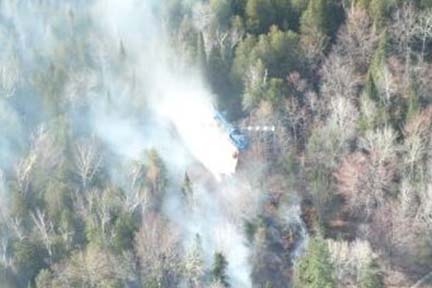
Aerial view of 2025 Roscommon County fireWith fire danger extremely high across much of Michigan’s Lower Peninsula today, firefighters are working near Houghton Lake in Roscommon County to contain a wildfire burning since Sunday afternoon, Oct. 5, near the Roscommon State Forest Area.

The fire was reported early Sunday afternoon east of Old U.S. Highway 27, near the Clare–Roscommon county line. The cause remains under investigation.

The fire is estimated to be at approximately 85 acres in a marshy area of mixed pine and hardwood forest, where dry fuels and gusty winds have challenged firefighting efforts.

“Crews have been working through difficult terrain to contain the fire,” said Jeff Vasher, Michigan Department of Natural Resources Lower Peninsula resource protection manager. “High winds have made suppression challenging, but firefighters are holding the lines and continuing to reinforce containment.”

Resources on scene include DNR firefighters, local fire departments, bulldozers, fire engines and drone aircraft support being used for aerial mapping and situational awareness. The DNR urges the public to avoid the area while crews continue suppression operations.

Across northern Michigan, fire danger remains high to very high, driven by warm temperatures, low humidity and extremely dry vegetation. Open burning is not advised, and residents are asked to use extreme caution with any outdoor heat or spark sources.

“We are currently experiencing severe drought conditions across the mid-to-lower peninsula,” added Paul Rogers, DNR fire prevention specialist. “While there is some chance of rain tonight and tomorrow, expected rainfall amounts will not be enough to ease the drought or reduce the overall fire danger.”

Burn permits were suspended Friday, Oct. 3, to help prevent additional wildfires under these increasingly dry conditions. The DNR strongly urges residents to refrain from any outdoor burning until conditions improve.

For updates, fire safety information, and prevention tips, visit Michigan.gov/FireManagement.


Note to editors: An accompanying photo is available below for download. Caption information follows.

  • Aerial view: Photo of the smoke from the 2025 Roscommon County wildfire.
It’s Firewood Month: Do you know what’s in your wood?

It’s Firewood Month: Do you know what’s in your wood?

 
Michigan Invasive Species Program banner

News Release

Oct. 2, 2025
Contact: Susie Iott, 517-420-0473 or Joanne Foreman, 517-284-5814

It’s Firewood Month: Do you know what’s in your wood?

Most people don’t spend much time thinking about firewood. If it’s split and dry, it’s good to go, right?

Well, maybe not. In recognition of Firewood Month, Michigan’s Invasive Species Program is taking a few minutes to unpack some firewood facts to help you make safe firewood choices to protect Michigan’s trees and forests.

Heating a home or enjoying a cozy evening by the fire is a great way to repurpose dead trees, but we often don’t think about what killed them.

Invasive insects like emerald ash borer or fungi like oak wilt can kill even healthy trees.

Other trees succumb to environmental conditions like drought, overcrowding or storm damage. Once a tree is weakened, it can become home to a host of insects and fungi that often remain in the wood even after it has been cut.

That means dead wood is often alive with harmful insects and diseases that can be transported to new locations on or in firewood.

What’s in my wood?

A crosscut of a tree trunk shows pale beetle larva on its back with coiled tentacles, dark eyes and dark mouth parts is nestled in a cavity.Wood borers

“Wood borer” is a general term for beetles that lay eggs on or in the bark of trees. When eggs hatch, these insects spend their larval stages tunneling into and feeding on wood, destroying tissues that move sap and water through the tree.

Many wood borers are native and seek out weakened trees. Others, such as invasive emerald ash borer and the Asian longhorned beetle (found in nearby states), infest healthy trees and cause their decline and death.

Wood borer eggs and larvae can remain in wood after trees die. Because they often are under bark or within the wood itself, they can go unnoticed until they emerge as adults. A Michigan study of 1,045 firewood pieces transported by the public indicated 23% contained live borers and an additional 41% showed evidence of previous borer infestation.

Hemlock woolly adelgid ovisacs on branch with magnified insetAdelgids

Adelgids are small, soft-bodied insects that feed on coniferous plants like pines or firs using piercing/sucking mouthparts. Agencies and partners in Michigan’s Invasive Species Program are working hard to prevent the spread of hemlock woolly adelgid in west Michigan. The Michigan Department of Agriculture and Rural Development is managing balsam woolly adelgid in areas of Clare, Missaukee and Oceana counties.

Adelgids are hard to see with the naked eye and are usually detected by the small, white, cottony tufts they spin to protect their eggs. Over time, hemlock and balsam woolly adelgids can kill their host trees by depleting sap and preventing its circulation.

Fungal diseases

Whether native or invasive, many types of fungi can cause tree death. Fungal diseases move around via spores or other structures and are spread in a variety of ways. Both invasive oak wilt and Dutch elm disease fungal spores can be spread by beetles. When trees die of fungal disease, the fungus can remain alive even if the wood is cut. Moving infected wood can spread tree diseases to areas far beyond a beetle’s range.

A gray, putty-like spotted lanternfly egg mass (center) above a fuzzy, tan spongy moth egg mass on a tree trunk.Egg masses

For many Michiganders, spongy moths (formerly gypsy moths) and their munching caterpillars are all too familiar. While female moths can’t fly, they easily spread across the state by depositing egg masses on vehicles, outdoor equipment and firewood, which are then moved around by people.

With invasive spotted lanternfly now present in areas of southeast Michigan, the same scenario is likely to play out again unless we all take the time to look for and remove egg masses from belongings and adopt safe firewood practices.

Here’s the takeaway: Don’t take it away!

Wood that looks clean and healthy can harbor tiny insects, eggs or microscopic fungi spores that can start a new and deadly infestation. Always leave your backyard firewood at home, even if you think it looks fine.

How to keep the fire burning

You can still have a roaring campfire or a cozy night in front of the fireplace if you just know how to burn safely.

A shrink-wrapped bundle of firewood with a paper label beneath the plastic. The label bears the USDA shield indicated it is certified wood.

  • Aged or seasoned wood is not safe to move. Just because it is dry doesn’t mean it’s clean. A recent study showed insects continued to emerge from firewood even three years after it had been cut.
  • Buy firewood near where you will burn it – a good rule of thumb is only using wood that was cut within 50 miles of where you’ll have your fire.
  • Certified, heat-treated firewood is safe to move long distances. Look for a federal stamp or seal on the package, and keep the firewood in the original packaging if entering a campground that requires heat-treated wood.
  • If you buy firewood and don’t burn it all, don’t bring it home or to your next destination.
  • Tell your friends not to bring wood with them – everyone needs to know they should not move firewood.

We’ve got a lot to protect

More than half of our state is forested – with an estimated 14 billion trees! Trees are part of every landscape we enjoy, from fall forest colors to river corridors to shady sidewalks and parks. Making safe firewood choices helps to protect the diversity and health of Michigan’s forest resources.

Learn more about protecting trees from invasive species at DontMoveFirewood.org.


Michigan’s Invasive Species Program is cooperatively implemented by the Department of Environment, Great Lakes, and Energy; the Department of Natural Resources; and the Department of Agriculture and Rural Development.


Note to editors: Accompanying photos are available below for download. Caption information follows.

  • ALB larva: An Asian longhorned beetle pupa burrowed deep into the heartwood of a host tree. Photo courtesy of Pennsylvania Department of Conservation and Natural Resources, Bugwood.org.
  • Magnification: Tiny hemlock woolly adelgids form round, white ovisacs are found on the undersides of hemlock branches near the base of the needles. Photo courtesy of Lorraine Graney, Bartlett Tree Experts, Bugwood.org.
  • Egg masses: A gray, putty-like spotted lanternfly egg mass (center) just above a tan, fuzzy spongy moth egg mass on a tree trunk. Photo courtesy of Lawrence Barringer, Pennsylvania Department of Agriculture, Bugwood.org.
  • Certified firewood: A certification stamp and the name and address of the firewood supplier should be visible on any certified firewood label. Photo courtesy of USACE.
DNR Logo 24 bit PNGDept of Environment, Great Lakes and Energy logoMDARD Logo
DNR: October events and volunteering

DNR: October events and volunteering

DNR banner

October events and volunteering

backpacker hiking through fall forest

Learn about one way to explore Michigan’s colorful fall forests – check out the Becoming an Outdoors Woman Beginners Backpacking Clinic in Cadillac Oct. 18.

Autumn is upon us, and the Michigan Department of Natural Resources has plenty of October opportunities for fall fun and helping take care of the outdoors! Here are highlights from our statewide DNR events calendar and Get Involved webpage, where you’ll find things to do and ways to help all month long.


Learn about backpacking, bowfishing, mushrooms and more

pile of morel mushrooms next to pan with melting butterThe DNR’s Outdoor Skills Academy and Becoming an Outdoors Woman programs offer opportunities to explore – and learn how to get started with – a variety of outdoor recreation activities. October classes include:

  • Outdoor Skills Academy Introduction to Bowfishing in Cadillac Saturday, Oct. 25. This one-day seminar will teach participants the fundamental skills needed to safely and ethically engage in the exhilarating and environmentally conscious sport of bowfishing.

For more information about other classes offering expert instruction, gear and hands-on learning for a range of outdoor activities, visit Michigan.gov/OutdoorSkills for Outdoor Skills Academy and Michigan.gov/BOW for Becoming an Outdoors Woman.


Celebrate trains and Halloween, learn deer processing skills and more at the Outdoor Adventure Center

Bosco's Trainload of Fun Show graphicThe Outdoor Adventure Center in Detroit has tons of fall fun queued up for October. Highlights include:

  • FestiFall, Saturday, Oct. 4. A day of Halloween and harvest programming, from drop-in crafts, activities and games to zombie archery.
  • Deer Processing Workshop, Saturday, Oct. 11. Learn the steps it takes to process a deer, including a cooking demonstration, where participants will enjoy venison backstraps and take-home recipes.
  • Train Expo: Detroit on Track, Friday and Saturday, Oct. 17-18. Discover the rich history of railroads on the Detroit riverfront in this celebration of local railways. Explore a model train exhibit, activities and displays, enjoy a “train” ride on the front lawn (Saturday only) and experience Bosco’s Trainload of Fun Show, a ventriloquist show packed with locomotive music, magic tricks and tons of audience participation (Saturday only; registration required).

For a full calendar of events – including archery, yoga, birding, education programs for seniors and kids, and more – see the OAC activity schedule.


Explore archaeology, impact of urban renewal on neighborhoods at Michigan History Museum

child puts a clay pot puzzle togetherDelve into our state’s stories with these special programs at the Michigan History Museum in Lansing this month:

  • Michigan Archaeology Day, Saturday, Oct. 18. Have you ever wondered what it’s like to be an archaeologist? Here’s your chance to talk with archaeologists about investigations and artifacts that tell the story of 14,000 years of Michigan history! Plus, you can pick up a free archaeology poster and enjoy activities like making a clay pinch pot, watching a flintknapper make stone tools, throwing a spear using an atlatl, a scavenger hunt, showing an artifact to Archaeology Roadshow experts, a special presentation about the Edmund Fitzgerald and more.
  • The Impact of Urban Renewal, Thursday, Oct. 23. Twentieth century urban renewal practices had a profound impact on neighborhoods across Michigan. Two of them, Lansing’s Westside and Detroit’s Black Bottom, saw the destruction of homes, businesses and community institutions for the building of new highways. Learn the stories of those neighborhoods during “From Lansing to Black Bottom: The Impact of Urban Renewal,” a program including screenings of oral history interviews and a panel discussion with former residents from both neighborhoods.

Keep an eye on the Michigan History Center events calendar for upcoming opportunities to discover more Michigan stories.


Pitch in to restore natural areas at state parks

volunteer collects native wildflower seeds at Fort Custer Recreation AreaSeveral state parks in southern Michigan will host stewardship workdays, where volunteers are needed to help remove invasive plants that threaten high-quality ecosystems or to collect native wildflower seeds for replanting. Workdays will take place at:

  • Warren Dunes State Park (Berrien County), Saturday, Oct. 4, 10 a.m. to noon.
  • Waterloo Recreation Area (Washtenaw County), Saturdays, Oct. 4, Oct. 11 and Oct. 25, and Sunday, Oct. 19, 10 a.m. to 12:30 p.m.
  • Pinckney Recreation Area (Washtenaw County), Sunday, Oct. 5, 10 a.m. to 12:30 p.m.
  • Fort Custer Recreation Area (Kalamazoo County), Saturday, Oct. 11, 10 a.m. to 12:30 p.m.
  • Saugatuck Dunes State Park (Allegan County), Sunday, Oct. 12, 10 a.m. to noon.
  • Bald Mountain Recreation Area (Oakland County), Saturday, Oct. 18, 10 a.m. to 12:30 p.m.
  • Yankee Springs Recreation Area (Barry County), Sunday, Oct. 19, 10 a.m. to noon.

Learn more about individual workdays and registration info on the DNR volunteer events calendar. Additional October workdays in southeast Michigan will be posted soon – please check back for details.


Help keep the trails you love ready to ride

ORV on trail through fall forestIf you’re an avid trail rider and looking to help maintain state-designated motorized trails, several off-road vehicle and snowmobile organizations across the state could use your help! Whether you have time to volunteer on a weekend or for a season, assistance is always appreciated.

Interested in finding an ORV or snowmobile group to support through volunteering? Contact Jessica Roehrs, who oversees the state motorized trails program for the DNR Parks and Recreation Division, at RoehrsJ1@Michigan.gov.


Give input on proposed plans for your state forests

Piled aspen logs are shown in a forest, waiting to be transported.Prescribed burns, timber harvests, tree planting and other activities are carefully planned to keep Michigan’s nearly 4 million acres of state forest thriving. Plans for these activities are currently being made for 2027, but public input is welcome now.

Find out what activities are planned and how to offer your feedback at Michigan.gov/ForestInput. You can submit online comments during designated 30-day periods or attend an open house or compartment review meeting, where plans are finalized. See all scheduled comment periods, open houses and compartment review meetings for the 2025 season.

Due to the effects of the March 2025 ice storm in the northeastern Lower Peninsula, the public review periods for the Atlanta, Gaylord, Grayling and Pigeon River Country forest management units have been postponed. The schedule will be updated when the comment periods and open houses are rescheduled.


THINGS TO DO

Now through mid-Ocober is the best time to see one of the state’s most majestic animals – the elk – in its natural habitat. Visit the DNR wildlife viewing page to learn more about this unique Michigan tradition and where to do it.

BUY & APPLY

Make reservations now to experience Silver Lake State Park – one of Michigan’s most unique state parks – on horseback. You can ride the Lake Michigan shore during the park’s shoreline horseback riding season Nov. 1-30.

GET INVOLVED

Help fight hunger and ensure Michiganders have access to a nutritious protein source – donate a deer or money to Hunters Feeding Michigan. Donations help get protein-rich venison to food banks around the state.

As swim buoys are removed, swim area designation expires

As swim buoys are removed, swim area designation expires

DNR banner with link to website

DNR News

Sept. 16, 2025
Contact: Pat Whalen, 269-838-1196

As swim buoys at state parks are removed, swim area designation expires

two buoys floating in waterAs the weather cools and the days shorten, the Michigan Department of Natural Resources continues the process of removing swim buoys and the Great Lakes flag system from many state park beaches.

Once buoys are removed – a process that always starts after Labor Day – the area is no longer considered a designated swim area. While the beach remains open to the public, swimming is not recommended, and beachgoers are urged to pay keen attention to weather and water conditions.

Swim buoys help mark the boundaries of swim areas, which are established to help identify locations with shallower water (less than 5 feet) and lower risks of dangerous currents and waves. DNR staff inspects these buoyed areas approximately every two weeks and adjusts them as needed to maximize safety.

On-shore rescue equipment and safety signage will remain along those sections of shoreline through at least Oct. 1. Additionally, the emergency notification system at Grand Haven State Park will remain active, automatically notifying 911 when a life ring is pulled or the “call for help” button is pushed.

“Due to high winds, waves and rapidly changing water temperatures during the off-season, buoys are typically installed before Memorial Day weekend and removed after Labor Day,” said Pat Whalen, Plainwell District supervisor for the DNR Parks and Recreation Division. “The flag system is also removed until the buoyed swim areas are established the next season.”

Visit Michigan.gov/BeachSafety for tips and information on safely visiting the Great Lakes, including buoyed swim beach locations, the beach flag warning system, Great Lakes currents (and how to escape them) and more.

For more information, contact the DNR’s Pat Whalen at 269-838-1196 or WhalenP1@Michigan.gov.


Note to editors: An accompanying photo is available below for download.

Sunny, dry fall weather means bigger fire risk

Sunny, dry fall weather means bigger fire risk

 
DNR banner with link to website

DNR News

Sept. 12, 2025
Contact: Jeff Vasher, 989-745-2942

Sunny, dry fall weather means bigger fire risk, especially in northern Lower Peninsula

Michigan’s greatest fire risk is usually in the spring, but downed wood from the March ice storm in northern Michigan forests and a forecast string of dry days mean people need to be careful with fire through the fall.

“We had a dry fall last year and many fire runs,” said Jeff Vasher, resource protection manager for the Michigan Department of Natural Resources. “We want to remind people to be careful and always keep fire safety in mind when they are burning, riding off-road vehicles or enjoying other outdoor activities.”

People are responsible for starting nine out of 10 wildfires, and nearly all of these could have been prevented.

Risk is heightened in the northern portion of the Mitten where an epic ice storm in March left tons of wood from snapped trees and broken branches on the ground. Despite massive cleanup efforts, some areas of state and private forests are still clogged with debris.

“Downed wood has been drying out all summer and it can catch fire easily,” Vasher said. He suggests chipping wood debris rather than burning it, if possible.

If you do need to burn, keep these safety tips in mind:

  • Before burning yard debris, see if burn permits are being issued or if weather conditions allow for safe burning. Check the burn permit page or call 866-922-BURN (866-922-2876) for more information.
  • Keep debris piles small. A large pile can burn for hours.
  • Build your campfire in a metal ring or pit. Never leave a fire unattended, even for a moment. When you’re done, thoroughly douse the fire with water, stir and douse again.
  • Taking a trailer up north? Ensure tow chains don’t drag and cause sparks, which can light a fire along the road’s edge.
  • Avoid using heavy machinery like lawnmowers in dry areas. Don’t park an ORV or other vehicle on dry grass, as a hot exhaust system can ignite the grass.

Learn more on the DNR’s fire safety webpage.