by orionontv | Aug 27, 2025 | Health and Wellness
|
Press Release
FOR IMMEDIATE RELEASE: Aug. 27, 2025
CONTACT: Lynn Sutfin, 517-241-2112, SutfinL1@michigan.gov
Michigan selected as one of 11 states for National
Medicaid Oral Health Workforce Implementation Learning Series
Opportunity to learn, share best practices to bolster dental workforce
LANSING, Mich. – Michigan is one of 11 states competitively selected for the Medicaid Oral Health Workforce Implementation Learning Series, a national initiative led by the Center for Health Care Strategies (CHCS) with support from the CareQuest Institute for Oral Health.
This learning series will bring together Medicaid agencies and their partners to share practical, scalable oral health workforce solutions that can increase access and utilization of services to improve member health.
“Increasing Michigan’s dental workforce is an important focus for the department,” said Elizabeth Hertel, Michigan Department of Health and Human Services director. “We want to ensure Michigan families can easily access care as oral health plays a critical role in overall health and well-being.”
Michigan was chosen to participate in the learning series along with 10 additional states: Kentucky, Louisiana, Maine, Nevada, Oregon, Pennsylvania, Rhode Island, Utah, Virginia and Wisconsin.
Michigan has made great strides in improving access to oral health preventive measures such as community water fluoridation, fluoride varnish for ages 0 to 5 and school-based/school-linked dental sealant programs. Access to care for children has increased through the expansion of the Healthy Kids Dental program statewide and the recently passed kindergarten dental screening program, which will help prevent cavities among children and promote oral health education to their families.
However, ensuring access to these and other oral health programs requires a robust dental workforce. While Michigan has 59.1 dentists per 100,000 people, they are not equally distributed throughout the state or representee of the populations they serve. Strengthening the state’s oral health workforce is a goal of the 2025 Michigan State Oral Health Plan developed by MDHHS and the Michigan Oral Health Coalition.
“These 11 state teams have demonstrated their commitment and readiness to implement strategies that strengthen and expand the oral health workforce,” said Madeline Steward, MPH, senior program officer at CHCS. “We are honored to play a role in supporting their efforts.”
The Medicaid Oral Health Workforce Implementation Learning Series supports Medicaid agencies and their partners in understanding best practices and sharing lessons related to oral health workforce policies and programs. Through expert guidance and peer collaboration, participating states will deepen their knowledge of effective oral health workforce strategies, with the goal of strengthening workforce capacity and improving care for Medicaid populations.
Focus areas include:
- Expanding the oral health workforce by empowering providers to work at the top of their license.
- Increasing provider engagement by raising awareness of Medicaid opportunities.
- Improving program design to enhance coverage, benefits, and operations for providers and the communities served.
- Encouraging cross-sector collaboration and coordination of oral health priorities across a broad coalition of stakeholders to tackle related workforce issues.
- Building a pipeline of engaged providers through creative solutions.
More information about the Medicaid Oral Health Workforce Implementation Learning Series is available online. |

by orionontv | Aug 22, 2025 | Health and Wellness
Press Release
FOR IMMEDIATE RELEASE: Aug. 22, 2025
CONTACT: Lynn Sutfin, 517-241-2112, SutfinL1@michigan.gov
MDHHS launches MI Options call center
to support Medicare needs, long-term care
Free service empowers Michigan residents to navigate health care supports
LANSING, Mich. – The Michigan Department of Health and Human Services (MDHHS) has launched a statewide MI Options system, offering free and comprehensive person-centered options counseling for adults looking for long-term care services and supports. Medicare counseling is also offered through the State Health Insurance Assistance Program and Medicare Improvements for Patients and Providers Act program for those navigating enrollment or reenrollment.
“MDHHS is excited to launch this statewide platform to increase the understanding and awareness of long-term care supports and services, including home and community-based options,” said Elizabeth Hertel, MDHHS director. “By providing counseling on topics from Medicare enrollment and prescription cost options to aging in place, individuals across the state will be empowered to make the best choices for their health and well-being.”
Michigan residents can call 800-803-7174, 8 a.m. to 8 p.m., Monday through Friday, to speak with an agent who can then schedule an appointment or provide a referral to a trained, certified counselor in their community. There is no cost to the individual or caregiver for this service. The new MI Options system supports older adults and people with disabilities, providing information to help individuals make informed decisions and exercise control over their long-term care needs by incorporating their personal goals and preferences.
MI Options provides counseling through a network of community-based providers and partners who were identified by a statewide Grant Funding Opportunity. These include regional Area Agencies on Aging, Centers for Independent Living and local nonprofit organizations.
Person-centered options counseling can help with:
- Exploring long-term care and support options for adults, including home and community-based services.
- Identifying next steps after a major life event to better understand what services and supports are available.
- Building actionable steps for pursuing options that align with an individual’s preferences and values.
Medicare counseling can help with:
- Medicare enrollment assistance.
- Medicare and Medicaid coordination.
- Discussions on cost savings, including low-income subsidies.
- Prescription drug coverage options.
- Billing questions.
- Benefits explanation.
The 2024 Home and Community Preferences Survey from the American Association of Retired Persons (AARP) indicates that at least 75% of Americans age 50+ would like to live in their current homes as long as possible. However, new findings from the 2025 University of Michigan National Poll on Healthy Aging reveal a wide variation in what adults age 65 and older have done, or intend to do, to ensure their homes will meet their needs as they grow older. MI Options counseling can assist individuals in identifying the steps and resources needed to stay happily and safely in their homes and communities longer.
“Too many people wait until the point of crisis to seek out this kind of information,” said Scott Wamsley, director of MDHHS’ Bureau of Aging, Community Living, and Supports. “Beginning these conversations earlier, with the assistance of trained counselors, can help alleviate some of the confusion and anxiety.”
The statewide call center will allow individuals to schedule appointments to meet with a counselor in a setting of their choice in their local community.
To reach a MI Options counselor or to find out more information about the MI Options program in Michigan, call 800-803-7174 or visit Michigan.gov/MDHHSMIOptions.

by orionontv | Aug 19, 2025 | Health and Wellness
|
Press Release
FOR IMMEDIATE RELEASE: Aug. 19, 2025
MDHHS CONTACT: Erin Stover, 517-241-2112, Stovere@michigan.gov
CEDAM CONTACT: Emily Reyst, 517-210-5936, emily@cedamichigan.org
Michigan residents can apply for Home Heating Tax Credit until September 30
State funds from this credit reduce heating bills of qualified Michigan renters, homeowners
LANSING, Mich. – With fall around the corner, the Michigan Department of Health and Human Services (MDHHS) is partnering with the Community Economic Development Association of Michigan (CEDAM) to spread the word about the Home Heating Credit, which helps eligible residents manage heating costs during the colder months. Qualified Michigan renters and homeowners have until Tuesday, Sept. 30 to claim the credit — and those who don’t file by the deadline will miss out.
“No one should have to choose between staying warm and covering other essentials like food,” said Governor Gretchen Whitmer. “The Home Heating Credit is a vital resource for Michigan families, especially those on fixed or limited incomes. As we head into the colder months, we want every eligible household to know about this opportunity. Claiming the credit now can help keep the heat on this winter and put more money in Michiganders’ pockets. I encourage every eligible Michigan household to apply, and I’ll keep working to lower energy costs and make a difference for Michiganders.”
Last year, the average qualifying household received $180 in assistance, which is most often applied directly to residents’ utility bills. Some energy providers automatically provide claimants a residential income assistance credit worth up to $20 monthly.
“The Home Heating Credit is a ‘use it or lose it’ benefit, so MDHHS is encouraging Michiganders to claim their credit by the September 30 deadline,” said MDHHS Director Elizabeth Hertel. “The Home Heating Credit does more than just lower your utility bill. It can also unlock additional support, like monthly energy discounts or expanded food assistance. If you qualify, don’t wait.”
To qualify, Michigan residents must be either a renter with a contracted lease or a homeowner and meet income requirements. The best way to claim the Home Heating Credit, and a number of other tax credits available to Michigan residents, is through one of the state’s trusted, free tax preparation services.
Free tax preparation is a community service designed to help Michiganders improve their financial well-being. Persons with disabilities, limited English-speaking ability, and those who earn less than $67,000 annually are qualified to use these services. Tax preparation providers are trained and IRS-certified volunteers.
“The heating season is only a few months away,” said State Treasurer Rachael Eubanks. “The Home Heating Credit can help with heating bills, allowing individuals and families to spend their hard-earned dollars on other necessities. Local free tax preparation can help taxpayers navigate the paperwork required to receive this very important credit and other credits, like the Earned Income Tax Credit. Please don’t hesitate to seek out voluntary assistance if you think you’re eligible.”
Residents can connect with their local free tax preparation site by calling 211 or visiting MichiganFreeTaxHelp.org. Local human services nonprofits, such as United Way and Community Action Agency, can also refer community members to a free tax preparation site.
“No one should miss out on help they qualify for,” said Eddie Fakhoury, executive director of CEDAM. “By working together with the state and local partners, we’re making sure residents get the support they need — and that support ripples out to strengthen entire communities.” |

by orionontv | Aug 19, 2025 | Health and Wellness
|
Press Release
FOR IMMEDIATE RELEASE: Aug. 19, 2025
CONTACT: Laina Stebbins, 517-241-2112, StebbinsL@michigan.gov
Michigan families urged to catch up on routine vaccinations
in recognition of National Immunization Awareness Month
LANSING, Mich. – Vaccines play a critical role in keeping the public healthy. The Michigan Department of Health and Human Services (MDHHS) urges Michigan residents and families to get caught up and stay up to date on vaccines as part of National Immunization Awareness Month (NIAM). Governor Whitmer has also proclaimed August as Vaccine Awareness Month.
NIAM highlights efforts to protect individuals of all ages against vaccine-preventable diseases and ensure residents receive vaccinations on time. A study from April 2024 found that global immunization efforts have saved more than 154 million lives – the majority of lives saved, 146 million, were those under the age of five.
“As families prepare for the new school year, it is the perfect time to ensure everyone is up to date on their routine vaccinations,” said Dr. Natasha Bagdasarian, chief medical executive. “Staying on schedule with immunizations protects against serious diseases like measles, hepatitis A, polio and HPV-related cancers. With whooping cough cases in Michigan at their highest since 2010 and the U.S. on track for the worst measles year since 1992, vaccines are more important than ever to prevent these diseases from making a deadly comeback in our communities. Talk to your health care provider, visit a local pharmacy or contact your local health department for more information.”
According to data from the Michigan Care Improvement Registry (MCIR), as of June 2025 only 68% of Michigan children 19 through 35 months of age were fully immunized with recommended vaccines. This is a significant decrease from March 2019 when 73.5% of children in this age group were vaccinated.
MDHHS encourages residents to check their vaccination records and consult with their health care providers about any recommended vaccines they may need. To obtain an immunization record for your child, ask your child’s pediatrician or family doctor, contact your local health department or submit an immunization record request.
Nationally and in Michigan, measles cases have been on the rise. Vaccinating against highly contagious diseases like measles is critically important. To achieve community immunity against measles, 95% of a population must be vaccinated. If measles vaccination coverage rates drop below that threshold, outbreaks and preventable deaths will ultimately occur. Maintaining high vaccine coverage rates is crucial to protect the public and prevent transmission.
As part of NIAM, MDHHS is joining the Franny Strong Foundation, its partner on the I Vaccinate campaign, and other advocates across the nation to spread the message that vaccines are one of the safest ways to protect health and lower risks for certain diseases and cancers. Now is the time to stay up to date with all recommended vaccines to protect yourself, your family and your community from vaccine-preventable diseases.
Watch for additional information coming soon regarding availability of flu, COVID-19 and RSV vaccines to help reduce symptoms and severity of illness during the upcoming fall respiratory season. Visit Michigan.gov/CovidFluRSV for more. |
by orionontv | Aug 18, 2025 | Health and Wellness
First Human Case of West Nile Virus Confirmed in Oakland County
Post Date:08/18/2025 12:41 PM
Pontiac, Mich. – The Michigan Department of Health and Human Services has confirmed a human case of West Nile Virus (WNV) in an Oakland County resident. No travel was reported by the patient. This is the first human case of WNV in Oakland County in 2025, and the second confirmed this year in Michigan.
“This is an important reminder that West Nile Virus is present in our community,” said Kate Guzman, health officer for Oakland County Health Division. “We strongly encourage residents to protect themselves from mosquitoes until the first hard frost of the year.”
No further information is available about the patient because of health privacy laws.
Residents, especially older adults, are urged to protect themselves from mosquito bites by following these instructions:
- Use Environmental Protection Agency (EPA) registered insect repellent.
- All EPA-registered insect repellents are evaluated for safety and effectiveness, and will contain DEET, picaridin, IR3535, Oil of Lemon Eucalyptus or para-menthane-diol as the active ingredient. Repellents containing a higher percentage of the active ingredient typically provide longer-lasting protection.
- Always follow the product label instructions.
- Remind children not to rub their eyes or touch their mouth after using repellent on their hands, as it can cause irritation.
- Get rid of mosquito breeding sites by removing standing water around your home.
- Turn over any container that can collect water. Once a week, empty items that hold water such as tires, buckets, planters, toys, pools, birdbaths, pet bowls, flowerpots and trash containers.
- Clean clogged roof gutters, especially if leaves tend to plug the drains.
- Treat standing water – such as retention ponds or drainage ditches – with a mosquito larvicide. It is easy to use and can be purchased at most home improvement stores.
- Wear long-sleeved shirts and pants.
- Limit outdoor activity from dusk to dawn when mosquitoes are most active.
- Cover holes in window and door screens. Do not prop open doors.
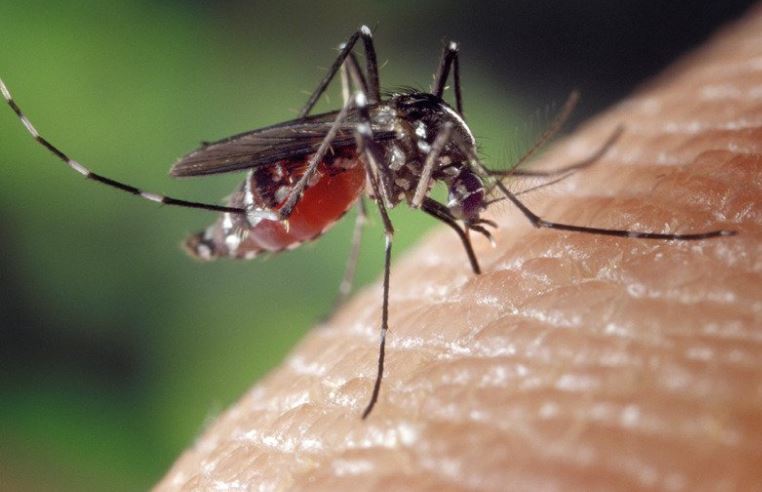
West Nile Virus is a mosquito-borne virus. Mosquitoes are infected with the virus by biting an infected bird. The virus is then spread to humans through the bite of the infected mosquito. Most people who are infected with the virus have either no symptoms or experience a mild illness such as fever, headache, and body aches. However, in some individuals, a more serious disease-causing inflammation and swelling of the brain can develop. People older than 50 are more likely to develop serious and potentially life-threatening symptoms of West Nile Virus if they do get sick.
For more information about West Nile Virus, visit www.oakgov.com/health or call Nurse on Call at 800-848- 5533, Monday through Friday, 8:30 a.m. – 5 p.m. For up-to-date public health information, follow @publichealthOC on Facebook, X and Instagram.
in Oakland County
Post Date:08/18/2025 12:41 PM
Pontiac, Mich. – The Michigan Department of Health and Human Services has confirmed a human case of West Nile Virus (WNV) in an Oakland County resident. No travel was reported by the patient. This is the first human case of WNV in Oakland County in 2025, and the second confirmed this year in Michigan.
“This is an important reminder that West Nile Virus is present in our community,” said Kate Guzman, health officer for Oakland County Health Division. “We strongly encourage residents to protect themselves from mosquitoes until the first hard frost of the year.”
No further information is available about the patient because of health privacy laws.
Residents, especially older adults, are urged to protect themselves from mosquito bites by following these instructions:
- Use Environmental Protection Agency (EPA) registered insect repellent.
- All EPA-registered insect repellents are evaluated for safety and effectiveness, and will contain DEET, picaridin, IR3535, Oil of Lemon Eucalyptus or para-menthane-diol as the active ingredient. Repellents containing a higher percentage of the active ingredient typically provide longer-lasting protection.
- Always follow the product label instructions.
- Remind children not to rub their eyes or touch their mouth after using repellent on their hands, as it can cause irritation.
- Get rid of mosquito breeding sites by removing standing water around your home.
- Turn over any container that can collect water. Once a week, empty items that hold water such as tires, buckets, planters, toys, pools, birdbaths, pet bowls, flowerpots and trash containers.
- Clean clogged roof gutters, especially if leaves tend to plug the drains.
- Treat standing water – such as retention ponds or drainage ditches – with a mosquito larvicide. It is easy to use and can be purchased at most home improvement stores.
- Wear long-sleeved shirts and pants.
- Limit outdoor activity from dusk to dawn when mosquitoes are most active.
- Cover holes in window and door screens. Do not prop open doors.
West Nile Virus is a mosquito-borne virus. Mosquitoes are infected with the virus by biting an infected bird. The virus is then spread to humans through the bite of the infected mosquito. Most people who are infected with the virus have either no symptoms or experience a mild illness such as fever, headache, and body aches. However, in some individuals, a more serious disease-causing inflammation and swelling of the brain can develop. People older than 50 are more likely to develop serious and potentially life-threatening symptoms of West Nile Virus if they do get sick.
For more information about West Nile Virus, visit www.oakgov.com/health or call Nurse on Call at 800-848- 5533, Monday through Friday, 8:30 a.m. – 5 p.m. For up-to-date public health information, follow @publichealthOC on Facebook, X and Instagram.

by orionontv | Aug 4, 2025 | Health and Wellness
|
Press Release
FOR IMMEDIATE RELEASE: Aug. 4, 2025
CONTACT: Lynn Sutfin, 517-241-2112, SutfinL1@michigan.gov
My Life, My Quit program launches mobile app
to help Michigan youth quit tobacco, vapes
LANSING, Mich – Youth in Michigan now have a new way to access free help to quit using tobacco and nicotine products, including e-cigarettes/vapes. The My Life, My Quit™ program has launched a mobile app, making it easy for teens to get confidential support from their smartphones.
“This new app will meet teens where they are with tools that support quitting tobacco products,” said Dr. Natasha Bagdasarian, chief medical executive. “We are grateful My Life. My Quit. worked with young adults to update their programming and are excited to promote this new option to youth in Michigan.”
As part of an effort to help young Michiganders quit tobacco, MDHHS contracts with the My Life, My Quit program. This free, evidence-based, service is designed specifically for youth who want to quit using tobacco and e-cigarette products. It offers live text and phone coaching, interactive content and personalized quit plans. The new app was developed in response to feedback from teen users and has been created to improve accessibility and expand engagement.
The app includes features like:
- Real time chat with a quit coach.
- Reminders and motivational messages.
- Progress training and interactive quit planning tools.
- Seamless connection to the full My Life, My Quit program across devices.
The app is available for download from Google Play and Apple App stores.
Youth and young adults can continue to enroll in the program by visiting MyLifeMyQuit.org or by texting “Start My Quit” to 36072.
According to the 2023 Michigan Youth Tobacco Survey, 13.2% of respondents reported current use of any tobacco product. The most common type of tobacco product used were e-cigarettes with 11.1% of youth reporting that they had used an e-cigarette in the last 30 days.
MDHHS reminds Michigan residents there are numerous benefits to quitting tobacco including financial savings, better health and more time spent with loved ones. As it can take several attempts to quit for good, tobacco users are encouraged not to give up after a failed attempt.
For additional information and resources, visit Michigan.gov/tobacco. |