
MI awarded more than $173 mill to strengthen rural health 

MI awarded more than $173 mill to strengthen rural health 

MDHHS banner with logo no names

Press Release


FOR IMMEDIATE RELEASE: Dec. 30, 2025

CONTACT: Lynn Sutfin, 517-241-2112, Sutfinl1@michigan.gov   

Michigan awarded more than $173 million in
federal funding to strengthen rural health
Funding comes from Rural Health Transformation Program

LANSING, Mich. – This week, the Michigan Department of Health and Human Services (MDHHS) was awarded $173,128,201 for FY 2026 by the Centers for Medicare & Medicaid Services under the Rural Health Transformation Program.

“Today’s investment will support access to health care for rural communities across Michigan as we deal with funding shortfalls caused by federal Medicaid cuts,” said Gov. Gretchen Whitmer. “This $173 million grant will help us connect more Michiganders to the care they need and provide essential wraparound supports. In Michigan, we have successfully worked together to protect quality, affordable health care, and we will continue finding ways to secure more federal funds, expand coverage and lower costs.”

The Rural Health Transformation Program is a $50 billion national commitment to improve the health and well-being of rural communities across the country. With this funding, states will implement comprehensive strategies to improve care delivery, support providers and advance new approaches to coordinating health care services across rural communities. Funding will be allocated over five years, with $10 billion available each year from 2026 through 2030.

“Michigan continues to support a resilient and innovative rural health system where every resident has access to high-quality care close to home,” said Elizabeth Hertel, Michigan Department of Health and Human Services director. “Our approved proposal for these federal funds focuses on enhancing the long-term sustainability of rural providers while supporting their growth and continued service to their communities.”

Before submitting its application, MDHHS hosted an online survey and two listening sessions to gather input on how the funding could help increase and improve sustainability for rural providers.

Based on this feedback, MDHHS requested funding to:

  • Support the development and strengthening of regional partnerships among rural hospitals, clinics and community organizations to improve care coordination, align service delivery, expand access points and promote financially sustainable care models.
  • Recruit and retain rural health professionals, behavioral health providers and community health workers. Funds will also promote prevention and chronic disease management training and integrated behavioral health care access.
  • Implement technology tools and advance rural interoperability, including establishing a rural technology catalyst fund to support expanding data exchange and increasing adoption of telehealth, remote patient monitoring and technology-driven care coordination tools.
  • Establish digital referral networks that connect residents to local care, prevention and wellness resources needed to live healthy lives.

For more information about Michigan’s plan for the funding, visit the MDHHS Rural Health Transformation Program website. Additional information about the federal Rural Health Transformation Program is available at Rural Health Transformation Program | CMS.

MDHHS seeks proposals to improve health care services

MDHHS seeks proposals to improve health care services

MDHHS banner with logo no names

Press Release


FOR IMMEDIATE RELEASE: Dec. 29, 2025

CONTACT: Lynn Sutfin, 517-241-2112, Sutfinl1@michigan.gov

MDHHS seeks proposals to improve health care
services for individuals with sickle cell disease

LANSING, Mich. – The Michigan Department of Health and Human Services (MDHHS) has issued a competitive Grant Funding Opportunity (GFO) to improve clinical services for Michigan residents who have been diagnosed with sickle cell disease.

The grant program is designed to assist providers in expanding or strengthening the services they offer to patients. Funding will prioritize projects that improve access to high-quality, integrated health care; increase the use of disease-modifying therapies; and enhance acute care services for individuals diagnosed with sickle cell disease.

This opportunity is open to 501(c)(3) nonprofits, private and public entities and universities that are:

  • An existing hematology or hematology/oncology clinic working under a Michigan hospital or medical school or an emergency department at a Michigan hospital.
  • Enrolled as a Michigan Medicaid provider.
  • Comply with Michigan Medicaid policies.
  • Accept all Medicaid, MI Child, Healthy Michigan Plan and Children’s Special Health Care Services beneficiaries.

The maximum total award for the grant period, April 1, 2026, through Sept. 30, 2026, is $80,000 per applicant. A total of approximately $400,000 in funding is available, and MDHHS anticipates issuing up to five awards. Continuation awards are available for successful applicants.

Grant applications must be submitted electronically through the EGrAMS program by 3 p.m., Tuesday, Jan. 27.

A pre-application conference will be held to discuss this funding opportunity and provide instructions on using the EGrAMS system at 1 p.m., Tuesday, Jan. 6. It will last approximately 90 minutes and can be accessed at https://bit.ly/48TceCT.

For more information or to apply, visit the EGrAMS website and select the “About EGrAMS” link in the left panel to access the “Competitive Application Instructions” training manual. The complete GFO can be accessed under the ‘Current Grants section under the “Public Health Administration” link and selecting the “SKLCE-2026” grant program.

Measles Case Confirmed in Oakland County

Measles Case Confirmed in Oakland County

Measles Case Confirmed in Oakland County

Post Date:12/16/2025 12:33 PM
  • Oakland County Health Division confirms measles diagnosis in an Oakland County child
  • DMC Huron Valley-Sinai Hospital in Commerce Township identified as possible exposure site

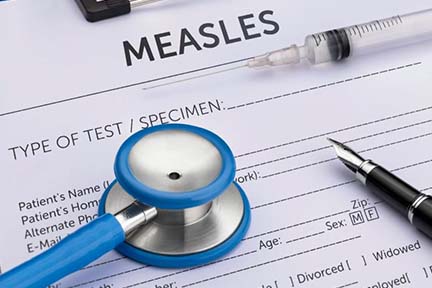
Pontiac, Mich. – Oakland County Health Division confirmed a pediatric measles case, marking the second case this year. Individuals may have been exposed to measles at DMC Huron Valley-Sinai Hospital in Commerce Township on Dec. 7 in the Emergency Department between 7:20 p.m. and 11:10 p.m. The Health Division is working with the hospital to identify people who possibly were exposed to connect them with resources and recommendations.

If you think you have been exposed, monitor for symptoms that include:

  • High fever
  • Cough
  • Runny nose
  • Red and watery eyes
  • White spots on the inner cheeks, gums and roof of mouth 2-3 days after symptoms begin
  • Rash that is red, raised, blotchy; usually starts on face, spreads to trunk, arms and legs 3-5 days after symptoms begin.

If symptoms develop, call ahead to your health care provider, including urgent care clinics and emergency departments. Measles can live for up to two hours in the air where an infected person coughed or sneezed. Measles symptoms usually begin 7-14 days after exposure but can appear up to 21 days after exposure.

“Vaccination is the most effective tool we have to prevent the spread of measles,” said Kate Guzman, Oakland County health officer. “The measles (MMR) vaccine helps protect our community’s most vulnerable which includes infants, children with medical conditions, and others who cannot be vaccinated.”

Oakland County measles cases have been linked to domestic and international travel this year. Before traveling for vacation, holidays or attending public events, confirm you are fully vaccinated against measles with two doses of the vaccine. Infants 6 months and older may receive their first dose of the MMR vaccine early if traveling internationally or to a place where there is a measles outbreak. Measles cases and outbreaks nationwide are mapped on the CDC website.

Measles is a highly contagious, vaccine-preventable disease that is spread by direct person-to-person contact and through the air. The Health Division recommends unvaccinated individuals ages 1 year and older receive measles vaccination to protect themselves and those around them.

Individuals born in or before 1957 are considered immune. High-risk individuals include those who are pregnant, unvaccinated children under age 5, and those who have a weakened immune system due to illness and disease including diabetes or HIV, malnutrition and/or medications.

The MMR vaccine is available through Oakland County Health Division offices in Southfield and Pontiac, some health care providers and many pharmacies. Health Division offices are located at the following addresses:

  • North Oakland Health Center, 1200 N. Telegraph Road, Building 34 East, Pontiac
  • South Oakland Health Center, 27725 Greenfield Road, Southfield

Health Division clinics hours:

  • Monday, Wednesday and Friday 8:30 a.m. – 5 p.m.
  • Tuesday 9:30 a.m. – 6 p.m.
  • Thursday 7:30 a.m. – 5 p.m.

Visit OakGov.com/Health for more information on measles, or contact Oakland Connects Helpline, 8:30 a.m. to 5 p.m. Monday through Friday, at 800-848-5533 or OCHelpline@OakGov.com.

For up-to-date public health information, follow @publichealthOC on Facebook, X and Instagram. Click here for more information about measles in Michigan.

MDHHS to invest $37.5 million in opioid settlement

MDHHS to invest $37.5 million in opioid settlement

MDHHS banner with logo no names

Press Release


FOR IMMEDIATE RELEASE: Dec. 8, 2025

CONTACT: Lynn Sutfin, 517-241-2112, Sutfinl1@michigan.gov   

MDHHS to invest $37.5 million in opioid settlement
funds to further expand recovery housing across Michigan

More than 200 new recovery beds created in past two years

LANSING, Mich. – As part of a statewide strategy designed to save lives and reduce overdose deaths, the Michigan Department of Health and Human Services (MDHHS) plans to invest $37.5 million into stable housing to help Michigan residents recover from substance use disorder (SUD). This funding is part of the FY 2026 state budget that includes $131.75 million for SUD prevention, harm reduction, treatment and recovery services.

“Ensuring someone has a safe place to live is one of the most powerful resources we can provide to prevent setbacks in recovery,” said Elizabeth Hertel, MDHHS director. “These investments provide people in recovery with the security, structure and dignity they need to thrive. By directing opioid settlement funds to stable housing, we are creating meaningful, lasting change in communities across the state.”

A recent analysis by MDHHS found that more than 7,500 discharges from publicly funded SUD treatment annually resulted in people leaving treatment without stable housing. To address this gap, the department has set a goal to create 3,467 new recovery housing beds by 2028, an increase of 40%.

Michigan is slated to receive more than $1.8 billion from national opioid settlements by 2040, with half being distributed to the State of Michigan Opioid Healing and Recovery Fund and the other half being distributed directly to county, city and township governments. Over the last several years, MDHHS has distributed settlement funds in support of the state strategy addressing prevention, harm reduction, treatment and recovery. This allowed the state to expand recovery housing by more than 200 beds in the last two years through $8 million in investments.

“We know that the transition out of treatment is one of the most critical times for individuals with substance use disorder,” said Dr. Natasha Bagdasarian, chief medical executive and Michigan Opioids Task Force co-chair. “It’s a time when individuals face an increased risk of returning to substance use. Without safe and stable housing, the risk of overdose increases dramatically. Recovery housing is a medically informed, evidence-based solution that offers individuals the stability and support needed to maintain their recovery and rebuild their lives.”

According to a Michigan Association of Recovery Residences (MARR) survey, recovery housing assists individuals in successfully obtaining and maintaining employment. Upon entering a MARR-certified recovery house, about 17% of individuals indicated needing employment assistance. This statistic decreases during their stay to about 8% at the 90-day mark.

Recent recovery housing investments include:

  • $1.5 million to support a new recovery housing project by Wellspring in Southfield in partnership with the Michigan State Housing Development Authority and Oakland County government. Construction will soon begin on 60 new recovery housing units.
  • $3 million for The McDaniel Apartments at Andy’s Place in Jackson, 26 affordable apartments and vital recovery services designed to serve expectant families overcoming opioid addiction.
  •  $3.8 million through the Recovery Housing Investment Program to purchase or lease homes across the state dedicated to supporting individuals in recovery, adding more than 110 new beds to the state’s total capacity.

“This is a matter of both equity and urgency,” said MDHHS senior advisor Tommy Stallworth. “Black and low-income communities are disproportionately impacted by housing instability and the heightened risk of overdose. Our investment in recovery housing reflects a strategic, data-informed commitment to ensuring every Michigan resident has a real opportunity for sustained recovery. Additionally, these projects demonstrate how state and local governments can work together to advance Governor Whitmer’s goal of expanding access to affordable housing.”

Recovery housing initiatives are supported by ongoing collaboration with local governments, community-based organizations and peer-led programs, ensuring that the needs of individuals in recovery are met with compassion, evidence-based practices and strong local partnerships.

For more information about SUD resources, visit Michigan.gov/SUD.

Additional information regarding proposed programming under Michigan’s Opioid Healing and Recovery Fund is provided on the opioids settlement website.

MDHHS honors Adoption Day by celebrating newly adoptive families

MDHHS honors Adoption Day by celebrating newly adoptive families


MDHHS banner with logo no names

Press Release


FOR IMMEDIATE RELEASE: Nov. 25, 2025

CONTACT: Erin Stover, 517-241-2112, StoverE@michigan.gov  

MDHHS honors Michigan Adoption Day by celebrating newly adoptive families
Adoption Day event held at Michigan Supreme Court to highlight importance of adoption

LANSING, Mich. – In honor of Michigan Adoption Day, the Michigan Department of Health and Human Services (MDHHS) is celebrating the life-changing impact of adoption by honoring the many loving families who open their hearts and homes to children in need of a permanent home.

Courts statewide, in partnership with MDHHS, hold special adoption ceremonies in November at which children officially become permanent members of their new forever families. The celebrations included a Michigan Adoption Day celebration hosted by the Michigan Supreme Court Tuesday, Nov. 25. Held each year the Tuesday before Thanksgiving, Michigan Adoption Day has become a holiday tradition, highlighting the importance of adoption and the need of children in foster care to find a forever family.

“Days like these are a heartfelt reminder of the love and new beginnings that adoption brings to children and families across the state,” said MDHHS director Elizabeth Hertel, who spoke at the Michigan Adoption Day celebration. “All children deserve a bright future with a loving and supportive home. Adoption is more than paperwork or a legal milestone; it’s a promise of stability, care and unconditional support.”

In Michigan there are approximately 10,000 children in foster care, a number that has continued to decrease each year. MDHHS first focuses on keeping families together and reunifying children safely with their families. When safe reunification is not possible, MDHHS works with contracted private adoption agency partners to find permanent homes. In fiscal year 2025, MDHHS, along with its partners, helped secure homes for approximately 1,400 children. Currently, there are more than approximately 170 children in Michigan in need of an adoptive home.

Those interested in adopting a child from foster care can contact the Michigan Adoption Resource Exchange at 800-589-6273, or see biographies and photos of children available for adoption at www.MARE.org. Adoptive homes for teens and sibling groups are especially needed.

Nominations sought for Hometown Health Hero awards

Nominations sought for Hometown Health Hero awards

MDHHS banner with logo no names

Press Release


FOR IMMEDIATE RELEASE: Nov. 25, 2025

CONTACT: Laina Stebbins, 517-241-2112, StebbinsL@michigan.gov

Nominations sought for Hometown Health Hero awards
Deadline for nominations is Friday, Dec. 19

LANSING, Mich. – The Michigan Public Health Week Partnership, a collaboration of 13 organizations working to increase the visibility of significant accomplishments in public health, is seeking nominations of individuals and organizations that have made significant contributions to preserve and improve their community’s health for its annual Hometown Health Hero awards.

Hometown Health Hero awards are presented every spring as part of Michigan Public Health Week. Award recipients will be honored at a reception Wednesday, March 18 in Lansing.

Michigan Public Health Week is observed as part of National Public Health Week to recognize public health contributions and to highlight issues that are important to improving the nation’s health. Each year, the American Public Health Association develops a campaign to educate the public, policymakers and health care providers about issues related to that year’s theme.

“As we look toward a healthier future for every Michigan resident, it’s important that we recognize the individuals and organizations leading the way,” said Dr. Natasha Bagdasarian, chief medical executive. “The 2026 Hometown Health Hero Awards honor those addressing critical public health issues and creating safer, stronger communities.”

The online nomination form is available at Michigan.gov/MPHW and must be submitted no later than Friday, Dec. 19.

The following organizations make up the Michigan Public Health Week Partnership: Central Michigan University Public Health Programs, Eastern Michigan University Master of Public Health Education, Grand Valley State University Master of Public Health Program, Michigan Association of Counties, Michigan Association for Local Public Health, Michigan Association of Medical Examiners, Michigan Health & Hospital Association, Michigan Public Health Association, Michigan Public Health Institute, Michigan State University Charles Stewart Mott Department of Public Health, University of Michigan School of Public Health, Wayne State University College of Human Medicine Family Medicine program and the Michigan Department of Health and Human Services.

For questions, please email Jim Koval at KovalJ@michigan.gov.