EGLE announces $10.8 million in MI Clean Water grants

EGLE announces $10.8 million in MI Clean Water grants

 
EGLE Main GovD banner
FOR IMMEDIATE RELEASE
November 14, 2023
EGLE Media Office, EGLE-Assist@Michigan.gov, 517-284-9278

EGLE announces $10.8 million in MI Clean Water grants to help communities upgrade water infrastructure, protect health & environment

Upgrades to Beulah’s wastewater plant, disposal of PFAS-contaminated biosolids at K.I. Sawyer Air Force Base and removal of contaminated soils from a lagoon in Grand Rapids are among $10.8 million in Michigan Department of Environment, Great Lakes, and Energy (EGLE) grants recently awarded to Michigan communities.

The MI Clean Water Plan grants, through EGLE’s Substantial Public Health Risk Project Program (SPHRPP) and Clean Water State Revolving Fund (CWSRF) aim to help communities upgrade aging infrastructure to ensure healthy drinking water and protect Michigan’s environment.

Seventy percent of Michiganders are served by more than 1,000 community wastewater systems and a similar percentage get drinking water from community water systems. Those systems often struggle to find resources to address legacy issues like aging drinking water and stormwater facilities and emerging challenges like new standards for Per- and Polyfluoroalkyl Substances (PFAS) “forever chemicals.”

Governor Gretchen Whitmer, the Michigan Legislature, and federal agencies have ramped up funding for aging water infrastructure – a critical move to help ensure those water systems continue to protect public health and the environment, including Michigan’s unmatched freshwater resources.

More than half of EGLE’s budget has traditionally passed through to Michigan cities, towns, villages, and other local government agencies to finance critical improvements that help them better protect residents and our natural resources.

Grant roundup

Recent grants through the SPHRPP: 

  • Village of Beulah, $2 million for critical upgrades to the wastewater treatment plant, including a new headworks building, a new moving bed bioreactor system, tertiary filtering, a new center pivot spray irrigation system, and proper lagoon abandonment.
  • Marquette County (K.I. Sawyer Air Force Base), $1,289,828 for purchase and installation of equipment that will support infrastructure to treat for eventual disposal of biosolids contaminated with PFAS, which are currently stored on site. The work will help the Air Force base transition away from the land application of biosolids toward consolidating the biosolids and transporting them to a landfill for disposal. 

Recent grants through the CWSRF: 

  • City of Grand Rapids, $7.5 million for the remediation of contaminated soils at the Ash Lagoon, and reconfiguration of the wastewater treatment plant stormwater system to address first-flush contamination into the Grand River.

Descriptions of funding sources

Drinking Water State Revolving Fund (DWSRF): Low-interest loan program to help public water systems finance the costs of replacement and repair of drinking water infrastructure to protect public health and achieve or maintain compliance with federal Safe Drinking Water Act requirements. The DWSRF provides loans to water systems for eligible infrastructure projects. As water systems repay their loans, the repayments and interest flow back into the DWSRF to support new loans. American Rescue Plan Act (ARPA) funding operates as a grant and may be used in combination with loan dollars to reduce the financial burden on communities to pay for capital improvement debt. ARPA funded grants awarded this fiscal year: $218,398,719.

Clean Water State Revolving Fund: Used by local municipalities to finance construction of water pollution control projects. These projects include wastewater treatment plant upgrades and expansions, combined or sanitary sewer overflow abatement, new sewers designed to reduce existing sources of pollution, and other publicly owned wastewater treatment efforts that improve water quality. The CWSRF can also finance stormwater infrastructure projects to reduce nonpoint sources of water pollution caused by things like agricultural runoff to lakes, streams, and wetlands. As with the DWSRF, ARPA funds can be used in conjunction with CWSRF loan dollars, thereby reducing the debt communities pay for infrastructure improvements. ARPA-funded grants awarded this fiscal year: $137,982,009.

Drinking Water Asset Management Program: Provides grant funding to assist drinking water suppliers with asset management plan development and updates, and/or distribution system materials inventories as defined in Michigan’s revised Lead and Copper Rule. Awarded this fiscal year: $19,695,817.

Consolidation and Contamination Risk Reduction Program: Established to aid drinking water systems to help remove or reduce PFAS or other contaminants. Awarded this fiscal year: $20,336,215.

Substantial Public Health Risk Project Program: Protects public and environmental health by removing direct and continuous discharges of wastewater from surface or groundwater. Awarded this fiscal year: $8,000,000.


Additional Background

  • Since January 2019 the State of Michigan has invested over $4 billion to upgrade drinking water, stormwater, and wastewater facilities across the state, supporting over 57,000 jobs.
  • In 2022, Governor Whitmer signed a package of bills to help communities access funding for water infrastructure.
Clean Boats, Clean Waters grant applications now open

Clean Boats, Clean Waters grant applications now open

 
Michigan Invasive Species Program banner

News Release

The following news release was issued earlier this week by Michigan State University Extension.  

Contact: Kelsey Bockelman or Paige Filice, Michigan State University Extension

Michigan Clean Boats, Clean Waters grant applications now open!

$35,000 is available for Michigan organizations dedicated to aquatic invasive species education and outreach.

For the fourth year running, the Michigan Clean Boats, Clean Waters program has grant funding available to support aquatic invasive species outreach efforts. This opportunity is for Michigan organizations dedicated to the protection of our waterways including lake associations, local units of government, and non-profit organizations. This year, up to $35,000 is available to engage the Michigan boating community in invasive species prevention actions.
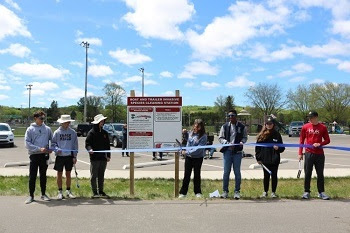
Seven people stand next to a sign on the edge of a parking lot preparing to cut a ribbon held in front of them.Funding requests can be up to $3,000 each and do not require local match or cost sharing. Clean Boats, Clean Waters grants can be used for a variety of activities including signage, invasive species supplies such as plant removal tools, sponges and towels, and staff time to perform watercraft inspections and demonstrations of boat cleaning techniques. Eligible applicants include lake associations, watershed groups, local or tribal units of government and non-profits. Cooperative Invasive Species Management Areas (CISMAs) and organizations with a statewide impact are highly encouraged to support local groups or pursue Michigan Invasive Species Grant Program funds to perform boater outreach activities.

Interested groups can apply for a grant now on the Clean Boats, Clean Waters website. The deadline to apply is January 19, 2024. This is a competitive funding opportunity and complete applications will be ranked based on group eligibility, project significance, anticipated outcomes, and target audiences. Accepted grantees will be notified in March of their award.

Over the last three years Clean Boats, Clean Waters has awarded 31 grants to lake associations, watershed groups, high schools, local units of government, and nonprofit organizations to educate the public about aquatic invasive species. Below are some examples of their projects.

  • The Elk-Skegemog Lakes Association, located at the tripoint of Antrim, Grand Traverse, and Kalkaska Counties, installed Clean Boats, Clean Waters Decontamination Station signs and distributed education materials around Elk and Skegemog Lakes. The lake association hosted invasive species education events and partnered with the Tip of the Mitt Watershed Council to host boat washing demonstrations.
  • The Alger Conservation District, in partnership with the Lake to Lake Cooperative Invasive Species Management Area and Burt and Au Train Townships, installed interpretive signs at public boat and kayak launches on the Au Train River and at the Burt Township Marina. In addition, a Clean Boats, Clean Waters Decontamination Station sign was installed at the marina for residents and visitors. The Conservation District and partners also hosted outreach events to educate the public about relevant invasive species and conducted boat and kayak decontamination demonstrations.
  • The Kalkaska Conservation District partnered with Coldsprings Township and Manistee Lake Association to install a Clean Boats, Clean Waters Decontamination Station sign and display educational messaging near the boat launch at Manistee Lake Sands Park. In addition, the Conservation District sponsored paid advertising about clean boating practices in local media and hosted outreach events during busy weekends.

Michigan Clean Boats, Clean Waters Program

Michigan State University Extension is leading the effort to implement the Clean Boats, Clean Waters program in cooperation with the Michigan Department of Environment, Great Lakes and Energy. Since 2006 the Clean Boats, Clean Waters program has been educating Michigan boaters about aquatic invasive species with trained volunteer boat inspectors. The program has grown into a comprehensive aquatic invasive species boater outreach program thanks to funding from EGLE.

Clean Boats, Clean Waters promotes understanding of boat cleaning practices and regulations through the distribution of educational materials, an online resource library, boat washing demonstrations, grants, and partnerships. The program builds upon existing partnerships with statewide and local organizations including the Michigan Lakes and Streams Association, CISMAs, and lake associations and is actively seeking new opportunities and partners to share the clean, drain, dry message.

More information on Clean Boats, Clean Waters can be found on the MSU Extension website, Facebook (@MichiganCBCW), or Instagram (@michigan_cbcw).

Questions about the Clean Boats, Clean Waters program and this grant funding opportunity can be directed to Kelsey Bockelman.
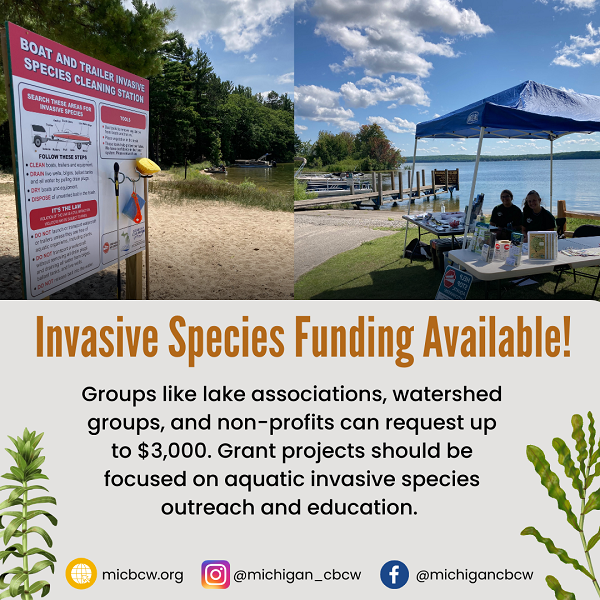

An infographic announcing "Invasive Species Funding Available" below two lakefront photos.


Michigan’s Invasive Species Program is cooperatively implemented by the Michigan Departments of Agriculture and Rural Development; Environment, Great Lakes, and Energy; and Natural Resources.


Note to editors: Accompanying photos are available below for download. Caption information follows.

High school: 2022 grantees show off parts of their grant projects from a few summers ago! East Jordan High School (Left) displays their new aquatic invasive species decontamination sign. Photo Credit: East Jordan High School.

Grant: CBCW grant announcement infographic available for use in publications or social media. Courtesy of MSU Extension.

DNR Logo 24 bit PNGDept of Environment, Great Lakes and Energy logoMDARD Logo
First Michigan detection of invasive hydrilla triggers response

First Michigan detection of invasive hydrilla triggers response

Michigan Invasive Species Program banner

News Release

Oct. 2, 2023
Contact: Bill Keiper, 517-342-4087, or Joanne Foreman, 517-284-5814

First Michigan detection of invasive hydrilla triggers response

Aquatic plant found in two West Michigan ponds

Hydrilla, considered one of the world’s most invasive aquatic plants, has been detected for the first time in Michigan. The Department of Environment, Great Lakes and Energy confirmed two small populations of the plant in adjacent private ponds on residential properties in Berrien Springs in Southwest Michigan.

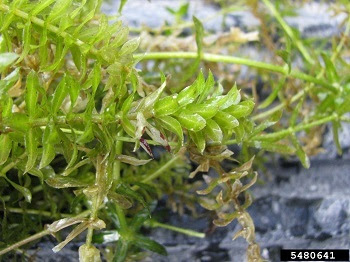
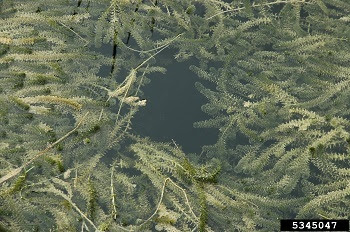
A mass of invasive hydrilla, an aquatic plant, held just above the water's surface.The small patches of hydrilla (Hydrilla verticillata) were discovered during routine monitoring following treatment for another invasive plant, parrot feather, which was found in the pond in 2020. Both species are prohibited in Michigan, meaning it is unlawful to sell, possess or import them into the state, and both are on Michigan’s invasive species watch list due to their potential environmental threat.

Hydrilla has several ways of reproducing, allowing it to spread rapidly, outcompete native plants and quickly form dense single-species infestations. Root tubers, turions (buds) and even small plant fragments can develop into new plants, making it very easy for hydrilla to disperse through water or attach to ornamental plants sold for water gardens.

“It’s not clear how either plant made its way to this pond, but seeds or fragments of the invasive plants may have been attached to ornamental plants installed in past years,” said Bill Keiper, EGLE aquatic biologist. “Sediment core samples of the pond and genetic analysis of the plant material are planned to help determine how long the hydrilla has been here and where in the U.S. it might have originated.”

EGLE’s immediate response actions include surveying connected ponds, a receiving stream, and the St. Joseph River to ensure the full hydrilla population extent is known. Herbicide treatments are underway in the infested ponds, targeting hydrilla plants to prevent further tuber production this season. A response plan will focus on preventing the spread of hydrilla beyond its current location, with the long-term goal of eradication.

Why be concerned?

Hydrilla stems float at the water’s surface. Heavy infestations can block access to waterways. Hydrilla was introduced into Florida in the 1950s and has spread across the southeast. A separate strain was first detected in Delaware in 1976 and has since made its way through the Atlantic states and several Great Lakes states.
Hydrilla can thrive in both low- and high-quality waters and has been found in lakes, rivers, reservoirs, wetlands, ponds and streams. Plants are generally rooted in sediment in water depths up to 25 feet and remain submerged, with long, leaved stems floating near the surface. Because it outcompetes native plants, it can quickly fill a lake or pond, choking off recreational access.

Though hydrilla can be treated with herbicide, it is difficult to eradicate because tubers and turions can persist in the sediment for years, and plants can reproduce from even small fragments.

You can help

Early detection of hydrilla provides a better opportunity for successful control and eradication. Michigan’s Invasive Species Program relies on reports from the public to help in early detection and response efforts.

Identify hydrilla

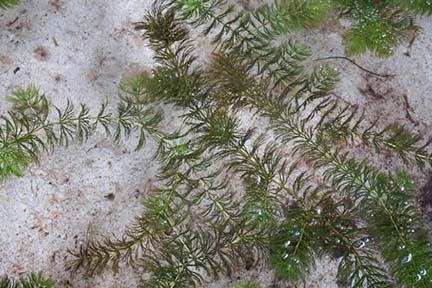
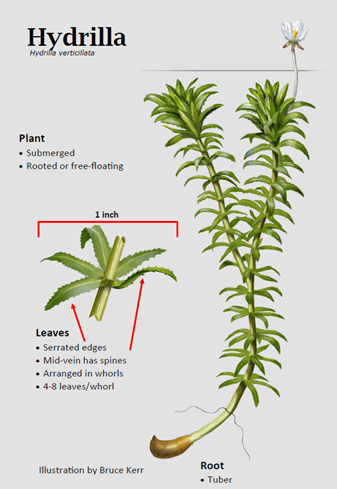
An illustration showing hydrilla's characteristics including serrated leaves, generally in whorls of five, surrounding long stems.Look for long, slender stems floating near the water surface. Check for these characteristics:
  • Pointed, bright green leaves about 5/8 inch long with small teeth on the edges.
  • Leaves growing around the stem, generally in whorls of five, but they can range from four to eight.
  • Tiny, floating white flowers visible in late summer to fall.
  • Small, white to yellowish, potato-like tubers attached to the roots.

Be aware of look-alikes

Note that hydrilla’s long stems may look like common native and invasive aquatic plants in Michigan. Differences are found in the number of leaves per whorl and the smooth versus serrated leaf edges.

  • Native elodea (Elodea canadensis and Elodea nuttalli) has three (rarely four) leaves per whorl.
  • Mare’s tail (Hippuris vulgaris) has six to 12 leaves per whorl.
  • Brazilian elodea (invasive) leaves are smooth, not toothed at the edges.

Report suspected hydrilla

Any suspicious aquatic plants should be reported as soon as possible to EGLE-WRD-AIP@Michigan.gov. Include close-up photos and provide the location of the detection in your report.

More information on identifying and reporting invasive aquatic plants can be found at Michigan.gov/Invasives.

Michigan’s Invasive Species Program is cooperatively implemented by the Michigan Departments of Agriculture and Rural Development; Environment, Great Lakes, and Energy; and Natural Resources.


/Note to editors: Accompanying photos are available below for download. Caption information follows.

Hydrilla plants: Invasive hydrilla is considered one of the world’s most invasive aquatic plants. Photo courtesy of Leslie J. Mehrhoff, University of Connecticut, Bugwood.org.

Hydrilla infestation: Hydrilla stems float at the water’s surface. Heavy infestations can block access to waterways. Photo courtesy of Leslie J. Mehrhoff, University of Connecticut, Bugwood.org.

Hydrilla graphic: Hydrilla is characterized by serrated leaves, generally in whorls of five, surrounding long stems. Illustration by Bruce Kerr./


DNR Logo 24 bit PNGDept of Environment, Great Lakes and Energy logoMDARD Logo


Clean Boats, Clean Waters grant applications now open

Invasive Balsam woolly adelgid confirmed in Missaukee County

Michigan Invasive Species Program banner

News Release

The following news release was issued earlier today by the Michigan Department of Agriculture and Rural Development.

For immediate release: September 26, 2023
Program contact: Rob Miller 517-614-0454
Media contact: Jennifer Holton, 517-284-5724

Invasive balsam woolly adelgid confirmed in Missaukee County

Second detection of this pest in Michigan

Lansing, MI – The Michigan Department of Agriculture and Rural Development (MDARD) verified the detection of invasive balsam woolly adelgid (BWA) at a residential property in Missaukee County. The U.S. Department of Agriculture confirmed a sample taken from the site as positive for balsam woolly adelgid, making Missaukee the second county in Michigan to have a confirmed infestation.

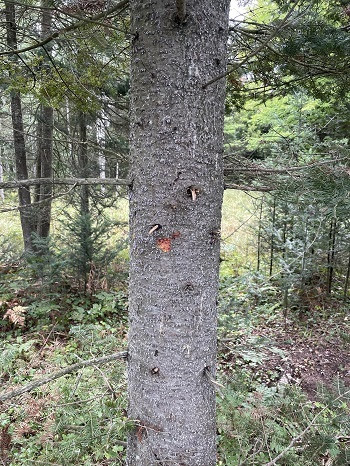
The trunk of a large fir tree with areas of small, white tufts indicating the presence of invasive balsam woolly adelgid.“The infestation was found by a consulting forester who was working with the landowner. We don’t known how balsam woolly adelgid was introduced to this site, but early detection is a fundamental component of successful response efforts,” said Mike Philip, Director of MDARD’s Pesticide and Plant Pest Management Division. “MDARD and its partner agencies have begun survey work to determine the extent of the infestation.”

This is the second detection of balsam woolly adelgid in Michigan. The pest was found near Rockford in Kent County in 2021. The site was treated, and survey efforts are ongoing to ensure successful eradication.

Balsam woolly adelgid is a tiny, sap-feeding insect that attacks true fir trees, including balsam, Fraser and concolor (white) fir. The pest is on Michigan’s Invasive Species Watch List because repeated attacks from the pest weaken trees, cause twig gouting, kill branches and, over the course of many years, cause trees to decline or die.

Symptoms of balsam woolly adelgid infestation include:

  • Tiny one-to-two-millimeter white woolly tufts on the lower trunk of the tree and possibly on large branches in the spring and summer.
  • Swelling and distortion of the twigs, commonly called “gout.”
  • Flagging – A branch or branches that turn brick-red and die.
  • Tree crowns that become narrow and misshapen with few needles.

Although not native to Michigan, Fraser and concolor fir trees are often planted on home landscapes. Balsam fir is native to the Upper Peninsula and Northern Lower Peninsula but also found throughout the state in residential and park settings.

“This invasive insect is a significant threat to the nearly 1.9 billion balsam fir trees populating Michigan’s forests,” said Philip. “And, as the third largest Christmas tree-growing state in the country, Michigan produces nearly 13.5 million fir trees each year, which are susceptible to balsam woolly adelgid.”

In 2014, MDARD implemented a balsam woolly adelgid quarantine regulating the movement of potentially infested nursery stock into Michigan from areas in North America with known infestations.

“MDARD relies on the public to help be our extra eyes in the landscape for invasive species; early detection and response are crucial to our efforts to protect the state’s natural resources,” added Philip. “Michiganders can also help prevent the spread of invasive species by leaving firewood at home and buying it where you burn it, cleaning gear and vehicles before hitting the road, and reporting suspected invasive species.”

If Michiganders suspect this invasive pest is damaging fir trees, they should take photos, note the location, and report it to the Midwest Invasive Species Information Network or MDARD at MDAInfo@michigan.gov or call 800-292-3939. For more information on balsam woolly adelgid and other invasive species in Michigan, visit Michigan.gov/Invasives.


Michigan’s Invasive Species Program is cooperatively implemented by the Department of Environment, Great Lakes, and Energy; the Department of Natural Resources; and the Department of Agriculture and Rural Development.


/Note to editors: The accompanying photo is available below for download. Suggested caption follows.

DNR Logo 24 bit PNGDept of Environment, Great Lakes and Energy logoMDARD Logo
Free well water testing now available

Free well water testing now available

EGLE Main GovD banner
FOR IMMEDIATE RELEASE

Sept. 5, 2023

EGLE Media Office, EGLE-Assist@Michigan.gov, 517-284-9278

Sara Pearson, Supervisor, Source Water Unit, PearsonS@Michigan.gov, 517-420-3219

Free well water testing now available for Michigan residents

The Department of Environment, Great Lakes, and Energy (EGLE) is excited to announce a special program to help Michigan families know the quality of their well water. EGLE and local health departments (LHD) are working together to ensure that safe drinking water is a priority for Michigan families.

Last year, the Michigan Legislature appropriated $5 million to provide free well water testing for Michigan residents who rely on a household or private well for their drinking water. Water from private wells may sometimes not be safe to drink. EGLE and the LHDs want to help families know if their water is safe to drink, and this free well water testing will help get them that answer.

Most wells get checked when they are first built; however, EGLE and the LHDs know that water wells should be checked more frequently as water quality may change over time. This testing can determine if there have been any water quality changes to your well that could be harmful to those who drink and use that well water.

Many different substances may be found in well water that could be harmful and may cause illness, including bacteria; nitrates; and some metals, such as arsenic. Residents who test through this free program will have the assistance of the LHD to help determine next steps if test results show a problem with their well water quality.

If you have a private well and you want to know if your water is safe to drink, here is what you can do:

  • Talk to your LHD. They can tell you if there is anything special you need to know about the water in your area.
  • Go to the EGLE website gov/EGLEPrivateWells. Here, you can add your information to ask for a water test. You will also learn more about how to collect a water sample to send to the laboratory.
  • Don’t worry if you are not sure what the laboratory results mean – your LHD will help you understand the results and will guide you on next steps, if necessary.

This free testing program is your first step in knowing if the water you drink from your private well is safe, and steps to take if an issue is found.

To stay up to date on other EGLE news follow us at Michigan.gov/MIEnvironment.

Do your part and be SepticSmart!

Do your part and be SepticSmart!

 
EGLE Main GovD banner
FOR IMMEDIATE RELEASE

Sept. 5, 2023

EGLE Media Office, EGLE-Assist@Michigan.gov, 517-284-9278

Marisa Faraldo, Environmental Quality Analyst, FaraldoM@Michigan.gov, 517-243-9631

Do your part and be SepticSmart!

Governor Whitmer declares September 18-22 as SepticSmart Week

Governor Gretchen Whitmer has proclaimed September 18-22, 2023, as SepticSmart Week. On Monday, Sept. 18, the U.S. Environmental Protection Agency (EPA) – in conjunction with federal, state, and local governments, and private sector partners – will kick off its eleventh annual SepticSmart Week to encourage homeowners and communities to properly care for and maintain their septic systems.

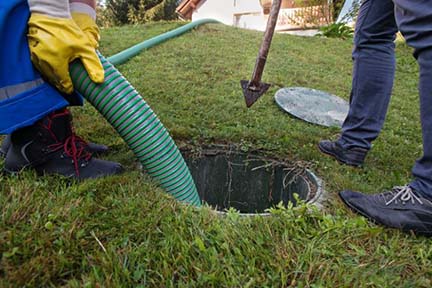
More than 1.3 million homes and businesses in Michigan depend on septic systems to treat wastewater. If not maintained, failing septic systems can contaminate groundwater and harm the environment by releasing bacteria, viruses, and household chemicals and other pollutants to local waterways. Proper septic system maintenance protects public health, the environment, and saves the homeowner money through avoided costly repairs.

Simple tips for homeowners:

  • Protect It and Inspect It: Homeowners should generally have their system inspected every three years by a qualified professional or according to their state or local health department’s recommendations. Regular septic system maintenance can save homeowners thousands of dollars in repairs and protect public health.
  • Think at the Sink: What goes down the drain has a big impact on your septic system. Fats, grease, and solids can clog a system’s pipes and drainfield.
  • Don’t Overload the Commode: A toilet is not a trash can. Disposable diapers and wipes, feminine hygiene products, coffee grounds, cigarette butts, and cat litter can damage a septic system.
  • Don’t Strain Your Drain: Use water efficiently and stagger use of water-based appliances. Too much water use at once can overload a system that hasn’t been pumped recently. Fix plumbing leaks and install faucet aerators and water-efficient products.
  • Shield Your Field: Tree and shrub roots, cars, and livestock can damage your septic drainfield.
  • Pump Your Tank: Ensure your septic tank is pumped at regular intervals as recommended by a professional and/or local permitting authority.
  • Keep It Clean!: Contamination can occur when a septic system leaks due to improper maintenance. Be sure your drinking water is safe to drink by testing it regularly.

The EPA’s SepticSmart Program educates homeowners about proper septic system care and maintenance all year long. In addition, it serves as an online resource for industry practitioners, local governments, and community organizations, providing access to tools to educate clients and residents.

Please join the Michigan Department of Environment, Great Lakes, and Energy (EGLE) in spreading the SepticSmart Week 2023 message that encourages homeowners and wastewater professionals to maintain septic systems to promote public health, water conservation, and economic wellbeing. Be part of the solution by visiting the EGLE SepticSmart Web site or the EPA SepticSmart Web site for an abundance of resources, videos, and information.

Webinar: Knowing Your Septic System – SepticSmart 2023

EGLE’s Onsite Wastewater Program is kicking off SepticSmart Week with a one-hour webinar, “Knowing Your Septic System – SepticSmart 2023,” on Sept. 18, which will be recorded. While this event is targeted to homeowners served by a septic system, all interested persons are welcome to attend.

Webinar attendees will learn about:

  • the basics of septic systems;
  • tools on how to locate a septic system, and
  • use, operation, and maintenance tips.

This webinar will provide participants with access to educational materials and a boost in their ability to manage their septic system. Mark your calendar and register today!

To stay up to date on other EGLE news and events follow us at Michigan.gov/MIEnvironment.