State wins $1.9 million federal award

State wins $1.9 million federal award

 
EGLE Main GovD banner
FOR IMMEDIATE RELEASE
April 26, 2024
Jeff Johnston, EGLE Public Information Officer, JohnstonJ14@Michigan.gov, 517-231-9304

State wins $1.9 million federal award to support local renewable energy planning and deployment

EGLE to launch the Michigan Renewable Energy Academy to provide community support

Michigan is set to launch the Michigan Renewable Energy Academy (REA) with new resources from President Biden’s Inflation Reduction Act. The State will receive $1.9 million from the U.S. Department of Energy (DOE)’s Renewable Energy Siting through Technical Engagement and Planning (R-STEP) program to improve planning, siting, and permitting processes for large-scale renewable energy facilities.

The Michigan Department of Environment, Great Lakes, and Energy (EGLE) will lead the REA in partnership with the University of Michigan’s Graham Sustainability Institute, Michigan State University Extension, 5 Lakes Energy, and the Michigan Association of Planning.

“This investment from the U.S. Department of Energy is another tool to help Michigan communities continue to build out renewable energy at the scope and scale necessary to meet the goals of the MI Healthy Climate Plan, the state’s climate action roadmap,” said EGLE Director Phil Roos. “EGLE’s Renewable Energy Academy will be a one-stop-shop where communities can receive technical assistance and support as they pursue more sustainable, clean energy resources.”

The academy will be a community-centered resource for expertise in renewable energy siting, providing technical aid at no out-of-pocket cost to Michigan communities. The program will prioritize local participation and capacity building, especially to underserved communities, and help local and tribal governments navigate the complexities and harness the benefits of hosting renewable energy facilities.

“Clean wind and solar energy and storage systems are keys to a climate-healthy future for our state and world,” said Liz Browne, director of EGLE’s Materials Management Division. “EGLE and its partners in the Michigan REA are ready to offer guidance and expertise to communities for renewable energy planning and siting.”

Nationally, seven states will share a total of $10 million through R-STEP to develop and expand statewide initiatives comparable to the REA. These collaboratives will bring together stakeholders from all perspectives in the energy planning process: state and regional agencies, universities, developers, technical experts, public service commissions, farmers, unions, tribes, community organizations, and others. Learn more online about the selected state-based collaboratives, including the full list of partners.

The DOE also announced it will open a second round of the program with up to $12 million available for states.

In Michigan, R-STEP dollars will fund a consolidation of all resources, services, and experts relevant to energy planning and zoning into the one-stop shop with the REA.

These R-STEP dollars complement existing EGLE efforts to support communities in playing a role in the clean energy transition and helping Michigan meet the goals of the MI Healthy Climate Plan, including the Catalyst Communities program and the recently announced Renewable Ready Communities Award funding opportunity.

Through a grant from EGLE, the University of Michigan’s Graham Sustainability Institute – one of the state’s partners on the REA – already is promoting a menu of offerings and services for communities that includes an introduction to renewables planning and zoning for elected and appointed officials, a series of mini-workshops on zoning for principal- and accessory-use wind and solar, tours of renewable energy sites, individualized presentations and workshops for township and county officials with no out-of-pocket cost, no-charge reviews of zoning ordinances, and more.

To meet the goals of the MI Healthy Climate Plan and recently enacted laws that require 100% renewable energy by 2040, removing barriers to rapid renewable deployment is critical. Enabling large-scale renewable energy projects can unlock opportunities for community wealth-building, create good-paying jobs and support workforce development, increase grid resilience and energy independence, and support electricity bill savings, especially in rural or underserved communities.

R-STEP is funded by the DOE’s Solar Energy Technologies Office and Wind Energy Technologies Office. The DOE website also includes more information about large-scale renewable energy siting.

Learn more about renewable energy initiatives in Michigan on EGLE’s Renewable Energy webpage.

State wins $1.9 million federal award

27 grants to conduct stream cleanups and monitoring

 
EGLE Main GovD banner
FOR IMMEDIATE RELEASE
April 22, 2024
Jeff Johnston, EGLE Public Information Officer, JohnstonJ14@Michigan.gov, 517-231-9304
Tamara Lipsey, Aquatic Biologist, LipseyT@Michigan.gov, 517-342-4372

EGLE awards 27 grants to conduct stream cleanups and monitoring

More than $100,000 will help local governments and nonprofit organizations improve Michigan waterways

The Michigan Department of Environment, Great Lakes, and Energy (EGLE) today announced $102,273 through 27 grants to local governments and nonprofit organizations for stream cleanup and monitoring through the Michigan Clean Water Corps (MiCorps) Program. These annual grants help foster local stewardship and a sense of community while providing valuable data used to protect Michigan’s waters.

The MiCorps Volunteer Stream Cleanup Program provides grants to local units of government to clean and improve Michigan waterways. Local governments often partner with nonprofits or other volunteer groups for the cleanups, which include removal of trash and other manmade debris from streams and stream banks.

The cleanup grant program began in 1998 and is funded by fees from the sale of Michigan’s specialty water quality protection license plates, available from the Secretary of State’s Office.

The local governments selected to receive cleanup funding in 2024 are:

  • City of Ann Arbor, $4,020.
  • City of Battle Creek, $2,878.
  • City of Ecorse, $5,000.
  • City of Lansing, $5,000.
  • Grand Traverse Conservation District, $2,168.
  • Macatawa Coordinating Council, $3,540.
  • Muskegon Conservation District, $2,663.
  • Newaygo Conservation District $5,000.
  • Ottawa County Water Resources, $1,250.
  • Joseph Conservation District, $1,926.
  • Shiawassee County Health Department, $5,000.
  • Van Buren Conservation District, $1,708.

The MiCorps Volunteer Stream Monitoring Program provides grants to enable local governments and nonprofits to conduct volunteer-based water quality and stream habitat monitoring through benthic macroinvertebrate surveys and habitat assessments. Three types of monitoring grants are available. Startup grants get groups started with learning and planning, implementation grants fund the first two years of official monitoring, and maintenance grants help groups that are already monitoring replace equipment and continue their program.

The Ottawa Conservation District received a startup grant of $4,701. The Barry Conservation District received an implementation grant of $19,923. Receiving maintenance grants are:

  • Berrien Conservation District, $3,000.
  • Clinton River Watershed Council, $3,000.
  • Friends of the Rouge, $3,000.
  • Grass River Natural Area, Inc., $1,839.
  • Kalamazoo Nature Center, $3,000.
  • Little Forks Conservancy, $2,999.41.
  • Lower Grand River Organization of Watersheds, $2,999.
  • Manistee Conservation District, $3,000.
  • Muskegon River Watershed Assembly, $2,932.55.
  • The University of Olivet, $2,964.
  • The Watershed Center Grand Traverse Bay, $3,000.
  • Tip of the Mitt, $3,000.
  • Joseph Conservation District, $2,760.

EGLE established MiCorps in 2004 to engage the public in collecting water quality data for use in water resources management and protection programs. MiCorps is administered for EGLE by Michigan State University Extension, in partnership with the Michigan Lakes and Streams Association and Huron River Watershed Council.

Questions about the grant award process should be directed to Dr. Paul Steen, Huron River Watershed Council, 734-519-0449 or PSteen@HRWC.org; or Tamara Lipsey, Lake Michigan Unit, Great Lakes Watershed Assessment, Restoration, and Management Section, Water Resources Division, EGLE, 517-342-4372 or LipseyT@Michigan.gov.

To stay up to date on other EGLE news, follow us at Michigan.gov/MIEnvironment.

$2M for Scrap Tire Market Development Grants

$2M for Scrap Tire Market Development Grants

EGLE Main GovD banner
FOR IMMEDIATE RELEASE
April 2, 2024
Kirsten Clemens, Coordinator, Scrap Tire Program, EGLE-ScrapTire@Michigan.gov or 517‑614‑7431
EGLE Media Office, EGLE-Assist@Michigan.gov, 517-284-9278

EGLE awards $2M for Scrap Tire
Market Development Grants

The Michigan Department of Environment, Great Lakes, and Energy (EGLE) announced the funding of more than $2 million in grants to develop new markets for used vehicle tires.  When illegal dumping in the environment occurs, scrap tires pose both a fire hazard and a human health risk as a mosquito breeding ground.

These scrap tire grants support building sustainable markets for recycled tire materials in Michigan. Grants have traditionally included support for essential equipment and materials that aid in the establishment of new markets, including various manufacturing processes, implementation and testing of paving materials, energy generation, and other innovative approaches.

These grants contribute to a more sustainable business model for the scrap tire industry through increased market opportunities for scrap tire processors, end users, and manufacturers.  This fiscal year funding will be used to support the following projects:

Entech Inc.: $300,000

Equipment to support the expansion of the use of rubber modified surface treatment for roads.

St. Joseph County Road Commission: $202,860

To apply 18.14 lane miles of rubber modified surface treatment.

Michigan Technological University: $210,070

Research partnership to install and study rubber modified rubber epoxy concrete on a bridge deck in St. Clair County as a lightweight bridge decking preservation method.

Washtenaw County Road Commission: $377,877

Rubber modified asphalt paving of four lane miles of Golfside Road between Packard Road and Clark Road that will utilize over 7,600 scrap tires. This project will be a research partnership with Michigan Technological University.

Clinton County Road Commission: $450,000

Portable small-scale blending unit for devulcanized rubber modified hot mix asphalt binder, which will be used on 3.66 lane miles of Airport Road from Grand River Avenue to Herbison Road. This project will be a research partnership with Michigan State University.

Road Commission of Kalamazoo County: $499,999

This will be used to apply approximately 20 land miles of rubber modified surface treatment.

Match funding for partnership grant: $25,000

Match funding for the Michigan Department of Transportation’s State Transportation Innovation Council (STIC) grant, in partnership with the County Road Association of Michigan (CRA), related to Rubber Modified Asphalt and Rubber Modified Surface Treatment for roads.

For more information, call the EGLE’s Environmental Assistance Center at 800-662-9278, or visit Michigan’s Scrap Tire Program: Mi.gov/ScrapTires.

To stay up to date on other EGLE news follow us at Michigan.gov/MiEnvironment.

$95.24 million in Clean Water grants

$95.24 million in Clean Water grants

 
EGLE Main GovD banner
FOR IMMEDIATE RELEASE
February 23, 2024
EGLE Media Office, EGLE-Assist@Michigan.gov, 517-284-9278

EGLE announces $95.24 million in MI Clean Water grants to help upgrade water infrastructure, protect health and the environment

Water main replacements in Muskegon Heights, wastewater plant upgrades on Mackinac Island, and lead service line replacements in multiple communities are the goals of more than $95 million in state grants recently awarded to Michigan communities.

The MI Clean Water Plan grants through the Drinking Water State Revolving Fund (DWSRF), the Clean Water State Revolving Fund (CWSRF), and support from the federal American Rescue Plan Act (ARPA) aim to help communities upgrade aging infrastructure, ensure healthy drinking water, and protect Michigan’s environment.

Seventy percent of Michiganders are served by more than 1,000 community wastewater systems and a similar percentage get drinking water from community water systems. Those systems often struggle to find resources to address legacy issues like aging drinking water and stormwater facilities and emerging challenges like new standards for Per- and Polyfluoroalkyl Substances (PFAS) “forever chemicals.”

Governor Gretchen Whitmer, the Michigan Legislature, and federal agencies have ramped up funding for aging water infrastructure – a critical move to help ensure those water systems continue to protect public health and the environment, including Michigan’s unmatched freshwater resources.

More than half of EGLE’s budget has traditionally passed through to Michigan cities, towns, villages, and other local government agencies to finance critical improvements that help them better protect residents and our natural resources.


Grant roundup

Recent grants through the DWSRF: 

  • Village of Sheridan for $3,985,000.  This project involves construction of an iron removal plant and water system improvements in the Village of Sheridan. This includes upsizing the watermain, looping to eliminate dead ends, and lead service line replacement. A new watermain will be installed between Well No. 2 and the iron removal plant.
  • City of Muskegon Heights for $19,847,000.  The project includes the replacement of aging water mains, improvement of water flows, critical valve installation, and improvement of reliability in the City of Muskegon Heights. Water main replacement will occur in two project areas: 1) along Broadway Avenue from Glade Street to Reynolds Street, which includes the replacement of approximately 5,650 linear feet of cast iron watermain and 57 lead service line replacements, and 2) along Sanford Street from Oakwood Avenue to Norton Avenue, which includes the replacement of approximately 1,350 linear feet of cast iron watermain and 24 lead service line replacements. In addition to the full lead service line replacements along these water main corridors, approximately 530 lead line replacements will also be completed in other areas.
  • City of Inkster for $10,905,000.  This project involves replacement of undersized watermains, lead service line replacements, and elimination of a watermain dead end in the City of Inkster. A total of 145 lead service lines will be replaced as a part of this project.


Recent grants through the CWSRF: 

  • Pontiac-Clinton River Drain Drainage District (Oakland County) for $800,000.  The Pontiac-Clinton River No. 1 Drain Drainage District is a stormwater system located in the City of Pontiac. This project involves stormwater pipe rehabilitation, including spot lining and grouting of existing storm sewer pipes and manholes.
  • City of Mackinac Island for $39,700,000.  This project consists of upgrades to the existing wastewater treatment plant (WWTP), including a new headworks facility containing screening and grit removal, three primary clarifiers, three moving bed biofilm reactor trains (each containing two reactors), rapid mix and flocculation basins with mixers for chemical feed, four secondary clarifiers, ultraviolet disinfection, effluent pump station, effluent equalization, effluent forcemain improvements, and sludge handling processes. New headworks, process, and maintenance buildings will be constructed, as well as upgrades to the existing control building. Electrical, control, and instrumentation upgrades will be done throughout the plant.


Earmarks through Federal American Rescue Plan Act: 

  • City of Saline for $5,000,000.  This project supports rehabilitation of the City of Saline’s WWTP by managing wet weather flows and critical technology upgrades. Rehabilitation of the WWTP is designed to improve severe weather resilience and mitigate environmental contaminants in the wastewater discharge that feeds into Michigan’s surface waters and the Great Lakes system.  A new headworks facility will be constructed to provide fine screening of the influent wastewater to improve plant operation. Wet weather flows will be improved by the construction of a wet weather storage tank and new primary and secondary clarifiers with modifications to four existing clarifiers. Additionally, aging infrastructure, such as the rotating biological contactors and floating cover digester, will be replaced with modern technology to increase reliability and treatment performance. Updates include upgrading to activated sludge pumping and blower facilities, improving biosolids management, adding new aeration tanks with fine pore diffusers, and completing existing digester tank modifications.
  • City of Milan for $3,600,000.  This project involves wastewater treatment upgrades at the City of Milan WWTP. This will include headworks improvements, ultraviolet (UV) disinfection improvements, meters, pumps, and mixer replacements, upgrading the oxidation ditch and clarifiers, and replacing the boiler heating system.


Grants through ED-SDC: 

  • City of Ironwood for $11,400,000. The City of Ironwood will use this grant to address concentrations of manganese that have exceeded safe levels. The ED-SDC grant program provides states and territories with grants to public water systems in small or disadvantaged communities to address emerging contaminants, including PFAS.


 Descriptions of funding sources

Drinking Water State Revolving FundLow-interest loan program to help public water systems finance the costs of replacement and repair of drinking water infrastructure to protect public health and achieve or maintain compliance with federal Safe Drinking Water Act requirements. The DWSRF provides loans to water systems for eligible infrastructure projects. As water systems repay their loans, the repayments and interest flow back into the DWSRF to support new loans. ARPA funding operates as a grant and may be used in combination with loan dollars to reduce the financial burden on communities to pay for capital improvement debt. ARPA funded grants awarded this fiscal year: $218,398,719.

Clean Water State Revolving FundUsed by local municipalities to finance construction of water pollution control projects. These projects include wastewater treatment plant upgrades and expansions, combined or sanitary sewer overflow abatement, new sewers designed to reduce existing sources of pollution, and other publicly owned wastewater treatment efforts that improve water quality. The CWSRF can also finance stormwater infrastructure projects to reduce nonpoint sources of water pollution caused by things like agricultural runoff to lakes, streams, and wetlands. As with the DWSRF, ARPA funds can be used in conjunction with CWSRF loan dollars, thereby reducing the debt communities pay for infrastructure improvements. ARPA-funded grants awarded this fiscal year: $137,982,009.

Drinking Water Asset Management Program: Provides grant funding to assist drinking water suppliers with asset management plan development and updates, and/or distribution system materials inventories as defined in Michigan’s revised Lead and Copper Rule. Awarded this fiscal year: $19,695,817.

Consolidation and Contamination Risk Reduction Program: Established to aid drinking water systems to help remove or reduce PFAS or other contaminants. Awarded this fiscal year: $20,336,215.

Substantial Public Health Risk Project ProgramProtects public and environmental health by removing direct and continuous discharges of wastewater from surface or groundwater. Awarded this fiscal year: $8,000,000.

 Emerging Contaminants in Small or Disadvantaged Communities Grant Program: Provides states and territories with grants to public water systems in small or disadvantaged communities to address emerging contaminants, including PFAS.


 Additional Background

  • Since January 2019 the State of Michigan has invested over $4 billion to upgrade drinking water, stormwater, and wastewater facilities across the state, supporting over 57,000 jobs.
  • In 2022, Governor Whitmer signed a package of bills to help communities access funding for water infrastructure.
Filter program for clean drinking water in schools

Filter program for clean drinking water in schools

EGLE Main GovD banner
FOR IMMEDIATE RELEASE
Feb. 6, 2024
EGLE Media Office, EGLE-Assist@Michigan.gov, 517-284-9278

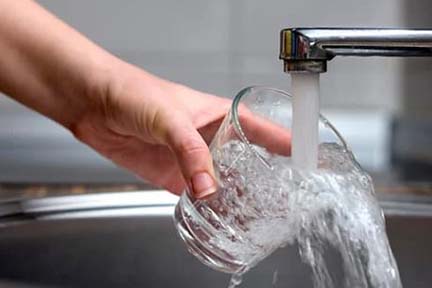
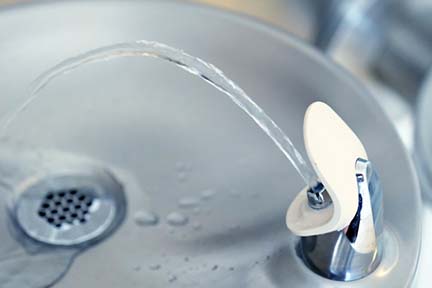
EGLE rolls out Filter First program targeting clean drinking water in schools

The Michigan Department of Environment, Great Lakes, and Energy (EGLE) today announced plans to implement new protections against lead in school drinking water under the Filter First legislation passed by the state legislature and signed by Governor Gretchen Whitmer last October.

Building on the success of Michigan’s strictest-in-the-nation Lead and Copper Rule aimed at eliminating lead in public water supplies, the bipartisan legislation directs $50 million in funding and other resources to support the installation of lead-reducing water stations at schools and child care centers throughout the state.

Collectively known as Filter First, the Clean Drinking Water Access Act (2023 PA 154) and amendments to the Child Care Organizations Act (1973 PA 116) create the first-of-its-kind legislation specifically designed to protect children from exposure to lead in drinking water in schools and child care centers. The Centers for Disease Control and Prevention states that no safe blood lead level has been identified in children. To promote a child’s healthy development, all exposure to lead should be prevented.

“Every parent wants to make sure their children are safe, and the Filter First bills will protect access to clean drinking water at school,” said Governor Whitmer. “In Michigan, we know how important it is to protect our kids at school. With Filter First, we are taking action so all our kids have access to safe drinking water so they can focus on learning in class. We have also delivered free breakfast and lunch, invested in mental health, and improved school safety. To protect access to safe drinking water across Michigan, we worked together to enforce the strongest lead and copper rule in the country, made record, bipartisan investments to fix our water infrastructure, and helped communities replace thousands of lead service lines.”

Under the new state legislation, schools must develop a drinking water management plan (DWMP), install lead-reducing filters on all drinking water fixtures, and test filtered water annually. Child care centers must follow the same protocols and test their water every two years.

Funding administered by EGLE will be available for the one-time acquisition and installation of filtered bottle filling stations, water coolers, point of use faucet filters, and certain maintenance and sampling costs until the is funding exhausted.

EGLE is working with the Michigan Department of Lifelong Education, Advancement, and Potential (MiLEAP) to provide schools and child care centers with a DWMP template and guidance on filters by April of 2024. This will give schools the necessary time to implement the program before the Filter First legislation goes into effect. Schools and child care centers are expected to complete DWMPs by Jan. 24, 2025, and have approved filters on all drinking water sources by the end of the 2025-2026 school year.

EGLE this week launched the Filter First web page containing more information about the program for school and child care administrators. EGLE and MiLEAP are also planning to host a training webinar on Filter First April 10, 2024, and will post guidance documents and a DWMP template for a 30-day public comment period by April 24, 2024.

The Filter First initiative builds on EGLE’s ongoing commitment to ensuring that children have access to healthy water. Although water entering schools and child care facilities is required to meet the same federal and state drinking water quality standards as homes, intermittent water use patterns can create more challenges due to water stagnation that could allow contaminants such as bacteria, lead, and copper to get into the water. The EGLE School Drinking Water Program was created to provide guidance and tools for all school and child care facilities regarding communication, free plumbing assessments, water management plans, sampling plans, sample collection, interpretation of results, risk reduction actions, and water moving programs for school personnel.

Additional information about Michigan’s strictest-in-the-nation lead testing requirements and strategies to reduce lead exposures in the home can be found on the state’s Mi Lead Safe web site.

Invasive plants, boating hygiene and K-12 learning

Invasive plants, boating hygiene and K-12 learning

 
Michigan Invasive Species Program banner

News Release

Feb. 1, 2024

Contact: Joanne Foreman, 517-284-5814

Invasive plants, boating hygiene and K-12 learning: NotMISpecies webinars feature recent grant projects

From now until summer, the NotMISpecies webinar series is devoting (most of) its time to showcasing the results of important work by Michigan Invasive Species Grant Program grantees. Projects include outreach in classrooms and by the boating industry and new research on controlling European frog-bit and invasive knotweeds.

The series also features an update on efforts to control invasive hydrilla, detected for the first time in Michigan in 2023.

Since 2014, the program – a joint effort of the Michigan departments of Natural Resources; Environment, Great Lakes, and Energy; and Agriculture and Rural Development – has awarded at least $3.6 million per year to prevent, detect, eradicate and control terrestrial and aquatic invasive species.

Grants support regional and statewide outreach, survey and control efforts and research to improve detection and management of new and established invasive species.

Frog-bit findings

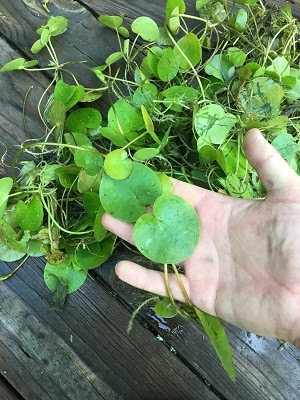
A hand lifts two leaves of the European frog-bit plantEuropean frog-bit was first detected in southeast Michigan in 1996 and has since spread along the coastal areas of lakes Erie, Huron and Michigan and to some inland lakes. Kevin Kapuscinski, associate professor and assistant director of research at Lake Superior State University’s Center for Freshwater Research and Education, has been studying the aquatic invasive plant and its effects on native ecosystems and water quality since 2019.
In “What’s the Damage? Ecology and Effects of Invasive European Frog-bit in the St. Marys River” (9 a.m. Wednesday, Feb. 7), he will share what’s been learned about plant reproduction, removal efforts and impacts based on research in the St. Marys River in the Upper Peninsula.

Industry initiative

After trailering boats, and before getting on the road, Michigan boaters are required to pull plugs, drain water and remove plants and debris, but many have been slow to comply with the 2019 law. In 2021, the Michigan Boating Industries Association got on board with state efforts to help boaters understand their role in stopping the spread of aquatic invasive species. With help from the Michigan Invasive Species Grant Program, MBIA launched its Boaters Prevent AIS initiative.

Join MBIA’s Amanda Wendecker for “I Wash My Bottom, Do You? Engaging the Boating Industry in AIS Prevention” (9 a.m. Thursday, March 21) to learn how an industry push, along with an eye-catching campaign, has helped engage thousands of boaters across the state.

New knotweed knowledge

Invasive knotweeds are a growing problem throughout Michigan. In the Upper Peninsula, a collaborative effort is underway to find the best methods for detecting and managing these aggressive plants.

In “Untangling the Knot: Identifying Effective Detection and Treatment Regimens for Invasive Knotweeds” (9 a.m. Thursday, April 11) Dorthea Vander Bilt of Michigan Tech Research Institute at Michigan Technological University, Sigrid Resh of the Keweenaw Invasive Species Management Area and MTU, and Matt Watkeys of Alger Conservation District will share the results of their recent research. The team studied various chemical, manual and integrated control methods on Japanese, Bohemian and giant knotweed species and employed remote sensing to detect and prioritize knotweed populations across the landscape.

Halting hydrilla

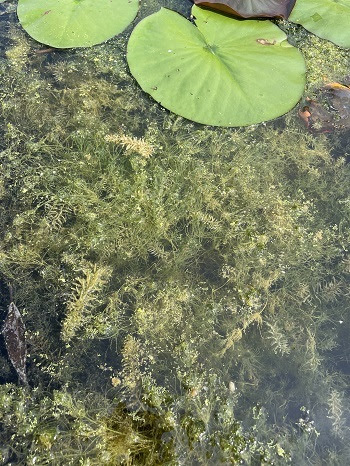
Aquatic weeds tangled at the water's surface, including some long, spiked hydrilla plants.The mythic Hydra was a water serpent that sprouted two heads for every one cut off. In a similar fashion, hydrilla – said to be the most invasive aquatic plant in the world – can grow new plants from stem fragments, making it a formidable challenge to control.
That challenge now faces Michigan, where hydrilla was recently detected for the first time. In “A Herculean Task: Containing the First Hydrilla Infestation in Michigan” (9 a.m. Tuesday, May 21), Billy Keiper from EGLE Water Resources Division explains why hydrilla is such a threat, how the Michigan Invasive Species Program is working to eradicate it, and how you can help identify and report it.

Student stewardship

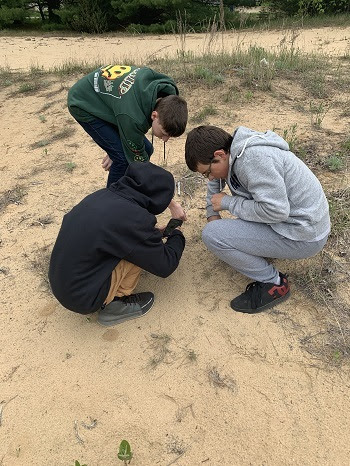
On a sandy shoreline, three young men kneel in a circle to examine a small patch of vegetation.If you’re looking for a successful model for infusing invasive species education into the classroom, Lake Superior State University’s Beth Christiansen has one. For the last three years, she’s been bringing together students, teachers, natural resource mentors and staff from LSSU’s Center for Freshwater Research and Education to conduct hands-on research into local invasive species issues.

In “Invading Classrooms: Empowering Students to Take Action on Invasive Species” (9 a.m. Tuesday, June 25) Christiansen will share the story of how collaboration has fostered local, student-led stewardship projects to raise awareness and inspire action in communities across northern Michigan.

How the webinars work

Monthly webinars from the Michigan Invasive Species Program provide an inside look at efforts across the state to prevent the introduction and spread of invasive plants, insects, animals and diseases.

Each hourlong session introduces experts with hands-on experience in invasive species research, management and prevention, who provide current information on threats to Michigan’s land and water. Question-and-answer sessions and links to resources help attendees get the most out of each presentation.

More grant projects

Additional NotMISpecies webinars focused on grant-funded projects, including biocontrol for invasive swallowworts and knotweeds, managing phragmites and hemlock woolly adelgid, and the work of Michigan’s 22 cooperative invasive species management areas, can be viewed by visiting the webinar’s archives on the NotMISpecies webpage.

Michigan’s Invasive Species Program, a collaborative effort of the Michigan departments of Natural Resources; Environment, Great Lakes, and Energy; and Agriculture and Rural Development, coordinates and supports invasive species initiatives across the state and provides support through the Michigan Invasive Species Grant Program.


/Note to editors: Accompanying photos are available below for download. Caption information follows.

EFB plant: European frog-bit, an invasive aquatic plant, is now widely distributed in shallow-water areas of Michigan’s eastern shoreline.

Hydrilla: Invasive hydrilla, visible here as the larger, spiked plants protruding from or just under the water, has been found in two private ponds in southwest Michigan.

Pellston survey: Students take part in a plant survey near their school in Pellston, Michigan./

DNR Logo 24 bit PNGDept of Environment, Great Lakes and Energy logo