‘Michigan Crafted’ Campaign Promotes Craft Beverage Industry
|
|||

|

|
|||
|
 |
| For immediate release: June 11, 2025
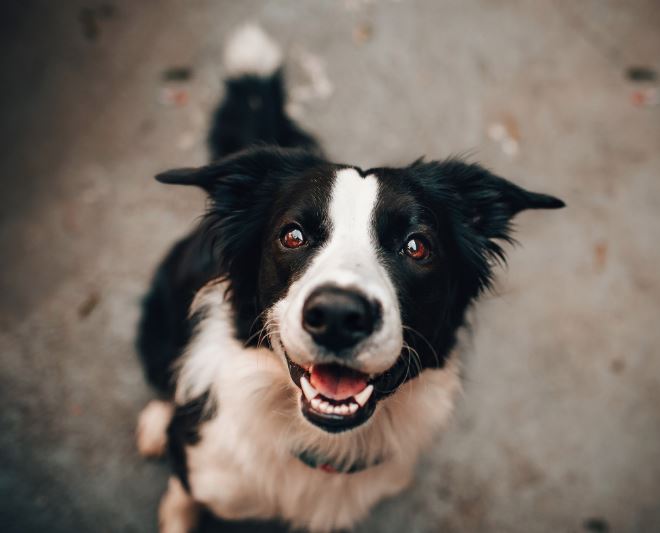
Media contact: Lynsey Mukomel, 517-290-1734 MDARD Offers Summer Safety Tips to Help Owners Keep Their Animals Happy and HealthyMake this summer paws-itively excellent for your pets and livestock by following a few easy tips LANSING, Mich. — As Michiganders begin to enjoy the warmth of the summer season, the Michigan Department of Agriculture and Rural Development (MDARD) is sharing some of the best ways to keep animals healthy and safe. “With the warm weather, more opportunities arise for travel, gatherings and outdoor activities. As we make these plans, it is important not to overlook the needs of our animals,” said State Veterinarian Dr. Nora Wineland, DVM, MS, DACVPM. “From ensuring they have proper identification and are fully vaccinated to making sure they are cool and comfortable, there are many precautions owners can take to keep their animals safe throughout the summer.” Keep animals safe this summer by following these seven easy tips:
Be sure your animals have all the documentation, vaccinations, tests and treatments they need to reach their destination. Vaccinations are central to animals’ preventative care as the vaccines can protect them against common diseases, such as rabies, leptospirosis and distemper. Talk to your veterinarian to ensure your animals have everything they need to be ready to go! More information can also be found on MDARD’s Animal ID and Movement page and the U.S. Department of Agriculture’s Pet Travel website.
Just like people, animals can quickly get parched in hot temperatures. No matter the species, animals should have access to an abundant supply of cool, clean, fresh water to prevent dehydration.
While it may be tempting to toss your animals a few crispy nuggets from the grill, they cannot enjoy all the same foods and treats as we do. Salty, fatty, and/or highly seasoned foods (like chips, nuts and meat fat) can cause digestive upset. Also, chocolate, grapes/raisins, onions and xylitol (an artificial sweetener found in many candies and gum) can be poisonous to animals; and bones can cause injury and illness.
An animal’s age, breed, type of coat, and health history can all play a role in their ability to tolerate the heat. Keep an eye on them for signs of heat stress—like increased panting or drooling and being more lethargic. If they are showing these signs, it is time to immediately move them to a cooler area.
HABs form due to a rapid growth of cyanobacteria, also called blue-green algae, which are naturally found in lakes, rivers and ponds. To prevent illness in animals, keep them out of areas with scums or discolored water, rinse them off after contact with any lake water, and bring clean, fresh water for them to drink. If an animal becomes sick after contact with a suspected HAB, call your veterinarian right away. Also, animal illness due to HABs is reportable to MDARD. To report cases, submit a Reportable Disease Form or call 800-292-3939. To report any suspicious looking algae, email algaebloom@michigan.gov.
With all the fun outdoor activities, it can be easy for animals to sneak away and become lost. Make sure they have identification tags and/or microchips that are up to date with your current contact information, ensuring a better chance they can be returned home.
Any animal, domestic or wild, has the potential to carry disease. Even if an animal looks healthy, it could still be ill and pass unwanted germs to your animals. Protect your animals by keeping them away from any unfamiliar creatures. These tips can help keep your animals safe and healthy throughout the summer. If there are any concerns about your animals’ health now or throughout the year, please talk to your veterinarian. |
|
|
| For immediate release: May 22, 2025
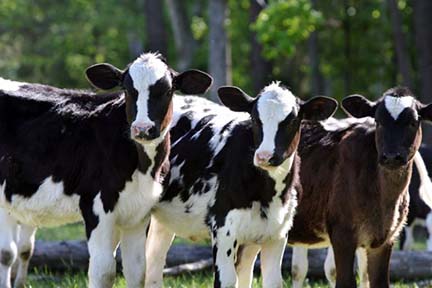
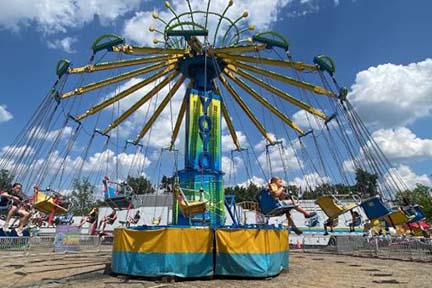
Media contact: Lynsey Mukomel, 517-290-1734 MDARD Awards Nearly $1.6 Million of Grant Funding to County Fairs and ExpositionsGrants will support infrastructure and safety improvements, shows and exposLANSING, Mich. – The Michigan Department of Agriculture and Rural Development (MDARD) today awarded 29 grants worth nearly $1.6 million to fund capital improvements at county fairground facilities and to support expositions featuring livestock and commodities. “MDARD is proud to support county fairs as indispensable forums for agricultural education, local commerce and civic engagement,” said MDARD Director Tim Boring. “Today’s grants will help build infrastructure and programs that connect Michiganders to the food they eat and to our state’s rich agricultural heritage.” Following a rigorous application and review process, MDARD awarded County Fairs Capital Improvement Grants to the following 22 entities:
MDARD also awarded Livestock and Commodity Exposition Competitive Grants to the following seven entities:
Since Fiscal Year 2019, MDARD has awarded more than $5.3 million in County Fairs Capital Improvement Grants. The grants were part of more than $184 million of funding MDARD delivered over the past seven years to help Michigan communities build infrastructure, promote agricultural development and create jobs. MDARD’s County Fairs Capital Improvement Grants help fund safety and infrastructure enhancements at county fairground facilities, including structural improvements and other building renovations. To be eligible for these grants, prospective applicants must:
MDARD’s Livestock and Commodity Exposition Competitive Grants provide financial support in the form of premiums or promotional activities to non-profit fairs, expositions and events that promote livestock and commodities. To be eligible for these grants, events must meet the required number of exhibitors. Michigan’s 86 county fairs attract an estimated 4.5 million attendees annually. In addition to providing grant support, MDARD helps ensure the safety and success of county fairs by licensing and inspecting food vendors, performing animal health inspections and delivering educational programming. ### |
|
| For immediate release: May 15, 2025
Media contact: Lynsey Mukomel, 517-290-1734
MDARD Advises Consumers and Michigan Food Industry of Potentially Harmful, Unapproved Ingredients in Some Food Products
LANSING, Mich. – The Michigan Department of Agriculture and Rural Development (MDARD) reminds consumers to check product labels for unapproved ingredients amid a rise in the availability of foods and dietary supplements containing potentially harmful psychotropic or psychoactive substances. “Psychoactive or psychotropic substances, when added to foods or dietary supplements and consumed, can affect mental processes like perception, consciousness, cognition or mood and emotions and are not legal to use as food ingredients,” said Tim Slawinski, MDARD Bureau of Food Safety and Animal Health director. “Many food products claiming to contain these and similar ingredients may be inaccurately labeled and could produce unexpected or potentially harmful side effects.” Unapproved ingredients include psychotropic and/or psychoactive mushrooms like psylocibin and A. muscaria, cannabis-based ingredients, non-noble forms of kava, kratom and other potentially harmful ingredients. Potential side effects of consuming these types of unapproved ingredients could include liver toxicity, seizures, elevated blood pressure and heart rates, reduction in motor skills and hallucinations. Foods containing these ingredients are considered adulterated according to the Michigan Food Law and the federal Food, Drug and Cosmetic Act (Sec 402(f)(1)(B)). Dietary supplements are defined as food under the Michigan Food Law. Many consumable products containing these unapproved ingredients have entered the market in recent years. However, these products are unlawful and cannot be legally sold or produced in Michigan or cross state lines. These ingredients have not satisfied the criteria necessary for being listed on the generally recognized as safety (GRAS) list for use. Consumable products containing any form of these unapproved ingredients are suspected of adulteration and therefore are not allowed in the manufacturing, holding, distribution or sale of food in Michigan. Outside of the marijuana regulations, any substance that will be added to food, drink or animal feed (including dietary supplements) must first be approved by the U.S. Food and Drug Administration (FDA) for that intended use. There is no legal path for manufacturing, selling or holding food products containing other psychoactive or psychotropic food additives in Michigan. If you have questions, please contact the MDARD Human Food Division at MDA-info@michigan.gov. |

|
| For immediate release: April 30, 2025
Media contact: Lynsey Mukomel, 517-290-1734 MDARD Helps Keep Tulip Time BloomingPre-Festival Inspections Root Out Invasive Pests and Plant Diseases LANSING, Mich. – Inspectors at the Michigan Department of Agriculture and Rural Development (MDARD) and their partners at the City of Holland have been working tirelessly to ensure a pleasant and pest-free Tulip Time. Each spring, hundreds of thousands of visitors descend on Holland to admire stunning floral displays throughout the city’s parks and gardens. MDARD plays a crucial behind-the-scenes role to ensure the health and safety of tulip bulbs before they’re planted — and to protect Michiganders and the natural resources we cherish. “MDARD and the City of Holland have been working quietly and efficiently to ensure a safe and successful Tulip Time,” said MDARD Director Tim Boring. “Verifying that imported tulip bulbs are free of plant pests and diseases is just one example of MDARD working behind the scenes to benefit Michiganders. We’re proud to help sustain this great state tradition for generations to come.” Preparations for Tulip Time begin months in advance. In early September, shipments of bulbs sourced from the Netherlands begin their journey to Michigan. After the bulbs arrive at port in Pennsylvania, they are transported overnight to Holland. At that point, MDARD steps in to ensure the tulips are disease and pest-free. “We want to ensure that the tulip bulbs visitors take home after the festival are healthy and pest-free,” said MDARD Plant Health Inspector Thomas Jepsen, Jr. “MDARD inspections help prevent the spread of harmful pests and plant diseases – protecting not just public displays, but also home landscapes and gardens.” MDARD inspectors conduct a thorough visual inspection of the imported tulip bulbs, looking for signs of rot, soft spots, mites and fungal infections. If the inspectors detect any health, safety, or environmental concerns, they restrict the planting of those bulbs or require treatment before planting proceeds. “We’re planting 648,000 tulips this year, all by hand,” said Jamie Scott, Deputy Director of Parks and Cemeteries at the City of Holland. “The fact that MDARD could come in and inspect our tulips and make sure we’re providing a product that is not detrimental to the environment is incredible.” Whether planting a few bulbs in a home garden or hundreds of thousands of bulbs in a major display, maintaining pest-free green spaces is essential to ecological health and the integrity of the food system. MDARD performs inspections for a variety of plants shipped to nurseries and greenhouses across the state, working directly with the horticulture industry to protect against the serious economic and environmental threats posed by invasive species and plant diseases. Watch MDARD inspectors and City of Holland personnel prep for Tulip Time. Learn more about the Tulip Time Festival, which will take place from May 2 – May 11. Read about MDARD’s Plant Health Program. |