Attorney Launches Operation Robocall Roundup

Attorney Launches Operation Robocall Roundup

Michigan Department of Attorney General Press Release banner

FOR IMMEDIATE RELEASE:
August 7, 2025

Media Contact:
Danny Wimmer

Attorney General Nessel Launches Operation Robocall Roundup, Issues Warning Letters to 37 Telecom Companies

LANSING – Today, Michigan Attorney General Dana Nessel launched Operation Robocall Roundup, a multistate effort by the Anti-Robocall Litigation Task Force to crack down on robocalls across the country. As part of the initiative, Attorney General Nessel and 50 bipartisan attorneys general are sending warning letters to 37 voice providers demanding that they act now to stop illegal robocalls being routed through their networks.

“Operation Robocall Roundup will help ensure voice service providers do their part to stop illegal robocalls,” Nessel said. “I look forward to continuing to work with the Anti-Robocall Litigation Task Force to protect people from these persistent and intrusive calls.”

These providers haven’t complied with Federal Communications Commission (FCC) rules about responding to government traceback requests, haven’t registered in the FCC’s Robocall Mitigation Databases, or haven’t filed a plan that describes how they will reduce illegal robocalls on their network. By disregarding these simple rules, these companies are allowing robocallers onto their phone networks and then passing their calls on to other downstream providers until they reach the phones of Michigan residents.

The task force is also sending the letters to more than 100 downstream providers that accept call traffic from the 37 companies, so that they know they’re doing business with bad actors that are not willing to follow the rules that apply to everyone equally.

The FCC is also taking a close look at several of these companies. It announced yesterday that it will be removing seven of these providers from the Robocall Mitigation Database, which means that other providers will no longer be allowed to accept and route any calls from their networks.

The voice service providers receiving warning letters are:

  • Advantage Investors LLC
  • Alpha Stream
  • Ananya Traders LLC
  • Ariyan Khan
  • BBT Voice Private Limited
  • Belthrough
  • BPO VoIP
  • Collection 3 LLC
  • Communications and Telephone Systems Co.
  • Dial Vista Corp.
  • DigitalOcean, LLC
  • Dtel Network LLC
  • End Zone Financial Services
  • EON Telecom Inc.
  • Family Communication Inc.
  • Fiber Flux VOIP
  • First Tele Communications Inc.
  • Flow VOIP LLC
  • Globe Tech Solutions
  • Higher Response Marketing, Inc.
  • HK KwaiFong Group Limited
  • Infinity SIP LLC
  • Lexico Telecom LTD / Lextel LTD
  • Mexico IP Phones LLC
  • Nexusphere VOIP LLC
  • Pleedex LLC
  • Quantum Link VOIP LLC
  • Ringnition
  • SK Teleco LLC
  • SkyPulse VOIP
  • Stacy Newsome LNCC LCC
  • Telnextrix LLC
  • Terra Voip
  • TheVisionConnect
  • Tiera Enterprises LLC
  • Voip Torque
  • Whisl Telecom, LLC / Telconus / Telcon US / Telcon Voice

In 2022, 51 attorneys general joined forces to create the Anti-Robocall Litigation Task Force. The Task Force investigates and takes legal action against companies responsible for significant volumes of illegal and fraudulent robocall traffic routed into and across the United States.

Are we talking enough about crumbling bridges?

Are we talking enough about crumbling bridges?

 
MDOT header (SOM branding)Talking Michigan Transportation (TMT) banner with the Mackinac Bridge.

Are we talking enough about crumbling bridges?

On this week’s edition of the Talking Michigan Transportation podcast, a conversation with the state’s chief bridge engineer about the dire forecast for bridges without additional funding.

Preconstruction I-96 and Grand River Avenue bridge in Brighton.Beckie Curtis, director of the Bureau of Bridges and Structures at the Michigan Department of Transportation (MDOT), explains the stark reality.

Becky Curtis

  • Bridges must maintain a minimum condition to keep the transportation system open.
  • Bridges are expensive investments in the highway network.
  • Bridges are long-lived assets, and many bridges on the trunkline system were built in a short window of time as part of the interstate and other freeway systems.
  • Because of these factors, combined with historic underfunding, widespread bridge closures can be expected in the next 10-20 years unless funding is increased.

Listen now at https://www.buzzsprout.com/1374205.

Stay connected by subscribing to Talking Michigan Transportation e-mail updates. 

August at the NOCC

August at the NOCC

Hello and happy August! 

In the newsletter below, we will cover:

  • Our August Board Member Spotlight
  • Information about our Youth Action Board
  • Details of our Lockbox Pickup dates and location
  • Insights on the benefits of limiting screen time
Tonya Potts, Board MemberPlease share a bit about your family: 
My family is a fun crew including my husband, Trevor, and our two middle school boys. We live in Leonard and the boys attend Oxford schools where my husband is a teacher and coach. We adore our community and are grateful to raise up our kids here. Together, we love experiencing new places and spaces as well as traditions. We love baseball season and eat, sleep, and breathe football in the fall! They return the time by supporting my dance recitals every year (yes, I still dance!).
What is your profession?
I am a Physical Therapist.
How long have you been on the NOCC board?
About 8 months.
Why did you want to become involved with the NOCC?
I was impressed by the thoughtful way NOCC engages with the community. I knew it would be a great place and opportunity to share goodness and support our kids and families.
What is your favorite NOCC program? 
Level Up Camp! My own kiddo was able to participate this summer. Such an amazing way to shake off the big transition between elementary and middle school and start having important and thoughtful conversations with our youth.
What is your favorite thing to do in the Lake Orion/Oxford area?
We are so blessed to be surrounded by so many great places, spaces, organizations, and events in our area. My favorite thing about Orion/Oxford is the combined events where the community comes out to shop, stroll, and celebrate, catching a Trolley ride between communities. Always a good time!
This summer, the Lake Orion and Oxford YAB groups got together to enjoy some ice cream and quality time!

Do you have a current or rising high schooler who’s interested in mental health, volunteering, or working to make their community a healthier place? The Youth Action Board might be right for them!

Throughout the school year, YAB members work together to create school-wide initiatives to promote a mentally healthy, substance-free environment. Members will meet new friends with common goals and help to plan super fun school activities!

If your student is interested in joining Youth Action Board, or just interested in learning more about us, we will have a table at both Oxford and Lake Orion registration in August! Stop by for more information.

The best way to stay up-to-date with the Youth Action Board is to follow us on Instagram! To follow the Lake Orion Page, please click here. To follow the Oxford Page, please click here.

Save the date!

It is important to be intentional about safe marijuana storage. From 5PM to 7PM on Thursday, August 14th, the NOCC will be distributing FREE marijuana/prescription medication lockboxes to interested Oxford residents at:

Oxford Fire Department, 96 N Washington St. Oxford, MI 48371.  

This will be a drive-through event, and it will not be necessary to provide your name to receive a lockbox.

It is illegal to provide marijuana to anyone under the age of 21. Locking marijuana up helps reduce the risk of both youth and pet access. Protect it, protect them!

For more information, please visit: noccmi.org

“Experience, not information, is the key to emotional development.” -Jonathan Haidt, The Anxious Generation 

In today’s digital world, phones are a big part of how we express ourselves, as well as connect and communicate with others. For our young members of our community, technology isn’t only a big part of their world—it can easily become most of it. A healthy balance of phone usage, allowing time for real-life experiences and in-person connections, promotes mental health, better sleep, and academic performance.

Reducing screen time, especially social media, has been linked to lower levels of depression and anxiety. It can also help create opportunities for creativity, physical activity, and meaningful offline relationships. When students are feeling their best mentally, they are also better equipped to reach their goals academically. With fewer digital distractions, students are more likely to stay focused, engage in learning, and have positive interactions with peers and teachers.

A new school year is a great chance to create healthy boundaries and habits surrounding phone usage. Small shifts such as limiting screen time can go a long way in promoting the health and well-being of our youth, inside and outside of the classroom!

Statements regarding mental health and screen time reduction supported by:

-CDC National Center for Health Statistics Data Report Daily Screen Time Among Teenagers: United States, July 2021 – December 2023 Section 4
https://www.cdc.gov/nchs/products/databriefs/db513.htm#section_4

-National Library of Medicine NCBI
https://pmc.ncbi.nlm.nih.gov/articles/PMC7012622/

-Visit www.nocc.org/mental-wellness for more information about mental health and preventative care.

Instagram
Facebook
Website
Copyright © 2025 North Oakland Community Coalition, All rights reserved.
You are receiving this email because you opted in via our website.

Our mailing address is:

North Oakland Community Coalition

455 E. Scripps Rd.
Room 404

Lake Orion, MI 48360

Add us to your address book

Heads up! Time took for sings of Asian longhorned beetle

Heads up! Time took for sings of Asian longhorned beetle

Michigan Invasive Species Program banner

News Release

August 7, 2025
Contact: Cheryl Nelson, 231-284-1714, or Joanne Foreman, 517-284-5814

Heads up! It’s time to look for signs of the invasive Asian longhorned beetle.

August is Tree Check Month

Michigan’s Invasive Species Program is joining with the U.S. Department of Agriculture’s Animal and Plant Health Inspection Service in asking the public to look for and report signs of the invasive Asian longhorned beetle.

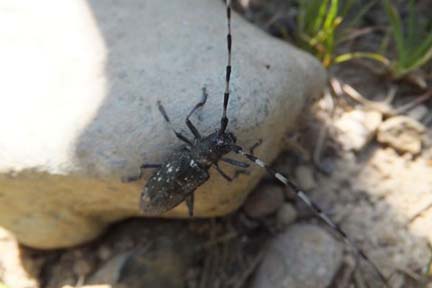
An adult Asian longhorned beetle clinging to the end of a twig.Each year, APHIS declares August as Tree Check Month because this is the most likely time to see the beetle and the damage it causes to trees. Everyone can help look for signs of this destructive beetle by checking trees on their property and in their community for damage.

The Asian longhorned beetle, or ALB for short, is a non-native, wood-boring beetle considered invasive in North America because it attacks at least 12 types of hardwood trees, including maples, elms, horse chestnuts, birches and willows. There are no predators or diseases in North America to keep ALB populations in check.

In its larval stage, the insect feeds inside tree trunks and branches during the colder months. The beetle creates tunnels as it feeds, and then it chews its way out as an adult in the warmer months, creating large, round exit holes approximately 3/8 to 1/2-inch in size.

Why be concerned?

Infested trees do not recover and eventually die. They also can become safety hazards since branches can drop and trees can fall, especially during storms.

Isolated infestations in several states have caused the removal of thousands of trees in neighborhoods, parks and natural areas.

Although ALB has not yet been discovered in Michigan, it is crucial to look for any potential signs of its presence. Discovering early signs of infestation can prevent widespread damage to the state’s forest resources, urban landscapes and maple syrup production.

Look for signs

Asian longhorned beetle with descriptive notes.The adult beetle has markings that are easy to recognize:

  • A shiny, black body with white spots. Its body is about 1 to 1.5 inches long.
  • Black and white antennae that are longer than its body.
  • Six legs with feet that can appear bluish.

Signs that a tree might be infested include:

  • Round exit holes about the diameter of a pencil found in tree trunks and branches.
  • Shallow, oval or round scars in the bark, where the adult beetle chewed an egg-laying site.
  • Material that looks like wood shavings lying on the ground around the tree or in the branches.
  • Dead branches or limbs falling from an otherwise healthy-looking tree.

Be aware of look-alikes

Several beetles and bugs native to Michigan often are mistaken for the Asian longhorned beetle, but there are differences to be aware of:

  • The white-spotted pine sawyer has a distinctive white spot below the base of its head – between its wings – and is dull black to bronze in color.
  • The brown prionid is a common native longhorned beetle distinguished by its overall brown color and lack of patterns on its wings or antennae.
  • The cottonwood borer is about the same size as the Asian longhorned beetle and is also black and white, but has a pattern of single, broad black stripes down each wing, and its antennae are all dark.
  • The northeastern pine sawyer reaches up to 2 inches in length, has very long antennae and is gray in color.
  • The eastern eyed click beetle has distinctive eye circles on the back of its head. It rolls over when threatened, then clicks and makes a flipping movement to get back on its feet.

Report signs of ALB

If you think you found a beetle or tree damage, report it by calling the ALB hotline at 1-866-702-9938. Or submit an online report through the ALB web page. Try to photograph the beetle or tree damage. If you can, capture the beetle in a durable container and freeze it. This helps preserve the insect for identification.

Don’t move firewood

An Asian longhorned beetle on a tree trunk with wood shavings, or frass, at the base of the tree.ALB doesn’t move far on its own, but it can and has hitchhiked to new areas in untreated firewood. When traveling, leave firewood at home and purchase what you need locally or choose certified, heat-treated firewood to help prevent this destructive pest from showing up at your favorite places.

For more information about ALB, call the USDA at 1-866-702-9938 or visit APHIS.USDA.gov/Plant-Pests-Diseases/ALB.


Note to editors: Accompanying photos are available below for download. Caption information follows.

ALB on twig: In August, the Asian longhorned beetle emerges from trees to feed on leaves and bark before mating, laying eggs and starting another generation of tree-killing beetles. Photo courtesy of the ALB Eradication Program.

Identification: The Asian longhorned beetle is a large, shiny black beetle with irregular white spots and black and white, banded antennae. Photo courtesy of USDA APHIS PPQ.

Adult and frass: Material resembling wood shavings at the base of a tree or tree branches is a sign of Asian longhorned beetle infestation. Photo courtesy of the ALB Eradication Program.

WSPS: The white-spotted pine sawyer is native to Michigan and often mistaken for the Asian longhorned beetle. Look for a white spot between the upper wings to identify this pine sawyer. Photo courtesy of William M. Ciesla, Forest Health Management International, Bugwood.org.

Prionid: The brown prionid is a native longhorned beetle that’s all brown with no distinctive marks on its wings or antennae. Photo courtesy of the Kansas Department of Agriculture, Bugwood.org.

Cottonwood: The cottonwood borer’s antennae are all black. Photo courtesy of Gerald J. Lenhard, Louisiana State University, Bugwood.org.

NEPS: The northeastern pine sawyer is a large beetle reaching 2 inches in length. Its body is primarily gray with white and black spots. Photo courtesy of Jim Brighton.

Eyed beetle: The eastern eyed click beetle is distinguished by large circles on the back of its head. Photo courtesy of iNaturalist.

DNR Logo 24 bit PNGDept of Environment, Great Lakes and Energy logoMDARD Logo
Apply for $100,000 tree planting grant program

Apply for $100,000 tree planting grant program

 
DNR banner with link to website

DNR News

Aug. 5, 2025
Contacts: Kerry Gray (DNR), 734-691-1806; Kayla Collins (DTE Energy Foundation) 313-235-5555; or Melinda Jones (ReLeaf Michigan)

Help your community go green: Apply for Michigan’s $100,000 tree planting grant program

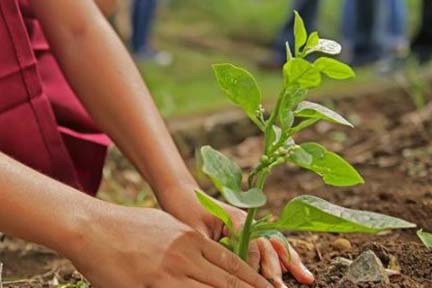
Potted trees are ready to be plantedThe Michigan Department of Natural Resources, in partnership with the DTE Foundation and ReLeaf Michigan, is offering $100,000 in grant funding through the DTE Foundation Tree Planting Grant Program. This initiative supports community tree planting efforts across Michigan.

The DNR is now accepting applications for the 2025-26 grant cycle. The program provides financial assistance to communities served by DTE Energy’s electric and natural gas services. Grants are available to support projects that plant trees away from utility lines along streets, in parks and near schools – all of which can help to mitigate climate change, enhance local beauty and engage residents in environmental stewardship.

Since 1996, this grant program has been a joint effort between the DTE Foundation and the DNR’s Urban and Community Forestry program to improve communities and the environment through tree planting. ReLeaf Michigan, the only statewide nonprofit dedicated to tree planting and homeowner education, was added to the program to provide technical support to grantees and help ensure successful and sustainable tree planting efforts.

“At the DTE Foundation, we believe that real change takes root when communities come together,” said Rodney Cole, the foundation’s president. “Tree planting is more than an environmental initiative; it’s a way to bring neighbors together, strengthen local pride and create healthier, more vibrant places to live.

“We’re proud to support this work alongside dedicated partners like the Michigan Department of Natural Resources and ReLeaf Michigan, whose efforts continue to strengthen our communities and protect the environment for future generations.”

Application info

Applicants can request up to $4,000 with a 1-to-1 matching requirement. Additionally:

  • Applications must be submitted through DNR MiGrants by Sept. 15.
  • Grant awards will be announced in October 2025.
  • Projects must be completed by Sept. 1, 2026.

Learn more and apply for a tree planting grant at Michigan.gov/UCF.

About the DTE Energy Foundation

The DTE Energy Foundation is the philanthropic arm of DTE Energy with a strong legacy of community support and involvement. In 2024, the Foundation provided $14.5 million in grant support to 375 nonprofit organizations in communities where the company has a business presence, with a focus on driving positive, meaningful change in priority giving areas: arts and culture, community transformation, economic progress, education and employment, environment and human needs. As one of Michigan’s leading corporate citizens, DTE aspires to be the best in the world and the best for the world. Visit DTEFoundation.com to learn more.