by orionontv | Nov 20, 2025 | Uncategorized
|
|
 |
News Release
|
|
Nov. 20, 2025
Contact Cheryl Nelson, 231-287-1714, or Joanne Foreman, 517-284-5814
Invasive pest now confirmed in 11 Michigan counties
The Michigan departments of Natural Resources and Agriculture and Rural Development encourage those who have eastern hemlock trees on their property to take time this winter to inspect the trees for signs of hemlock woolly adelgid – tiny, soft-bodied insects that consume the trees’ stored nutrients, slowly sucking the life from the trees.
 Anyone taking to the woods also can help by looking for signs of this invasive insect while hunting, hiking or enjoying other outdoor activities. Anyone taking to the woods also can help by looking for signs of this invasive insect while hunting, hiking or enjoying other outdoor activities.
Winter is the best time to look for evidence of an infestation, according to Robert Miller, MDARD’s invasive species prevention and response specialist.
“Cooler temperatures trigger feeding activity,” Miller said. “As the hemlock woolly adelgid feeds, it secretes a white, waxy material that creates ovisacs. The presence of these small, round, white masses makes it possible to identify infested trees.”
These insects are considered invasive because they are not native to the state and can cause significant harm to Michigan’s estimated 170 million hemlock trees.
Infestations of hemlock woolly adelgid have been confirmed in Allegan, Antrim, Benzie, Leelanau, Manistee, Mason, Muskegon, Oceana, Ottawa, Van Buren and Washtenaw counties. |
Winter surveys underway
 Throughout the winter, survey crews from the DNR and multiple cooperative invasive species management areas, or CISMAs, will look for signs of hemlock woolly adelgids. Crews will focus their efforts along the northern edge of the infestation, conducting surveys within a 5-mile border along the Lake Michigan shoreline. Throughout the winter, survey crews from the DNR and multiple cooperative invasive species management areas, or CISMAs, will look for signs of hemlock woolly adelgids. Crews will focus their efforts along the northern edge of the infestation, conducting surveys within a 5-mile border along the Lake Michigan shoreline.
Because hemlock trees can be protected from these insects with proper insecticide treatments, infested trees and any other hemlocks within the area will be mapped and tagged, then prioritized for summer treatment.
If designated survey areas include private lands, CISMAs first will seek landowner permission. CISMA survey efforts are supported by funds from the Michigan Invasive Species Grant Program and the U.S. Forest Service and are provided at no cost to these landowners. |
Your help is needed
Though dozens of staff will assist in the surveys, they won’t be able to check every hemlock. If you have hemlocks on your property, whether it’s within or beyond the 5-mile shoreline border, take some time to look for signs of hemlock woolly adelgid.
Anyone spending time outdoors is encouraged to do the same. Remember to take precautions and wear hunter orange during hunting seasons.
In Michigan’s northern forests, hemlock trees are found in moist soils along streams and riverbanks and along coastal dunes. Hemlock also is popular as a landscape tree in parks and residential areas.
Identify hemlock trees
 Since these adelgids feed and form ovisacs only on eastern hemlock trees in Michigan, it is important to distinguish hemlocks from other conifers like pines or spruces. Look for: Since these adelgids feed and form ovisacs only on eastern hemlock trees in Michigan, it is important to distinguish hemlocks from other conifers like pines or spruces. Look for:
- Cone- or egg-shaped trees up to 75 feet tall.
- Drooping or feathery branches.
- Flat needles growing individually from the sides of twigs.
- Needles that are dark green on top with two parallel, white stripes underneath.
- Papery cones about three-quarters of an inch long that hang downward from branches.
|
Look for signs
Late fall through early spring is the best time to check hemlock trees. Look on the undersides of branches for evidence of round, white ovisacs near the base of the needles.
Up close, ovisacs look like tiny cotton balls and may appear alone or in clusters. The short video “Hemlock woolly adelgid: invasive species in Michigan” provides helpful identification tips.
Report your findings
Report infested hemlock trees by using the Midwest Invasive Species Information Network, available online at MISIN.MSU.edu or as a downloadable smartphone app. The MISIN smartphone app will take a GPS location point if a report is made at the site; it also will allow you to upload photos with a report.
Reports also can be made by email to MDA-Info@Michigan.gov or by phone to MDARD’s Customer Service Center at 800-292-3939.
Identify the location of infested trees and, whenever possible, take one or two pictures of infested branches to help confirm identification. To avoid spreading the insect, do not collect sample branches or twigs.
Manage your trees
 If you find hemlock woolly adelgid on your property, it is important to know that certain insecticides are effective in treating the infestation if used correctly. You can plan now for spring or summer treatment. If you find hemlock woolly adelgid on your property, it is important to know that certain insecticides are effective in treating the infestation if used correctly. You can plan now for spring or summer treatment.
Without treatment, infested trees will die within four to 10 years. A qualified arborist, such as one certified by the International Society of Arboriculture, can diagnose and assist with treating infested trees.
If you are able to handle treatment on your own, follow the guidance provided in the Michigan State University Extension bulletin “How to treat hemlock trees for hemlock woolly adelgid.”
Reporting infested trees, even if you will be managing them on your own, is important to help determine how far hemlock woolly adelgid has spread. This information also indicates where additional surveys may be needed. |
Find more information
For more information on identification, reporting or treatment, visit the Michigan Invasive Species Program’s hemlock woolly adelgid page at Michigan.gov/HWA.
Michigan’s Invasive Species Program is cooperatively implemented by the Department of Environment, Great Lakes, and Energy; the Department of Natural Resources; and the Department of Agriculture and Rural Development.
Note to editors: Accompanying photos are available below for download. Caption information follows.
- Infested branch: Round, white hemlock woolly adelgid ovisacs are found on the undersides of branches near the base of the needles.
- Tagging tree: A cooperative invasive species management area staff member tags an infested hemlock tree in a forest. Photo courtesy of West Michigan CISMA.
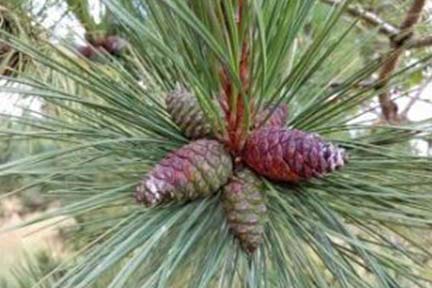
- Hemlock branch: Hemlock trees have small, papery cones and short needles that are dark green on top.
- Tree injection: A certified pesticide applicator prepares to inject an infested hemlock tree with pesticide. Photo courtesy of West Michigan CISMA.
|
   |
|

by orionontv | Nov 20, 2025 | Environmental
EGLE announces eight grants to protect or improve water quality
The Michigan Department of Environment, Great Lakes, and Energy (EGLE) announced today about $2.9 million in Nonpoint Source (NPS) Program grants. These funds will support eight projects that will prevent, reduce, or eliminate polluted runoff and other nonpoint sources of pollution – caused when rain, snowmelt, or wind carry pollutants from land into lakes, streams, or wetlands.
The purpose of these grants is to carry out locally developed watershed management priorities that EGLE has approved to help restore impaired waters and protect high-quality waters by reducing NPS sediments, nutrients, bacteria, and other contaminants. These Nonpoint Pollution Control grants are funded through the Renew Michigan Fund and Section 319 of the Federal Clean Water Act. The projects recommended for funding will:
- Address high levels of bacteria from human sources in the Thornapple River Watershed with outreach to homeowners, technical assistance, and funding for the repair and replacement of failing on-site septic systems.
- Replace an undersized railroad-stream crossing in the Grand Traverse Bay Watershed to restore proper stream dimensions and sediment transport mechanisms to improve stream health and natural stream function.
- Implement livestock best management practices in the Ottawa-Stony North and Munuscong River watersheds to address sources of sediment, nutrient, and E. coli impairments. Practices will include improvements to on-site manure management, restricting livestock access to surface water, and adding livestock stream crossings.
- Develop an Inland Waterway stewardship guide to educate residents and recreational users across six major waterbodies including Crooked, Pickerel, Burt, and Mullet lakes as well as Indian and Cheboygan rivers on best management practices for reducing nutrient runoff, managing invasive species, and protecting shorelines. The project will leverage resources from statewide initiatives to drive action and increase public awareness and stewardship.
- Protect approximately 300 acres in the Grand River Watershed and 552 acres in the Manistee River Watershed with water quality-based permanent conservation easements. Combined, these easements will prevent 33.6 tons of sediment, 542 pounds of nitrogen, and 112 pounds of phosphorus from entering Michigan waterways.
The following Michigan based organizations have been awarded funding:
- Legacy Land Conservancy, Ann Arbor: $377,038
- Washtenaw County Soil Conservation District, Ann Arbor: $383,484
- Southwest Michigan Land Conservancy, Galesburg: $239,216
- Barry Conservation District, Hastings: $339,462
- Tip of the Mitt Watershed Council, Petoskey: $45,356
- Chippewa Luce Mackinac Conservation District, Sault Ste. Marie: $500,000
- Grand Traverse Regional Land Conservancy, Traverse City: $415,673
- The Watershed Center Grand Traverse Bay, Traverse City: $614,993
A total of 17 applications requesting about $6.4 million were received in response to the request for proposals (RFP).
The grants are issued by EGLE’s NPS Program, which helps local stakeholders reduce pollution and excess runoff by supporting efforts to develop and launch watershed management plans.
The NPS Program typically issues an RFP each year for this funding source, with the next available opportunity to be released in January 2026. The RFP will be posted at Michigan.gov/NPS.
|
|

by orionontv | Nov 19, 2025 | Health and Wellness
Press Release
FOR IMMEDIATE RELEASE: Nov. 18, 2025
CONTACT: Lynn Sutfin, 517-241-2112, Sutfinl1@michigan.gov
MDHHS launches bidding process for Healthy Kids Dental contract
LANSING, Mich. – The Michigan Department of Health and Human Services (MDHHS) is announcing today that it has launched a competitive procurement for the Healthy Kids Dental contract.
Healthy Kids Dental is a dental benefit program for children with Medicaid and covers dental services such as X-rays, cleanings, fillings, extractions, sealants and more at no cost to families. The Healthy Kids Dental model functions similarly to commercial dental plans and serves approximately 955,000 Michigan children statewide.
“Through this rebid process, MDHHS seeks to provide improved quality and access for Michigan’s youth served by Healthy Kids Dental,” said MDHHS Director Elizabeth Hertel. “Dental care remains one of the most unmet health needs for children, particularly in low-income and rural areas. Oral health plays a critical role in overall health, and Michigan’s Healthy Kids Dental Program is vital to ensuring our children receive the care they need for a lifetime of smiles.”
Healthy Kids Dental will provide access to a robust network of dental professionals while promoting patient-centered best practices for enrolled children. This will result in children and their families having an increased understanding of the value of daily oral health care and preventive dental care to improve the likelihood of good oral health practices throughout the child’s life.
The Michigan Department of Technology, Management & Budget (DTMB) will manage the request for proposal (RFP) process on behalf of MDHHS. The RFP is posted on the state’s SIGMA Vendor-Self Service system online. Interested bidders are encouraged to refer to the proposal instructions for additional information regarding questions submittal and deadlines.
To bid on proposals, all vendors must first be registered with SIGMA Vendor Self-Service. Registration is free, and information on how to register and obtain an account to bid on open solicitations is available online: DTMB – How to Register as a Vendor.
Responses from bidders are due Monday, Jan. 12, 2026. Bidders are to submit any written questions regarding the RFP by Monday, Dec 1. MDHHS will post answers to bidder questions on the SIGMA system by Monday, Dec. 15.
New contracts are scheduled to begin Thursday, Oct. 1, 2026. For more information, visit the MDHHS Healthy Kids Rebid webpage.

by orionontv | Nov 19, 2025 | Regional News
|
FOR IMMEDIATE RELEASE:
November 19, 2026
|
|
AG Nessel’s Child Support Unit Secures More than $450 Million for Michigan Children
LANSING – Michigan Attorney General Dana Nessel is recognizing the significant achievements of the Child Support Unit of the Financial Crimes Division, which has been instrumental in identifying parents throughout the State who are capable of paying child support but deliberately refuse to do so. Since its establishment in 2003, the Child Support Unit has made significant strides in combating the problem of unpaid child support through its partnership with the Friend of the Court. The division has successfully collected more than $450 million in unpaid child support, directly benefitting nearly 31,000 children statewide. This fiscal year alone, the division has recovered $28.2 million.
“I am proud of the incredible work our Child Support Unit does to make sure Michigan children are properly supported,” Nessel said. “I also want to thank the Friend of the Court and the many county prosecutors who work alongside us each day to hold accountable those who can pay child support but refuse to. Every child deserves stability and the assurance that their parents are contributing to their well-being. My office will continue to stand with Michigan’s children and ensure they receive the support they deserve.”
“Child support enforcement is about helping children thrive,” said Elizabeth Hertel, director of the Michigan Department of Health and Human Services. “We are thankful for the important work the Child Support Unit does every day to protect the safety and well-being of children and families across Michigan, helping them gain stability and have a stronger foundation for the future.”
The Child Support Unit of the Financial Crimes Division focuses on parents with a history of non-payment and significant arrearages of at least $5,000 or 24 months of substantial non-payment, whichever is greater. By focusing on those who are financially capable but unwilling to pay child support, the division upholds the integrity of the Court’s orders and reinforces the importance of parental responsibility. Failing to pay child support is a felony punishable by up to 4 years of incarceration or by a fine of not more than $2,000, or both.
In addition to benefitting Michigan’s children, the unit’s efforts also provide financial relief to the State. By recovering funds that were paid as cash assistance provided to custodial parents, the unit not only covers its operating costs, but also returns revenue to the State. More than $3.2 million has been returned to the State Department of Treasury this fiscal year.
|
|

by orionontv | Nov 19, 2025 | Transportation
Projects improve travel near Grand Rapids, Traverse City
Nov. 19, 2025
In the second installment of podcasts focusing on significant road and bridge project completions by the Michigan Department of Transportation (MDOT), conversations about a new roundabout on busy routes near Traverse City and a new bridge over I-96 in Walker.

In October, City of Walker officials joined MDOT engineers and lawmakers to celebrate completion of a $30 million Fruit Ridge Avenue bridge over I-96.
 First, Jeff Shaw, supervisor of Elmwood Township in Leelanau County, talks about what the roundabout means for traffic flow in the area, safety benefits and the connections for pedestrians and cyclists. First, Jeff Shaw, supervisor of Elmwood Township in Leelanau County, talks about what the roundabout means for traffic flow in the area, safety benefits and the connections for pedestrians and cyclists.
“Now we’re able to take a look at the corridor and the improvements that have been made and know how much of a benefit this is going to be for the people that motor through here, that bike through here, that walk through here,” said State Transportation Director Bradley C. Wieferich at a celebration event on Oct. 31. |
 Former U.S. Department of Transportation Sec. Pete Buttigieg, a Traverse City resident, also attended the celebration. Former U.S. Department of Transportation Sec. Pete Buttigieg, a Traverse City resident, also attended the celebration.
“I know folks grumble about roundabouts, but a well-placed roundabout can reduce injury crashes by 80 percent or more,” Buttigieg said of the new M-72/M-22 intersection, a centerpiece of the project. “I want to commend MDOT, the contractors and, above all, the workers who, in partnership with this community, made sure this was a success.” |

A new Traverse City roundabout means better traffic flow and more safety benefits and connections for pedestrians and cyclists.
At another celebration in October, City of Walker officials joined MDOT engineers and lawmakers to celebrate completion of a $30 million Fruit Ridge Avenue bridge over I-96.
The investment replaced the original bridge and interchange from 1961. Contractors widened the new bridge from two lanes to five and included non-motorized paths, linking heavily used trails on each side.
 Art Green, manager of MDOT’s Grand Rapids Transportation Service Center (TSC), joined the podcast to talk about the long-time needs for the improved bridge and interchange, how the funding came about and improvements already showing up in traffic flow. Art Green, manager of MDOT’s Grand Rapids Transportation Service Center (TSC), joined the podcast to talk about the long-time needs for the improved bridge and interchange, how the funding came about and improvements already showing up in traffic flow.
“Projects like this don’t happen overnight,” said City of Walker Mayor Gary Carey at the event. “They take vision, persistence, partnership, and a shared belief that our infrastructure is worth investing in.” |
|
|