Sunny, dry fall weather means bigger fire risk

Sunny, dry fall weather means bigger fire risk

 
DNR banner with link to website

DNR News

Sept. 12, 2025
Contact: Jeff Vasher, 989-745-2942

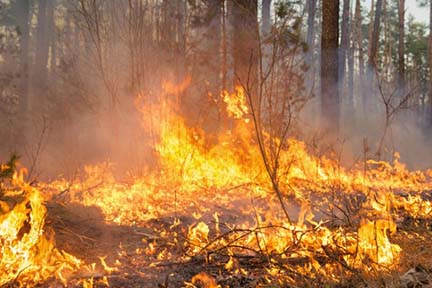
Sunny, dry fall weather means bigger fire risk, especially in northern Lower Peninsula

Michigan’s greatest fire risk is usually in the spring, but downed wood from the March ice storm in northern Michigan forests and a forecast string of dry days mean people need to be careful with fire through the fall.

“We had a dry fall last year and many fire runs,” said Jeff Vasher, resource protection manager for the Michigan Department of Natural Resources. “We want to remind people to be careful and always keep fire safety in mind when they are burning, riding off-road vehicles or enjoying other outdoor activities.”

People are responsible for starting nine out of 10 wildfires, and nearly all of these could have been prevented.

Risk is heightened in the northern portion of the Mitten where an epic ice storm in March left tons of wood from snapped trees and broken branches on the ground. Despite massive cleanup efforts, some areas of state and private forests are still clogged with debris.

“Downed wood has been drying out all summer and it can catch fire easily,” Vasher said. He suggests chipping wood debris rather than burning it, if possible.

If you do need to burn, keep these safety tips in mind:

  • Before burning yard debris, see if burn permits are being issued or if weather conditions allow for safe burning. Check the burn permit page or call 866-922-BURN (866-922-2876) for more information.
  • Keep debris piles small. A large pile can burn for hours.
  • Build your campfire in a metal ring or pit. Never leave a fire unattended, even for a moment. When you’re done, thoroughly douse the fire with water, stir and douse again.
  • Taking a trailer up north? Ensure tow chains don’t drag and cause sparks, which can light a fire along the road’s edge.
  • Avoid using heavy machinery like lawnmowers in dry areas. Don’t park an ORV or other vehicle on dry grass, as a hot exhaust system can ignite the grass.

Learn more on the DNR’s fire safety webpage.

One more time: Texts about unpaid tolls are scams!

One more time: Texts about unpaid tolls are scams!

MDOT header (SOM branding)Talking Michigan Transportation (TMT) banner with the Mackinac Bridge.

One more time: Texts about unpaid tolls are scams!

As unscrupulous actors continue to impersonate government agencies and target unknowing people with texts about unpaid tolls, Michigan Attorney General Dana Nessel this week reissued a consumer alert.

Texts about unpaid tolls are scams!With that in mind, this week’s edition of the Talking Michigan Transportation podcast is a reprise of a conversation in June with J. Michael Skiba, also known as “Dr. Fraud,” a national expert on scams, like those proliferating in Michigan and other states, where text messages tell people they have unpaid road tolls.

Skiba is department chair at Colorado State University Global, where he oversees the Criminal Justice Department, including specializations in fraud, financial crime and cybercrime. He discusses the psychology that prompts so many victims of online fraud to engage with scammers on smishing attempts.

If you’ve been targeted, the FCC offers many tips.

In April, the Michigan Department of Transportation released a video of Director Bradley C. Wieferich urging people not to respond to the texts.

Listen now at https://www.buzzsprout.com/1374205.

Stay connected by subscribing to Talking Michigan Transportation e-mail updates. 

Suicide Prevention Resources to Support Farmers

Suicide Prevention Resources to Support Farmers

bob new header
For immediate release: Sep. 10, 2025

MDARD media contact: Lynsey Mukomel, 517-290-1734

MSU Extension program contact: Dr. Remington Rice 

MDARD, MSU Extension Share Suicide Prevention Resources to Support Farmers

Managing Farm Stress program helps Michigan ag workers stay healthy and resilient

LANSING, Mich. – To mark World Suicide Prevention Day, the Michigan Department of Agriculture and Rural Development (MDARD) and Michigan State University (MSU) Extension’s  Managing Farm Stress program are connecting farmers with therapy-based resources and stress support.

“Coming from a family of farmers, I know the pressures that a career in agriculture can bring,” said MDARD Director Tim Boring. “Unpredictable weather, fluctuations in global markets, labor shortages and other factors can produce uncertainty and extreme stress in the agriculture community. If you or a loved one is struggling, please know that MSU Extension’s Managing Farm Stress program is there to help farmers navigate these stressors so they can remain healthy and resilient.”

Agricultural work is fundamental to the nation’s health and prosperity, but it is also one of the most dangerous civilian occupations in the United States. Farming can also be financially challenging. Amid soaring equipment costs and low commodity prices, total U.S. farm debt grew to nearly $592 billion in 2025 –  an increase of 66 percent since 2015.

The demands of farming can produce physical, financial, and emotional stress not seen in other industries. Yet farmers often live in rural areas with limited access to mental health services. According to the National Rural Health Association, farmers are more than 3.5 times as likely to die by suicide as the general public.

The MSU Extension Managing Farm Stress program offers services including teletherapy, financial well-being resources and trainings. These services help farmers make decisions, support their loved ones, and help other agriculture professionals better identify signs of struggle and offer support.

“For farmers, mental health is just as essential as crop health or market access,” said Dr. Quentin Tyler, director of MSU Extension. “When Michigan producers face mental health challenges, the impact ripples through families, communities and our entire food system. That’s why MSU Extension stands with our farmers, and why we’re committed to making sure the help they need is within reach.”

An MDARD grant has supported the Managing Farm Stress program since 2020. In total, MSU Extension has been able to offer nearly 550 free therapy visits and reached over 10,000 people across Michigan through educational presentations and workshops.

“When we meet with farmers and others who work with farmers, it’s not just about sharing information, it’s about exploring new ways to handle stress alongside farmers,” said Dr. Remington Rice, an MSU Extension educator. “These sessions create space for farmers to try out strategies and support one another. They also build community, reminding farmers they are not alone. Sometimes that support gives a farmer the confidence to take the next step into therapy, and thanks to this grant, cost is no longer a barrier. That’s how healthier rural communities begin, one conversation at a time.”

Visit the Managing Farm Stress website for more information and resources. Communities and organizations are invited to contact the Managing Farm Stress program for details about upcoming workshops, including Communicating with Farmers and Weathering the Storm.

In addition, don’t miss the premiere of the new MSU Extension documentary on September 10 at 6 p.m. EDT.

Need help now?

You matter. You are not alone. If you are experiencing depression, anxiety, or thoughts of suicide, support is available right now. Reaching out is a sign of strength and help is here.

  • If you are in immediate danger or facing a life-threatening situation, dial 911 right away. Visit your nearest emergency department if you or someone you love may need immediate help.
Train Week kicks off with two railroad safety events

Train Week kicks off with two railroad safety events

newsroom

MDOT on facebook MDOT on Twitter MDOT on YouTube Mi Drive - Know before you go. MDOT on Instagram Sign up for E-mails form MDOT
FOR IMMEDIATE RELEASE
September 10, 2025
MEDIA CONTACT
Curtis Stewart
Michigan Operation Lifesaver
517-974-1737
Frmn2009@sbcglobal.net

See Tracks? Think Train Week kicks off
with two railroad safety events across Michigan


ANN ARBOR and ST. JOSEPH, Mich. – Michigan Operation Lifesaver, Inc. and the Michigan Railroads Association will begin See Tracks? Think Train Week (formerly Rail Safety Week) to promote safety around railroad tracks with two kick-off events on Sept. 15. One event will be held in Ann Arbor and the other in St. Joseph. All are encouraged to share rail safety messages on social media using the hashtags #SeeTracksThinkTrainWeek, #StopTrackTragedies and #RailSafetyEducation.

Who:
Curtis Stewart, Operation Lifesaver state coordinator
Jon Cool, Michigan Railroads Association
John Reiser, City of Ann Arbor
Rick Burn, Operation Lifesaver authorized volunteer
Tim Rogers, Operation Lifesaver authorized volunteer
Federal, state and local officials
Law enforcement officers
Railroads
Interested public
Students
Media

Ann Arbor Kick-off Event:
Monday, Sept. 15, 2025
10 a.m.
University of Michigan Department of Public Safety
1239 Kipke St.
Ann Arbor, MI. 48104

Note: The event will be at parking lot SC7 (East Stadium Boulevard and Kipke Street) next to the railroad tracks. The Ann Arbor Railroad will have two locomotives parked at the event on display.

West Michigan Kick-off Event:
Monday, Sept. 15, 2025
7:30 – 9:15 a.m.
St. Joseph/Benton Harbor Amtrak Station
410 1/2 Vine St.
St. Joseph, MI. 49085

Note: Please plan to join the event for breakfast at 8:10 a.m. after Amtrak train 371 leaves.

Background:
It happens every three hours in the United States: a person or vehicle is struck by a train. When this tragedy occurs, lives are changed forever.

To raise awareness of the dangers of being on or around railroad tracks, See Tracks? Think Train Week (ST3Week) is happening this year from Sept. 15 to 21. This event is being spearheaded by Operation Lifesaver, Inc. in partnership with the U.S. Department of Transportation and other safety organizations.

Activities are being planned each day during the week to share lifesaving messages throughout our communities. By working together on raising railroad safety awareness, we can save lives.

###

MDOT: Working with our partners at airports, bus systems, marine and rail to find innovative solutions for
Michigan’s transportation systems.

See Tracks? Think Train Week logo

AG Reissues Consumer Alert on Government Imposter Scams

AG Reissues Consumer Alert on Government Imposter Scams

Michigan Department of Attorney General Press Release banner

FOR IMMEDIATE RELEASE:
September 10, 2025

Media Contact:
Danny Wimmer

Attorney General Nessel Reissues Consumer Alert on Government Imposter Scams

LANSING – Michigan Attorney General Dana Nessel is reissuing her consumer alert on government imposter scams, warning consumers to remain vigilant against fraudulent emails, calls, or texts from scammers posing as government officials. Fraudsters use these messages to trick consumers into believing they are being contacted by a legitimate government agency or law enforcement office. The communications may offer special medication rates, requests for updated personal information, or demand money.

These fraudulent messages often contain links or attachments. Attorney General Nessel urges consumers to not click these links or download attachments, as they may contain viruses that infect devices and allow scammers to access sensitive information.

“When you receive these messages, silence is always the best policy,” Nessel said. “If someone contacts you claiming to be from the government, protect yourself by reaching out to the agency directly through its official contact information.”

Attorney General Nessel is advising consumers who have received communications from imposters to protect themselves from these scams by:

  • Blocking the text, email, or call;
  • Not clicking links or opening attachments;
  • Reporting the spam; and
  • Deleting the text or email from their device.

Attorney General Nessel is also reminding consumers that government agencies:

  • Will not request personal information through email, over the phone, or text;
  • Will never demand money through email, over the phone, or text. They will mail residents a notice and offer payment options; and
  • Do not ask for or take payment by prepaid gift card, wire transfer, cryptocurrency, or a pay app.

To report a scam, file a complaint, or get additional information, please contact the Attorney General’s Consumer Protection Team at:

Consumer Protection Team
P.O. Box 30213
Lansing, MI 48909
517-335-7599
Fax: 517-241-3771
Toll-free: 877-765-8388
Online complaint form