
Michigan Residents can apply for Home Heating Tax Credit

Michigan Residents can apply for Home Heating Tax Credit


MDHHS banner with logo no names

Press Release


FOR IMMEDIATE RELEASE: Aug. 19, 2025

MDHHS CONTACT: Erin Stover, 517-241-2112, Stovere@michigan.gov   

CEDAM CONTACT: Emily Reyst, 517-210-5936, emily@cedamichigan.org

Michigan residents can apply for Home Heating Tax Credit until September 30
State funds from this credit reduce heating bills of qualified Michigan renters, homeowners

LANSING, Mich. – With fall around the corner, the Michigan Department of Health and Human Services (MDHHS) is partnering with the Community Economic Development Association of Michigan (CEDAM) to spread the word about the Home Heating Credit, which helps eligible residents manage heating costs during the colder months. Qualified Michigan renters and homeowners have until Tuesday, Sept. 30 to claim the credit — and those who don’t file by the deadline will miss out.

“No one should have to choose between staying warm and covering other essentials like food,” said Governor Gretchen Whitmer“The Home Heating Credit is a vital resource for Michigan families, especially those on fixed or limited incomes. As we head into the colder months, we want every eligible household to know about this opportunity. Claiming the credit now can help keep the heat on this winter and put more money in Michiganders’ pockets. I encourage every eligible Michigan household to apply, and I’ll keep working to lower energy costs and make a difference for Michiganders.”

Last year, the average qualifying household received $180 in assistance, which is most often applied directly to residents’ utility bills. Some energy providers automatically provide claimants a residential income assistance credit worth up to $20 monthly.

“The Home Heating Credit is a ‘use it or lose it’ benefit, so MDHHS is encouraging Michiganders to claim their credit by the September 30 deadline,” said MDHHS Director Elizabeth Hertel. “The Home Heating Credit does more than just lower your utility bill. It can also unlock additional support, like monthly energy discounts or expanded food assistance. If you qualify, don’t wait.”

To qualify, Michigan residents must be either a renter with a contracted lease or a homeowner and meet income requirements. The best way to claim the Home Heating Credit, and a number of other tax credits available to Michigan residents, is through one of the state’s trusted, free tax preparation services.

Free tax preparation is a community service designed to help Michiganders improve their financial well-being. Persons with disabilities, limited English-speaking ability, and those who earn less than $67,000 annually are qualified to use these services. Tax preparation providers are trained and IRS-certified volunteers.

“The heating season is only a few months away,” said State Treasurer Rachael Eubanks. “The Home Heating Credit can help with heating bills, allowing individuals and families to spend their hard-earned dollars on other necessities. Local free tax preparation can help taxpayers navigate the paperwork required to receive this very important credit and other credits, like the Earned Income Tax Credit. Please don’t hesitate to seek out voluntary assistance if you think you’re eligible.”

Residents can connect with their local free tax preparation site by calling 211 or visiting MichiganFreeTaxHelp.org. Local human services nonprofits, such as United Way and Community Action Agency, can also refer community members to a free tax preparation site.

“No one should miss out on help they qualify for,” said Eddie Fakhoury, executive director of CEDAM. “By working together with the state and local partners, we’re making sure residents get the support they need — and that support ripples out to strengthen entire communities.”

Families urged to catch up on routine vaccinations

Families urged to catch up on routine vaccinations

MDHHS banner with logo no names

Press Release


FOR IMMEDIATE RELEASE: Aug. 19, 2025

CONTACT: Laina Stebbins, 517-241-2112, StebbinsL@michigan.gov

Michigan families urged to catch up on routine vaccinations
in recognition of National Immunization Awareness Month

LANSING, Mich. – Vaccines play a critical role in keeping the public healthy. The Michigan Department of Health and Human Services (MDHHS) urges Michigan residents and families to get caught up and stay up to date on vaccines as part of National Immunization Awareness Month (NIAM). Governor Whitmer has also proclaimed August as Vaccine Awareness Month.

NIAM highlights efforts to protect individuals of all ages against vaccine-preventable diseases and ensure residents receive vaccinations on time. A study from April 2024 found that global immunization efforts have saved more than 154 million lives – the majority of lives saved, 146 million, were those under the age of five.

“As families prepare for the new school year, it is the perfect time to ensure everyone is up to date on their routine vaccinations,” said Dr. Natasha Bagdasarian, chief medical executive. “Staying on schedule with immunizations protects against serious diseases like measles, hepatitis A, polio and HPV-related cancers. With whooping cough cases in Michigan at their highest since 2010 and the U.S. on track for the worst measles year since 1992, vaccines are more important than ever to prevent these diseases from making a deadly comeback in our communities. Talk to your health care provider, visit a local pharmacy or contact your local health department for more information.”

According to data from the Michigan Care Improvement Registry (MCIR), as of June 2025 only 68% of Michigan children 19 through 35 months of age were fully immunized with recommended vaccines. This is a significant decrease from March 2019 when 73.5% of children in this age group were vaccinated.

MDHHS encourages residents to check their vaccination records and consult with their health care providers about any recommended vaccines they may need. To obtain an immunization record for your child, ask your child’s pediatrician or family doctor, contact your local health department or submit an immunization record request.

Nationally and in Michigan, measles cases have been on the rise. Vaccinating against highly contagious diseases like measles is critically important. To achieve community immunity against measles, 95% of a population must be vaccinated. If measles vaccination coverage rates drop below that threshold, outbreaks and preventable deaths will ultimately occur. Maintaining high vaccine coverage rates is crucial to protect the public and prevent transmission.

As part of NIAM, MDHHS is joining the Franny Strong Foundation, its partner on the I Vaccinate campaign, and other advocates across the nation to spread the message that vaccines are one of the safest ways to protect health and lower risks for certain diseases and cancers. Now is the time to stay up to date with all recommended vaccines to protect yourself, your family and your community from vaccine-preventable diseases.

Watch for additional information coming soon regarding availability of flu, COVID-19 and RSV vaccines to help reduce symptoms and severity of illness during the upcoming fall respiratory season. Visit Michigan.gov/CovidFluRSV for more.

DNR Public Meetings: Forestry, parks and trails on the agenda

DNR Public Meetings: Forestry, parks and trails on the agenda

DNR banner

DNR Public Meetings

Two men in shorts and with helmets biking down an unpaved, narrow forest trail

Aug. 18, 2025

Forestry, parks and trails on the agenda for DNR’s September public meetings

The Department of Natural Resources is committed to providing Michigan residents the opportunity to share input and ideas on policy decisions, programs and other aspects of natural resource management and outdoor recreation opportunities.

One important avenue for this input is at meetings of the public bodies that advise the DNR and, in some cases, also set policies for natural and cultural resource management. Frequently check the DNR boards, commissions, committees and councils webpage for updates.

The links below will take you to the webpage for each group, where you will find meeting details such as location and agenda (when finalized). Please check these pages often, as meeting details may change and sometimes meetings are canceled.

September meetings

First Human Case of West Nile Virus Confirmed

First Human Case of West Nile Virus Confirmed

First Human Case of West Nile Virus Confirmed in Oakland County

Post Date:08/18/2025 12:41 PM

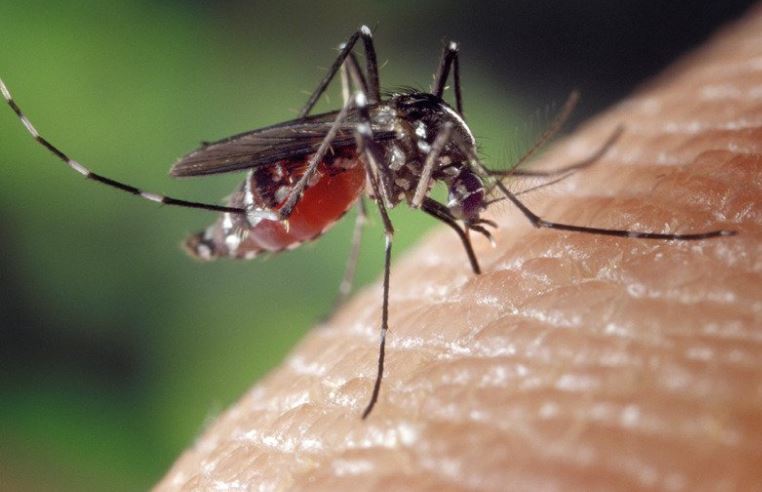
Pontiac, Mich. – The Michigan Department of Health and Human Services has confirmed a human case of West Nile Virus (WNV) in an Oakland County resident. No travel was reported by the patient. This is the first human case of WNV in Oakland County in 2025, and the second confirmed this year in Michigan.

“This is an important reminder that West Nile Virus is present in our community,” said Kate Guzman, health officer for Oakland County Health Division. “We strongly encourage residents to protect themselves from mosquitoes until the first hard frost of the year.”

No further information is available about the patient because of health privacy laws.

Residents, especially older adults, are urged to protect themselves from mosquito bites by following these instructions:

  • Use Environmental Protection Agency (EPA) registered insect repellent.
    • All EPA-registered insect repellents are evaluated for safety and effectiveness, and will contain DEET, picaridin, IR3535, Oil of Lemon Eucalyptus or para-menthane-diol as the active ingredient. Repellents containing a higher percentage of the active ingredient typically provide longer-lasting protection.
    • Always follow the product label instructions.
    • Remind children not to rub their eyes or touch their mouth after using repellent on their hands, as it can cause irritation.
  • Get rid of mosquito breeding sites by removing standing water around your home.
    • Turn over any container that can collect water. Once a week, empty items that hold water such as tires, buckets, planters, toys, pools, birdbaths, pet bowls, flowerpots and trash containers.
    • Clean clogged roof gutters, especially if leaves tend to plug the drains.
    • Treat standing water – such as retention ponds or drainage ditches – with a mosquito larvicide. It is easy to use and can be purchased at most home improvement stores.
  • Wear long-sleeved shirts and pants.
  • Limit outdoor activity from dusk to dawn when mosquitoes are most active.
  • Cover holes in window and door screens. Do not prop open doors.

West Nile Virus is a mosquito-borne virus. Mosquitoes are infected with the virus by biting an infected bird. The virus is then spread to humans through the bite of the infected mosquito. Most people who are infected with the virus have either no symptoms or experience a mild illness such as fever, headache, and body aches. However, in some individuals, a more serious disease-causing inflammation and swelling of the brain can develop. People older than 50 are more likely to develop serious and potentially life-threatening symptoms of West Nile Virus if they do get sick.

For more information about West Nile Virus, visit www.oakgov.com/health or call Nurse on Call at 800-848- 5533, Monday through Friday, 8:30 a.m. – 5 p.m. For up-to-date public health information, follow @publichealthOC on Facebook, X and Instagram.

in Oakland County

Post Date:08/18/2025 12:41 PM

Pontiac, Mich. – The Michigan Department of Health and Human Services has confirmed a human case of West Nile Virus (WNV) in an Oakland County resident. No travel was reported by the patient. This is the first human case of WNV in Oakland County in 2025, and the second confirmed this year in Michigan.

“This is an important reminder that West Nile Virus is present in our community,” said Kate Guzman, health officer for Oakland County Health Division. “We strongly encourage residents to protect themselves from mosquitoes until the first hard frost of the year.”

No further information is available about the patient because of health privacy laws.

Residents, especially older adults, are urged to protect themselves from mosquito bites by following these instructions:

  • Use Environmental Protection Agency (EPA) registered insect repellent.
    • All EPA-registered insect repellents are evaluated for safety and effectiveness, and will contain DEET, picaridin, IR3535, Oil of Lemon Eucalyptus or para-menthane-diol as the active ingredient. Repellents containing a higher percentage of the active ingredient typically provide longer-lasting protection.
    • Always follow the product label instructions.
    • Remind children not to rub their eyes or touch their mouth after using repellent on their hands, as it can cause irritation.
  • Get rid of mosquito breeding sites by removing standing water around your home.
    • Turn over any container that can collect water. Once a week, empty items that hold water such as tires, buckets, planters, toys, pools, birdbaths, pet bowls, flowerpots and trash containers.
    • Clean clogged roof gutters, especially if leaves tend to plug the drains.
    • Treat standing water – such as retention ponds or drainage ditches – with a mosquito larvicide. It is easy to use and can be purchased at most home improvement stores.
  • Wear long-sleeved shirts and pants.
  • Limit outdoor activity from dusk to dawn when mosquitoes are most active.
  • Cover holes in window and door screens. Do not prop open doors.

West Nile Virus is a mosquito-borne virus. Mosquitoes are infected with the virus by biting an infected bird. The virus is then spread to humans through the bite of the infected mosquito. Most people who are infected with the virus have either no symptoms or experience a mild illness such as fever, headache, and body aches. However, in some individuals, a more serious disease-causing inflammation and swelling of the brain can develop. People older than 50 are more likely to develop serious and potentially life-threatening symptoms of West Nile Virus if they do get sick.

For more information about West Nile Virus, visit www.oakgov.com/health or call Nurse on Call at 800-848- 5533, Monday through Friday, 8:30 a.m. – 5 p.m. For up-to-date public health information, follow @publichealthOC on Facebook, X and Instagram.

We Must Make Quality Child Care More Affordable

We Must Make Quality Child Care More Affordable

Image
Friend –

I’ve heard it time and time again from my constituents: the lack of quality and affordable child care has reached crisis levels in Michigan. The cost of child care has skyrocketed and parents are having an increasingly hard time even finding a day care with available spots for their children. As a result, parents are often forced to choose between breaking the bank, missing work, or leaving the workforce altogether.

Not only is the child care crisis placing a strain on parents, it’s also hurting our economy. According to a 2023 report from the U.S. Chamber of Commerce Foundation, Michigan loses nearly $3 billion in economic activity every year when working parents struggle to find child care.

On top of all this, the Trump Administration is making drastic cuts to the resources that are currently helping working families – including Head Start – a vital child care program that helps Michigan kids start on a bright path for success in school.

But we need to be doing more – not less – to lower costs and support our families. That’s why I just helped introduce the Child Care for Working Families Act to make child care more affordable and accessible for hardworking families.

This bill would help improve the quality of child care and expand families’ child care options. To help grow and retain our child care work force, the bill would also support higher wages for child care workers and expand access to high-quality pre-K education.


Image


I never want Michigan families to be forced to choose between missing work and caring for their children. The Child Care for Working Families Act would help ensure all families can find affordable, quality child care – making a long overdue investment in working families.

I’ll keep working to support our state’s kids and help working families thrive.


Thanks for reading,

Gary Peters
United States Senator for Michigan