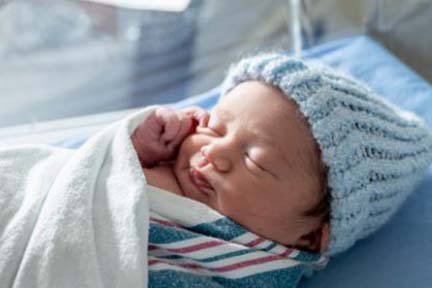
10 years of screening newborns for heart disease  

10 years of screening newborns for heart disease  

MDHHS banner with logo no names

Press Release


FOR IMMEDIATE RELEASE: April 1, 2024

CONTACT: Lynn Sutfin, 517-241-2112, SutfinL1@michigan.gov

MDHHS commemorates 10 years of screening
newborns for critical congenital heart disease 
 

LANSING, Mich. – Since April 1, 2014, approximately 982,000 babies have been screened for critical congenital heart disease (CCHD) through the Michigan Department of Health and Human Service (MDHHS) Newborn Screening Program, allowing for timely treatment of a potentially fatal birth defect. According to the Centers for Disease Control and Prevention, CCHDs are one of the most significant causes of infant death in the United States.

Every Michigan newborn is screened shortly after birth for more than 50 different disorders through the state’s Newborn Screening Program. In addition to blood spot screening, additional tests for CCHD and a hearing screening are preformed prior to discharge. A simple non-invasive test, called pulse oximetry, measures the amount of oxygen in the blood and helps detect CCHD in newborns. CCHDs may require surgery or catheter intervention in the first year of life.

“Michigan’s newborn screening program is designed to quickly diagnose babies who may look healthy but have rare and often serious disorders that require early treatment,” said Dr. Natasha Bagdasarian, chief medical executive. “Failure to detect these conditions can put a baby at risk for death or other serious complications within the first few days or weeks of life. Being able to identify conditions such as critical congenital heart disease allows for early interventions and healthier outcomes.”

As a result of screening, more than 30 babies have been diagnosed with a CCHD and more than 70 babies have been diagnosed with secondary conditions including hemoglobinopathy, hypothermia, infection, lung disease, noncritical congenital heart defect, persistent pulmonary hypertension and other hypoxemic conditions.

Congenital heart defects are the most common group of birth defects, affecting nearly 1% of births per year in the United States. About one in four babies have a critical congenital heart defect requiring immediate intervention.

For more information about CCHD, visit Michigan.gov/cchd.

Help Keep Pets Safe this Spring Holiday Season

Help Keep Pets Safe this Spring Holiday Season

bob new header
For immediate release: March 28, 2024
Media contacts: Chelsea Lewis-Parisio, 517-331-1151

MDARD Encourages Owners to Help Keep Pets Safe this Spring Holiday Season

Following a few easy tips can help ensure you have a healthy, happy celebration with your pets

LANSING, MI—As Michiganders prepare to celebrate this spring holiday season, the Michigan Department of Agriculture and Rural Development (MDARD) is reminding owners of some of the best ways to keep their pets healthy and safe.

“Spring holiday celebrations are filled with food, family, and loved ones—including our pets. It is important to consider their needs as we plan our festivities,” said State Veterinarian Dr. Nora Wineland, DVM, MS, DACVPM. “From keeping them away from eating chocolate and candy to ensuring they have a quiet space to destress, there are many actions we can take to make sure they have a safe holiday.”

Keep pets safe this spring holiday season by following these six easy tips:

  • Happy Tummies: Avoid feeding pets people foods.

Unfortunately, pets cannot enjoy all of the same foods and treats we do. Foods not specifically formulated for pets should be avoided as they could cause pancreatitis—even when consumed in small amounts. Also, be sure to keep candy and other sweets containing chocolate, raisins, and/or xylitol (an artificial sweetener found in many candies and gum) away from pets as these ingredients can be hazardous.

  • Avoid Temptations: Keep Easter grass and other holiday decorations out of reach.

Brightly colored plastic Easter grass or other basket fillers may make for a beautiful presentation, but it can also catch the eye of our pets. If consumed, the filler could cause intestinal blockages or other injuries. Be sure to remove filler from baskets completely or at least keep the baskets out of a pet’s reach, along with candles, lights, plastic eggs/toys, and some festive flowers/plants—especially Easter lilies as these are highly toxic to cats.

  • Go Natural: Save the dye for eggs—not pets.

As a reminder, in Michigan, it is illegal to sell baby chicks, rabbits, ducklings, or other fowl or game that have been dyed or artificially colored (Public Act 163 of 1945). Violating this law is a misdemeanor, so keep animals their natural color.

  • Search No More: Make sure pets have proper identification.

With all the holiday activity, pets can easily sneak out and get lost. Make sure pets have identification tags and microchips updated with your current contact information to ensure they can be returned home.

  • Destress and Decompress: Have a quiet space for your pets.

Any holiday celebration can be loud and overly stimulating for pets. So, it is important to have a quiet space set aside for them to go if they are getting too stressed. Also, have the room stocked with their food, water, litter pan, etc. in case they want to maintain their distance for an extended period of time.

  • More Than Novelties: Bunnies and chicks are fur-ever pets.

While it may be tempting to surprise someone with a real bunny, chick, or duckling this holiday, it is important to remember these animals are long-term pets, often requiring specialized care and feed. Many people feel unprepared to properly care for one of these animals and hand them over to local animal control or an animal shelter. Opt for gifting someone a stuffed or chocolate animal instead.

These tips can help you and your pets have an egg-cellent and safe holiday. If there are ever any concerns about your pets’ health now or beyond the spring holiday season, please talk to your veterinarian.

Annual spring weight restrictions changing on Michigan’s roads

Annual spring weight restrictions changing on Michigan’s roads

newsroom
FOR IMMEDIATE RELEASE
March 26, 2024 


MEDIA CONTACT
Dan Weingarten
906-250-480
WeingartenD@Michigan.gov


Annual spring weight restrictions
changing on Michigan’s roads

LANSING, Mich. ­- The Michigan Department of Transportation (MDOT) continues to adjust spring weight restriction areas in an annual move to protect roads.

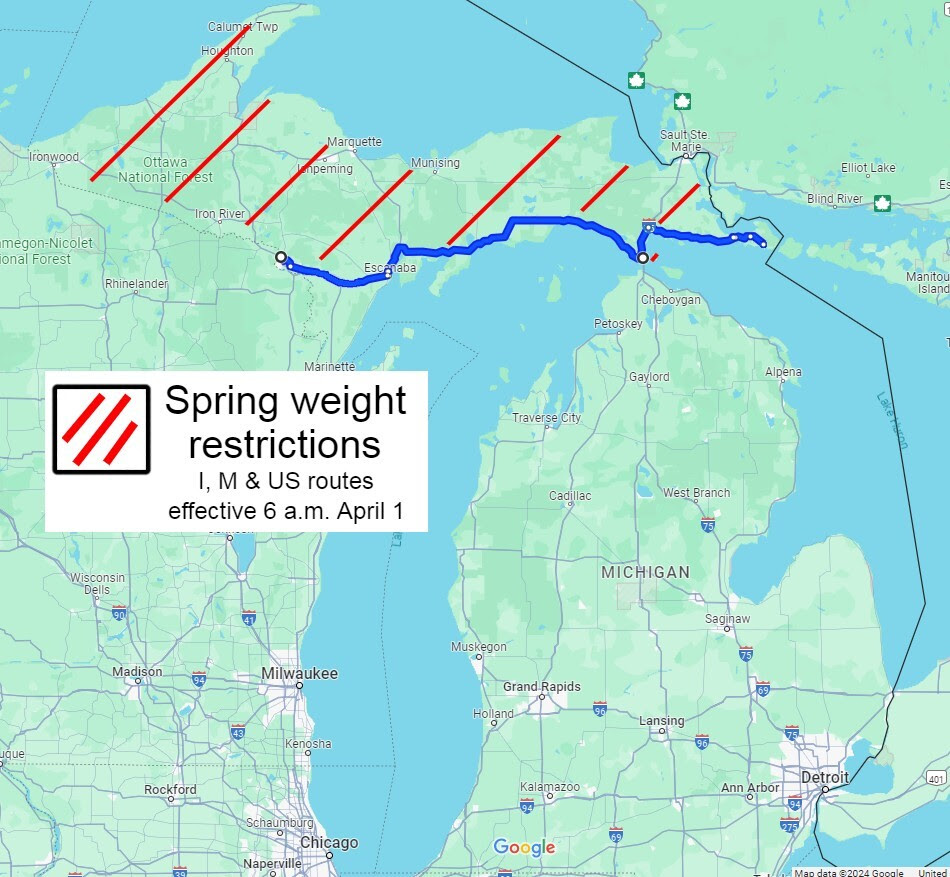
Effective 6 a.m. Monday, April 1, weight restrictions will be lifted on all state trunkline highways from the southern Michigan border north to and including US-2/US-141 at the Menominee River bridge west of Iron Mountain then east on US-2 to St. Ignace, then north on I-75 to M-134, then east to and including M-134 on Drummond Island.

Frost restrictions are still in effect for the remainder of the state and will be imposed and enforced on all state trunkline highways north of US-2, I-75, and M-134 and on M-185 on Mackinac Island. State routes typically carry M, I, or US designations.

In the restricted areas, the following will apply:

  • On routes designated as “all-season” (designated in green and gold on the MDOT Truck Operators Map), there will be no reduction in legal axle weights.
  • All extended permits will be valid for oversize loads in the weight-restricted area on the restricted routes. Single-trip permits will not be issued for any overweight loads or loads exceeding 14 feet in width, 11 axles, and 150 feet in overall length on the restricted routes.
  • On routes designated as “seasonal” (designated in solid or dashed red on the MDOT Truck Operators Map), there will be a posted weight reduction of 25 percent for rigid (concrete) pavements and 35 percent for flexible (asphalt) pavements, and maximum speed of 35 mph for some vehicles.

Drivers must follow the speed limits for weight restricted roads, per state law. Go online for speed restrictions for trucks and the rules for propane fuel delivery and public utility vehicles.

When roads that have been frozen all winter begin to thaw from the surface downward, melting snow and ice saturate the softened ground. During the spring thaw, the roadbed softened by trapped moisture beneath the pavement makes it more susceptible to damage. This contributes to pothole problems already occurring due to this winter’s numerous freeze-thaw cycles.

MDOT determines when weight restrictions begin each spring by measuring frost depths along state highways, observing road conditions, and monitoring weather forecasts. Weight restrictions remain in effect until the frost line is deep enough to allow moisture to escape and the roadbeds regain stability.

County road commissions and city public works departments put in place their own seasonal weight restrictions, which usually, but not always, coincide with state highway weight restrictions. Signs are generally posted to indicate which routes have weight restrictions in effect.

For weight restriction information and updates, call 800-787-8960, or you can access this information on MDOT’s website at www.Michigan.gov/Truckers, under “Restrictions.” All-season routes are designated in green and gold on the MDOT Truck Operators Map, which is available online. You also may sign up to receive e-mail alerts.

Trucking companies located in New Jersey and Canada can obtain information by calling 517-373-6256. 

###

Work zones are temporary,
Bad decisions behind the wheel can last forever.

Spring Weight Restrictions #3 map

MDHHS Behavioral Health Loan Repayment Program

MDHHS Behavioral Health Loan Repayment Program

MDHHS banner with logo no names

Press Release


FOR IMMEDIATE RELEASE: March 26, 2024

CONTACT: Lynn Sutfin, 517-241-2112, SutfinL1@michigan.gov

MDHHS Behavioral Health Loan Repayment Program offered
to help retain, attract providers through student debt relief

Up to $300,000 available per award to repay educational debt


LANSING, Mich. – As part of the state’s effort to attract and retain talent and expand access to behavioral health services, the Michigan Department of Health and Human Services (MDHHS) is offering the Behavioral Health Loan Repayment Program. Previously known as the MI Kids Now Loan Repayment Program, this program encourages behavioral health providers to offer their services within nonprofit outpatient organizations statewide.   


The program is available to behavioral health providers, including psychiatrists, psychologists, social workers, counselors, therapists, case managers and certified behavioral analysts. Those eligible must provide in-person, outpatient behavioral health services through eligible nonprofit practice sites, including public school-based systems and community mental health organizations.  


“Under Governor Whitmer, MDHHS has prioritized expanding access to behavioral health services across Michigan,” said Elizabeth Hertel, MDHHS director. “We are continuing to offer loan repayment programs to ensure providers have the supports they deserve, and families can receive services when and where they need them.” 


The loan repayment program is open to providers who serve both children and adults, but priority will be given to those who serve children. Eligible providers will be selected to enter into consecutive two-year agreements. The program will assist those selected with up to $300,000 to repay educational debt over a period of up to 10 years. A prioritization system will be used to rank applicants as follows: 

  • Priority Group #1: Child providers in a Community Mental Health Authority setting.
  • Priority Group #2: Child providers in a public school-based setting.
  • Priority Group #3: Child providers in any nonprofit, eligible setting.
  • Priority Group #4: Adult providers in a Community Mental Health Authority setting.
  • Priority Group #5: Adult providers in any nonprofit, eligible setting.

Current behavioral health providers are encouraged to apply for the loan repayment program. The application period is April 29 through May 24. Further information regarding eligibility, selection criteria, application instructions and frequently asked questions can be found on the MDHHS website.  


Providers should note that guidelines, eligibility criteria and application instructions have changed for the 2024 application cycle. During previous grant cycles, MDHHS has enrolled around 500 providers and awarded $12.3 million in funding to eligible providers. Further information can be found on the program website. Providers who have questions or need more information can email MDHHS-Behavioral-Health-LRP@michigan.gov.   

Combatting the opioid crisis in Michigan

Combatting the opioid crisis in Michigan

Image
 

Friend ­­––

The opioid crisis has devastated communities across Michigan – and young people have been hit as hard as anyone. Over 100,000 teenagers in our state have experienced a substance use disorder.

These are kids who should be going to school, spending time with their friends, and looking forward to their futures. Instead, they’re losing their adolescence to addiction.

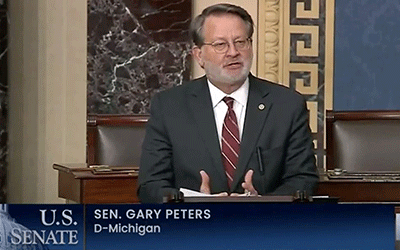
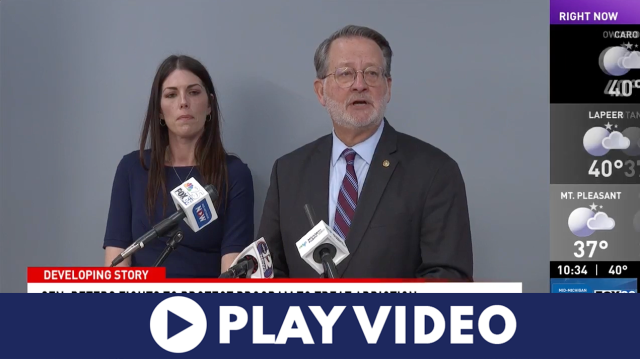
I recently heard about this firsthand when I joined a roundtable at the Greater Flint Health Coalition, where I spoke with health care providers on the front lines of this crisis about the scope of this problem and the resources they need to address it. I know how essential it is that we continue to support their work.


Image

Click HERE to watch more.


That starts with reauthorizing the Youth Prevention and Recovery Initiative – a program I helped establish in 2018 that has provided critical support to young people who are struggling with addiction.

This is just the first step. I’ll continue doing whatever I can to keep up the fight against the opioid crisis and help our communities heal.


Thanks for reading,

Gary Peters
United States Senator for Michigan