by orionontv | May 22, 2024 | Local News
CHARTER TOWNSHIP OF ORION
OFFICE OF THE SUPERVISOR
CHRIS BARNETT
FOR IMMEDIATE RELEASE CONTACT: Jenny Bhatti
248-391-0304 ext. 1003
jbhatti@oriontownship.org
ORION TOWNSHIP RECOGNIZED FOR
ENVIRONMENTAL LEADERSHIP
Orion Township, MI (May 22, 2024) – Orion Township was recognized for environmental leadership by the statewide Michigan Green Communities program. As part of the 2023 Michigan Green Communities (MGC) Challenge, 62 participating local governments were awarded gold, silver, or bronze seals of achievement reflecting community leadership in areas such as energy efficiency, climate adaptation and resilience, recycling, environmental justice, and more. Seven communities received bronze certification, twenty received silver certifications, and thirty-five received gold certification.
Orion Township achieved gold status for exemplary action in multiple categories, including economic development, land use, climate resilience, climate adaptation, energy efficiency, renewable energy, materials management (recycling, composting, waste diversion), water conservation and protection, and community engagement.
Most remarkable was Orion Township’s demonstrated increase in quantity and quality of both commercial and recreational development, while also increasing investment in and improvement of local parks and nature reserves all while prioritizing and enhancing community social, financial, environmental, and physical wellbeing. Examples include General Motor’s Orion Assembly, Orion Township’s purchase of Great Lakes Athletic Club and their investing in and revisioning of the space into a community recreation center, upgraded and renovated several sewer lift stations and other waste management measures resulting in a 20% reduction in household disposal since 2020, and over $3 million invested in Orion Parks and trails.
The Michigan Green Communities (MGC) program is open to all local governments in Michigan, at no cost. MGC is a sustainability networking, benchmarking, and technical assistance program. It guides and supports communities in adapting to a changing climate, protecting infrastructure, improving the quality of life for residents, and creating a more environmentally and economically sustainable future for the state of Michigan.
Michigan Green Communities is supported by the Michigan Department of Environment, Great Lakes, and Energy; the Michigan Department of Health and Human Services; the Michigan Economic Development Corporation; the Michigan Association of Counties; the Michigan Municipal League; and the Michigan Townships Association. More details about this program can be found at www.migreencommunities.com.
Questions regarding the Michigan Green Communities program can be directed to Danielle Beard, Michigan Green Communities Program Coordinator at info@migreencommunities.com.

by orionontv | May 21, 2024 | Community Event, Feature Writers
LAKE ORION/ORION TOWNSHIP, Mich. – Two fun events for runners, walkers and athletes alike happened this weekend. The Donut Dash 5k and the Dragon Dash 5k events both took place on Saturday the 18th and Sunday the 19th respectively.
The Donut Dash 5k, which took place at Friendship Park in Lake Orion, was put on by YoungLife Lake Orion, an adolescent-focused religious group that puts on events in the community. Donuts were handed out during and after the race, with many young faces crowding the park that morinng enjoying their racing rewards.
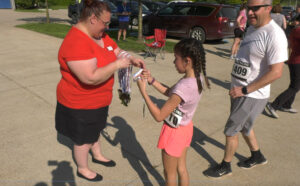
Photo by Joe Johnson
The next day, on the other side of town, the Dragon Dash 5k event took place – starting at the Orion Center. The event primarily took place on the Polly Ann Trail, with runners of all ages and skill levels participating in the race.
In total, over 200 runners registered for the event, with 32 walk-ons registering that morning for the race.
The runners gathered at the starting line, and then… they were off!
Racers charged towards the entrance of the Polly Ann Trail, heading south towards Civic Center Park, then they turned around and headed back to the Orion Center – where the finish line was.
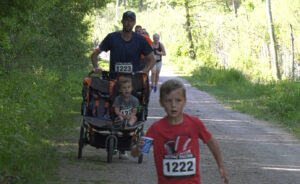
Photo by Joe Johnson
For the first time in the Dragon Dash’s 28-year history, the entry fees were collected and donated towards a local non-profit: Orion Area Youth Assistance.
ONTV broadcasting intern Lexi McKinney spoke to Jennifer Vezina, a recreation programmer at Orion Township Parks & Rec., Sunday morning about the 5k and how the event’s allocation will help children in need.
“All proceeds from this run will go directly to [Orion Area Youth Assistance], they will be awarding scholarships for participants needing financial aid to register for programs within the community,” Vezina said.
And the winner of the Dragon Dash 5k, for the second year in a row… Alexander Pollack.
Pollack, a Lake Orion Native, took the gold once again with a time of 18 minutes and 42 seconds.
“It’s hard to prepare for the heat, cause we’re coming out of winter so I think the heat got every body today, but, I don’t know, I just run a lot and have fun with it – that’s how I prepare,” Pollack said.
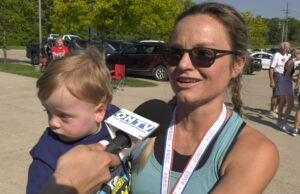
Photo by Joe Johnson and Lexi McKinney
The first female runner to cross the finish line was Maria Brandon, with a time of 20 minutes and 8 seconds.
“I had a blast out there! It was a great course, it was so well administrated,” Brandon said. “I am actually a running coach over at Great Lakes Athletic Club… I train a group of runners through my cadence classes and I work out with them as well. But now honestly, I have two little kids so right now it’s a lot of stroller-running, but once I lose the stroller it’s a lot easier to run fast.”
Family and fun was had here at the Orion Center this weekend, many other events will be taking place in the Orion area in the following weeks, including another running event, the Veteran’s Memorial Day 5k and 5-mile Run/Walk May 27th, as well as the summer season kickoff with the “Summer Sizzle” at the Orion Center on June 2nd.
For more information about these events, visit orionparks.com
.

by orionontv | May 21, 2024 | Recreation
|
|
 |
DNR News
|
|
 May 21, 2024 May 21, 2024
Contact: Joe Nohner, 517-599-6825 or Chip Kosloski, 517-281-1705
Over $1.7 million in grants will benefit fish and aquatic systems statewide
The Michigan Department of Natural Resources is awarding more than $1.7 million in Fisheries Habitat Grants for conservation projects on lakes and streams statewide. The funds are matched by more than $950,000 in partner contributions, for a total conservation value of about $2.7 million.
“These grants provide critical funding for projects that yield cleaner water, healthier fish populations and better aquatic habitats – all of which make the outdoors safer and more enjoyable for residents,” said Randy Claramunt, chief of the DNR Fisheries Division. “Our natural resources have always been central to Michigan’s appeal as an outdoor recreation destination, and creative, collaborative projects like these make a lasting, positive impact on those resources.”
The projects will rehabilitate and protect valuable fish habitats that provide the foundation for Michigan’s world-class fisheries. Two of them are DNR Priority Habitat Conservation Projects – those proactively identified by the department as important to sustaining healthy habitats, fisheries and aquatic communities – and another four are projects that directly benefit priorities of Michigan’s Wildlife Action Plan.
The Fisheries Habitat Grant program provides funding for a variety of activities including fish habitat conservation, dam removal and repair, resource assessment studies and access to recreation opportunities such as fishing. Funding from fishing license sales, state of Michigan general funds and a settlement with Consumers Energy is distributed through three grant areas: aquatic habitat conservation, dam management, and aquatic habitat and recreation in the Au Sable, Manistee and Muskegon river watersheds.
Most of the funding is distributed through traditional grants that are funded this year, but the Fisheries Habitat Grant program also provides conditional commitments for funding from future years. These conditional commitments enable partners to leverage future Fisheries Habitat Grant funds in applications for federal and other funding sources, making high-priority and sometimes very expensive projects possible.
Joe Nohner, a resource analyst with the DNR Fisheries Division, said the funded projects will protect and rehabilitate aquatic habitats across the state, while in many cases also improving public safety through the removal of dams.
“These projects are critical to strengthening and maintaining populations of fishes and other aquatic species,” Nohner said. “They will improve fish migration in over 327 miles of Michigan streams and boost public safety through the removal of three dams and seven culverts.”
Supporting work in 12 counties
 This year’s funded projects (and counties where projects are located) include: This year’s funded projects (and counties where projects are located) include:
- City of Battle Creek – Kalamazoo River restoration project (Calhoun County), $325,000.
- City of Kalamazoo – Habitat restoration of Portage Creek at Milham Park (Kalamazoo County), $75,000.
- Conservation Resource Alliance – Boyne Falls Dam removal options analysis (Charlevoix County), conditional commitment for $135,000.
- Conservation Resource Alliance – Manistee River tributaries aquatic organism passage (Wexford County), $150,000.
- Conservation Resource Alliance – N. Cole Creek/24th Street fish passage (Lake County), $100,000.
- Conservation Resource Alliance – Stony Creek restoration, fish passage and Marshville Dam removal implementation (Oceana County), $108,604.
- DNR Fisheries Division – Muskegon walleye rearing pond water intake improvements (Muskegon County), $156,000.
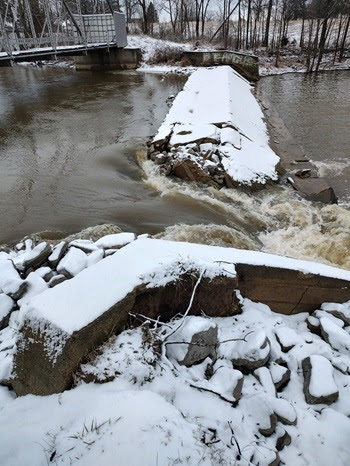
- Duplain Township – Duplain Township Dam removal engineering and design (Clinton County), $225,000. (The snow-covered Elsie Dam is pictured above.)
- J.A. Woollam Foundation – Restoring fish passage on the headwaters of the Fox River (Alger County), $62,264.
- Michigan Trout Unlimited – North Branch Manistee stream restoration and improvement at Flowing Wells (Kalkaska County), $144,800.
- Michigan Trout Unlimited – Riparian wood inventory for opportunistic stream improvement on state land (Crawford and Kalkaska counties), $27,700.
- Trout Unlimited – Restoring habitat and connectivity in the White River watershed (Newaygo County), $250,500.
Fisheries Habitat Grant funding is available annually to local, state, federal and tribal governments and nonprofit groups through an open, competitive process. The next request for proposals is expected to be announced in September.
Learn more about the Fisheries Habitat Grant program and other grant opportunities at Michigan.gov/DNRGrants. |
Note to editors: An accompanying photo is available below for download. Caption/credit information follows.
- Elsie Dam: The failing Elsie Dam in Duplain Township, Clinton County, will be removed using Fisheries Habitat Grant funds, with the goal of reconnecting fish passage on 200 miles of the Maple River. Photo credit: Bruce Levey.
|
|
by orionontv | May 21, 2024 | Environmental
|
Press Release
FOR IMMEDIATE RELEASE: May 21, 2024
CONTACT: Chelsea Wuth, 517-241-2112, WuthC@michigan.gov
MDHHS offers tips to stay healthy during poor air quality days
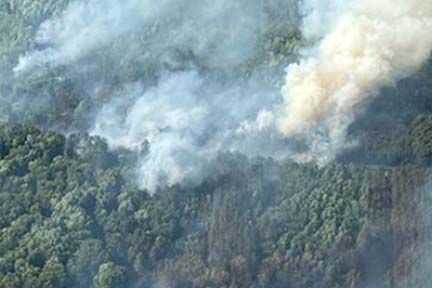
LANSING, Mich. – As the 2024 North American wildfire season continues and warmer weather increases the risk of higher ozone levels, the Michigan Department of Health and Human Services (MDHHS) is providing Michigan residents steps to take to protect themselves from risks related to poor air quality.
“Last summer, Michigan experienced unique levels of poor air quality due to smoke from neighboring Canadian wildfires,” said Dr. Natasha Bagdasarian, chief medical executive. “This year, in the event that wildfire smoke reaches Michigan again, we urge residents to be proactive in checking the Air Quality Index online regularly to determine if there are any actions they should take. Other than the risk of wildfire smoke, it is still helpful to monitor the Air Quality Index for poor air quality due to other hazards such as ozone.”
The Air Quality Index (AQI), which can be found on the AirNow website, is a color-coded way for residents to see what the levels of some types of air pollution are in their area. Higher AQI values indicate there is a higher concentration of pollutants in the air and a need for Michiganders to take steps to protect their health.
Residents can also sign up for alerts through the EnviroFlash system. This subscriber system allows you to choose the area you would like to get alerts for, and it will send them directly to your email or through a text message.
Before a wildfire smoke event, MDHHS recommends you:
- Familiarize yourself with your forced air HVAC system or your window air conditioning unit. If it has a fresh air intake or outdoor air damper, you will need to close it during a smoke event.
- Ensure you have replacement air filters that are rated MERV-13 or higher.
- Consider purchasing a portable air cleaner. If you do not have one, you can make a do-it-yourself air filter.
- Help neighbors and family members make a plan for possible wildfire smoke.
- If you have asthma or other respiratory illnesses, heart disease, diabetes or another health condition that may make you more sensitive to wildfire smoke, talk to your health care provider ahead of time to make a plan.
- Children under the age of 18, pregnant people, outdoor workers and older people (age 60+) are also more at risk. Talk to your health care provider ahead of time to make a plan.
- Check your local fire risk and read tips from the Michigan Department of Natural Resources for preventing wildfires in Michigan.
During a poor air quality day, take action to protect your health based on the AQI Index. Some recommendations may include:
- Reduce the time you are active outdoors.
- Consider less intense activities that require less physical exertion.
- If ozone levels are unhealthy, schedule outdoor activities for the morning or evening when ozone levels are usually lower.
- In the event of wildfire smoke, avoid activities that create more fine particles indoors, including smoking cigarettes; using gas, propane or wood-burning stoves and furnaces; frying or broiling food; and burning candles or incense.
- In the event of wildfire smoke, create a clean air room. If you can’t stay cool at home, the electricity goes out or too much smoke is still getting in your home, it may be best to seek shelter elsewhere. Call Michigan 211 information on cooling centers.
For additional guidance on protecting your health during poor air quality visit the MDHHS Health and Wildfire webpage. |

by orionontv | May 21, 2024 | Environmental
FOR IMMEDIATE RELEASE
May 21, 2024
Jeff Johnston, EGLE Public Information Officer, JohnstonJ14@Michigan.gov, 517-231-9304
Lauren Detwiler, VVK PR + Creative, Lauren@VVKAgency.com, 248-884-1421
Anne Mitchell, SRLP Manager, MitchellA26@Michigan.gov, 517-914-4254
EGLE and Michigan Saves launch Septic Replacement Loan Program
The Michigan Department of Environment, Great Lakes, and Energy (EGLE) has partnered with Michigan Saves, the nation’s first nonprofit green bank, to offer financing for the replacement of failing or near-failing septic systems through the Septic Replacement Loan Program (SRLP). The program provides low-interest financing options for loans up to $50,000 to Michigan homeowners looking to replace their septic systems.
“A working septic system is an essential part of a home,” said Anne Mitchell, Septic Replacement Loan Program Manager at EGLE. “According to a 2024 Bankrate survey, 56% of Americans struggle to cover a $1,000 emergency, so we’re thrilled to offer this financial benefit to anyone facing the daunting task of replacing a failing septic system.”
A failing septic system can back up wastewater into homes, posing serious health risks. Failing septic systems discharge untreated wastewater, posing environmental risks such as the contamination of surface water and drinking water resources. This poses a significant health risk, especially to children who may come into contact with dangerous bacteria and viruses. To address this issue, the SRLP offers affordable loan options to homeowners to help them overcome the unexpected financial burden of septic system replacement.
The Michigan Legislature has allocated $35 million to EGLE’s Onsite Wastewater Management Unit for the development and implementation of the statewide program. EGLE has partnered with Michigan Saves to develop and manage the SRLP. This collaboration ensures that the program adheres to EGLE’s program minimum standards, assuring that supported septic systems are evaluated, designed, and installed to be protective of both public and environmental health.
“Michigan Saves is honored to be selected to manage the Septic Replacement Loan Program in collaboration with our partners at EGLE,” said Chanell Scott Contreras, president and CEO of Michigan Saves. “With the launch of income-qualified loans, we’re ensuring the process of replacing failing septic systems becomes more equitable, providing financial support where it’s needed most and leveling the playing field for all Michigan families.”
The SRLP is divided into two tiers: income-based financing (Tier One) and market-based loans (Tier Two). Loans will range up to $30,000 per project for Tier One and up to $50,000 per project for Tier Two, with rates, terms, and loan amounts varying. To be eligible for the program, septic systems must be permitted by the local health department in accordance with EGLE’s program minimum standards and be installed by a Michigan Saves authorized septic installation contractor.
Through the initiative, EGLE and Michigan Saves aim to protect Michigan’s water resources and safeguard the well-being of its residents. They are committed to ensuring all Michigan homeowners have access to safe and reliable septic systems.
For more information about the SRLP, to find a Michigan Saves authorized contractor, and to begin the financing process for septic system replacement, please visit MichiganSaves.org/Septic/.
To stay up to date on other EGLE news, follow us at Michigan.gov/MIEnvironment. |
|